

When to Start Beets Indoors
Written with AI assistance, edited and checked against horticultural sources.
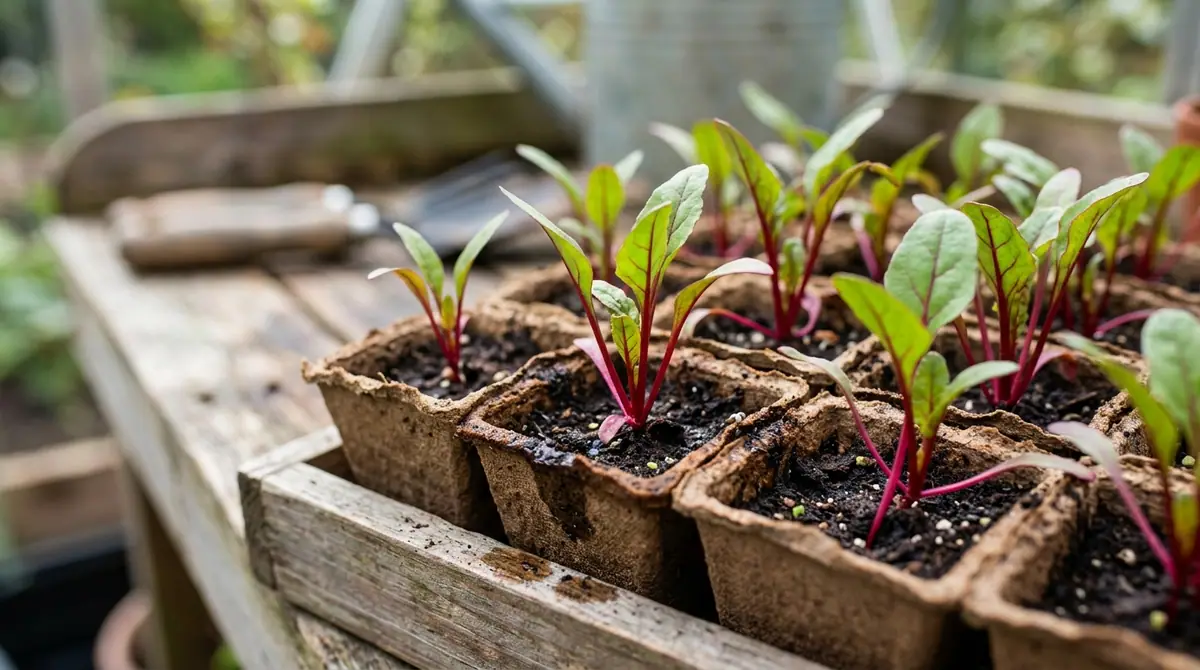
I stood in trial gardens one brisk early spring morning three years ago, staring down at a flat of beet seedlings that looked more like tangled red threads than a future harvest. I had started them indoors four weeks too early in standard seed trays, coddling them under warm heat mats because I was impatient to get a jump on the season. When I finally tried to tease apart their delicate roots to transplant them into the garden, every single taproot snapped. The lesson was etched into my gardening journal that day: beets are not traditional garden annuals that love being transplanted; they are temperamental taprooted biennials that demand absolute precision. I have since refined the exact science of when and how to give beets a head start indoors without sacrificing root integrity. Let's dig into the botanical requirements, timelines, and specialized techniques needed to master this crop.
1. Botanical Overview & Natural Habitat

Unlike crops that develop fibrous root systems, the beet is defined by its swollen hypocotyl—the transitional zone between the root and the stem—combined with the primary taproot. When you look at a beet seed, you are not looking at a single seed at all. It is a rugged, corky multiseed capsule (often called a cork or glomerule) containing two to six true embryos. This botanical quirk means that every single beet "seed" you plant will inevitably sprout a cluster of multiple seedlings that require strategic thinning.
Understanding their natural habitat dictates our cultivation strategy. Beets are cool-season biennials grown as annuals for their edible roots and foliage. They reach peak physiological development when daytime temperatures hover between 50°F and 65°F (10°C to 18°C). When temperatures drop below 40°F (4°C) for prolonged periods during early growth, the young beet plant can misinterpret the cold snap as the passing of winter, triggering bolting—premature flowering and seed production—which ruins the root. Conversely, extreme summer heat causes the roots to become woody, bitter, and ringed with pale, unpalatable zones. Starting beets indoors is a strategic maneuver designed to bypass erratic late-winter weather, giving them a 3-to-4-week head start so they hit the garden soil precisely when spring conditions peak.
2. Essential Environmental & Care Requirements
Creating a controlled indoor microclimate for beet seedlings requires mimicking their native coastal, temperate environment while managing the fragile nature of their developing taproots.
Temperature is your primary variable. During germination, soil temperature is far more critical than ambient air temperature. Beets will germinate across a soil temperature range of 40°F to 85°F (4°C to 29°C), but the absolute sweet spot is between 55°F and 75°F (13°C to 24°C). Once the cotyledons emerge, drop the ambient temperature to a cool 60°F to 65°F (15°C to 18°C) during the day and 50°F to 55°F (10°C to 13°C) at night. Keeping indoor seedlings too warm results in weak, leggy stems that cannot support the developing plant.
Light intensity is equally non-negotiable. Beets require intense light to synthesize robust foliar growth that feeds the expanding subterranean hypocotyl. Position seedlings 2 to 3 inches (5 to 7.5 cm) beneath full-spectrum LED grow lights, running them for 14 to 16 hours daily. If you notice the stems stretching or leaning toward the light source, your fixtures are either too weak or positioned too far away.
Moisture management requires a delicate touch. The potting medium must remain evenly moist—comparable to a wrung-out sponge—but never waterlogged. Over-saturation starves the roots of oxygen, inviting damping-off fungi (Pythium and Rhizoctonia species), while extreme drought causes the developing taproot to cork, woody, and prematurely split.
| Parameter | Optimal Condition | Common Mistake | Why It Matters |
|---|---|---|---|
| Soil Temperature | 55°F – 75°F (13°C – 24°C) | Starting seeds in cold (<40°F) or hot (>90°F) soil | Slows germination, leading to seed rot or erratic emergence. |
| Container Depth | Minimum 4 inches (10 cm) | Using shallow plug trays (<2 inches) | Stunts the vertical taproot, causing permanent root distortion. |
| Light Duration | 14 – 16 hours daily | Placing on a dim windowsill | Results in leggy, weak seedlings incapable of bulking up roots. |
| Transplant Timing | 3 to 4 weeks max from sowing | Keeping indoors past 5 weeks | Root becomes root-bound, triggering transplant shock and bolting. |
3. Step-by-Step Cultivation, Feeding & Propagation
Because beets despise root disturbance, standard plastic cell packs are out of the question. To successfully start beets indoors, you must use biodegradable containers that can be planted directly into the garden soil, such as peat pots, cow pots, or compressed soil blocks. For gardeners navigating specific regional microclimates—such as those timing crops using a When to Plant Onions in Southern California (Zone 9 & 10 Planting Calendar) framework—beets should be scheduled for the tail end of winter to avoid sudden spring heatwaves.
Here is the exact step-by-step protocol for starting beets indoors:
- Select Containers and Soil: Fill 3-to-4-inch (7.5-to-10-cm) biodegradable pots or soil blocks with a sterile, fine-textured seed-starting mix enriched with a small amount of finished vermicompost for initial biological activity. Ensure the pH of your medium sits between 6.0 and 7.0.
- Sow the Multiseed Clusters: Press two to three beet "seeds" into the center of each pot or soil block at a precise depth of 1/2 inch (1.3 cm). Firm the soil gently over the clusters to ensure good seed-to-soil contact.
- Manage Germination: Mist the surface thoroughly with a fine spray bottle. Place the containers on a heating mat set to 65°F (18°C). Cover the trays with a clear dome to retain humidity until emergence, which typically occurs within 5 to 10 days.
- Thin the Seedlings: Once the seedlings reach 2 inches (5 cm) tall and display their first set of true leaves, use clean kitchen scissors to snip away the weaker seedlings at the soil line. Do not pull them out, as pulling disturbs the delicate root system of the remaining champion seedling. Leave exactly one strong plant per container.
- Harden Off: Exactly 7 to 10 days before your final expected spring frost, begin the hardening-off process. Expose the biodegradable pots to outdoor filtered sunlight and wind for 1 hour on the first day, gradually increasing exposure over a week. Protect them from freezing temperatures below 30°F (-1°C).
- Transplant Out: Dig a hole in your garden bed slightly larger than your biodegradable pot. Plant the entire pot directly into the soil, ensuring the top rim of the pot is completely buried beneath the soil surface to prevent moisture wicking. Space your transplants 3 to 4 inches (7.5 to 10 cm) apart in rows spaced 12 inches (30 cm) apart.
💡 Pro-Tip: When thinning your indoor beet seedlings, don't toss the tiny snipped greens into the compost bin! They are packed with earthy flavor and can be tossed directly into your morning microgreen smoothie or atop a salad.
For gardeners balancing multiple cool-season root crops—much like calculating precise schedules when learning When to Transplant Cucumber Seedlings: Stop Root Shock & Boost Growth or timing perennial berry setups like How to Grow Strawberries Indoors: From Fruit Seeds to Sweet Berries—keeping strict calendar records for your beet sowings ensures a continuous, uninterrupted harvest succession.
4. Common Problems, Pests & Troubleshooting
Even with meticulous indoor care, beet growers occasionally run into developmental hiccups. Diagnosing them early saves the crop.
Leggy, pale seedlings are the most frequent indoor complaint. If your beet stems stretch out past 3 inches (7.5 cm) before developing true leaves, your light source is inadequate. Immediately lower your grow lights to within 2 inches (5 cm) of the canopy and increase the photoperiod to 16 hours.
Damping-off disease can wipe out an entire tray overnight. Caused by soil-borne fungi in over-saturated, stagnant air, it manifests as water-soaked lesions at the base of the stem, causing the seedling to abruptly topple over. Prevent this by bottom-watering your pots, running a small oscillating fan nearby to circulate air, and using fresh, sterile seed-starting mix for every batch.
⚠️ Important Caution: Never let indoor beet roots circle the bottom of their pots. If you wait past 5 weeks to transplant, the primary taproot will hit the bottom of the container, deform into a J-shape, and permanently stunt the development of a smooth, rounded beet root.

5. Frequently Asked Questions
Can you transplant beet seedlings?
Yes, but with strict caveats. Because beets develop a primary taproot, you cannot transplant them bare-root like tomatoes or peppers. You must start them in biodegradable pots or soil blocks that allow you to plant the entire root-ball directly into the garden without disturbing the soil surrounding the roots.
Why are my indoor beet seedlings so tall and skinny?
Leggy beet seedlings are universally caused by insufficient light intensity or a light source that is placed too far away from the plant canopy. Beets require intense light immediately upon germination. Lower your grow lights so they are within 2 to 3 inches (5 to 7.5 cm) of the leaves and ensure they receive 14 to 16 hours of light daily.
When exactly should I start beet seeds indoors?
You should start beet seeds indoors precisely 3 to 4 weeks before your average last spring frost date. Starting them any earlier risks the plants becoming root-bound in their indoor containers, which permanently stunts root development and triggers premature bolting once transplanted.
Do I need to thin beet seedlings if multiple plants sprout from one seed?
Absolutely. Each beet "seed" is actually a corky cluster containing multiple embryos. If you leave multiple seedlings to grow in a single pot or spot, they will compete aggressively for resources, resulting in tangled, distorted, and stunted roots that never swell properly. Snip away the weaker sprouts, leaving only one strong plant per container.
Related Guides
- When to Start Tomatoes Indoors Zone 6
- When to Start Tomato Seeds Indoors Zone 6
- When to Start Strawberries Indoors
- When to Start Stock Seeds Indoors
- When to Start Squash Seeds Indoors
📋 Table of Contents ▼ Click to expand
Tags:
Keep reading
🌿 Related Plants You Might Like

PlantSavvyWorld
Editorial team
PlantSavvyWorld is an independent botanical education project. Articles are drafted with AI assistance, then edited and checked against university extension services, botanical garden collections and other published horticultural sources.