

How to Test Garden Soil Ph Without a Kit
Written with AI assistance, edited and checked against horticultural sources.
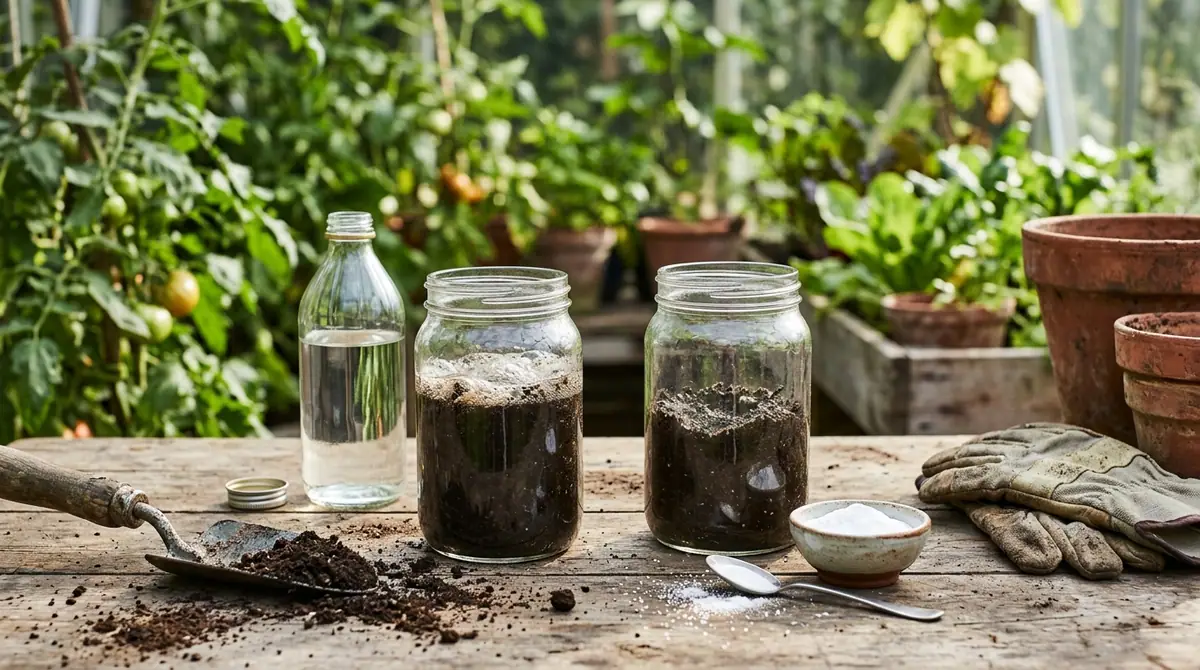
I was standing in trial gardens at 6:00 AM on a crisp 52°F (11°C) autumn morning, staring at a patch of blue hydrangeas (Hydrangea macrophylla) that stubbornly refused to produce anything other than washed-out, muddy pink bracts. My garden center pH test kits had run out the evening before, and an impatient gardener was arriving at 10:00 AM to review our soil remediation plan for their acidic-loving ericaceous beds. Out of pure desperation, I reached into my tool apron, grabbed a bottle of household vinegar and some baking soda, and ran two kitchen chemistry tests right there on the potting bench. That morning reminded me of a fundamental truth every master gardener learns eventually: nature leaves chemical breadcrumbs in the earth, and you do not need to spend money on plastic dropper bottles to read them.
1. Botanical Overview & Natural Habitat

In their native habitats, plants have evolved alongside specific geological profiles. For instance, woodland understory species like rhododendrons, azaleas, and blueberries (Vaccinium corymbosum) originate in regions with decomposing leaf litter, acidic pine needles, and high rainfall that leaches away basic cations like calcium and magnesium, settling comfortably in a pH range of 4.5 to 5.5. Conversely, plants native to arid limestone steppes or chalk downlands—such as lavender (Lavandula angustifolia) and dianthus—thrive in alkaline soils ranging from 7.5 to 8.5, where calcium carbonate dominates the matrix.
When the pH shifts outside a plant's evolutionary sweet spot, soil chemistry undergoes radical changes. In highly acidic soils (below 5.5), micronutrients like iron, manganese, and aluminum become intensely soluble. While iron solubility is generally positive, excessive aluminum reaches toxic levels that stunt root elongation. Furthermore, essential macronutrients like phosphorus bind tightly with iron and aluminum, rendering them chemically unavailable. In alkaline soils (above 7.5), the inverse occurs: phosphorus binds with calcium to form insoluble calcium phosphate, and trace elements like iron and zinc precipitate out of solution, triggering severe interveinal chlorosis (yellowing leaves with green veins).
Understanding these dynamics requires looking at the physical matrix of your garden bed. Whether you are dealing with heavy clay packed tightly at 6 to 8 inches (15 to 20 cm) deep or loose sandy loam, the mineral composition dictates how easily you can alter or read your ground's native chemistry. To deepen your understanding of how soil chemistry interacts with plant nutrition, consult the comprehensive guides provided by the Royal Horticultural Society Soil Chemistry Resource.
| Parameter | Optimal Condition | Common Mistake | Why It Matters |
|---|---|---|---|
| Soil pH (General) | 6.2 – 6.8 | Assuming all plants like "neutral" soil | Dictates nutrient availability and root health |
| Active Root Depth | 6 – 12 inches (15 – 30 cm) | Testing only the top 1 inch (2.5 cm) of mulch | Roots absorb minerals deep in the profile |
| Testing Soil-to-Water Ratio | 1:1 by volume | Using mineral water with unknown mineral content | Distilled water prevents false mineral readings |
| Observation Window | 3 to 5 minutes | Reading color shifts after 15 minutes | Chemical reactions degrade and yield false data |
2. Essential Environmental & Care Requirements
Before running physical or chemical tests without a kit, you must establish baseline environmental controls. Soil is a living biological ecosystem teeming with mycorrhizal fungi, bacteria, and macrofauna that operate efficiently only within specific physical parameters.
Moisture levels drastically influence how ions move through the soil profile. If you test soil that is bone dry—for example, during a summer drought when ground temperatures sit at 85°F (29°C)—your DIY chemical tests will fail to dissolve or suspend the target ions properly. Conversely, waterlogged soil sitting at 50°F (10°C) following heavy spring storms creates an anaerobic environment that skews chemical reactions.
You also need to understand the physical makeup of your site. Earth situated beneath mature conifers naturally trends acidic due to the accumulation of organic acids released as fallen needles decompose. Meanwhile, ground located near concrete foundations, mortar, or newly poured stone pathways almost invariably drifts alkaline due to lime leaching out of the cement composites over 30 to 90 days.
💡 Pro-Tip: When gathering samples for any DIY soil test, ignore the top 2 inches (5 cm) of surface mulch, organic debris, and dried fertilizer crusts. Dig a clean trowel down to a depth of 6 inches (15 cm), scoop a slice of the vertical profile, and place it in a pristine glass container. This ensures you are testing the active rhizosphere where actual root uptake occurs, rather than surface amendments.
3. Step-by-Step Cultivation, Feeding & Propagation
Evaluating your garden's pH without a commercial kit relies on two distinct household experiments: the Baking Soda Test for acidity, and the Vinegar Test for alkalinity. Follow this exact step-by-step protocol to determine your soil's chemical signature accurately.
- Collect Representative Samples: Walk your garden and take soil cores from at least three distinct zones (e.g., the vegetable patch, the perennial border, and beneath the shrubbery). Dig down 6 inches (15 cm), and place roughly 2 cups (500 ml) of soil from each zone into separate, clean glass bowls. Remove any earthworms, large stones, or woody debris.
- Perform the Vinegar Test (Checking for Alkalinity): Take a half-cup (120 ml) of your first soil sample and place it in a clean glass container. Slowly pour household white vinegar (which contains roughly 5% acetic acid) over the soil until it is thoroughly saturated. Watch the surface closely for 60 seconds. If the soil begins to fizz, bubble, or effervesce, your soil is alkaline (pH 7.5 to 8.5). The fizzing is carbon dioxide gas releasing as the acid reacts with calcium carbonate. If nothing happens, proceed to step 3.
- Perform the Baking Soda Test (Checking for Acidity): Take a fresh half-cup (120 ml) of soil from the same sample zone and place it in a second clean glass bowl. Add a few drops of distilled water to create a thick mud slurry. Sprinkle 1 tablespoon (15 ml) of baking soda (sodium bicarbonate) directly over the top of the mud slurry. Observe the surface for 60 seconds. If the mixture begins to fizz, bubble, or foam, your soil is acidic (pH below 6.0). The reaction occurs because the sodium bicarbonate reacts with organic acids in the sour soil.
- Evaluate Neutral Results: If your soil sample shows zero reaction to either the vinegar or the baking soda test, congratulations—you have neutral soil resting comfortably between 6.5 and 7.0.
- Cross-Check with Native Indicator Weeds: Walk your property and identify uncultivated pioneer species. Plants like dandelions (Taraxacum officinale), plantain (Plantago major), and wild dock (Rumex crispus) thrive in compacted, slightly acidic soils ranging from 5.8 to 6.5. Moss growth, horsetail (Equisetum arvense), and sorrel aggressively colonize heavily acidic sites with a pH plummeting below 5.2.
- Record and Map Your Findings: Document your results on a hand-drawn garden map, noting the exact date, soil temperature (ideally measured at 60°F / 15°C), and whether specific zones require amendment before planting your seasonal crops. For formal laboratory verification to cross-reference your DIY findings, consult the protocols outlined by the USDA Natural Resources Conservation Service Soil Survey.
⚠️ Important Caution: Never use tap water to mix your soil slurries for these tests if your municipal water supply is hard or heavily chlorinated. High mineral content in tap water introduces background carbonates and dissolved ions that will instantly ruin the accuracy of your vinegar and baking soda reactions. Always use store-bought distilled water.
4. Common Problems, Pests & Troubleshooting
When gardeners attempt DIY soil testing, common errors can lead to misdiagnoses that damage plant health. Let's break down the most frequent pitfalls and how to fix them.
- False Positives from Contaminated Containers: If your glass bowls or mixing spoons contain residual dish soap, grease, or hard water spots, the chemical reaction will be compromised. Always scrub testing vessels with boiling water and rinse them thoroughly with distilled water before beginning.
- Misinterpreting Weak Fizzing: A tiny, single micro-bubble does not equal a positive test. A true alkaline or acidic reaction produces an audible hiss and visible effervescence that foams across the surface of the soil slurry within 30 seconds. If you see nothing substantial, your soil is genuinely near neutral.
- Ignoring Seasonal pH Fluctuations: Soil pH is not static. Following heavy autumn rains or spring snowmelts, water leaches basic minerals downward, temporarily driving the topsoil into a more acidic state. Conversely, hot summer droughts cause capillary action to pull mineral salts upward from lower strata, temporarily spiking surface alkalinity. Always test your soil during stable weather windows in spring or autumn when soil temperatures hover around 55°F to 65°F (13°C to 18°C).
- Nutrient Lockout Symptoms Despite Correct pH: If your DIY tests indicate a neutral pH of 6.8, yet your tomatoes exhibit severe blossom end rot or interveinal chlorosis, the issue is rarely the pH itself. More often, it stems from compacted soil structure that restricts oxygen diffusion to the roots, halting active nutrient transport regardless of chemical availability in the matrix. Aerate your beds deeply and incorporate well-rotted compost to restore biological activity.

5. Frequently Asked Questions
Can I trust the baking soda and vinegar soil test results?
Yes, within a relative margin of error. While these household kitchen tests will not give you an exact decimal reading like a digital pH meter, they are remarkably reliable at categorizing your soil into broad buckets: strongly acidic, strongly alkaline, or neutral. Professional growers have relied on this quick qualitative assessment for generations to catch extreme pH imbalances before planting.
How do I raise or lower my garden soil pH once I know what it is?
To raise acidic soil (make it more alkaline), incorporate agricultural limestone (calcium carbonate) or dolomitic limestone at a rate determined by your soil texture, typically applying 5 to 10 lbs per 100 square feet (2.4 to 4.8 kg per 10 square meters) to shift the pH by roughly 0.5 units. To lower alkaline soil (make it more acidic), incorporate elemental sulfur, peat moss, or well-composted pine bark mulch into the top 6 inches (15 cm) of the root zone over a period of 60 to 90 days.
Why is my garden soil pH different in different beds?
Soil chemistry varies wildly even within small residential plots due to human intervention and micro-climates. A flower bed bordering a concrete foundation will always test more alkaline because lime leaches out of the masonry. Meanwhile, a bed nestled under mature oak trees will trend acidic due to the annual accumulation and decay of acidic leaf mold and tannin-rich organic debris.
How often should I test my garden soil pH without a kit?
For established perennial beds and established shrub borders, testing once every 2 to 3 years during the spring is entirely sufficient. However, if you are establishing a brand-new intensive vegetable garden, installing sensitive ericaceous plantings, or managing heavy clay soils that require frequent organic amendments, run your DIY tests annually to catch chemical drift before plant stress sets in.
Related Guides
- How Do You Kill Wild Onions Without Killing Grass
- How to Plant Aloe Vera Without Roots
- 5 Ways to Harvest Dill Without Killing the Plant
- How Long for Sunlght to Dry Soil
- Grey Clay Soil
📋 Table of Contents ▼ Click to expand
Tags:
Keep reading
🌿 Related Plants You Might Like






PlantSavvyWorld
Editorial team
PlantSavvyWorld is an independent botanical education project. Articles are drafted with AI assistance, then edited and checked against university extension services, botanical garden collections and other published horticultural sources.