

How to Plant Aloe Vera Without Roots
Written with AI assistance, edited and checked against horticultural sources.
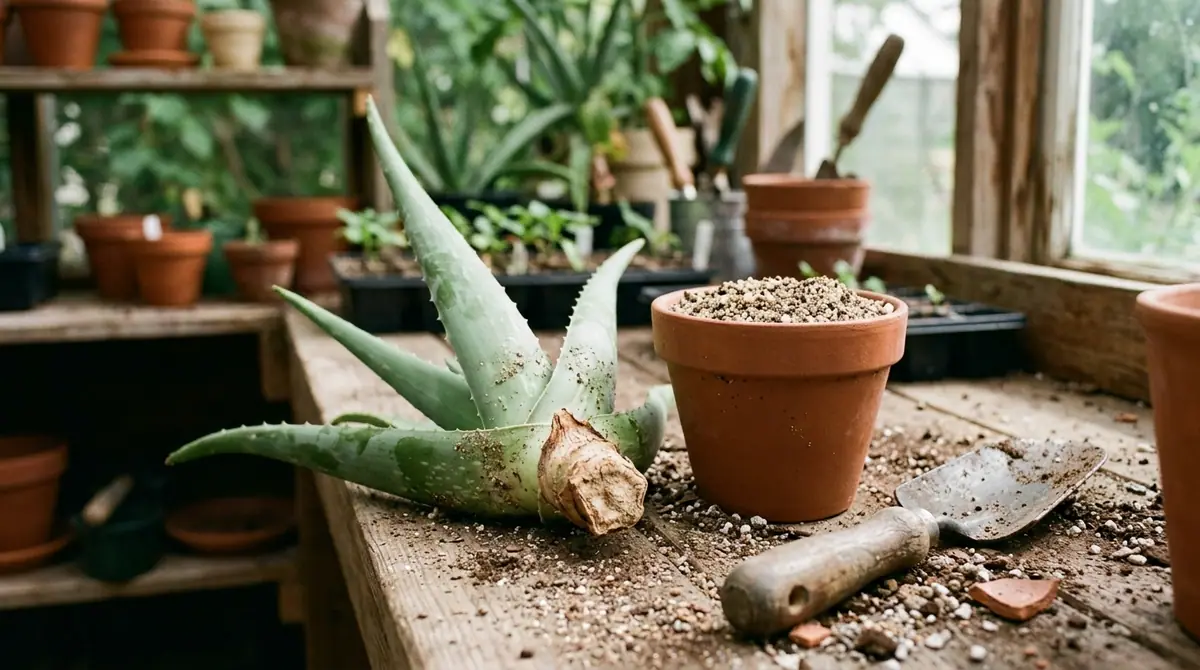
Back in the summer of 2018, while consulting on a commercial landscape installation in Palm Springs, a maintenance crew accidentally sheared a magnificent, three-pound Aloe vera pup clean off its mother plant, leaving behind a completely smooth, concave stem base without a single thread of root. The crew lead was ready toss it into the green waste bin. I intercepted it, wiped the latex sap from the basal wound, and set it on a shaded workbench in my truck. Three weeks later, after a proper callous had formed and the stem met a dry, gritty mineral mix, that exact pup had pushed out a dense, vigorous root system.

1. Botanical Overview & Natural Habitat
Aloe vera is a stemless or very short-stemmed succulent belonging to the Asphodelaceae family. Botanically classified as Aloe barbadensis miller, the plant is native to the Arabian Peninsula, specifically modern-day Oman, but has naturalized across arid and semi-arid regions globally, from the Mediterranean to the American Southwest.
In its native habitat, Aloe vera experiences scorching daytime temperatures often exceeding 100°F (38°C) and cool desert nights. Rainfall is erratic, sparse, and torrential when it does occur. To survive, the plant evolved a specialized photosynthetic pathway known as Crassulacean Acid Metabolism (CAM). Unlike typical plants that open their stomata during the day to take in carbon dioxide, Aloe vera opens its stomata at night to minimize transpirational water loss.
When an aloe is broken or sheared without roots, its internal survival mechanism triggers. The vascular cambium—a layer of actively dividing cells between the xylem and phloem—retains totipotency. This means these cells can de-differentiate and form a mass of unorganized cells known as a callus, which then differentiates into root primordia. Understanding this evolutionary background changes how we handle rootless specimens: they do not need traditional pampering, moisture, or heavy fertilizers. They need stability, air circulation, and well-draining mineral substrates that mimic a desert floor.
If you are expanding your succulent and container gardening repertoire, you might also enjoy our guide on the The Complete Guide to Coleus Plants: 50+ Varieties, Care, Propagation & Landscaping for shady garden accents, or look into the structural root dynamics found in How Deep Do Pepper Plant Roots Go? Pot Size & Substrate Depth Guide.
2. Essential Environmental & Care Requirements
When establishing an unrooted Aloe vera, getting your environmental parameters right is the difference between successful propagation and catastrophic stem rot. Because the cutting lacks roots, it cannot take up water to cool itself or maintain turgor pressure. Therefore, environmental stress must be minimized.
Temperature is the primary driver of metabolic activity. The optimal ambient temperature range for rooting Aloe vera is between 70°F and 85°F (21°C to 29°C). Temperatures dropping below 60°F (15°C) will stall root initiation entirely, while temperatures exceeding 95°F (35°C) can cook the unrooted stem before it has time to form a callus.
Light is equally critical. While mature aloes love direct, scorching sun, an unrooted cutting will dehydrate and shrivel under intense rays. Provide bright, indirect light—approximately 2,000 to 3,000 foot-candles of light intensity. An east-facing windowsill or a shaded patio protected from direct midday sun is ideal.
Substrate composition is where most home gardeners fail. Standard potting soil retains far too much moisture, suffocating nascent root tips and inviting opportunistic fungi like Pythium and Rhizoctonia. Your substrate must be an ultra-coarse, inorganic mix. A reliable formula consists of 50% horticultural pumice or perlite, 25% coarse builder's sand, and 25% low-nutrient peat-free potting mix.
| Parameter | Optimal Condition | Common Mistake | Why It Matters |
|---|---|---|---|
| Temperature | 70°F – 85°F (21°C – 29°C) | Placing in rooms below 60°F (15°C) | Low temps halt cellular division, preventing root primordia formation. |
| Light | Bright, indirect light | Full, scorching midday sun | Rootless cuttings cannot transpire efficiently and will sunburn and dehydrate. |
| Substrate | 50% pumice/perlite, 50% organic mix | Using dense, heavy garden soil | Compacted soil holds moisture, causing the naked stem base to rot. |
| Moisture | Completely dry until roots form | Frequent watering or misting | Without roots, moisture causes fungal pathogens to colonize the wound. |
💡 Pro-Tip: Never use rooting hormone powders containing synthetic auxins (like IBA) on succulent stems unless they are specifically formulated for cacti and succulents. Standard rooting powders often contain high concentrations of anti-fungal agents or synthetic fillers that can burn succulent stem tissue and trap moisture against the unsealed callous. Let nature's natural callus formation do the heavy lifting.
3. Step-by-Step Cultivation, Feeding & Propagation
Planting an Aloe vera without roots requires patience and strict adherence to dry-culture principles. Follow this exact sequence to ensure a 95% or higher success rate.
- Harvest and Clean the Base: If you are removing a pup from a mother plant, use a sterilized, sharp utility knife to cut as close to the main stem as possible. Remove the lower 2 to 3 leaves (approx. 5 to 7 cm) by gently pulling them downward and away from the stem to expose clean, bare stem tissue where roots will emerge.
- Cure the Callus: Place the cut pup upright in a dry, well-ventilated, shaded area indoors. Allow the wound to air-cure for 7 to 14 days. You are looking for the basal cut to turn a dry, leathery grey-brown color. Never plant a fresh cut directly into soil; open sap channels are a direct gateway for soil-borne pathogens.
- Select and Prep the Container: Choose a terra cotta pot measuring no more than 4 to 6 inches (10 to 15 cm) in diameter. Terra cotta is porous and allows the substrate to dry out rapidly. Fill the container with your dry, coarse mineral-heavy succulent mix, leaving 1 inch (2.5 cm) of headspace.
- Plant at the Correct Depth: Insert the callused stem base approximately 1 to 1.5 inches (2.5 to 3.8 cm) deep into the dry substrate. Tamp the mix down gently around the base of the leaves to provide physical stability, as a wobbling cutting will snap newly emerging microscopic root hairs.
- Implement Dry Culture (Days 1 to 21): Do not water the pot upon planting. Keep the container completely dry in its bright, indirect location for the first 21 days. The cutting will draw on its internal water and nutrient reserves to fuel root development.
- Initiate the First Watering (Day 21+): Gently tug on the aloe after three weeks. If you feel resistance, adventitious roots have anchored into the substrate. Give the pot its very first deep, thorough watering, allowing excess water to drain completely out of the bottom holes. Resume a normal watering schedule only after the soil has gone bone-dry for at least 7 to 10 days.
For gardeners interested in expanding their yard planning, aligning your planting schedules with local agricultural extensions is vital. You can cross-reference regional timing guidelines with resources like the University of California Agriculture and Natural Resources Extension for climate-specific succulent care insights.
4. Common Problems, Pests & Troubleshooting
Even with meticulous care, rootless propagation can present minor hurdles. Recognizing the early warning signs of stress prevents total loss of the specimen.
Stem Rot and Mushy Base: If the stem turns translucent, yellow, or dark brown and squishy near the soil line, stem rot has set in. This is almost always caused by introducing moisture too early or using organic-heavy soil.
- The Fix: Unpot the aloe immediately. Using a sterile blade, slice away all rotted, discolored tissue until you hit crisp, white-green plant matter. Dust the fresh cut with powdered sulfur or ground cinnamon (a natural antifungal), let it re-callus for 14 days in dry air, and restart the propagation process in fresh, dry pumice.
Severe Leaf Curling and Dehydration: It is entirely normal for an unrooted aloe to lose some turgor pressure and look slightly deflated during the first two weeks as it expends energy to grow roots. However, if the leaves curl inward dramatically and feel paper-thin after week three, the ambient environment may be too hot or dry.
- The Fix: Move the pot to a slightly cooler location with lower light levels, and ensure you administer that critical first deep watering if 21 days have elapsed.
Mealybug Infestations: Weakened or unrooted cuttings occasionally attract sap-sucking mealybugs, which look like small, white, cottony masses tucked into leaf axils.
- The Fix: Dip a cotton swab in 70% isopropyl alcohol and dab it directly onto every visible pest to dissolve their protective waxy coating.
⚠️ Important Caution: Never mist an unrooted Aloe vera cutting with a spray bottle in an attempt to keep it hydrated. Because the plant lacks roots, misting only wets the leaf surfaces and top layer of soil, encouraging fungal spore germination and rot without providing any usable hydration to the plant.

5. Frequently Asked Questions
Can you root an aloe vera leaf in water?
No. Unlike African violets or pothos, a single Aloe vera leaf snapped or cut off cleanly without a portion of the main stem base will almost never grow roots. A lone leaf will simply rot in water or dry up and die because the meristematic tissue required to generate new shoots and roots resides exclusively at the stem axis, not within the leaf blade itself.
How long does it take for a rootless aloe pup to grow roots?
Under optimal environmental conditions—temperatures between 70°F and 85°F (21°C to 29°C) and bright, indirect light—an unrooted Aloe vera pup typically initiates roots within 14 to 28 days. Visible resistance when gently tugging on the plant is your primary indicator that root development is underway.
Should I use rooting hormone when planting an aloe without roots?
Generally, no. Aloe vera is naturally high in rooting auxins and possesses robust cellular repair mechanisms. Applying standard chemical rooting powders can trap moisture against the base and cause chemical burns. Letting the cutting form a natural callus in dry air is far more reliable and eliminates the risk of rot.
Why is my unrooted aloe turning brown after planting?
If the entire plant is turning a dull, dark brown or translucent black, it is suffering from fatal stem rot due to moisture in the soil. However, if the aloe is taking on a slight reddish-bronze blush (sun stress), it is simply reacting to high light intensity. Move the plant to a shadier spot if the color change is accompanied by softening of the leaves.
Related Guides
- How Do You Kill Wild Onions Without Killing Grass
- How to Test Garden Soil Ph Without a Kit
- 5 Ways to Harvest Dill Without Killing the Plant
- Dog Tail Cactus Aerial Roots
- How Do You Plant Peony Roots
📋 Table of Contents ▼ Click to expand
Tags:
Keep reading
🌿 Related Plants You Might Like






PlantSavvyWorld
Editorial team
PlantSavvyWorld is an independent botanical education project. Articles are drafted with AI assistance, then edited and checked against university extension services, botanical garden collections and other published horticultural sources.