

How Long for Sunlght to Dry Soil
Written with AI assistance, edited and checked against horticultural sources.
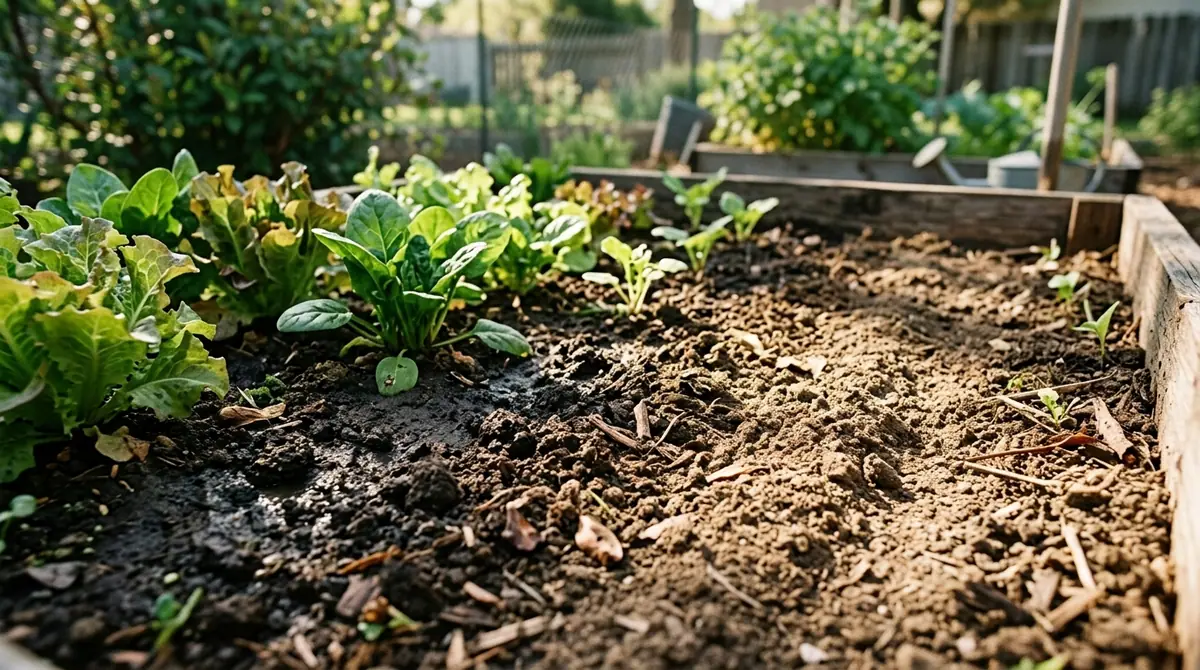
I stood over my raised vegetable beds three summers ago, staring in quiet disbelief at a crust of dry earth that had formed barely six hours after a torrential morning thunderstorm. My newly planted heirloom tomato seedlings were already drooping, their tender leaves signaling severe water stress while the soil two inches down remained thoroughly saturated. That afternoon taught me a fundamental lesson I carry into every landscape design project today: surface appearance is a notorious liar when it comes to moisture, and understanding how long it takes for sunlight to dry soil requires looking far beneath the crust.

1. Botanical Overview & Natural Habitat
To understand how sunlight dries soil, we must first look at how plants evolved in their native ecosystems to handle moisture fluctuations. In a natural forest floor or prairie, soil is rarely exposed to direct, blistering sunlight across vast, unshaded expanses. Instead, nature employs a multi-tiered canopy, leaf litter, and deep root networks that moderate soil temperature and slow down evaporation rates.
When direct sunlight hits bare soil, it initiates a two-part drying mechanism: direct solar radiation heats the water molecules, increasing their kinetic energy and driving surface evaporation, while also warming the surrounding air to create a vapor pressure deficit that draws moisture upward from deeper strata through capillary action. Soil texture dictates how efficiently this capillary action operates. Sandy soils, dominated by large macropores, let water drain quickly and dry out within 4 to 12 hours of direct sun exposure because gravity and rapid air exchange quickly empty the spaces between particles. Conversely, clay soils are composed of microscopic colloidal platelets that hold onto water molecules with immense matric potential. Even under 90°F (32°C) sunlight, heavy clay can take 5 to 7 days to dry out to a depth of 4 inches (10 cm), often baking into a concrete-like impermeable layer that cracks open and shears delicate root hairs in the process.
This dynamic directly impacts root zone respiration. Roots require oxygen to drive cellular respiration and nutrient uptake. When soil is waterlogged, oxygen is displaced; when sunlight bakes the surface into a hard seal, oxygen diffusion is similarly choked off. Balancing solar exposure with moisture retention is therefore one of the most critical challenges in professional landscape design and crop management. If you are starting your planting calendar, pairing your moisture management strategy with accurate soil temperature data using the Best Soil Thermometer for a Head Start in your Vegetable Garden will ensure your seeds germinate in conditions that are neither too swampy nor bone-dry.
2. Essential Environmental & Care Requirements
Managing how sunlight interacts with your garden soil requires balancing several interdependent environmental factors. You cannot control the sun, but you can manipulate the variables that dictate how that sunlight is absorbed and dissipated.
Temperature plays a starring role. For every 18°F (10°C) increase in ambient temperature, the rate of potential evaporation roughly doubles, provided relative humidity remains constant. If your garden is experiencing a heatwave with temperatures hitting 95°F (35°C), exposed topsoil can lose its top 1 inch (2.5 cm) of moisture in as little as 3 to 5 hours. However, wind is often an even more aggressive drying agent than the sun alone. A steady 10 mph breeze sweeps away the micro-layer of humid air sitting right above the soil surface, supercharging the evaporation rate.
Soil composition is your primary structural defense against either catastrophic baking or permanent waterlogging. Incorporating organic matter—such as well-rotted compost or leaf mold—acts like a sponge, buffering the extremes. Organic matter increases the soil's cation exchange capacity and creates stable aggregates that resist crusting under harsh sunlight. Before planting heavy-feeding crops, it is also wise to evaluate your soil's chemical profile, as improper pH can lock out nutrients even when moisture is ideal. You can learn how to assess this balance by reading our guide on How to Test Garden Soil Ph Without a Kit.
| Parameter | Optimal Condition | Common Mistake | Why It Matters |
|---|---|---|---|
| Surface Moisture | Evenly damp down to 1 inch (2.5 cm) | Letting the top layer bake completely dry while roots drown below | Causes surface root dieback and prevents gas exchange |
| Organic Matter | 5% to 8% by volume in topsoil | Leaving bare soil exposed to direct, unshaded sunlight | Accelerates moisture loss and destroys beneficial soil microbes |
| Mulch Layer | 2 to 3 inches (5 to 7.5 cm) of organic mulch | Piling mulch directly against plant stems and trunks | Traps excessive moisture against bark, inviting fungal pathogens |
| Compaction Level | Loose, friable crumb structure | Walking on wet beds after heavy rain | Crushes macropores, halting capillary water movement and root growth |
💡 Pro-Tip: Never judge soil moisture by sight alone. Take a stainless steel garden trowel and dig a vertical slice 4 inches (10 cm) deep. If the soil at the 2-inch (5 cm) mark feels cool and holds its shape when squeezed gently in your palm, do not water—even if the surface looks bone-white and cracked under the midday sun.
3. Step-by-Step Cultivation, Feeding & Propagation
When you need to actively manage soil drying times—whether to prep a bed for direct sowing or to rescue a waterlogged container—following a methodical protocol prevents root shock and structural degradation. Here is my proven step-by-step workflow for regulating soil moisture through strategic sun exposure and mechanical intervention:
- Assess the Depth of Saturation: Insert a 6-inch (15 cm) metal skewer or soil probe straight down into the earth. Pull it out and check where soil particles stop adhering to the metal to determine the exact depth of the moisture profile.
- Remove Impeding Surface Barriers: Rake away dense mats of old leaf litter, plastic sheeting, or matted weeds that are trapping stagnant water and preventing sunlight from reaching the topsoil.
- Initiate Controlled Aeration: For compacted clay beds, run a broadfork or a manual garden fork vertically into the earth every 6 inches (15 cm), rocking it slightly backward and forward. This opens fissures that allow sunlight and air to penetrate the 2 to 4 inch (5 to 10 cm) depth without inverting the soil layers.
- Deploy Strategic Shading or Exposure: If the soil is drying too quickly (losing moisture within 12 hours), install a 30% shade cloth or apply a 2-inch (5 cm) blanket of shredded bark mulch. If the soil is stubbornly waterlogged and taking longer than 5 days to dry in a 75°F (24°C) environment, pull back all organic mulches to expose the bare surface directly to morning sunlight.
- Amend with Structural Organics: Once the soil reaches a workable "moisture crumb" state—where it crumbles easily without sticking to your fingers—incorporate a 1-inch (2.5 cm) top-dressing of aged compost to improve aggregate stability.
- Time Your Plantings: If you are preparing beds for demanding fruiting crops, ensure your moisture and sun-drying cadence is locked in weeks before transplanting. For specific crop timelines and moisture integration, consult our comprehensive resource on How Long Does It Take for Tomatoes to Grow Tomato Growing and Harvesting Guide.
⚠️ Important Caution: Never use a rotary tiller to dry out wet garden soil. Tilling saturated clay or loam destroys soil aggregate structure, shatters earthworm habitats, and creates a dense subsurface plow pan that permanently ruins drainage.
4. Common Problems, Pests & Troubleshooting
When sunlight dries soil too rapidly or unevenly, it triggers a cascade of secondary problems that can devastate a landscape. Recognizing these symptoms early allows you to intervene before plant health is compromised.
The most frequent issue associated with intense sun-drying is hydrophobic soil crusting. When organic soils dry out completely under relentless 90°F+ (32°C+) sunlight, the microbial glues and organic compounds coat the soil particles in a waxy, water-repellent shell. When you finally water, the moisture simply beads up and runs off the surface rather than soaking in. To combat this, you must apply a gentle organic surfactant (such as liquid kelp or a mild castile soap dilution at 1 teaspoon per gallon) to break the surface tension, followed by gentle, pulsing irrigation over several hours.
Root zone thermal stress is another hidden hazard. In containers or shallow raised beds, direct sunlight can heat the outer 1 inch (2.5 cm) of dry soil to over 110°F (43°C). This extreme heat cooks feeder roots on the sun-facing side of the container, creating symptoms identical to drought—wilting and leaf scorch—even when the center of the pot is moist. For container gardening, always use light-colored pots or construct an outer protective wrap to shield the soil perimeter from direct solar radiation.

5. Frequently Asked Questions
Can morning sun dry soil faster than afternoon sun?
No. Afternoon sun is significantly more intense and is accompanied by higher ambient temperatures and lower relative humidity. Consequently, afternoon sun dries soil up to 40% faster than morning sun at the same temperature, as the cumulative thermal energy input peaks between 1:00 PM and 4:00 PM.
How do I stop the top layer of my soil from baking into a hard crust?
Apply a 2-inch (5 cm) layer of organic mulch, such as shredded hardwood or straw, over the soil surface. This blocks direct ultraviolet and infrared radiation from hitting the soil directly, preventing the rapid evaporation cycle that forms crusts while still allowing natural gas exchange.
Does wind dry soil faster than sunlight?
In many cases, yes. While sunlight provides the heat energy required to vaporize water molecules, wind removes the humid boundary layer of air sitting directly above the soil surface. A 15 mph wind combined with overcast skies can dry out surface soil just as quickly as direct sunlight on a dead-calm day.
How deep does sunlight actually dry the soil?
Direct sunlight rarely dries soil effectively below a depth of 2 inches (5 cm) on its own. Below this threshold, moisture movement relies almost entirely on capillary action drawing water upward to the surface, a process that slows dramatically once the top layer becomes dry and forms an insulating barrier.
Related Guides
- Grey Clay Soil
- Best Soil for Plumeria
- Hoya Soil
- Plumeria Potting Soil
- How to Test Garden Soil Ph Without a Kit
📋 Table of Contents ▼ Click to expand
Tags:
Keep reading
🌿 Related Plants You Might Like






PlantSavvyWorld
Editorial team
PlantSavvyWorld is an independent botanical education project. Articles are drafted with AI assistance, then edited and checked against university extension services, botanical garden collections and other published horticultural sources.