

Monstera Temperature Range
Written with AI assistance, edited and checked against horticultural sources.
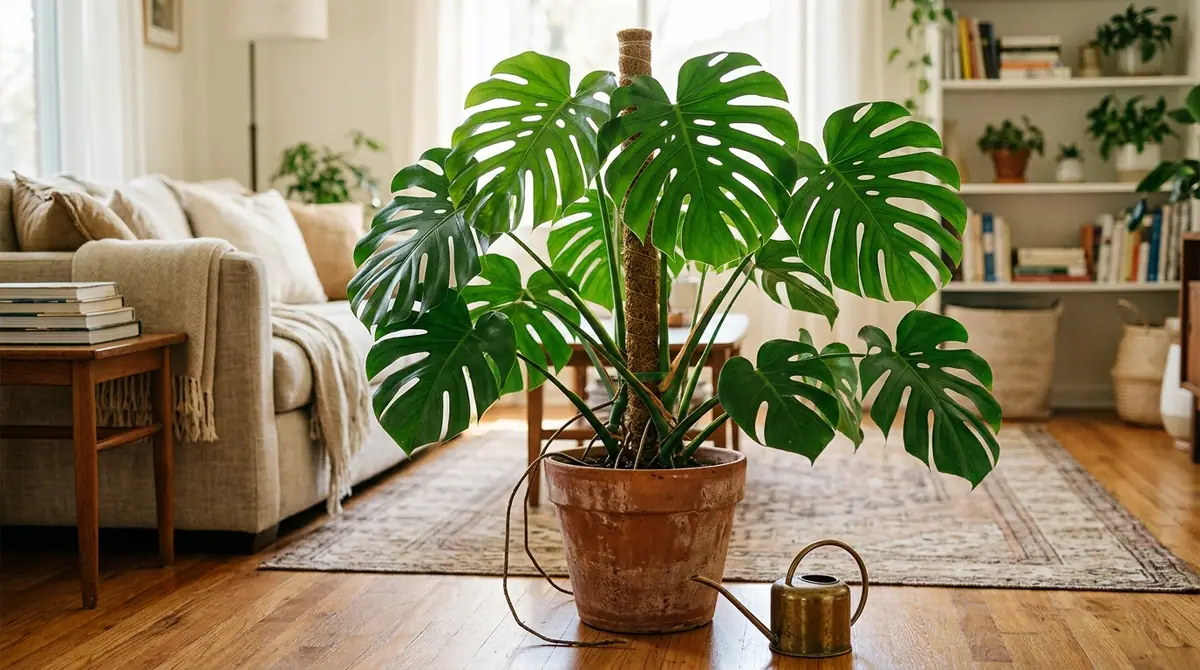
When exposed to a sudden overnight cold snap dropping temperatures to 38°F (3.3°C), a Monstera deliciosa will show unmistakable signs of cellular collapse by morning, with lower leaves becoming translucent, water-soaked, and weeping a dark, necrotic fluid.

1. Botanical Overview & Natural Habitat
To understand why monsteras react so violently to thermal stress, we must look to their evolutionary origins. I always remind growers that Monstera deliciosa and its popular cousin Monstera adansonii are native to the tropical rainforests of Central America, stretching from southern Mexico down to Panama.
In their natural understory and canopy-climbing habitats, these hemiepiphytes experience a remarkably stable thermal environment. Daytime temperatures consistently hover between 75°F and 85°F (24°C to 29°C), while nighttime cooling rarely drops below 65°F (18°C). Humidity levels remain perpetually elevated, often exceeding 70% year-round.
Botanically, monsteras are classified as C3 plants that lack physiological adaptations for enduring frost or extended cold. Their cell walls contain high concentrations of water and lack the osmoprotectant sugars found in temperate-zone trees. When ambient temperatures dip below 50°F (10°C), the lipid bilayer in their cellular membranes transitions from a fluid state to a rigid gel. This phase transition halts active cytoplasmic streaming, disrupts nutrient uptake, and ice crystals begin to form intracellularly at 32°F (0°C), instantly rupturing cell walls and causing irreversible tissue necrosis.
Conversely, upper thermal thresholds are dictated by enzymatic denaturation. When temperatures persistently exceed 95°F (35°C), the plant’s rate of respiration outpaces photosynthesis. Stomata close to prevent excessive transpirational water loss, halting carbon dioxide intake and causing localized heat scorch on the tender leaf margins.
2. Essential Environmental & Care Requirements
Mastering the ideal monstera temperature range requires balancing ambient thermal energy with light, humidity, and airflow. The absolute safe operational window for active growth sits squarely between 65°F and 85°F (18°C to 29°C).
When designing interior landscapes or greenhouse layouts, I advise tracking these metrics with a digital hygrometer-thermometer placed directly at canopy height, rather than relying on a thermostat on a distant wall.
| Parameter | Optimal Condition | Common Mistake | Why It Matters |
|---|---|---|---|
| Temperature | 68°F – 80°F (20°C – 27°C) | Placing near drafty windows or heating vents | Extreme shifts cause cell shock, root stalling, and leaf drop. |
| Light | Bright, indirect light (10,000–20,000 lux) | Direct, scorching midday sun or deep shade | Insufficient light slows metabolism; too much light bleaches foliage. |
| Humidity | 60% – 80% relative humidity | Placing in dry, forced-air heated rooms | Low humidity causes crispy brown tips and invites spider mites. |
| Air Circulation | Gentle, continuous air movement | Stagnant air or direct, high-speed fan blasts | Stagnation promotes fungal pathogens; high blasts desiccate leaves. |
💡 Pro-Tip: If you are moving your monstera outdoors for the summer growing season, initiate the transition only when overnight lows consistently stay above 60°F (15°C) for 14 consecutive days. Bring them back indoors well before the first autumn frost warning, ideally when nighttime temperatures drop to 55°F (13°C).
For rigorous botanical guidelines on tropical plant acclimation, consult the Royal Horticultural Society.
3. Step-by-Step Cultivation, Feeding & Propagation
Maintaining optimal thermal conditions directly influences how you should feed, water, and propagate your monstera. During cooler winter months when growth slows, the plant's metabolic demand plummets.
Follow this strict operational sequence to manage seasonal transitions and propagation successfully:
- Assess Ambient Baseline: Use a digital thermometer to record the high and low temperatures of your plant's location over a 7-day period to ensure it sits within the 65°F–85°F (18°C–29°C) sweet spot.
- Adjust Watering Frequency: When indoor temperatures drop below 65°F (18°C) in winter, allow the top 3 inches (7.6 cm) of soil to dry out completely before irrigating. Lower temperatures drastically slow water uptake, increasing root rot susceptibility.
- Calibrate Fertilization: Apply a balanced, water-soluble fertilizer (such as a 20-20-20 formula diluted to half-strength) strictly during periods of active growth when temperatures exceed 70°F (21°C). Cease all fertilization entirely if temperatures drop below 60°F (15°C).
- Execute Warm-Temperature Propagation: When taking stem cuttings, ensure the propagation medium (whether water, perlite, or a sphagnum moss blend) is maintained at a warm 75°F to 80°F (24°C to 27°C). Use a horticultural heating mat beneath your propagation vessel if ambient room temperatures are cool; root initiation drops by 70% in media below 65°F (18°C).
⚠️ Important Caution: Never place a monstera directly against a single-pane glass window in winter. Even if your room thermostat reads 70°F (21°C), radiant cold from the glass can freeze leaf tissue resting against it, and proximity to hot or cold HVAC supply vents will cause rapid cellular dehydration.
4. Common Problems, Pests & Troubleshooting
Thermal stress manifests in specific, diagnostic ways. If your monstera experiences a sudden drop below the safe monstera temperature range, you will notice water-soaked patches on the leaves within 24 hours. These patches turn black and papery as they dry. Do not prune these damaged leaves immediately; leave them attached until the plant forms a natural abscission layer, as cutting them prematurely exposes fresh, unsealed wounds to opportunistic pathogens.
Temperature fluctuations also weaken the plant's systemic immune response, frequently triggering pest infestations. Spider mites (Tetranychus urticae) thrive in warm, dry indoor environments where heating systems have depleted ambient humidity. Thrips (Thysanoptera) similarly exploit stressed foliage.
To combat this, inspect the undersides of leaves and leaf axils weekly. If pests appear, treat immediately with insecticidal soap or horticultural oil, ensuring room temperatures are between 65°F and 75°F (18°C and 24°C) during application to prevent chemical burn on the foliage.

5. Frequently Asked Questions
What is the absolute lowest temperature a monstera can survive?
The absolute minimum threshold for Monstera deliciosa is 32°F (0°C), but exposure to any temperature below 50°F (10°C) for more than a few hours will induce severe chilling injury, cell wall rupture, and extensive leaf necrosis. True survival without permanent damage requires keeping the plant above 55°F (13°C) at all times.
Can a monstera survive in an unheated garage during winter?
No. Unheated garages routinely experience rapid temperature drops, drafts, and prolonged periods below 50°F (10°C), which will rapidly kill a tropical monstera. They must be kept in climate-controlled living spaces where temperatures do not fluctuate wildly.
Do monsteras need less water when the temperature drops?
Yes. As ambient temperatures drop below 65°F (18°C), the plant enters a semi-dormant metabolic state. Transpiration slows down, and roots absorb water at a significantly reduced rate. Continuing your summer watering schedule in a cooler room will saturate the soil and quickly lead to anaerobic root rot.
How do I know if my monstera is suffering from heat stress?
Heat stress occurs when temperatures exceed 95°F (35°C). Symptoms include curling or cupping leaves as the plant tries to minimize surface area exposure, dry and crispy leaf margins (leaf scorch), and rapid soil dry-down despite regular watering schedules. Move the plant to a cooler, shaded location immediately.
Related Guides
📋 Table of Contents ▼ Click to expand
Tags:
Keep reading
🌿 Related Plants You Might Like



PlantSavvyWorld
Editorial team
PlantSavvyWorld is an independent botanical education project. Articles are drafted with AI assistance, then edited and checked against university extension services, botanical garden collections and other published horticultural sources.