

How Fast Does Pine Grow
Written with AI assistance, edited and checked against horticultural sources.
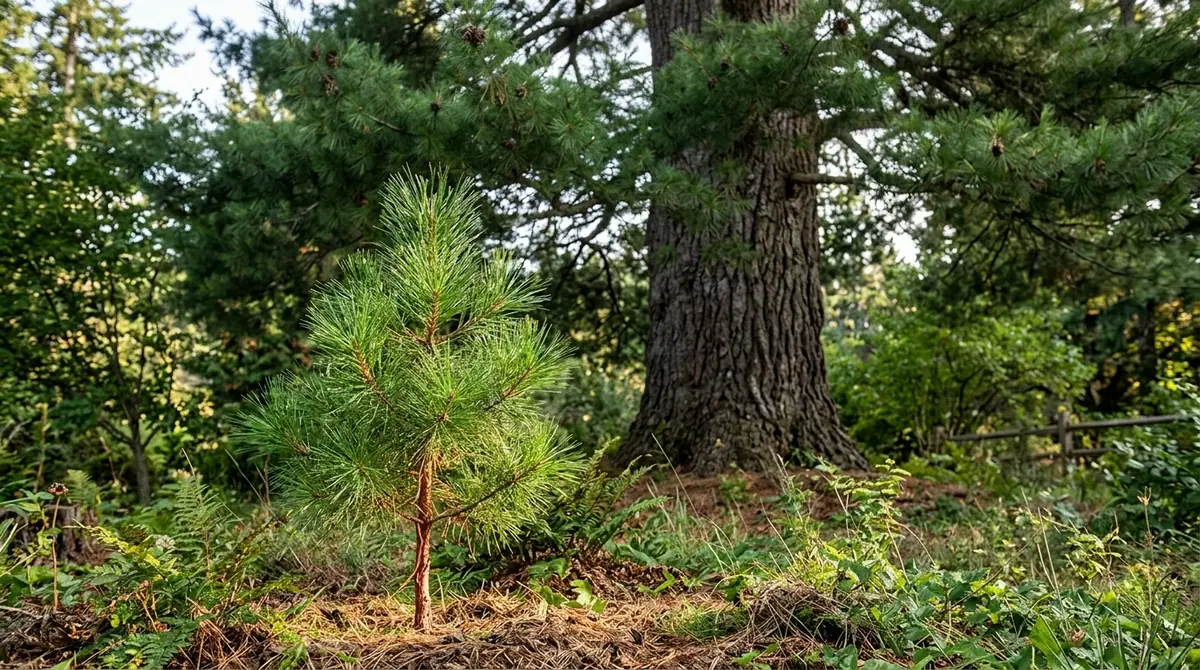
Fifteen years ago, standing knee-deep in a red clay wash in central Georgia with a bundle of bare-root Pinus taeda seedlings cradled in my arm, I wondered if I’d live to see the canopy close. Every gardener who walks into my landscape design studio asking "how fast does pine grow" carries that exact same impatience. They want a privacy screen yesterday, a windbreak by next winter, or a towering structural anchor before their mortgage term expires. But pine growth isn't a race; it's a calibrated biological engine dictated by species genetics, soil microbiology, and thermal units. Let’s pull back the bark on conifer growth rates and look at what makes these ancient gymnosperms surge upward, or stall out completely.
1. Botanical Overview & Natural Habitat

Understanding pine growth requires understanding the concept of "flushes." Pines do not grow continuously throughout the spring and summer like deciduous trees. Instead, their entire shoot elongation for the year is pre-formed inside a tight, resinous terminal bud created the previous autumn. When spring temperatures stabilize and day lengths lengthen, those buds break open, and the candles stretch out with astonishing speed over a 4 to 6-week window. Once that candle hardens into woody tissue, height growth for the season is essentially finished, though the needles continue to fill out and the trunk swells laterally via the cambium layer.
Growth rates vary wildly across the genus:
- Fast-growing species: Pinus taeda (Loblolly Pine) and Pinus radiata (Monterey Pine) can rocket upward by 3 to 5 feet (91 to 152 cm) per year under ideal conditions, frequently reaching mature heights of 80 to 100 feet (24 to 30 meters). If you are integrating these into a larger perennial layout, you can look at how they interact with understory layers in a How to Grow a Wild Food Forest Self Sufficiency Garden design.
- Moderate-growing species: Pinus strobus (Eastern White Pine) adds 2 to 3 feet (61 to 91 cm) annually, creating soft, sweeping curtains of blue-green needles.
- Slow-growing species: Pinus aristata (Bristlecone Pine) or Pinus mugo (Mugo Pine) might only push 2 to 4 inches (5 to 10 cm) of annual vertical growth, focusing their cellular energy instead on dense wood density and centuries-long survival strategies.
Natural habitats dictate this pacing. Pines native to high-moisture, nutrient-rich lowland valleys race for the light because canopy competition is fierce. Pines native to arid rocky ridges or nutrient-poor sandy barrens grow slowly because water and nitrogen are severely limiting factors. When you transplant a pine into your suburban landscape, you are asking it to reconcile its evolutionary programming with your irrigation system and fertilizer regimen.
2. Essential Environmental & Care Requirements
If you want your pines to hit their maximum genetic growth potential, you must mimic the environmental triggers they evolved to expect. Neglect these parameters, and a fast-growing pine will stall out, dropping lower branches and turning a dismal chlorotic yellow.
Light
Pines are obligate sun-lovers. With very few exceptions (such as young Pinus strobus seedlings that appreciate dappled shade during their first grueling summer), pines require full sun, defined as a minimum of 6 to 8 hours of direct, unobstructed sunlight daily. Shade causes lower branch dieback, stretches the trunk into a weak, spindly posture, and invites fungal pathogens.
Soil and Drainage
The single biggest killer of cultivated pines is not drought; it is heavy, waterlogged clay that suffocates the root system. Pines demand coarse, well-draining soils with a pH ranging from acidic (4.5) to neutral (7.0). Their roots exist in a symbiotic relationship with mycorrhizal fungi that require oxygen-rich soil environments to mine phosphorus and micronutrients.
Watering
First-year establishment requires deep, infrequent watering. During the establishment phase (the first 12 to 18 months), provide 1 inch (2.5 cm) of water per week via rainfall or deep-soaking irrigation. Once established, most mature pines are remarkably drought-tolerant, though prolonged severe droughts will stunt their annual candle elongation.
💡 Pro-Tip: When planning turf installations around your property, remember that heavy lawn fertilizers and frequent overhead lawn watering will rot pine roots and invite Phytophthora root rot. If you are dealing with struggling turf near your trees, review proper cultural practices in How to Make Grass Green Fast to ensure you aren't accidentally drowning your conifers with high-nitrogen runoff.
| Parameter | Optimal Condition | Common Mistake | Why It Matters |
|---|---|---|---|
| Soil Drainage | Sandy loam to loamy sand, rapid percolation | Planting in heavy, compacted clay sinks | Prevents fatal root rot and allows mycorrhizal symbiosis |
| Soil pH | 5.5 to 6.5 (Mildly Acidic) | Liming soil to neutral or alkaline levels | Alkaline soils lock up iron and manganese, causing severe chlorosis |
| Sunlight | Full sun (8+ hours direct exposure) | Planting in dense shade under mature hardwoods | Starves the tree of energy, resulting in leggy, weak growth and branch drop |
| Irrigation | Deep soaking every 7–10 days in year one | Frequent, shallow sprinkling | Encourages shallow surface roots rather than deep, anchoring taproots |
3. Step-by-Step Cultivation, Feeding & Propagation
Growing a pine successfully from seed or transplant requires precision. Conifers do not tolerate root disturbance the way maples or elms do; once a pine’s fine feeder roots dry out, the tree is often past saving.
Here is my field-tested protocol for planting and establishing a high-performance pine:
- Site Selection and Sizing: Assess overhead utility lines, property boundaries, and root zones. Ensure your chosen species has room to expand horizontally and vertically without hitting infrastructure.
- Hole Excavation: Dig a shallow, wide hole—three times the diameter of the root ball, but no deeper than the root ball itself. The top of the root flare must sit 1 to 2 inches (2.5 to 5 cm) above the surrounding grade to account for settling.
- Root Preparation: If planting a container-grown pine, gently tease apart any circling roots with your fingers or a knife. If handling a balled-and-burlapped (B&B) specimen, slice away all twine and peel back the top third of the burlap once the tree is stabilized in the hole.
- Backfilling: Backfill with the native unamended soil. Do not add rich compost or commercial potting soil to the planting hole; this creates a "bathtub effect" where water pools in the amended pocket rather than draining into the surrounding native soil.
- Tamping and Watering: Firm the soil gently by foot to eliminate large air pockets, then build a low 3-inch (7.5 cm) soil berm around the perimeter of the root zone to act as a watering basin. Apply 5 gallons (19 liters) of water slowly to settle the soil.
- Mulching: Apply a 3-inch (7.5 cm) layer of shredded pine bark or pine straw over the root zone, keeping the mulch pulled back 4 inches (10 cm) from direct contact with the trunk to prevent collar rot.
- Long-Term Nutrition: Pines rarely require heavy synthetic fertilization. If soil tests show a deficiency, apply a slow-release, acidifying conifer fertilizer in early spring just before candle break, broadcasting it evenly across the outer drip line.
For further reading on integrating conifers into diverse agricultural or homestead ecosystems, consult the USDA National Resources Conservation Service Plant Database for regional suitability profiles.
⚠️ Important Caution: Never prune a pine back into bare, old wood ("dehorning" or "topping"). Pines lack dormant buds on old, bark-covered branches. If you cut past the green needles, that branch will die back entirely rather than resprouting. Always prune back only to green needle clusters or fresh candles.
4. Common Problems, Pests & Troubleshooting
Even fast-growing pines can experience sudden stalls or dramatic declines. Diagnosing conifer issues requires a close look at needle color, resin flow, and bark integrity.
Needle Cast and Blights
Fungal diseases like Dothistroma needle blight or Lophodermium needle cast thrive in humid, wet springs. They manifest as yellow spots on needles that turn brown or reddish-brown, often developing dark fruiting bodies. The needles drop prematurely, starting from the bottom of the tree upward. Control involves clearing away fallen diseased needles and applying a copper-based fungicide at bud break if historical infection rates are high.
Bark Beetles and Borers
Stressed pines emit chemical volatiles that attract pests like the Southern Pine Beetle (Dendroctonus frontalis) or Ips beetles. Look for small pitch tubes (blobs of resin) on the bark, fine reddish-brown sawdust in the bark crevices, and a sudden, rapid fading of the crown from green to pale yellow, then brick red. Once a pine is heavily infested by bark beetles, it cannot be saved and must be removed promptly to protect surrounding trees.
Nutrient Deficiencies
Interveinal chlorosis (yellowing between green veins) in new needles usually points to iron or magnesium deficiency, often triggered by soil compaction or an excessively high pH that locks up micronutrients. If you are managing complex multi-tier landscapes where pines share space with other demanding crops or structures, keep an eye on soil chemistry, especially if you are also exploring intensive systems like those outlined in a Total Guide to Moringa Why You Should Grow the Miracle Tree or Drumstick Vegetable garden framework.

5. Frequently Asked Questions
How fast do pine trees grow in a year?
Growth rates depend entirely on the species and environmental conditions. Fast-growing species like the Loblolly Pine (Pinus taeda) or Slash Pine (Pinus elliottii) can add 3 to 5 feet (91 to 152 cm) of vertical height per year once established. Moderate varieties like the Eastern White Pine (Pinus strobus) add 2 to 3 feet (61 to 91 cm) annually, while dwarf or alpine species may grow less than 3 inches (7.5 cm) per year.
What is the fastest growing pine tree for privacy?
The hybrid Leyland Cypress is often sold for fast privacy, but among true pines, the Loblolly Pine and the Monterey Pine (Pinus radiata) are the speed demons. If you live in the eastern United States, the Eastern White Pine is an exceptional choice for a soft, dense privacy screen, growing rapidly while retaining a fuller habit if given adequate sun.
How do I make my pine tree grow faster?
You cannot force a pine to exceed its genetic limits, but you can remove limiting factors. Ensure your tree receives full sun (8+ hours of direct light), water deeply during dry spells in its first two years, eliminate turf competition by maintaining a mulch ring out to the drip line, and verify that the soil pH sits between 5.5 and 6.5 so nutrients remain bioavailable.
Can you prune the top of a pine tree to stop it from growing taller?
No, topping a pine tree destroys its natural apical dominance, creates massive entry wounds for wood-decaying fungi, and ruins the structural integrity of the tree. If you need a shorter screen, choose a dwarf or slow-growing cultivar from the nursery rather than attempting to dwarf a standard forest-sized pine with hedge shears.
Related Guides
- Is Pine Bark Mulch Good
- Planting Landscaping Under Pine Trees
- How to Make Grass Green Fast
- Herbs for Bruises 7 Herbs That Will Get Rid of Bruises Fast
📋 Table of Contents ▼ Click to expand
Tags:
Keep reading
🌿 Related Plants You Might Like






PlantSavvyWorld
Editorial team
PlantSavvyWorld is an independent botanical education project. Articles are drafted with AI assistance, then edited and checked against university extension services, botanical garden collections and other published horticultural sources.