

What Herbs to Plant Together
Written with AI assistance, edited and checked against horticultural sources.
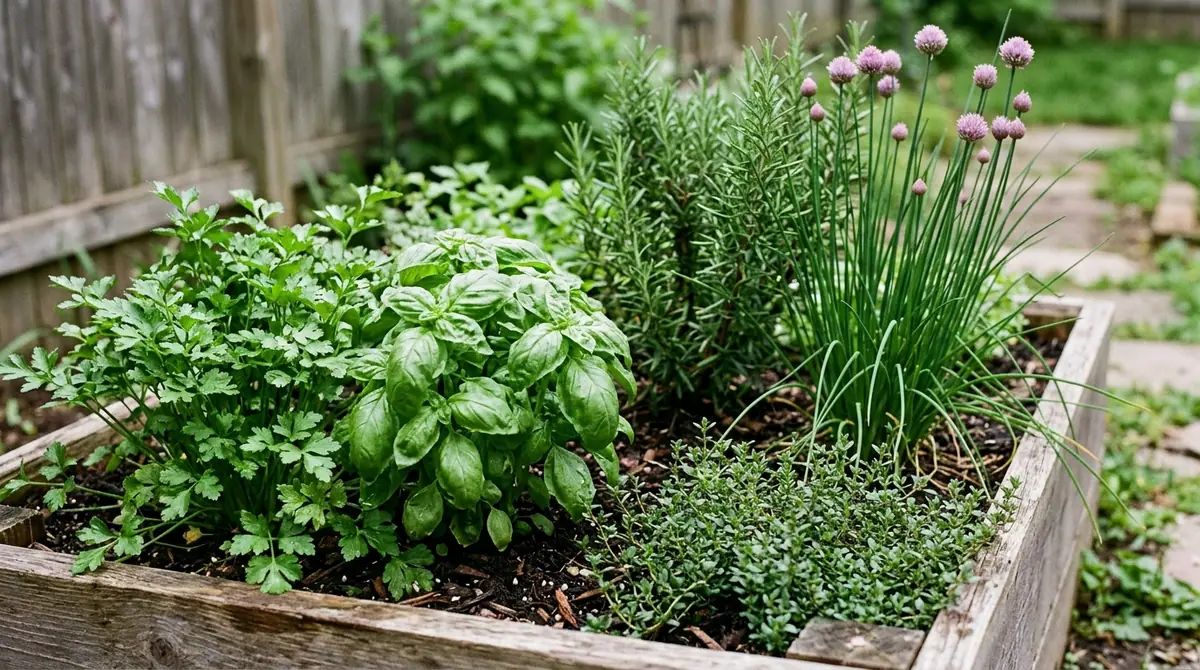
Planting Mediterranean rosemary right alongside water-loving basil in a single raised cedar box causes issues. Within three weeks, the basil's lower stems turn a ghostly, water-logged black from root rot, while the rosemary needles become crisp, brittle, and drop like dry pine needles. The soil is simply too damp for the woody perennial, yet not quite thirsty enough to satisfy the tropical annual.

1. Botanical Overview & Natural Habitat
To understand companion planting, we must look at where these plants evolved. Herbs generally fall into two distinct ecological camps: Mediterranean xerophytic perennials and moisture-loving temperate annuals.
Mediterranean herbs—such as rosemary (Salvia rosmarinus), thyme (Thymus vulgaris), oregano (Origanum vulgare), and sage (Salvia officinalis)—evolved along rocky, sun-drenched coastal cliffs. Their natural habitats feature poor, rocky, alkaline soils that drain instantly after a downpour. Their leaves are modified with small surface areas, heavy cuticles, or fine hairs (indumentum) to trap moisture and reflect intense solar radiation. These plants thrive on neglect and dry roots.
Conversely, soft-leafed culinary herbs like basil (Ocimum basilicum), parsley (Petroselinum crispum), cilantro (Coriandrum sativum), and chives (Allium schoenoprasum) originate from river valleys, woodland edges, and temperate meadows. They demand consistent moisture, rich organic matter, and neutral to slightly acidic soils.
When designing a polyculture herb bed, pairing these groups together guarantees the failure of one party. Instead, we must group plants by their biochemical signaling (allelopathy), root architecture, and environmental demands. For instance, aromatic members of the Lamiaceae (mint) family produce volatile monoterpenes—such as thymol, carvacrol, and menthol—that mask the scent of nearby plants, confusing phytophagous insects like aphids and cabbage loopers. Meanwhile, deep-rooted taproot herbs can break through compacted subsoil, leaving channels that fibrous-rooted companion plants utilize for oxygen exchange.
For broader insights on maximizing vertical space and root zone dynamics in mixed-planting beds, consult our guide on How Deep Do Pepper Plant Roots Go? Pot Size & Substrate Depth Guide.
2. Essential Environmental & Care Requirements
Creating a thriving multi-herb guild requires precise management of light, water, and soil chemistry. The table below outlines the core environmental parameters necessary for managing a mixed Mediterranean and temperate herb installation.
| Parameter | Optimal Condition | Common Mistake | Why It Matters |
|---|---|---|---|
| Soil pH | 6.5 to 7.0 for annuals; 7.0 to 7.5 for Mediterranean perennials | Using uniform acidic potting mix for all herbs | Incorrect pH locks out calcium and magnesium, causing chlorosis |
| Drainage Rate | Percolation rate of 2.0 to 4.0 inches (5 to 10 cm) per hour for woody herbs | Planting drought-tolerant herbs in heavy clay | Stagnant water surrounds fine root hairs, inviting Pythium root rot |
| Sunlight Exposure | 6 to 8 hours of direct, unfiltered photosynthetically active radiation (PAR) daily | Placing shade-tolerant chervil in scorching afternoon glare | Excessive UV stress degrades essential oils and causes leaf scorch |
| Irrigation Depth | Soak to a depth of 6.0 to 8.0 inches (15 to 20 cm), then allow top 2.0 inches (5 cm) to dry | Daily shallow waterings that encourage shallow root stratification | Deep watering forces roots downward, stabilizing the plant against wind |
💡 Pro-Tip: When grouping herbs in containers, match their root depths as well as their watering needs. Pair shallow-rooted creeping thyme with deeper-rooted upright oregano only if your container is at least 12.0 inches (30 cm) deep, ensuring their root zones do not violently compete for the exact same nutrient layer.
To dive deeper into regional planting schedules and frost management when integrating garden herbs with seasonal crops, reference the University of California Division of Agriculture and Natural Resources resource portal.
3. Step-by-Step Cultivation, Feeding & Propagation
Designing and planting a thriving multi-herb guild is a deliberate process. Follow this step-by-step protocol to establish a high-performing herb community.
- Site Selection and Soil Mapping: Select a location receiving a minimum of 6 hours of direct sunlight daily. Test your soil drainage by digging a hole 12.0 inches (30 cm) deep and filling it with water. If it drains slower than 1.0 inch (2.5 cm) per hour, amend the bed with coarse horticultural sand and compost to improve porosity before building your herb zones.
- Zone Separation: Divide your planting area into distinct hydrological micro-zones. Dedicate Zone A (raised, sandy, gravel-topped) to Mediterranean perennials like rosemary, thyme, and lavender. Dedicate Zone B (flatter, richer, compost-amended loam) to moisture-lovers like basil, parsley, and cilantro.
- Spacing and Root Interlocking: Space upright woody herbs 18.0 to 24.0 inches (45 to 60 cm) apart to allow for mature canopy airflow. Interplant faster-growing, short-lived annuals like cilantro between them temporarily, harvesting them before they crowd the permanent perennials.
- Planting Depth Calibration: Dig planting holes matching the exact root ball depth of your nursery starts. Set basil and parsley crowns level with the soil surface (burying stems causes collar rot). Set woody cuttings or transplants so the root flare sits 0.5 inches (1.2 cm) above grade to prevent stem decay.
- Initial Irrigation and Mulching: Water newly installed herbs thoroughly to settle soil air pockets. Apply a 1.0-inch (2.5 cm) layer of crushed gravel or decomposed granite around Mediterranean herbs to reflect heat and keep stems dry; apply organic shredded bark around leafy annuals to retain moisture.
- Targeted Maintenance and Feeding: Feed perennial herb guilds sparingly—an annual top-dressing of compost in early spring is sufficient. Prune Mediterranean herbs by one-third immediately after flowering to prevent woody, sparse stems.
⚠️ Important Caution: Never apply high-nitrogen synthetic fertilizers to Mediterranean herb guilds. Excessive nitrogen forces rapid, weak soft tissue growth that dilutes the concentration of flavorful essential oils and makes the plants highly vulnerable to aphid infestations.
For gardeners expanding their ornamental designs or managing diverse garden tiers alongside herbs, review our comprehensive resource on The Complete Guide to Coleus Plants: 50+ Varieties, Care, Propagation & Landscaping.
4. Common Problems, Pests & Troubleshooting
Even in well-planned polycultures, issues arise. Here is how to diagnose and correct them:
- Issue: Powdery Mildew (Erysiphe species) on Basil and Mint.
- Diagnosis: Caused by high relative humidity, poor air circulation, and overcrowding.
- Solution: Prune out interior stems to open the plant canopy. Water only at the base early in the morning using drip irrigation. Spray affected leaves with a bio-fungicide containing Bacillus subtilis.
- Issue: Root Rot and Sudden Wilting in Rosemary or Lavender.
- Diagnosis: Soil remains consistently wet, or the planting medium lacks adequate aeration.
- Solution: Cease watering immediately. If potted, repot into a sterile, fast-draining cactus mix amended with perlite and pumice, trimming away black, mushy roots with sterilized shears.
- Issue: Leggy, Weak Growth in Thyme and Oregano.
- Diagnosis: Insufficient light levels (less than 5 hours of direct sun) or excessive soil fertility.
- Solution: Relocate containers to a southern exposure or prune back overgrown shade branches from neighboring plants. Do not fertilize.

5. Frequently Asked Questions
Can I plant basil and mint together in the same pot?
No. While both enjoy moisture, mint spreads aggressively via underground stolons and will quickly crowd out basil's root system, starving it of nutrients and water. Furthermore, mint's vigorous canopy will overshadow basil, reducing the light it needs to manufacture flavorful essential oils. Always plant mint in its own dedicated container or barrier-lined bed.
Which herbs should never be planted next to each other?
Fennel (Foeniculum vulgare) is the ultimate horticultural loner; it secretes allelopathic biochemicals from its roots and foliage that inhibit the growth of almost all other culinary herbs, particularly bush beans, cilantro, and caraway. Additionally, keep moisture-loving chives and heavy-drinking parsley away from drought-loving rosemary and lavender, as their watering requirements will inevitably kill one of the parties.
Does companion planting actually improve herb flavor?
Yes, indirectly. When you plant aromatic herbs like dill, cilantro, and parsley alongside flowering thyme or oregano, you attract predatory beneficial insects—such as lacewings, syrphid flies, and parasitic wasps—that consume herb pests like aphids and spider mites. Pest-free plants experience less physiological stress, allowing them to channel maximum energy into synthesizing high concentrations of flavorful terpenes and essential oils.
Can rosemary and lavender be planted in the same garden bed?
Absolutely. Rosemary and lavender share identical environmental requirements: full sun (8+ hours daily), sandy or gravelly soil with a neutral to alkaline pH of 6.8 to 7.5, and minimal water once established. They make exceptional companions in a dry-stack rock wall or a designated Mediterranean herb garden.
Related Guides
- Herbs for Bruises 7 Herbs That Will Get Rid of Bruises Fast
- 13 Wonderful Herbs That Like Full Sun for Beginners
- Fusing Trees Together Bonsai Trunk
- Can You Plant Raspberries and Blackberries Together
📋 Table of Contents ▼ Click to expand
Tags:
Keep reading
🌿 Related Plants You Might Like


PlantSavvyWorld
Editorial team
PlantSavvyWorld is an independent botanical education project. Articles are drafted with AI assistance, then edited and checked against university extension services, botanical garden collections and other published horticultural sources.