

Fusing Trees Together Bonsai Trunk
Written with AI assistance, edited and checked against horticultural sources.
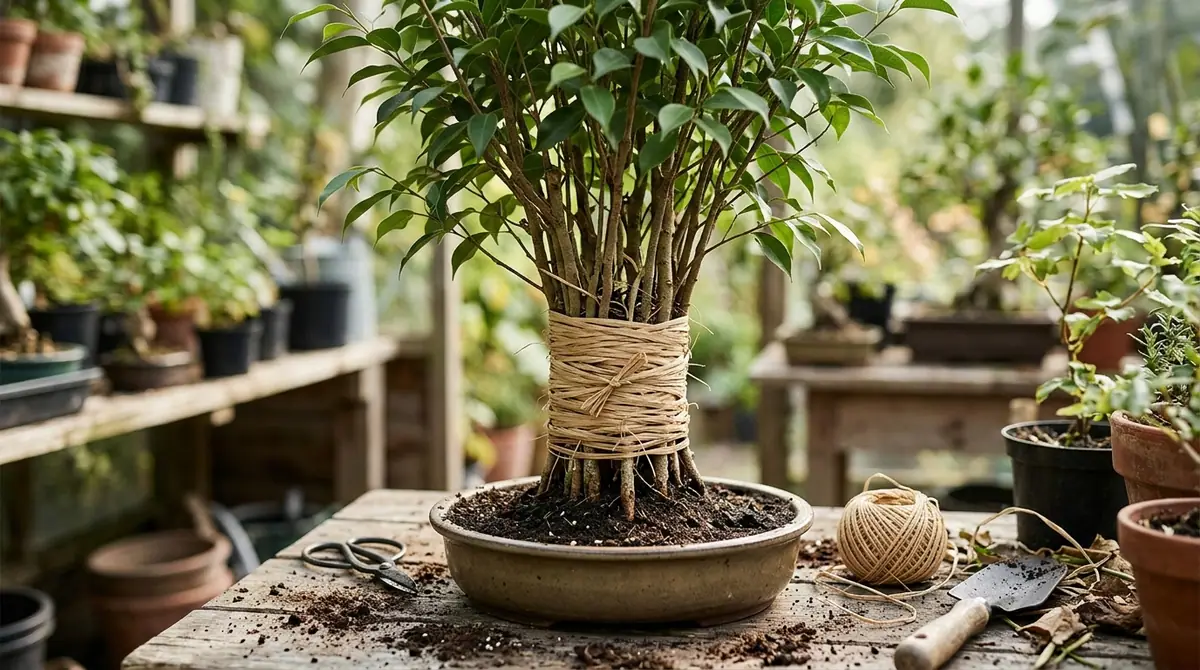
Fusing seven whips of Trident Maple (Acer buergerianum) wired together inside a 6-inch (15 cm) diameter PVC pipe will, when the pipe is carefully slid off 18 months later, result in trunks that have fused completely into a single, fluted, ancient-looking base that resembles decades of weathering on a Japanese hillside. Fusing trees together to form a single bonsai trunk—known botanically as inosculation—is one of the most rewarding techniques in advanced landscape design and miniature tree cultivation. Whether creating a massive, tapered nebari on a mame bonsai or experimenting with Step By Step Guide to Grafting Fruit Trees for Beginners to build a multi-varietal woody display, understanding the underlying plant physiology is what separates a rotting bundle of sticks from a living sculpture.
1. Botanical Overview & Natural Habitat

In bonsai cultivation, we hijack this natural defense and growth mechanism to bypass the decades-long wait required to grow a thick, single-trunk specimen from seed. By packing multiple young whips or seedlings—often 1 to 2 years old—tightly together, we force the lateral cambium layers to recognize each other as a single organism.
From a taxonomic perspective, inosculation occurs most successfully within the same species (homoplastic), though it can occasionally be achieved between very closely related species within the same genus (heteroplastic), much like we see when we look at How to Prune Apple Trees for Maximum Fruit Yield or explore advanced techniques found in Salad Trees Edible Leaves. The cambium—the thin layer of actively dividing cells just beneath the bark—is the engine of this fusion. For a deeper scientific dive into woody plant anatomy and vascular merging, consult the Royal Horticultural Society Plant Growth Guide.
Species selection is paramount. Fast-growing, vigorous species with thin, responsive bark excel at inosculation. Excellent candidates include:
- Trident Maple (Acer buergerianum)
- Chinese Elm (Ulmus parvifolia)
- Japanese Black Pine (Pinus thunbergii)
- Bougainvillea (Bougainvillea spp.)
- Ficus species (such as Ficus retusa)
Slow-growing conifers with thick, armored bark, like mature spruce or true firs, are notoriously difficult candidates for trunk fusion because their outer bark layers prevent the necessary cambial contact.
2. Essential Environmental & Care Requirements
Fusing tree trunks requires precise environmental management. Because you are intentionally wounding or pressing the bark of multiple plants together, the bundle is exceptionally vulnerable to fungal pathogens, desiccation, and mechanical shifting.
Light levels must be optimized to encourage vigorous radial growth without scorching delicate young foliage. During the active fusion phase, provide bright, indirect light or 30% shade cloth coverage, particularly if the trees are recovering from being wired or carved. Temperatures should remain consistently moderate, ideally between 65°F and 85°F (18°C to 29°C), which accelerates cell division and callus formation in the cambial zone.
Moisture management is a delicate balancing act. The binding materials and tight spaces between trunks create micro-environments where humidity must remain high to prevent the exposed edges from drying out, yet stagnant moisture will invite fungal rot. Soil mixtures must be exceptionally well-draining. A professional bonsai substrate composed of 60% akadama, 20% pumice, and 20% lava rock ensures that oxygen reaches the roots while preventing waterlogging.
| Parameter | Optimal Condition | Common Mistake | Why It Matters |
|---|---|---|---|
| Temperature | 65°F – 85°F (18°C – 29°C) | Exposing fresh grafts to freezing or extreme heat (>95°F / 35°C) | Extreme temperatures halt cambial cell division and callus bridging. |
| Substrate Drainage | 60% akadama, 40% pumice/lava | Using heavy organic potting soil or garden loam | Waterlogged roots suffocate, halting the top growth needed to drive trunk thickening. |
| Binding Pressure | Firm, uniform, elastic | Wrapping with rigid wire directly into the bark | Over-tightening strangles the vascular flow; loose binding prevents cambial contact. |
| Humidity | 50% – 70% ambient | Enclosing in non-breathable plastic in direct sun | Trapped solar heat cooks the cambium layer and encourages fungal spores. |
💡 Pro-Tip: When selecting young whips for a clump or forest bonsai fusion, always source plants from the same seed batch or cutting generation. Plants from the same genetic line have synchronized growth rates and identical sap chemistry, which drastically reduces internal rejection rates during the vascular merging process.
3. Step-by-Step Cultivation, Feeding & Propagation
Achieving a seamless, single-trunk fusion requires precise mechanical alignment and patience. Follow this sequential protocol during the early spring flush when sap is rising and cambial activity is at its peak.
- Select and Prepare Material: Choose 3 to 7 straight, flexible whips (12 to 24 inches / 30 to 60 cm tall) with caliper diameters of 0.25 to 0.5 inches (0.6 to 1.3 cm). Gently bare-root the plants and rinse the root systems clean of nursery soil.
- Scrape the Contact Faces: Using a sharp, sterilized grafting knife, shave a thin, narrow strip of bark (about 1 to 2 inches / 2.5 to 5 cm long) down the side of each trunk where they will touch. Expose the green-white cambium layer without gouging deeply into the inner xylem.
- Arrange and Align: Press the shaved faces tightly together. For a round trunk, arrange them in a circle; for a flat wall-style trunk, arrange them in a straight line. Ensure the root flares (nebari) interlock naturally at the base.
- Secure and Bind: Wrap the clustered trunks tightly with biodegradable grafting tape, rubber bands, or stretchable nursery tape starting from the bottom and working upward. The pressure must be firm enough to keep the cambium layers touching, but not so tight that it cuts off all vertical sap flow.
- Pot and Stabilize: Plant the bound cluster into a training pot or deep growing box filled with your well-draining bonsai substrate. Anchor the base securely with heavy guy wires so that any movement from wind or watering does not shear the fragile new callus bridges forming between the trunks.
- Apply Targeted Feeding: Once active shoot growth appears (typically after 21 to 30 days), apply a low-nitrogen, high-phosphorus organic fertilizer every 14 days to encourage root development and lateral wood strengthening rather than leggy top growth.
- Monitor and Release: Leave the binding undisturbed for 180 to 365 days, depending on the species' growth rate. Once the bark begins to bulge over the binding material, carefully slice away the tape to inspect the fusion.
⚠️ Important Caution: Never remove binding tape during the dormant winter season. If the fusion is incomplete when frost hits, the expanding ice crystals and delayed spring growth can tear the newly formed vascular bridges apart, killing the entire project.
If you are expanding your woody plant propagation experiments, you can also look into companion layout strategies, similar to how landscape designers approach Planting Landscaping Under Pine Trees to maximize microclimates and soil synergy.
4. Common Problems, Pests & Troubleshooting
Even experienced growers encounter setbacks when forcing trees to fuse. Recognizing distress signals early saves months of wasted effort.
- Partial Rejection and Bark Necrosis: If you notice one whip turning brown while others remain green, the cambium layers failed to knit on that specific flank. This usually happens due to air pockets or desiccation during the initial binding. Solution: Unbind the failing section, re-scrape the dead tissue back to green cambium, apply a dab of horticultural sealing paste, and re-wrap securely.
- Girdling Damage: If your binding tape or wire is left on too long, it cuts deeply into the swelling trunk, creating unsightly scars or snapping the tree in high winds. Solution: Inspect bindings every 60 days. Switch to self-degrading rubber ties that snap naturally under pressure.
- Fungal Stem Cankers (Botryosphaeria or Phomopsis): High humidity combined with wounded bark provides an open invitation for fungal spores, resulting in dark, sunken lesions on the trunk. Solution: Immediately remove affected material, apply a copper-based fungicide, and increase air circulation around the base of the plant. For broader pest and disease identification frameworks, reference the guidelines provided by the University of California Agriculture and Natural Resources Statewide IPM Program.
- Root Competition and Imbalance: When fusing multiple root systems, dominant plants may starve weaker ones, leading to uneven trunk thickening. Solution: Root-prune the vigorous specimens during annual repotting while leaving the roots of the weaker whips intact to balance the energy flow across the entire composite trunk.

5. Frequently Asked Questions
Can you fuse trees of different species together for a bonsai trunk?
True inosculation—where vascular systems permanently merge—is generally limited to trees within the same species or very closely related cultivars within the same genus (such as specific maples or elms). Fusing entirely different families, like a pine and a maple, is biologically impossible because their cell structures, sap chemistries, and growth rates are entirely incompatible.
How long does it take for tree trunks to completely fuse?
Under optimal growing conditions with fast species like Trident Maple or Chinese Elm, initial cambial fusion occurs within 60 to 90 days, but complete structural integration and bark smoothing takes anywhere from 1 to 3 full growing seasons. Slower-growing conifers may require 3 to 5 years before bindings can be safely removed.
Do I need to remove the bark before binding the trees together?
Yes. Trees communicate and fuse through their cambium layer, which sits directly underneath the dead outer bark. If you bind two un-scraped branches together, the outer bark acts as a barrier, preventing the living cells from making physical contact and delaying or entirely preventing fusion.
What is the best time of year to start fusing bonsai trunks?
Late winter to early spring, just as the buds begin to swell and the sap starts moving upward, is the absolute best window. The high concentration of active auxins and rapidly dividing cambial cells during this period ensures the fastest possible healing and callus bridging across the wounded contact zones.
Related Guides
- Is My Bonsai Tree Dying
- Chilean Mesquite Trees
- Can Avocado Trees Grow in Arizona
- Cherry Trees in Texas
- Problems with Olive Trees in Pots
📋 Table of Contents ▼ Click to expand
Tags:
Keep reading
🌿 Related Plants You Might Like

PlantSavvyWorld
Editorial team
PlantSavvyWorld is an independent botanical education project. Articles are drafted with AI assistance, then edited and checked against university extension services, botanical garden collections and other published horticultural sources.