Written with AI assistance, edited and checked against horticultural sources.
Standing ankle-deep in saturated clay in my North Vancouver plot back in 2018, staring down three hundred stunted onion sets that had rotted in a relentless 14-day May atmospheric river, I learned the golden rule of British Columbia food growing: our legendary natural beauty comes with a notoriously fickle, microclimate-fractured temper. From the maritime, Mediterranean-leaning damp of the Gulf Islands to the blistering desert heat of the Okanagan and the short, intense frost windows of the Northern Interior, BC is not a single garden. It is a mosaic of extreme ecological zones where standard garden calendar advice goes to die. Over two decades of designing edible landscapes across this province I have learned that matching the right vegetable variety to your specific hardiness zone—whether USDA Zone 4b in Prince George or Zone 8b in Victoria—is the single line between an abundant harvest and a compost pile of heartbreak.
1. Botanical Overview & Natural Habitat
To grow successfully in British Columbia, we must first look at how our staple vegetables relate to their evolutionary origins. Vegetables are not native artifacts of our modern soil; they are domesticates drawn from ancestral habitats spanning Mediterranean scrublands, temperate Eurasian forest edges, and high-altitude Andean slopes. When we plant them in BC, we are artificially recreating those native niches.
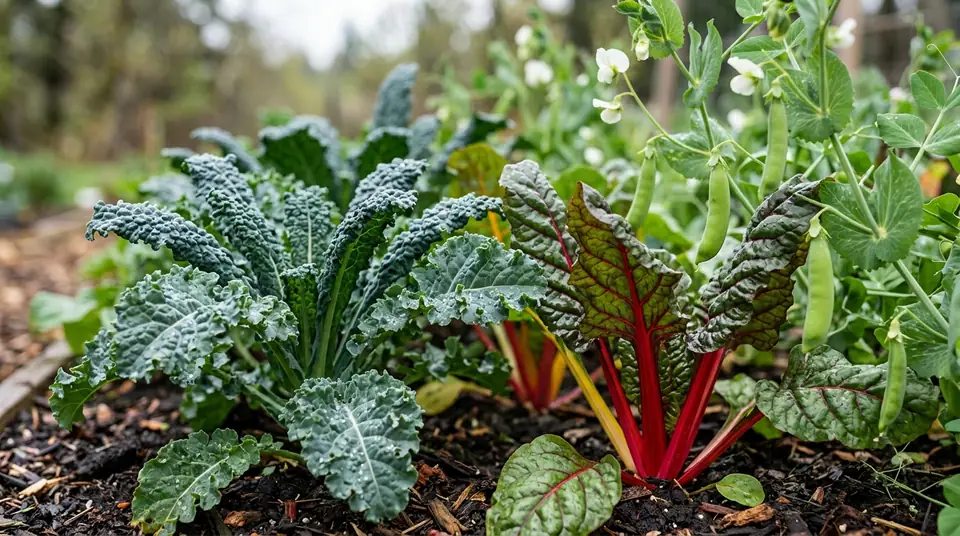
Kale and chard growing in a garden bed with pea plants in the background
Take the brassica family—kale, cabbage, and broccoli (Brassica oleracea). These plants trace their ancestry to wild maritime cliffs along the Mediterranean and Atlantic coasts of Europe. There, they evolved to tolerate cool, moisture-laden air, high salt levels, and persistent coastal winds. This evolutionary lineage is precisely why brassicas thrive across Coastal BC and Vancouver Island. The damp, temperate air and frequent Pacific drizzle mimic their native seaside cliffs, allowing them to accumulate soluble sugars and protective waxes that actually improve their flavor after a light autumn frost.
Conversely, solanaceous crops like tomatoes (Solanum lycopersicum) and peppers (Capsicum annuum) descend from the sun-drenched, frost-free Andean foothills and Mesoamerican lowlands. They require sustained solar radiation and warm root zones. In BC’s interior valleys, such as the Okanagan or Kootenays, high summer daytime temperatures frequently exceed 85°F (29°C) with low relative humidity, perfectly mirroring their ancestral homes. However, attempt to grow these same heirloom beefsteak tomatoes outdoors in Prince Rupert or Haida Gwaii without structural protection, and the high humidity combined with cool summer nights (falling below 50°F / 10°C) will trigger fungal pathogens faster than you can stake them.
Root vegetables like carrots (Daucus carota) and parsnips (Pastinaca sativa) originate from temperate Eurasian meadows, preferring loose, friable soils where their taproots can descend without physical impedance. In the glacial outwash and alluvial floodplains of the Fraser Valley, these crops find a structural paradise, provided the dense, compacted clay layers common to the region are systematically amended with organic matter.
2. Essential Environmental & Care Requirements
Vegetable success in British Columbia hinges on mastering four environmental parameters: thermal accumulation, photoperiod, soil hydrology, and mineral nutrition. Because BC spans USDA Hardiness Zones 3 through 9, your approach to these parameters must be regionally tailored.
Coastal and Island gardeners (Zones 7–9) face mild winters and cool, dry summers, with a frost-free window stretching 180 to 240 days. However, soil temperatures remain uncomfortably cool (below 55°F / 13°C) well into late May, delaying direct-sown warm-season crops. Interior and Northern growers (Zones 3–6) experience a compressed frost-free window of 60 to 120 days, demanding rapid-maturing cultivars and season-extension infrastructure like unheated hoop houses or low tunnels.
Parameter
Optimal Condition
Common Mistake
Why It Matters
Soil pH
6.0 to 6.8 for most vegetables; 6.5–7.0 for brassicas
Ignoring natural acidity in coastal rainforest soils (often pH 4.5–5.5)
Highly acidic soils lock up phosphorus and calcium, causing blossom end rot and stunted root extension.
Soil Hydrology
Free-draining loam with 5%–8% organic matter
Over-watering heavy clay without aeration amendments
Waterlogged root zones lack oxygen, inducing root respiration failure and soil-borne fungal rots like Pythium.
Thermal Accumulation
Minimum soil temp of 60°F (15°C) for solanaceous crops
Planting warm-season crops at the first sign of a sunny spring day
Cold soil arrests phosphorus uptake, halting root development and leaving plants vulnerable to pests.
Solar Exposure
6 to 8 hours of direct, unhindered photosynthetically active radiation (PAR)
Siting gardens in northern shade or beneath heavy evergreen canopies
Insufficient light volume drastically reduces carbohydrate synthesis, crippling fruit set and leaf expansion.
Water management requires specific attention across the province. While the West Coast receives copious winter precipitation (often exceeding 60 inches / 1500 mm annually), summer drought conditions frequently trigger water restrictions between July and September. Installing drip irrigation systems paired with moisture sensors ensures deep, infrequent root watering rather than shallow surface wetting, which encourages shallow root architecture. For gardeners looking to integrate their food production spaces seamlessly with hardscaped property lines, ensuring proper drainage planning is just as critical as selecting disease-resistant cultivars—principles you can explore further in our guide on 15 Best Trees for Driveways That Won't Crack Concrete.
Growing prime-grade vegetables in British Columbia demands strict adherence to chronological planting windows and soil preparation protocols. Here is the field-tested protocol for establishing a high-yield annual vegetable bed in BC's diverse climates.
Site Selection and Soil Profiling: Select a south- or southwest-facing location receiving at least 7 hours of direct sunlight. Test your soil pH using a laboratory-grade kit. If your soil registers below 6.0—common in coastal and interior forest margins—apply calcitic agricultural limestone at a rate of 5 lbs per 100 square feet (2.4 kg per 10 square meters) in early autumn to allow sufficient time for chemical neutralization before spring planting.
Bed Preparation and Structure Modification: Do not till when the soil is wet, as heavy machinery or spade work destroys crumb structure in clay soils. Broadfork the bed to a depth of 12 inches (30 cm) to relieve compaction without inverting soil layers. Incorporate a 2-inch (5 cm) top-dressing of well-rotted cow manure or municipal leaf compost, gently working it into the top 4 inches (10 cm) with a garden rake.
Seed Starting and Indoor Propagation: For long-season crops like tomatoes, peppers, and winter squash, sow seeds indoors 6 to 8 weeks before your region's average last spring frost date. Use a sterile peat-perlite germination mix. Maintain a soil temperature of 70°F to 75°F (21°C to 24°C) using a propagation heating mat. Once true leaves emerge, transplant seedlings into 4-inch (10 cm) pots and place them under full-spectrum LED grow lights for 14 hours daily, positioned 3 inches (7.5 cm) above the canopy.
Hardening Off: Approximately 10 to 14 days before your planned outdoor transplant date, initiate hardening off. Move seedlings outdoors to a sheltered, shaded location for 2 hours on day one, progressively increasing direct sun exposure and wind stress over 10 days to toughen cuticles and cell walls.
Direct Sowing Cool-Season Crops: For hardy crops like carrots, spinach, radishes, and peas, direct-sow outdoors as soon as the soil can be worked in spring—typically late March to mid-April on the coast, and early to mid-May in the interior. Sow carrot seeds at a shallow depth of 0.25 inches (0.6 cm) and space them 1 inch (2.5 cm) apart, firming the soil gently to ensure capillary moisture contact. Keep the seedbed continuously moist with a fine mist until germination occurs within 10 to 14 days.
Transplanting and Spacing: Plant warm-season transplants outdoors only when nighttime ambient temperatures reliably remain above 50°F (10°C) and soil temperatures hit 60°F (15°C). Space indeterminate tomato plants 24 inches (60 cm) apart in rows spaced 36 inches (90 cm) apart. Bury tomato stems up to their first set of true leaves to encourage adventitious root formation along the buried stem.
Nutritional Management (Fertilization): Apply a balanced organic fertilizer rich in nitrogen during the vegetative growth phase (e.g., blood meal or fish hydrolysate at a rate of 1 lb nitrogen per 1,000 square feet). Transition to a high-phosphorus and high-potassium organic amendment (such as bone meal and kelp meal) as soon as flowering commences to support cellular wall integrity and fruit development.
Mulching and Moisture Retention: Apply a 2-inch (5 cm) layer of weed-free straw or shredded leaf mulch around all established plants, leaving a 1-inch (2.5 cm) clearance around stems to prevent collar rot. This suppresses weed germination, buffers soil temperature fluctuations, and drastically reduces moisture evaporation during peak summer dry spells.
💡 Pro-Tip: In British Columbia’s maritime zones, the single best defense against early blight on tomatoes and downy mildew on brassicas is overhead exclusion combined with rigorous crop rotation. Construct a simple PVC-and-polyethylene rain shelter over your tomato beds; keeping the foliage entirely dry during our late-summer coastal mist cycles cuts fungal infection rates by over 70%.
4. Common Problems, Pests & Troubleshooting
British Columbia's unique environmental conditions foster specific pest complexes and physiological disorders that can devastate an unmanaged garden.
Root Maggot Infestation (Delia radicum):
Particularly destructive in coastal and damp interior gardens, root maggots target brassica crops (cabbage, kale, turnips). Adult flies lay eggs in the soil at the base of the stem; hatching larvae burrow downward and chew through root systems, causing wilting and sudden plant collapse.
Remedy: Immediately apply floating row covers at the time of planting, burying the edges securely with soil. For existing infestations, apply beneficial entomopathogenic nematodes (Steinernema carpocapsae) directly to the root zone soil when soil temperatures exceed 50°F (10°C).
Slugs and Snails (Arion species):
Thriving in BC's wet spring conditions, introduced slug species graze voraciously on emerging seedlings, leaving ragged holes and glistening slime trails.
Remedy: Clear all dense organic debris within 3 feet (1 meter) of garden beds to eliminate daytime hiding spots. Apply iron phosphate-based bait pellets around the perimeter of vulnerable crops according to manufacturer directions. For detailed identification and life-cycle management protocols, consult the Royal Horticultural Society pest management guides.
Blossom-End Rot:
A physiological disorder appearing as sunken, dark, leathery patches on the distal end of tomatoes, peppers, and squash fruits. It is caused by a localized calcium deficiency within the fast-growing fruit tissue, typically triggered by erratic soil moisture fluctuations rather than a total lack of calcium in the soil.
Remedy: Maintain consistent, deep soil moisture through drip irrigation and heavy straw mulching. Avoid high-nitrogen fertilizers that spur excessive vegetative growth, which outpaces the plant's ability to translocate calcium to developing fruit clusters. For regional agricultural extension advice on local soil chemistry variations, review resources provided by the British Columbia Ministry of Agriculture.
⚠️ Important Caution: Never compost plant material infected with clubroot (Plasmodiophora brassicae) or late blight (Phytophthora infestans). These resilient pathogens survive standard backyard compost pile temperatures and will reinfect your garden beds the following season. Bag and municipal-dispose of all infected tissues immediately.
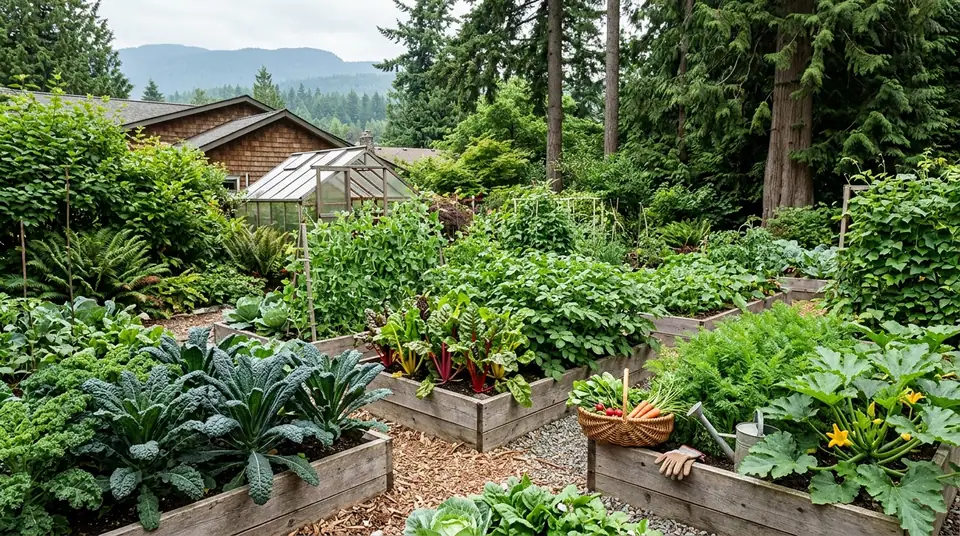
Lush vegetable garden with raised beds of kale, chard, and carrots against a British Columbia forest backdrop
5. Frequently Asked Questions
What are the absolute best vegetables to grow for beginners in British Columbia?
Radishes, bush beans, Swiss chard, sugar snap peas, and kale are the top performers for novice growers across BC. They germinate reliably, tolerate minor soil and watering mistakes, resist early-season frosts down to 28°F (-2°C), and produce heavy yields within short harvest windows (40 to 70 days from seeding).
When should I plant garlic in British Columbia?
Plant hardneck garlic cloves (such as 'Music' or 'Georgia Fire') in mid-to-late October across most of BC. This allows the cloves to establish a strong root system before the ground freezes solid in winter, triggering vigorous green shoot emergence the following early spring for a mid-July harvest. Push individual cloves 2 inches (5 cm) deep with the pointy end facing upward, spaced 6 inches (15 cm) apart.
How do I protect my garden from BC's heavy winter rains and soil leaching?
Do not leave your vegetable beds bare over the winter months. Sow a cover crop mix of winter rye and crimson clover in September, or apply a thick 4-inch (10 cm) blanket of chopped straw and fallen leaves. Cover crops capture residual nitrogen, prevent topsoil erosion from heavy Pacific storms, and feed soil microbial life as they are chopped and turned under in early spring.
Can I grow Mediterranean vegetables like eggplants and peppers in coastal BC?
Yes, but you must modify their microclimate. Grow them inside unheated unvented greenhouses, high tunnels, or against south-facing brick walls that absorb and radiate solar heat through chilly coastal nights. Select early-maturing cultivars bred for northern latitudes, such as 'Gypsy' peppers or 'Patio Baby' eggplants, which set fruit successfully under cooler ambient temperatures.
PlantSavvyWorld is an independent botanical education project. Articles are drafted with AI assistance, then edited and checked against university extension services, botanical garden collections and other published horticultural sources.