

When to Plant Vegetables in Minnesota
Written with AI assistance, edited and checked against horticultural sources.
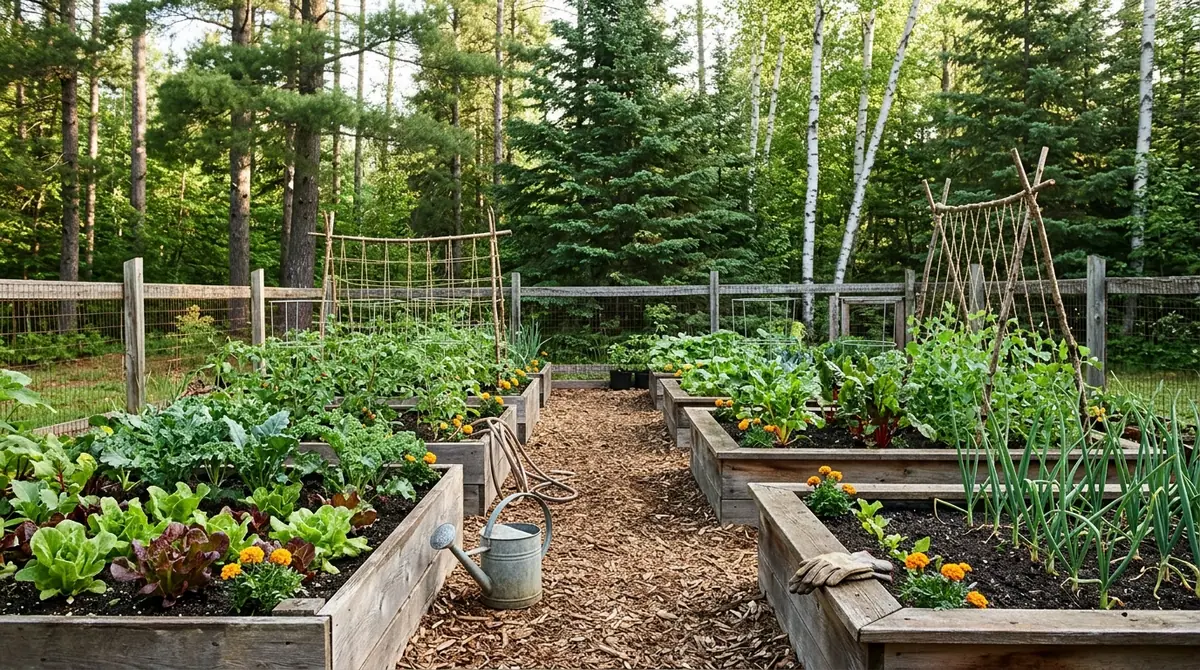
I stood shivering in my Duluth garden plot last May, holding a tray of hardening-off tomato seedlings while a sudden, unseasonal flurry dusted my jacket shoulders in white. The air was a crisp 34°F (1.1°C), and the wind whipping off Lake Superior felt like a mid-winter gale. I learned the hard way years ago that in Minnesota, optimism is not a strategy; frost dates are gospel. Whether you are mapping out a backyard kitchen garden in Rochester or designing a raised-bed layout in the Twin Cities, timing is everything in the North Star State.
1. Botanical Overview & Natural Habitat

Understanding how your vegetables fit into this ecosystem requires looking at their evolutionary origins. Cool-season crops—such as brassicas, root vegetables, and leafy greens—originated in temperate Eurasian and Mediterranean climates where spring and autumn bring damp, cool conditions ranging between 45°F and 65°F (7.2°C to 18.3°C). These plants thrive during Minnesota’s shoulder seasons, bolting or turning bitter only when the fierce July heat arrives.
Conversely, warm-season crops like tomatoes, peppers, and cucurbits evolved in tropical and subtropical zones. They demand soil temperatures consistently above 60°F (15.5°C) and air temperatures soaring past 75°F (23.9°C) to activate their enzymatic pathways. Because our frost-free window ranges wildly from just 90 days in the Arrowhead region up to 160 days in the far southeast, navigating vegetable timing is an exercise in botanical choreography. For a deeper dive into how root systems adapt to strict thermal limits, consult our guide on How Deep Do Pepper Plant Roots Go? Pot Size & Substrate Depth Guide.
2. Essential Environmental & Care Requirements
Success in the Minnesota vegetable garden depends on four non-negotiable environmental pillars: soil temperature, photoperiod, moisture management, and frost management.
Soil preparation must begin as soon as the earth thaws, but resist the urge to till or work wet clay soil; doing so destroys its granular structure, creating concrete-like clods that stunt root growth. Wait until soil moisture reaches "field capacity"—when a handful squeezed into a ball crumbles apart easily under gentle pressure.
| Parameter | Optimal Condition | Common Mistake | Why It Matters |
|---|---|---|---|
| Soil Temperature | 60°F–85°F (15.5°C–29.4°C) for warm crops | Planting warm crops when air feels warm | Seeds rot and roots stall below 50°F (10°C). |
| Soil pH | 6.0 to 6.8 for most vegetables | Neglecting soil testing | Extreme pH locks out essential micronutrients like phosphorus. |
| Sunlight | 6 to 8 hours of direct daily sun | Planting in shaded urban microclimates | Insufficient light halts photosynthesis and reduces yields. |
| Frost Protection | Floating row covers (0.5 oz–1.5 oz/sq yd) | Removing covers too early in spring | Sudden overnight drops below 32°F (0°C) rupture cell walls. |
Photoperiod is another critical variable. Minnesota enjoys up to 15.5 hours of mid-summer daylight, which drives rapid vegetative growth in long-day onions and leafy greens, but can trigger premature bolting in cilantro and spinach as the summer solstice approaches.
💡 Pro-Tip: Always keep a few yards of floating row cover on hand. In Minnesota, a clear, windless midnight sky in late May can radiate heat away from the soil so rapidly that a 38°F (3.3°C) evening forecast plunges into a destructive 30°F (-1.1°C) frost pocket at ground level.
3. Step-by-Step Cultivation, Feeding & Propagation
Getting your timing right requires splitting your planting calendar into three distinct generational waves. Follow this structured roadmap to sequence your crops from early spring through the autumn freeze.
- Calculate Your Local Frost Windows: Reference the University of Minnesota Extension Yard and Garden guidelines for your specific county to pinpoint your average last spring frost date, which typically ranges from May 1 to May 31.
- Sow Cool-Season Crops (4–6 Weeks Before Last Frost): Direct sow radishes, spinach, kale, and peas into soil when temperatures hit 40°F (4.4°C). Plant seeds at a depth of 0.5 to 1 inch (1.25 to 2.5 cm).
- Start Warm-Season Indoor Seeds (6–8 Weeks Before Planting Out): Start tomatoes, peppers, and eggplants indoors under high-intensity grow lights maintained for 14–16 hours daily. Keep ambient room temperatures at 70°F–75°F (21.1°C–23.9°C).
- Harden Off Seedlings (7–10 Days Before Transplanting): Gradually introduce your indoor-started transplants to outdoor conditions by placing them in a sheltered, shady spot for 1 hour on day one, slowly increasing sun exposure and wind duration over a week.
- Transplant Warm-Season Crops (1–2 Weeks After Last Frost): Plant your warm-season crops outdoors only when evening lows reliably stay above 50°F (10°C). Space tomato starts 24 to 36 inches (61 to 91 cm) apart, burying them deep up to their first true leaves to encourage adventitious root formation. If you are working with vine crops, timing the transition is just as critical; read our detailed breakdown on When to Transplant Cucumber Seedlings: Stop Root Shock & Boost Growth.
- Execute Fall Second-Sowings (Late July to Early August): Clear out spent spring brassicas and replant seeds for a robust autumn harvest of carrots, beets, and loose-leaf lettuce that will taste sweeter after experiencing light autumn frosts.
4. Common Problems, Pests & Troubleshooting
Minnesota’s unique climate creates specific vulnerabilities for vegetable growers. Recognizing symptoms early saves your harvest.
- Damping-Off Disease: Caused by soil-borne fungi (Pythium or Rhizoctonia) attacking young seedlings at the soil line, causing them to pinch and topple over. Solution: Ensure maximum airflow with oscillating fans, use sterile seed-starting mix, and avoid over-watering.
- Blossom-End Rot: A sunken, black leathery patch on the bottom of tomatoes and peppers caused by irregular calcium uptake, often triggered by inconsistent soil moisture levels during hot July dry spells. Solution: Maintain even soil moisture through drip irrigation and heavy organic mulching; avoid high-nitrogen fertilizers that spur fast, soft growth.
- Flea Beetles: Tiny, jumping beetles that riddle early brassica leaves with hundreds of tiny "shot-hole" punctures. Solution: Cover emerging cool-season crops immediately with fine insect netting (mesh size < 1mm) until plants are large enough to outgrow damage.
- Early and Late Blight: Fungal pathogens that thrive in Minnesota’s humid late-summer storm cycles, causing dark concentric rings on leaves and rapid plant collapse. Solution: Prune lower foliage up to 18 inches (45 cm) from the ground to prevent soil splash, water at the base of plants in the morning, and apply copper-based fungicides preventatively if persistent rain is forecasted.
⚠️ Important Caution: Never apply synthetic pesticides or heavy chemical fertilizers to vegetable gardens when pollinators are actively foraging. Always apply treatments at dusk to protect native bees and beneficial predatory insects.

5. Frequently Asked Questions
When can I safely plant tomatoes outside in Minnesota?
You can safely plant tomatoes outside 1 to 2 weeks after your region's average last spring frost date, typically ranging from mid-May in the Twin Cities to early June in northern zones like the Iron Range. Ensure soil temperatures at a 4-inch (10 cm) depth have reached a consistent 60°F (15.5°C) and nighttime air temperatures stay above 50°F (10°C).
What vegetables can I plant earliest in Minnesota spring?
The absolute earliest vegetables to plant are cold-hardy crops like spinach, radishes, peas, kale, and onion sets. These can be direct-sown into garden beds as soon as the soil can be worked in April, when soil temperatures reach 40°F (4.4°C). They tolerate light freezes down to 28°F (-2.2°C) without missing a beat.
How do you protect a garden from an unexpected late freeze?
Cover your vegetable beds with old bedsheets, burlap, or commercial floating row cloths anchored securely with stones or bricks before sunset to trap ground heat. For individual prized plants like large heirloom tomatoes, invert five-gallon plastic buckets over them overnight, removing the covers promptly the next morning once temperatures rise above freezing.
Can I grow a fall vegetable garden in Minnesota?
Yes, absolutely. By mid-to-late July, plant a second wave of cool-season crops including carrots, beets, broccoli, and spinach. The descending autumn temperatures and shorter days stimulate these plants to concentrate sugars in their tissues, often yielding crisper, sweeter flavors than their spring counterparts before the hard freeze sets in by October.
Related Guides
- When to Plant Tomatoes in Minnesota
- Homegrown Vegetables That Save the Most Money
- Vegetables for Ontario
- Scary Vegetables for Halloween
- Best Vegetables to Grow in Apartment Balcony Gardens
📋 Table of Contents ▼ Click to expand
Tags:
Keep reading
🌿 Related Plants You Might Like






PlantSavvyWorld
Editorial team
PlantSavvyWorld is an independent botanical education project. Articles are drafted with AI assistance, then edited and checked against university extension services, botanical garden collections and other published horticultural sources.