

Homegrown Vegetables That Save the Most Money
Written with AI assistance, edited and checked against horticultural sources.
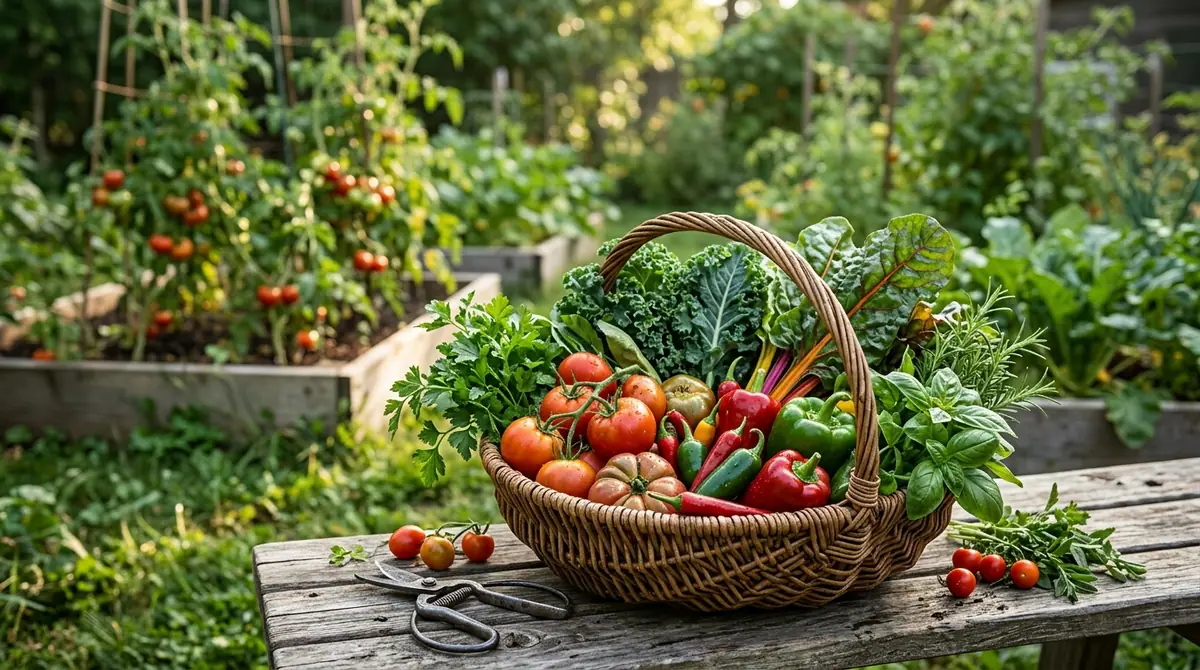
The grocery store charges a massive markup for water, transit time, and cold-storage degradation. When the right crops like Genovese basil and crisp bell peppers are grown at home instead of bought at the supermarket—where a single plastic-wrapped bundle of organic basil costs $3.99 and two bell peppers cost more than five dollars combined—return on investment rivals high-performing equities, turning a bag of compost and a $3 packet of seeds into hundreds of dollars of fresh produce.
1. Botanical Overview & Natural Habitat
To understand which crops maximize your financial return, we must look at plant morphology and resource allocation. High-yield, money-saving vegetables generally fall into two botanical categories: indeterminate annuals with prolonged fruit-bearing habits, and perennial or leaf-harvest crops where the vegetative tissue—not the seed or fruit—is consumed.
Take Solanum lycopersicum (the tomato), specifically indeterminate varieties. In its native Central and South American habitat, the wild tomato is a scrambling perennial vine that continuously sets flowers and fruit along its sprawling stems until frost or drought intervenes. By staking and training an indeterminate cultivar, we trick the plant into mimicking this endless loop of production. Instead of getting one flush of fruit like a determinate bush variety, a single $4 seedling can yield 15 to 20 lbs (6.8 to 9 kg) of high-value fruit over a 120-day harvest window, replacing grocery store tomatoes that routinely cost $4 to $6 per pound.
Similarly, leaf crops such as Beta vulgaris var. cicla (Swiss chard) and various Brassica oleracea cultivars demonstrate extreme harvest efficiency. When you harvest outer leaves while leaving the apical meristem intact, the plant rapidly redirects photosynthetic energy upward, generating continuous vegetative growth. This contrasts sharply with root crops like carrots or turnips, which occupy valuable garden space for 70 to 90 days only to yield a single, unrepeatable harvest. If you live in regions with short growing seasons, timing these crops correctly is vital; for northern growers, consult resources like When to Plant Vegetables in Minnesota to optimize your frost-free windows. For Canadian gardeners dealing with similar continental climates, specialized guides like Vegetables for Ontario offer precise regional adaptations.
2. Essential Environmental & Care Requirements
Maximizing your financial return requires maximizing biological output per square foot, which means providing strict environmental optimization. High-value crops like tomatoes, peppers, and dense leafy greens demand precise resource management regarding light, soil temperature, and moisture.
Light is your primary engine. Most high-dollar crops require a minimum of 6 to 8 hours of direct, unfiltered sunlight daily. Photosynthesis efficiency plummets when light levels drop, directly reducing your harvest weight. Soil temperature is equally critical for seed germination and root activation; warm-season crops like peppers will stall indefinitely if planted when soil temperatures sit below 60°F (15.5°C).
| Parameter | Optimal Condition | Common Mistake | Why It Matters |
|---|---|---|---|
| Soil pH | 6.0 – 6.8 | Ignoring pH testing | Nutrient lockout reduces yield by up to 40% |
| Watering | 1 to 1.5 inches (2.5 to 3.8 cm) weekly | Shallow, daily sprinkling | Encourages weak, shallow root development |
| Sunlight | 6–8 hours direct sun daily | Planting in partial shade | Slows vegetative growth and delays fruiting |
| Spacing | Varies by crop (e.g., 18-24 in / 45-60 cm for tomatoes) | Overcrowding | Triggers fungal disease and nutrient competition |
💡 Pro-Tip: To drastically reduce your water bill while maximizing crop yields, bury unglazed terra cotta ollas (or simple clay pots with their drainage holes plugged) directly into your raised beds between your high-value plants. Fill them with water weekly; the moisture seeps slowly through the porous clay straight to the root zone, eliminating evaporation loss and cutting your water consumption by up to 70%.
3. Step-by-Step Cultivation, Feeding & Propagation
To turn a modest packet of seeds into a cascading harvest that slashes your grocery bills, you must follow a disciplined, chronological protocol. Here is the step-by-step framework I use in my own design practice for establishing high-yield, money-saving vegetable beds.
- Site Selection and Soil Preparation: Clear all perennial weeds from a bed receiving at least 8 hours of daily sun. Incorporate 3 inches (7.6 cm) of aged compost into the top 8 inches (20 cm) of soil to establish a rich crumb structure with a target pH between 6.0 and 6.8.
- Precision Sowing or Transplanting: Start high-value seeds indoors in plug trays 6 to 8 weeks before your last spring frost. If direct-sowing crops like leaf lettuce or bush beans, sow seeds at a depth of 0.5 inches (1.3 cm) with seed-to-seed spacings adjusted for mature widths.
- Hardening Off: Move indoor-started seedlings outdoors over a 10-day period, gradually increasing their exposure to wind and direct sunlight to prevent transplant shock.
- Planting and Initial Mulching: Transplant seedlings into the garden beds once nighttime lows reliably exceed 55°F (12.8°C). Dig planting holes twice as wide as the root ball, bury tomato stems up to their first true leaves to encourage adventitious root growth, and apply a 2-inch (5 cm) layer of clean straw or shredded bark mulch to suppress weed competition.
- Targeted Irrigation and Nutrition: Install drip irrigation or soaker hoses beneath your mulch layer. Deliver 1.2 inches (3 cm) of water weekly, adjusting upward during peak summer heat waves. Side-dress heavy feeders (like indeterminate tomatoes and peppers) with organic compost or a balanced, slow-release organic fertilizer every 21 days once flowering commences.
- Continuous Harvesting: Implement cut-and-come-again harvesting protocols for leafy greens and herbs, never removing more than one-third of the total plant mass at any single harvest. Stake and prune indeterminate vines weekly to maximize airflow and direct energy into heavy fruit clusters.
⚠️ Important Caution: Never use municipal green waste compost or untested manure unless you can verify its origin. Persistent synthetic herbicides (such as aminopyralid) routinely survive the composting process and can permanently distort, stunt, or kill high-value solanaceous crops like tomatoes and peppers for multiple seasons.
For authoritative guidelines on organic soil management and pest controls, consult the Royal Horticultural Society (RHS) vegetable growing portal. For localized climate matching and extension data, the University of Minnesota Extension Yard and Garden offers peer-reviewed insights on frost dates and crop selection.
4. Common Problems, Pests & Troubleshooting
Even the most carefully managed high-value garden will encounter biological pressures. Recognizing symptoms early prevents total crop failure and protects your financial investment.
- Blossom-End Rot: This physiological disorder appears as a sunken, leathery black patch on the bottom of tomatoes, peppers, and squash. It is rarely caused by a permanent lack of calcium in the soil; rather, it stems from irregular watering habits that disrupt calcium uptake. Maintain consistent soil moisture using the olla technique described above, and avoid cultivating too aggressively near the root zone.
- Aphid Infestations: Soft-bodied green or black aphids cluster on the tender new growth of lettuce, chard, and brassicas, sucking sap and excreting sticky honeydew that fosters sooty mold. Blast colonies off with a sharp jet of cold water from your hose nozzle, and introduce companion plants like sweet alyssum or dill to attract predatory hoverflies and parasitic wasps.
- Fungal Leaf Spots (Blights): High humidity and overhead watering frequently trigger early blight or powdery mildew on cucurbits and solanoids. Prune away all lower leaves touching the soil surface (up to 18 inches / 45 cm high) to maximize ground clearance and air circulation. Always water at the base of the plant in the early morning hours rather than wetting the foliage at dusk.
- Mammal Herbivory: Deer, rabbits, and groundhogs can wipe out a $50 investment in tender brassica greens overnight. For comprehensive, humane strategies to protect your financial harvest from vertebrate pests, review the methods outlined in How to Keep Rabbits Out of the Garden 5 Humane Solutions That Work.

5. Frequently Asked Questions
Which single vegetable provides the absolute highest financial return on investment?
Indeterminate cherry tomatoes consistently deliver the highest financial return. A single packet of seeds or a cheap starter plant, when given proper support, sunlight, and regular water, can produce upwards of 20 lbs (9 kg) of fruit over a single season. At standard retail prices for organic cherry tomatoes, that output easily translates to $80 to $100 worth of produce from an area measuring less than two square feet.
Are perennial vegetables worth the space if I am trying to save money immediately?
Perennials like asparagus, rhubarb, and perennial globe artichokes are exceptional long-term investments, but they do not save money immediately. Asparagus beds require a two- to three-year establishment window before you can harvest substantial yields. If your goal is immediate grocery bill reduction, prioritize fast-turnaround annuals like leaf lettuce, Swiss chard, bush beans, and radishes while establishing perennials in a separate, dedicated bed.
How much money can an average backyard vegetable garden realistically save in a season?
A well-maintained 100-square-foot (9.3-square-meter) raised bed garden focusing on high-value crops (herbs, salad greens, tomatoes, peppers, and summer squash) can easily yield $400 to $600 worth of produce in a single growing season. After subtracting the initial one-time costs of soil amendments, seeds, and drip lines, your net savings in subsequent years will scale even higher as your soil improves organically.
Can I save seeds from my money-saving crops to plant next year?
Yes, provided you grow open-pollinated or heirloom varieties rather than F1 hybrids. Seeds saved from heirloom cherry tomatoes, bush beans, lettuce, and peppers will grow true to type, dropping your seed budget to precisely zero for future growing seasons. Always allow the fruit to reach full, overripe maturity before extracting, fermenting (in the case of tomatoes), and thoroughly drying the seed stock in a cool, dark environment.
Related Guides
- Money Tree New Leaves Drooping
- Why is My Money Tree Drooping
- Why is My Money Tree Dropping Leaves
- Why is My Money Tree Leaves Drooping
- When to Plant Vegetables in Minnesota
- Best Vegetables for British Columbia
📋 Table of Contents ▼ Click to expand
Tags:
Keep reading
🌿 Related Plants You Might Like






PlantSavvyWorld
Editorial team
PlantSavvyWorld is an independent botanical education project. Articles are drafted with AI assistance, then edited and checked against university extension services, botanical garden collections and other published horticultural sources.