

Scary Vegetables for Halloween
Written with AI assistance, edited and checked against horticultural sources.
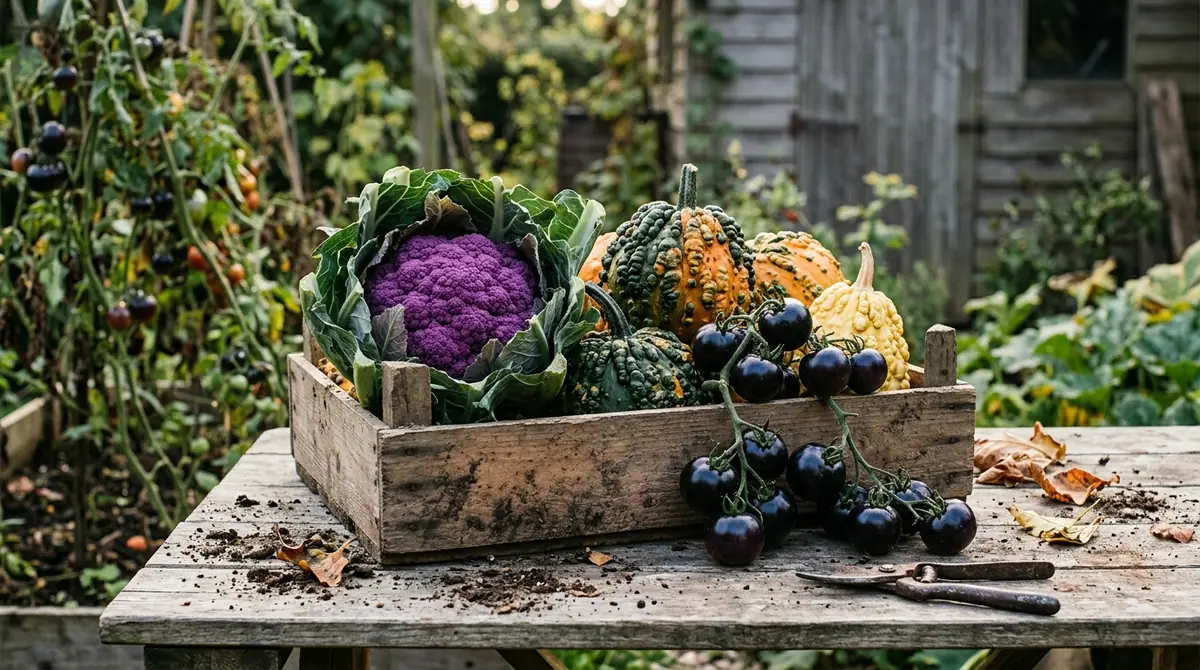
Last October, while wrestling with a tangled vine of Trichosanthes cucumerina that had wrapped its weeping, blood-red-striped fruit around my deck railing, a trick-or-treater gasped and dropped his candy bag right into my mulch beds. That’s the magic of growing "scary" vegetables for Halloween. I spend my year pushing plant aesthetics past the conventional tomato-and-pepper routine into the delightfully macabre. When the crisp autumn air hits, nature provides a bizarre cast of characters—bloody fruits, skeletal pods, and ghost-white tubers—that turn an ordinary patch of dirt into a living cabinet of curiosities.

1. Botanical Overview & Natural Habitat
To grow successfully weird plants, you first need to understand where their unsettling adaptations evolved in the wild.
Take the Romanesco Broccoli (Brassica oleracea var. botrytis), a fractal masterpiece native to the Mediterranean basin. Its logarithmic spiral heads are a natural expression of the Fibonacci sequence, evolving as a dense defensive rosette to shed heavy winter rains while maximizing surface area for photosynthesis in mild, damp coastal climates.
Then there is the Snake Gourd (Trichosanthes cucumerina), hailing from the tropical rainforests of South and Southeast Asia. In its native understory, this cucurbit dangles pale, undulating, serpentine fruits down from high tree canopies. The elongated, twisting shape acts as camouflage against arboreal herbivores, mimicking sleeping tropical vipers.
The Black Spanish Round Radish (Raphanus sativus), a European heirloom dating back to at least the 16th century, evolved its rough, jet-black skin and searing interior bite as a chemical defense mechanism against subterranean pests in cold-temperate soils.
Finally, White Ghost Pumpkin cultivars (Cucurbita pepo) originate from Mesoamerican domesticates, where pale mutations were selected over centuries. In nature, stark lack of chlorophyll in the rind often exposes the fruit to sunscald, but agricultural selection preserved these ghostly, waxy canvases for their striking visual presence and superior storage longevity.
2. Essential Environmental & Care Requirements
Creating a successful Halloween-themed edible landscape requires balancing native growth habits with the demands of autumn display.
| Parameter | Optimal Condition | Common Mistake | Why It Matters |
|---|---|---|---|
| Soil pH | 6.0 – 6.8 for brassicas and cucurbits | Planting in highly acidic soil (<5.5) | Low pH restricts calcium uptake, causing blossom end rot in pumpkins and clubroot in brassicas. |
| Temperature | 60°F–85°F (15°C–29°C) for growth; cool down to 50°F (10°C) for ripening | Exposing developing fruits to hard frosts (-2°C) | Sudden freezes rupture cell walls in high-water content gourds and pumpkins, turning them to mush. |
| Sunlight | Full sun, minimum 6–8 hours daily | Shading out trailing vines | Insufficient light halts the sugar production needed to harden rinds and deepen dark skin pigments. |
| Watering | 1 to 1.5 inches (2.5 to 3.8 cm) per week, deeply | Frequent, shallow surface watering | Shallow moisture encourages surface root growth, making plants prone to drought stress and wind tipping. |
💡 Pro-Tip: When growing White Ghost Pumpkins or pale gourds, place a small square of untreated cedar shingle or plastic mesh underneath each developing fruit once it reaches softball size. This elevates the bottom off the damp soil, preventing soil-borne fungal pathogens from marring that pristine, ghostly white skin before Halloween night.
3. Step-by-Step Cultivation, Feeding & Propagation
Growing these strange specimens requires precise timing. To have peak-condition scary vegetables ready by October 31, you must work backward from your region's average first frost date.
- Calculate the Timeline: Determine your local first frost date. For long-season vining crops like Snake Gourds and Ghost Pumpkins, count backward 110 to 120 days to find your spring sowing window (typically late April to mid-May). For cool-season brassicas like Romanesco, count backward 90 to 100 days for a mid-summer sowing that matures during chilly autumn nights.
- Prepare the Bed: Clear a well-draining planting site and amend the top 12 inches (30 cm) of soil with a 3-inch (7.6 cm) layer of aged compost and balanced organic fertilizer (such as a 5-10-10 blend). Ensure the soil temperature has reached a consistent 65°F (18°C) before direct-sowing seeds.
- Sow and Space: Plant seeds at a depth of 1 inch (2.5 cm) for large cucurbits and 0.5 inches (1.2 cm) for radishes and brassicas. Space Ghost Pumpkin mounds 6 feet (1.8 meters) apart, and Romanesco seedlings 18 inches (45 cm) apart in rows spaced 30 inches (76 cm) apart.
- Train and Support: Install sturdy arbors or cattle-panel tunnels for vining crops like Snake Gourds. Suspend maturing, heavy gourds in slings made from old pantyhose or breathable netting tied securely to the overhead support structure to prevent stem breakage.
- Manage Nutrients and Moisture: Feed heavy-feeding cucurbits with a nitrogen-rich liquid organic fertilizer every 14 days until flowering begins. Once female blossoms appear, switch to a low-nitrogen, high-phosphorus and potassium fertilizer to encourage robust fruit set and strong cellular walls. Maintain consistent soil moisture to prevent root cracking in radishes and blossom drop in gourds.
- Harvest and Cure: Harvest pumpkins and ornamental gourds when the stems turn woody and the rind resists a thumbnail indentation, leaving a 3-inch (7.6 cm) stem attached. Cure them in a well-ventilated space at 80°F to 85°F (27°C to 29°C) for 10 days to harden the protective outer skin.
⚠️ Important Caution: Never puncture or carve ornamental pumpkins and gourds while they are still attached to the living vine. Doing so creates an open wound that immediately invites bacterial soft rot (Erwinia carotovora) and fruit flies, destroying your display before Halloween arrives.
4. Common Problems, Pests & Troubleshooting
Unusual garden plants often attract unique pest pressures and environmental disorders.
Powdery mildew (Podosphaera xanthii) is the perennial nemesis of ornamental cucurbits and snake gourds. It appears as a white, powdery fungal residue on leaves, cutting off photosynthesis and causing premature defoliation. Combat this by applying a preventative spray of organic neem oil or a solution of 1 tablespoon of baking soda mixed with 1 teaspoon of liquid dish soap per gallon of water every 7 to 10 days, ensuring you spray the undersides of leaves.
Squash bugs (Anasa tristis) and vine borers (Melittia cucurbitae) can decimate vining spooky plants overnight. Scout the undersides of leaves weekly for clusters of bronze, oval eggs and scrape them off manually. If you notice sudden wilting of a single vine runner accompanied by a small sawdust-like frass pile at the base of the stem, use a sterile razor blade to slit the stem lengthwise, remove the white grub borer, and bury the wounded stem in moist soil to encourage adventitious rooting. For comprehensive management strategies on garden pests, consult the University of Minnesota Extension Yard and Garden.

5. Frequently Asked Questions
Can you actually eat a snake gourd, or are they just for decoration?
Yes, snake gourds are entirely edible and form a staple in South Asian cuisine when harvested young—typically when they are under 16 inches (40 cm) long and tender. At this immature stage, their flesh has a crisp texture similar to summer squash or cucumber. However, if left on the vine until maturity, they become fibrous, woody, and intensely bitter, making them useful solely for decoration and startling your neighbors.
Why are my white ghost pumpkins turning yellow or orange?
Ghost pumpkins owe their stark color to a recessive genetic mutation that blocks the expression of carotenoid pigments (which produce orange and yellow). However, intense direct UV sunlight and high temperatures can trigger residual carotenoid synthesis, causing the white skin to blush yellow or orange. To preserve their ghostly hue, shield maturing fruits from harsh afternoon sun by tucking them beneath surrounding foliage or draping light-filtering 30% shade cloth over the patch.
How long will carved scary vegetables last outside on a porch?
Once carved, a pumpkin or strange root vegetable typically begins to degrade within 3 to 5 days depending on ambient humidity and temperature. To extend their lifespan outdoors, submerge the carved vegetable in a solution of 1 teaspoon of household bleach per gallon of water for 3 minutes to kill surface mold spores, dry thoroughly, and coat all exposed cut edges with petroleum jelly to lock in internal moisture.
Are black Spanish radishes spicy enough to scare your tastebuds?
Decidedly so. Black Spanish radishes possess an extremely sharp, pungent bite due to high concentrations of glucosinolates, chemical defense compounds that produce a fiery, horseradish-like kick. If eaten raw, they will clear your sinuses instantly, though roasting them transforms their flavor into a sweet, earthy, and deeply complex side dish that counters their intimidating outer appearance.
Related Guides
- Homegrown Vegetables That Save the Most Money
- When to Plant Vegetables in Minnesota
- Vegetables for Ontario
- Best Vegetables to Grow in Apartment Balcony Gardens
- Best Vegetables for British Columbia
📋 Table of Contents ▼ Click to expand
Tags:
Keep reading
🌿 Related Plants You Might Like

PlantSavvyWorld
Editorial team
PlantSavvyWorld is an independent botanical education project. Articles are drafted with AI assistance, then edited and checked against university extension services, botanical garden collections and other published horticultural sources.