

Best Flowering Shrubs for Texas
Written with AI assistance, edited and checked against horticultural sources.
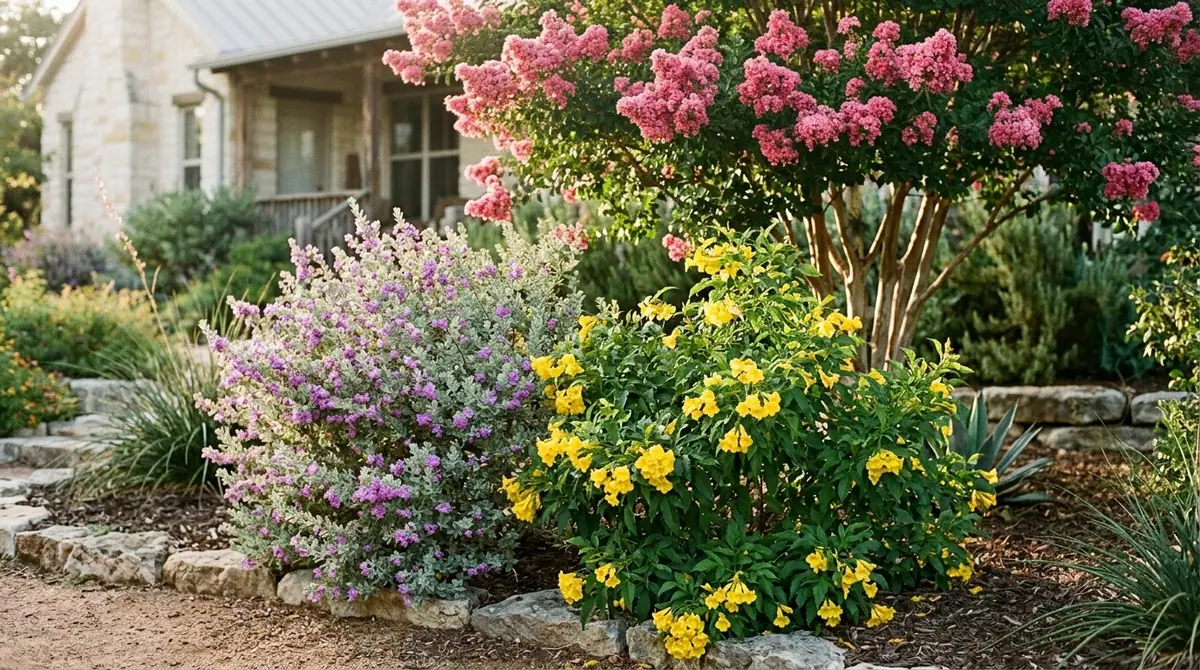
Sweat was dripping off my nose and pooling on the caliche soil of my Austin trial garden when I finally realized why my imported hydrangeas were staging a terminal revolt. It was July 2011, the air temperature was hovering relentlessly at 103°F (39°C), and no amount of midday hand-watering was going to coax moisture through a sun-baked clay hardpan that felt like a brick. That afternoon marked the end of my horticultural hubris and the beginning of a deep, abiding romance with Texas-adapted flowering shrubs. When you garden in the Lone Star State, you aren't just arranging plants; you are negotiating with extremes, from freezing winter polar vortexes dipping down to 0°F (-18°C) in the Panhandle to scorching, rainless 105°F (40°C) summers in the Rio Grande Valley.
1. Botanical Overview & Natural Habitat
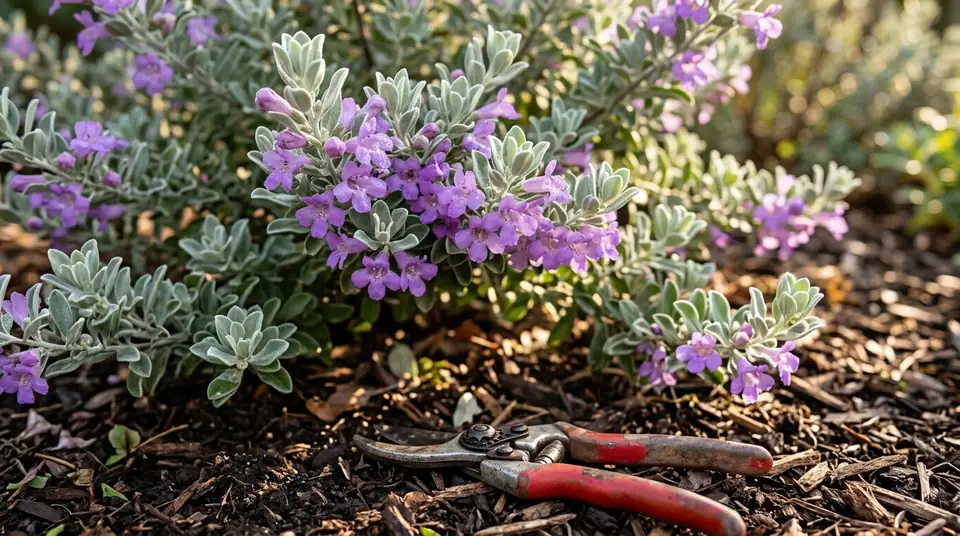
Let's examine five powerhouse flowering shrubs that thrive across these challenging landscapes:
- Esperanza (Tecoma stans): A powerhouse native to South Texas and northern Mexico. In USDA Zones 8b through 11, it grows as a woody perennial or small shrub reaching 6 to 10 feet (1.8 to 3.0 m) tall. It produces blazing yellow, trumpet-shaped flowers continuously from May until the first frost. It relishes full baking sun and tolerates reflective heat from brick walls effortlessly.
- Texas Sage (Leucophyllum frutescens): Also known as the barometer bush, this native beauty produces clouds of purple, lavender, or pink flowers in response to changes in atmospheric humidity preceding rain. It grows 4 to 8 feet (1.2 to 2.4 m) tall with silvery-gray foliage that reflects intense solar radiation. It demands high alkalinity and zero heavy summer moisture.
- Pomegranate (Punica granatum): Cultivated in Texas for centuries, this multi-stemmed deciduous shrub reaches 8 to 12 feet (2.4 to 3.6 m) in height. It features brilliant, crinkled orange-red blossoms from April through June, followed by edible fruit in autumn. It is exceptionally cold-hardy down to USDA Zone 7 and thrives in virtually any well-drained soil.
- Flame Acanthus (Anisacanthus quadrifidus var. wrightii): A native Texan gem that forms a loose, rounded shrub 3 to 4 feet (0.9 to 1.2 m) high and wide. From June to October, it blazes with tubular orange-red flowers that act as a magnet for hummingbirds and butterflies. It shrugs off prolonged drought and thrives in caliche, clay, and sand alike.
- Oakleaf Hydrangea (Hydrangea quercifolia): For the shaded, acidic soils of East Texas and sheltered urban courtyards, this native southeastern US shrub delivers. Growing 6 to 8 feet (1.8 to 2.4 m) tall, it features magnificent 12-inch (30 cm) panicles of white flowers that age to pink, coupled with brilliant burgundy-red autumn foliage.
💡 Pro-Tip: When designing a water-wise border alongside a home foundation or driveway, pair deep-rooted shrubs like Texas Sage with structural elements. If you are also working on perimeter plantings, check out our guide on 15 Best Trees for Driveways That Won't Crack Concrete to ensure your canopy selections complement your low-water shrub layout.
2. Essential Environmental & Care Requirements
Understanding the physiological tolerances of Texas shrubs prevents root rot, chlorosis, and sudden dieback. Most native and adapted species require rapid drainage above all else.
| Parameter | Optimal Condition | Common Mistake | Why It Matters |
|---|---|---|---|
| Soil pH | 6.5 to 8.2 (Central/West); 5.5 to 6.5 (East) | Planting acid-loving shrubs in alkaline caliche | High pH locks out iron, causing severe foliar chlorosis and stunting. |
| Irrigation | Deep, infrequent soaking every 14 to 21 days once established | Frequent, shallow daily sprinkling | Shallow watering encourages surface root mats that scorch when the topsoil bakes. |
| Sunlight | 6 to 8+ hours of direct un-shaded solar radiation | Planting sun-lovers in heavy, damp shade | Reduced light leads to leggy growth, powdery mildew, and zero flower bud set. |
| Drainage | Percolation rate of 1 to 2 inches (2.5 to 5.0 cm) per hour | Heavy clay basins that pool water after storms | Extended root saturation starves roots of oxygen, triggering fatal fungal pathogens. |
⚠️ Important Caution: Never amend individual planting holes with rich organic compost when planting native Texas shrubs into heavy clay soil. This practice creates a "bathtub effect," trapping irrigation water inside the amended pocket and rotting the root system before it can establish outward into native soil.
3. Step-by-Step Cultivation, Feeding & Propagation
Establishing a flowering shrub in Texas requires precision timing. The ideal planting window is mid-autumn (late October through November) when soil temperatures remain warm enough for root elongation, but air temperatures are cool enough to prevent transpirational stress.
Here is the precise installation protocol I use across my design projects:
- Excavate the Site: Dig a shallow, saucer-shaped hole 3 times as wide as the nursery container, but strictly equal to or slightly shallower than the root ball depth—leaving the top 1 to 2 inches (2.5 to 5.0 cm) of the root crown sitting above the surrounding grade.
- Condition the Root Ball: Gently score the outer 0.5 inches (1.3 cm) of the root mass with a sharp knife in four vertical quadrants if the plant is root-bound, teasing outward any circling roots to prevent girdling.
- Position and Backfill: Set the shrub in the center of the excavated basin. Backfill using only the native unamended soil, tamping down gently with your hands—never your boots—to eliminate large air pockets while preserving critical soil macropores.
- Initial Watering: Apply 5 gallons (19 liters) of water slowly around the root zone to settle the soil particles naturally around the root hairs.
- Apply Mulch Layer: Spread a 3-inch (7.6 cm) blanket of shredded native hardwood bark across the root zone, pulling the mulch back a full 2 inches (5 cm) away from direct contact with the main stem to prevent collar rot.
- Establish an Irrigation Schedule: Provide 1 inch (2.5 cm) of water via drip irrigation or hand-watering every 7 days for the first 30 days, tapering down gradually over 90 days until the plant is fully established.
4. Common Problems, Pests & Troubleshooting
Even tough-as-nails Texas shrubs encounter stressors. Diagnosing issues quickly saves plants from irreversible decline.
- Foliar Yellowing with Green Veins (Chlorosis): This is nearly always iron deficiency triggered by high soil pH locking up micronutrients, common in Central and West Texas limestone soils. Correct this by applying a chelated iron soil drench, or by consulting the Texas A&M AgriLife Extension Service for local soil testing kits to determine exact nutrient imbalances.
- Cottony White Masses on Stems (Mealybugs or Cottony Cushion Scale): Sucking insects multiply rapidly during hot, dry summer stretches. Blast them off with a high-pressure stream of water from a garden hose, followed by an application of horticultural insecticidal soap applied strictly at dawn or dusk to avoid leaf scorch.
- Sudden Wilt and Leaf Drop (Root Rot / Phytophthora): Caused by poor drainage during periods of torrential autumn rainfall. If the stems feel spongy near the soil line and the bark slips off easily, the plant cannot be saved. Remove it immediately and improve site drainage with raised beds or expanded shale before replanting. For deep botanical insights into plant pathology, refer to resources provided by the Lady Bird Johnson Wildflower Center.
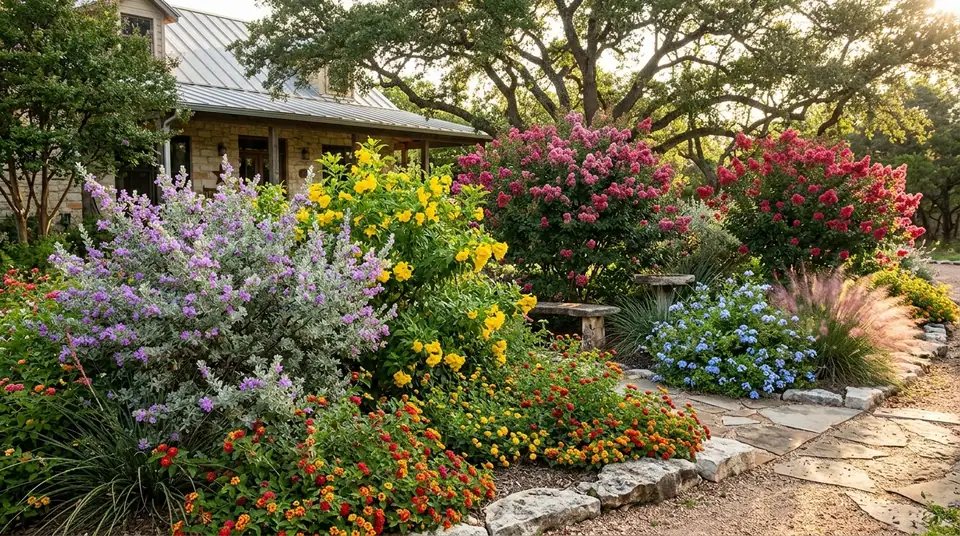
Flowering shrubs like purple sage and yellow bells blooming in a sunny Texas garden
5. Frequently Asked Questions
What are the best drought-tolerant flowering shrubs for Central Texas?
Texas Sage (Leucophyllum frutescens), Esperanza (Tecoma stans), and Flame Acanthus (Anisacanthus quadrifidus var. wrightii) rank among the absolute best. Once established through their first growing season, these species survive exclusively on natural rainfall during typical years, blooming profusely through the harshest summer heatwaves.
When should I prune flowering shrubs in Texas?
Pruning timing depends entirely on the plant's bloom cycle. Prune spring-blooming shrubs (such as bridal wreath spiraea or redbuds) immediately after they finish flowering in late spring so you do not snip away next year's flower buds. Prune summer- and autumn-blooming shrubs (such as Esperanza or vitex) in late winter (February) just as new vegetative growth begins to break dormancy.
How do I protect my flowering shrubs from a Texas freeze?
Before an arctic express drops temperatures below 20°F (-6°C), water the root zones deeply; moist soil retains significantly more ambient heat than bone-dry earth. Apply a thick 4-inch (10 cm) layer of organic mulch over the root crown, and drape breathable frost cloth or burlap over sensitive shrubs, securing the fabric to the ground with heavy stones or pins rather than plastic, which conducts freezing temperatures directly to foliage.
Which flowering shrubs grow best in heavy Texas clay soil?
Pomegranate, Texas Sage, Crape Myrtles, and Caddo Maple-leaf viburnum handle heavy, sticky alkaline clay soils exceptionally well, provided the landscape topography allows surface water to drain away without pooling around the root crowns for more than 24 hours after a heavy downpour.
Related Guides
- Lilies Not Flowering
- Cherry Trees in Texas
- Lavender Plant Texas
- Japanese Maple in Texas
- Do Peonies Grow in Texas
📋 Table of Contents ▼ Click to expand
Tags:
Keep reading
🌿 Related Plants You Might Like






PlantSavvyWorld
Editorial team
PlantSavvyWorld is an independent botanical education project. Articles are drafted with AI assistance, then edited and checked against university extension services, botanical garden collections and other published horticultural sources.