

What Zone is South Carolina for Planting
Written with AI assistance, edited and checked against horticultural sources.
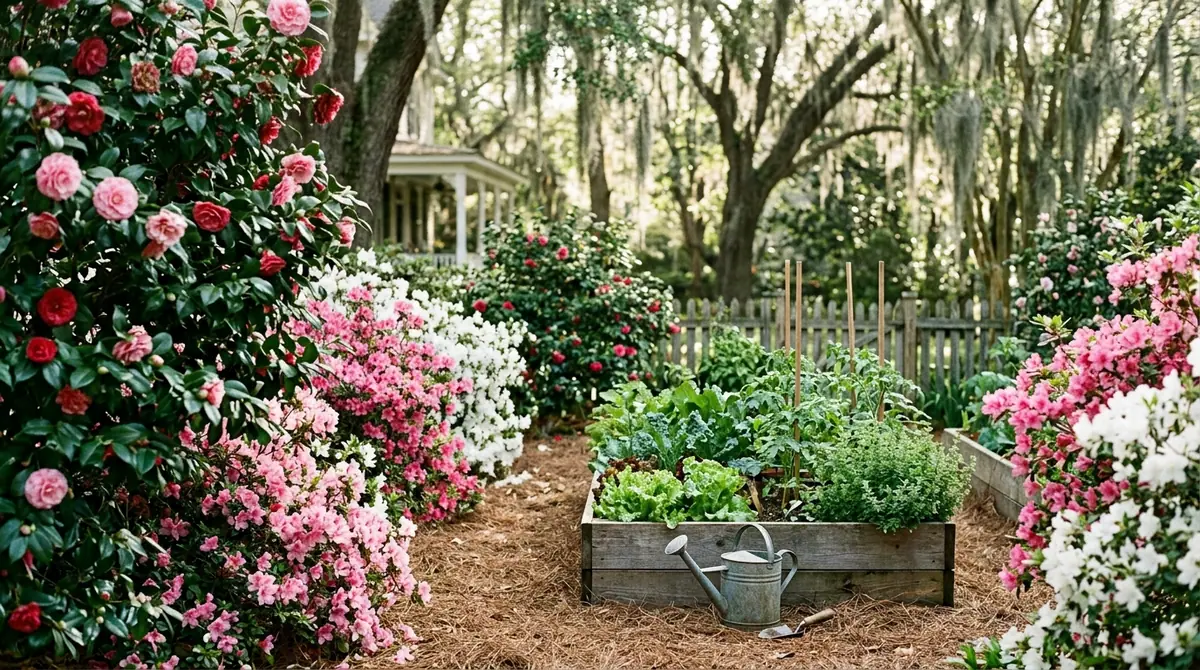
Standing in a historic Charleston garden Across many seasons I watched a gardener lose an entire hedge of prized Japanese camellias because she treated her courtyard like Zone 9 while her property sat squarely in a frost-pocket Zone 8a. That afternoon taught me a fundamental lesson about gardening in the Palmetto State: South Carolina is an ecological mosaic where microclimates shift dramatically within a single zip code, making a generalized answer to "what zone is South Carolina for planting" dangerously incomplete.
1. Botanical Overview & Natural Habitat

In the Upstate (including Greenville and Spartanburg), you are typically operating in USDA Zones 7a through 7b, where winter lows dip to 0°F to 10°F (-17.8°C to -12.2°C). Soil profiles here are heavily weathered red clay derived from ancient metamorphic rocks, often high in iron oxides and low in organic matter. Native understory plants like the Cornus florida (flowering dogwood) and Cercis canadensis (eastern redbud) thrive in this rolling topography by developing deep taproots to anchor against seasonal erosion.
Moving down through the Midlands (Columbia and surrounding counties), the hardiness classification shifts primarily to Zone 8a and 8b, with winter lows ranging from 10°F to 20°F (-12.2°C to -6.7°C). This region represents the ancient coastline, meaning soils transition from sticky clay to sandy loam, locally known as the Sandhills. Here, native species such as Pinus palustris (longleaf pine) and Opuntia humifusa (eastern prickly pear cactus) have adapted to fast-draining, nutrient-poor substrates by prioritizing drought tolerance over lush foliage.
Finally, the Lowcountry (Charleston, Beaufort, and the Sea Islands) basks in USDA Zone 9a to 9b warmth, where winter temperatures rarely drop below 20°F to 25°F (-6.7°C to -3.9°C). The native habitat is defined by tidal marshes, maritime forests dominated by Quercus virginiana (live oak), and high humidity. While the mild winters allow for an extended growing season exceeding 240 frost-free days per year, the frequent presence of sandy, highly saline soils introduces unique horticultural hurdles that demand careful species selection.
2. Essential Environmental & Care Requirements
Mastering plant care in South Carolina requires understanding how humidity, precipitation, and soil composition interact across the state's diverse zones. Statewide annual rainfall is generous, averaging 48 to 55 inches (122 to 140 cm), but it is heavily front-loaded in the spring and late summer hurricane season, leaving the late spring and autumn months prone to flash droughts.
| Parameter | Optimal Condition | Common Mistake | Why It Matters |
|---|---|---|---|
| Soil pH | 5.5 to 6.5 for most ornamentals; 4.5 to 5.5 for acid-lovers | Assuming native soil is automatically balanced | Incorrect pH locks out essential micronutrients like iron and phosphorus. |
| Irrigation Depth | 1 to 1.5 inches (2.5 to 3.8 cm) per week via soaking | Frequent shallow sprinkling that wets only the topsoil | Deep watering forces root systems downward, increasing drought resistance. |
| Mulch Application | 2 to 3 inches (5 to 7.6 cm) of organic pine straw or bark | Piling mulch directly against plant stems or tree trunks | Volcanic mulching traps moisture against bark, causing collar rot and pest entry. |
| Fertilizer Timing | Early spring flush and late summer tapering | Heavy nitrogen feeding in late autumn | Late feeding encourages tender new growth that freezes and dies during the first hard frost. |
Sunlight exposure also demands careful calculation. While a full-sun perennial like Echinacea purpurea (purple coneflower) thrives in 6 to 8 hours of direct light in the Upstate, that same plant in the Lowcountry will experience heat stress and leaf scorch if exposed to the blistering afternoon rays between 1 PM and 5 PM. Positioning these plants to receive morning sun and dappled afternoon shade is often the key to survival in Zones 8 and 9.
💡 Pro-Tip: Never rely solely on your USDA hardiness zone when purchasing perennials or shrubs. Always cross-reference your specific location with the American Horticultural Society (AHS) Heat Zone Map. South Carolina regularly experiences 90 to 120 days above 86°F (30°C), which will fry plants rated for cold northern climates even if the winter temperature does not kill them.
3. Step-by-Step Cultivation, Feeding & Propagation
Establishing a resilient garden bed in South Carolina begins with proper soil preparation, especially when breaking ground in the heavy red clay of the Piedmont or the nutrient-leached sands of the Coastal Plain. Follow this proven protocol for planting container-grown perennials, shrubs, and ornamental trees.
- Site Assessment and Excavation: Dig a planting hole that is 2 to 3 times wider than the root ball, but maintain the exact same depth as the container. Never dig deeper than the root ball, as settling will submerge the root flare and suffocate the plant.
- Soil Amendment Strategy: For clay soils, amend the backfill with 20% to 30% compost to improve aeration. For sandy coastal soils, incorporate organic peat or well-rotted manure to boost moisture retention.
- Root Pruning and Placement: Gently tease out circling roots from the outer edges of the root ball to prevent girdling. Center the plant in the hole, ensuring the top of the root flare sits 0.5 to 1 inch (1.3 to 2.5 cm) above the surrounding grade to account for natural settling.
- Initial Watering and Settling: Fill the hole halfway with the backfilled soil mixture, tamp down gently to eliminate air pockets, and water thoroughly until saturated. Finish filling the hole, and apply a final, deep irrigation cycle.
- Mulching and Protection: Apply a 3-inch (7.6 cm) layer of shredded hardwood bark or pine straw across the root zone, keeping the mulch 2 inches (5 cm) away from direct contact with the main stem.
- Establishment Irrigation Schedule: Provide 1 inch (2.5 cm) of water every 5 to 7 days for the first 8 weeks. Reduce frequency once new root tips penetrate the native surrounding soil.
For further reading on regional planting calendars and extension-backed recommendations, consult the Clemson University Home & Garden Information Center, which provides invaluable localized resources for Palmetto State gardeners. Additionally, tracking your specific county adjustments can be refined using the USDA Plant Hardiness Zone Map tool.
4. Common Problems, Pests & Troubleshooting
South Carolina’s long, humid growing season creates a high-pressure environment for fungal pathogens and sap-sucking insects. Powdery mildew (Erysiphe spp.) and black spot (Diplocarpon rosae) are ubiquitous on roses, crape myrtles, and dogwoods during the damp, warm spring months. Preventative spacing to maximize air circulation and watering strictly at the base of the plant—avoiding overhead sprinkler irrigation—will drastically reduce fungal spore germination.
Root rot caused by Phytophthora species is another major adversary, particularly in heavy clay soils that hold standing water after torrential tropical downpours. If leaves begin to yellow, drop prematurely, or exhibit branch dieback despite adequate soil moisture, dig down to inspect the roots. Healthy roots are firm and light-colored; infected roots are dark, mushy, and slough off easily when touched.
⚠️ Important Caution: Do not apply heavy chemical insecticides indiscriminately during the peak summer months. High temperatures combined with synthetic oils or certain copper-based fungicides can cause severe phytotoxicity, burning plant foliage and stripping beneficial insect populations, including pollinators and predatory mites.

5. Frequently Asked Questions
What planting zone is Columbia, South Carolina?
Columbia is located in USDA Zone 8a, with average annual minimum winter temperatures ranging from 10°F to 15°F (-12.2°C to -9.4°C). Gardeners here experience hot summers and moderate winters, making it ideal for a mix of southern warm-season annuals and hardy perennials.
When should I plant tomatoes in South Carolina?
In the Upstate (Zone 7), plant warm-season crops like tomatoes outdoors after the last spring frost, typically between mid-April and early May. In the Lowcountry (Zone 9), you can plant as early as mid-March. A second autumn planting can also be established in July for a fall harvest before the first November frost.
Can I grow tropical plants outdoors year-round in South Carolina?
True tropicals like standard banana trees (Musa spp.) and certain palms can survive year-round in the Lowcountry (Zones 8b–9b) if given a heavy winter mulch blanket. However, in the Upstate (Zones 7a–7b), these same plants must be treated as annuals, grown in containers, or brought indoors before autumn temperatures drop below 40°F (4.4°C).
Why are the leaves on my gardenia turning yellow in South Carolina soil?
Gardenias require acidic soil with a pH between 5.0 and 6.0. Much of South Carolina's soil can fluctuate or lean neutral, locking out iron availability. This iron chlorosis presents as bright yellow leaves with distinct green veins; correct it by applying elemental sulfur or chelated iron fertilizer according to soil test recommendations.
Related Guides
- What Zone is South Carolina in for Planting
- What Zone is South Carolina for Plants
- When to Plant Pumpkins in South Carolina
- When to Plant Pumpkins in North Carolina
- What Hardiness Zone is Sacramento
📋 Table of Contents ▼ Click to expand
Tags:
Keep reading
🌿 Related Plants You Might Like


PlantSavvyWorld
Editorial team
PlantSavvyWorld is an independent botanical education project. Articles are drafted with AI assistance, then edited and checked against university extension services, botanical garden collections and other published horticultural sources.