

How to Pick the Perfect Ears of Corn
Written with AI assistance, edited and checked against horticultural sources.
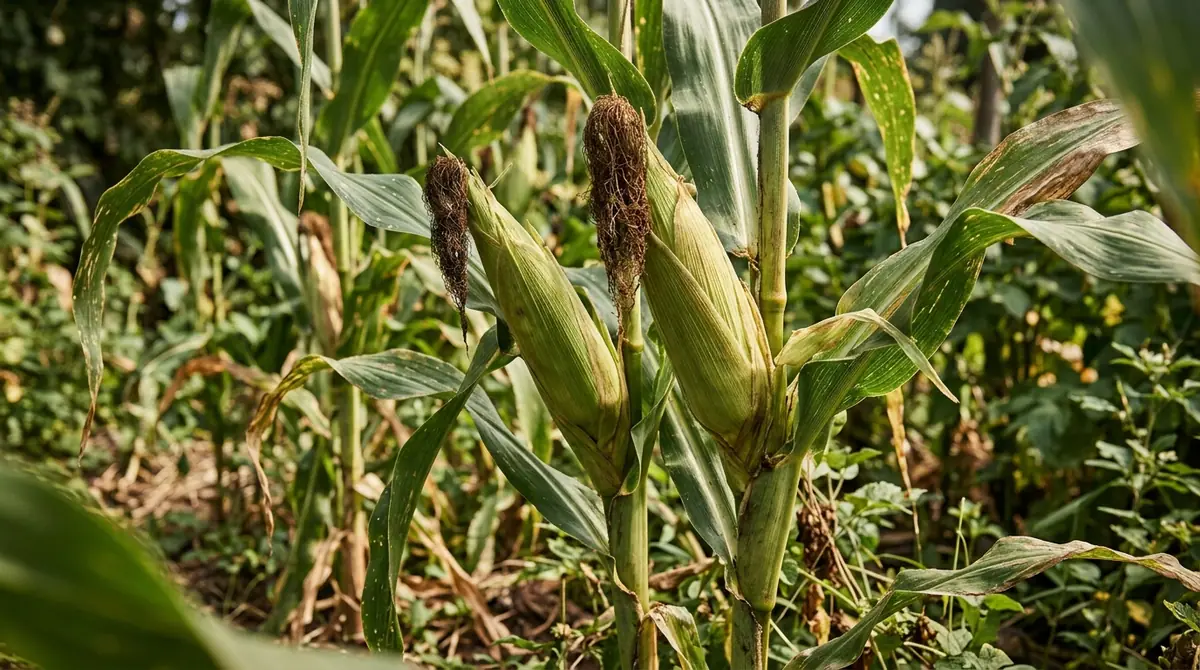
1. Botanical Overview & Natural Habitat

Botanically, a corn plant is a monoecious marvel, meaning it bears separate male and female flowers on the same individual plant. The male inflorescence is the tassel, bursting forth at the apex of the stalk to release millions of lightweight pollen grains into the wind. The female inflorescence is the ear shoot, positioned lower down in the leaf axils. Each individual potential kernel on the cob is attached to a long, slender style and stigma, universally known as silk. For pollination to succeed and produce a fully filled-out ear, every single strand of silk must capture a grain of wind-blown pollen.
Modern sweet corn cultivars are genetic mutations selected specifically for their inability to convert sugar into starch as quickly as field corn. While field corn converts its sugars rapidly after pollination, sweet corn (su, se, and sh2 gene types) retains higher sugar concentrations within the endosperm of the kernel for a longer window. However, this window closes fast once the ear reaches peak maturity. Understanding the plant's internal anatomy—from the moisture content of the vascular bundles to the development of the milky endosperm—is the foundation of harvesting at the exact right moment.
2. Essential Environmental & Care Requirements
Growing and timing the harvest of sweet corn requires strict adherence to environmental thresholds. Because Zea mays originated in tropical Mesoamerica, it is a warm-season C4 plant with exceptionally high photosynthetic efficiency, demanding intense sunlight and consistent moisture to fuel rapid kernel development.
| Parameter | Optimal Condition | Common Mistake | Why It Matters |
|---|---|---|---|
| Soil Temperature | 60°F to 85°F (15°C to 29°C) | Planting too early in cold soil below 50°F (10°C) | Seeds rot in damp soil; surviving seedlings exhibit severe phosphorus deficiency and stunted growth. |
| Soil pH | 6.0 to 6.8 | Neglecting soil acidity; letting pH drop below 5.5 | Acidic soils lock up vital macronutrients like nitrogen and calcium, leading to yellowing lower leaves. |
| Sunlight | Full sun, minimum 6–8 direct hours daily | Planting in partial shade under tree canopies | Inadequate light reduces photosynthesis, resulting in small, poorly pollinated, barren ears. |
| Watering | 1 to 1.5 inches (2.5 to 3.8 cm) per week | Irregular watering alternating between drought and flood | Drought stress during silking causes incomplete pollination, missing kernel rows, and aborted tip development. |
For deep scientific insights into crop nutrient uptake, refer to the University of Illinois Extension Guide.
💡 Pro-Tip: Corn is a heavy nitrogen feeder. To maximize kernel plumpness without burning the fibrous root system, side-dress your plants with organic blood meal or composted manure precisely when the stalks reach knee-high status—roughly 18 to 24 inches (45 to 60 cm) tall—and again just as the tassels begin to emerge.
3. Step-by-Step Cultivation, Feeding & Propagation
To harvest ears of corn that reach absolute perfection, your cultivation strategy must support the plant from seed to harvest. Because corn relies on wind pollination rather than bees, layout geometry is just as important as soil preparation.
- Site Selection and Soil Preparation: Choose a flat, open patch receiving unobstructed sunlight. Amend the top 8 inches (20 cm) of soil with well-rotted compost to improve drainage and nutrient retention.
- Block Planting Configuration: Never plant corn in a single long, straight row. Plant in blocks of at least 4 short rows spaced 30 inches (76 cm) apart to ensure reliable wind-driven cross-pollination among neighboring stalks.
- Sowing the Seed: Direct-sow seeds after all danger of spring frost has passed and soil temperatures consistently exceed 60°F (15°C). Plant seeds 1 to 1.5 inches (2.5 to 3.8 cm) deep, spacing them 8 to 10 inches (20 to 25 cm) apart within the rows.
- Thinning: Once seedlings reach 4 to 6 inches (10 to 15 cm) in height, thin them out so plants stand roughly 10 inches (25 cm) apart. Do not pull out adjacent roots; instead, snip the unwanted seedlings at the soil line with sterile shears.
- Irrigation Management: Provide 1.5 inches (3.8 cm) of water weekly via drip irrigation or soaker hoses. Increase watering volume by 50% during the critical silking and tassel-shedding window to prevent kernel abortion.
- Harvest Timing Assessment: Monitor the ears 18 to 24 days after the first silks appear. Check for moisture by piercing a kernel with your fingernail; harvest immediately when the fluid is milky rather than watery or pasty.
⚠️ Important Caution: Never peel back the husk entirely to check for ripeness while the ear is still attached to the living stalk. Opening the husk prematurely exposes the developing kernels to fungal spores, corn earworms, and moisture loss, ruining the entire ear before it reaches prime harvest condition.
4. Common Problems, Pests & Troubleshooting
Even with pristine environmental management, corn growers frequently encounter biological challenges that threaten the harvest. Identifying these issues early is vital to saving your crop.
- Incomplete Pollination (Skipped Kernels): If you peel back the husk and find missing, patchy kernels along the cob, the cause is usually poor wind pollination. This happens when plants are grown in single, isolated rows or when extreme heat causes pollen to desiccate before it lands on the silks. Fix this in future seasons by planting in dense blocks and ensuring consistent irrigation during the hot summer afternoons.
- Corn Earworm (Helicoverpa zea): These notorious caterpillars tunnel directly through the silk channel to feed on the developing kernels at the tip of the ear. To combat them organically, apply a few drops of food-grade mineral oil directly to the silk channel using a medicine dropper about 4 to 5 days after silks emerge, once the silk begins to turn brown.
- Lodging (Stalk Toppling): High winds combined with saturated soil can cause tall corn stalks to lean or snap entirely at the base. Prevent lodging by hilling soil 3 to 4 inches (7.5 to 10 cm) high around the base of the stalks when they reach knee height, which encourages the development of strong, stabilizing brace roots.
- Smut (Ustilago maydis): This fungal pathogen creates grotesque, silvery-gray galls filled with black spores on kernels, stalks, and tassels. Cut out and destroy infected galls immediately before they rupture and release spores into your garden soil. For regional disease tracking and management strategies, consult the Royal Horticultural Society Plant Pest Advice.

5. Frequently Asked Questions
How do you know when corn is ready to pick without peeling it?
Look at the silks protruding from the top of the ear. When they turn a deep brown, dry out, and feel brittle to the touch, the ear is approaching maturity. Next, gently squeeze the outer husk; the ear should feel plump, firm, and completely filled out to the very tip. Finally, use your thumb to puncture a single kernel through the husk. If the escaping liquid is watery, it is immature; if it is thick and doughy, it is overripe. Perfect corn yields a creamy, milky fluid when punctured.
What time of day is best to harvest sweet corn?
Harvest your sweet corn strictly at dawn, before the morning sun warms up the plants. During the cool night hours, the corn plant converts sugars stored in the stalks into the kernels, maximizing sweetness. Once sunlight hits the leaves, the plant rapidly converts those precious sugars into tasteless starches. Harvesting at first light ensures you capture the highest possible sugar content.
How long does sweet corn last after picking?
Sweet corn has an extraordinarily fast respiration rate and begins losing its sugar content the moment it is severed from the stalk. Modern supersweet (sh2) varieties hold their sugar slightly longer—up to 7 to 10 days—while traditional standard sugary (su) varieties lose up to 50% of their sugar within the first 24 hours at room temperature. For peak flavor, cook or refrigerate the ears immediately after harvest. Keep unhusked ears in plastic bags in the coldest part of your refrigerator at 34°F to 38°F (1°C to 3°C) for no more than 3 to 5 days.
Can you pick corn if the silks are still green?
No. Green silks indicate that the pollination process is either just beginning or still ongoing. The silks are the vascular conduits that carry pollen grains down to each individual unfertilized ovule on the cob. If you harvest an ear while the silks are vibrant green and limp, the interior cob will be severely under-developed, consisting of tiny, watery blanks rather than plump, sweet kernels. Wait until the silks have withered, turned brown, and dried out completely.
Related Guides
- When to Pick Poblano Pepper
- When to Pick Pumpkins Off Vine
- When to Pick Snap Peas
- When to Pick Peas
- When to Pick Pea Pods
📋 Table of Contents ▼ Click to expand
Tags:
Keep reading
🌿 Related Plants You Might Like






PlantSavvyWorld
Editorial team
PlantSavvyWorld is an independent botanical education project. Articles are drafted with AI assistance, then edited and checked against university extension services, botanical garden collections and other published horticultural sources.