

How Much Sun Do Tomatoes Need
Written with AI assistance, edited and checked against horticultural sources.
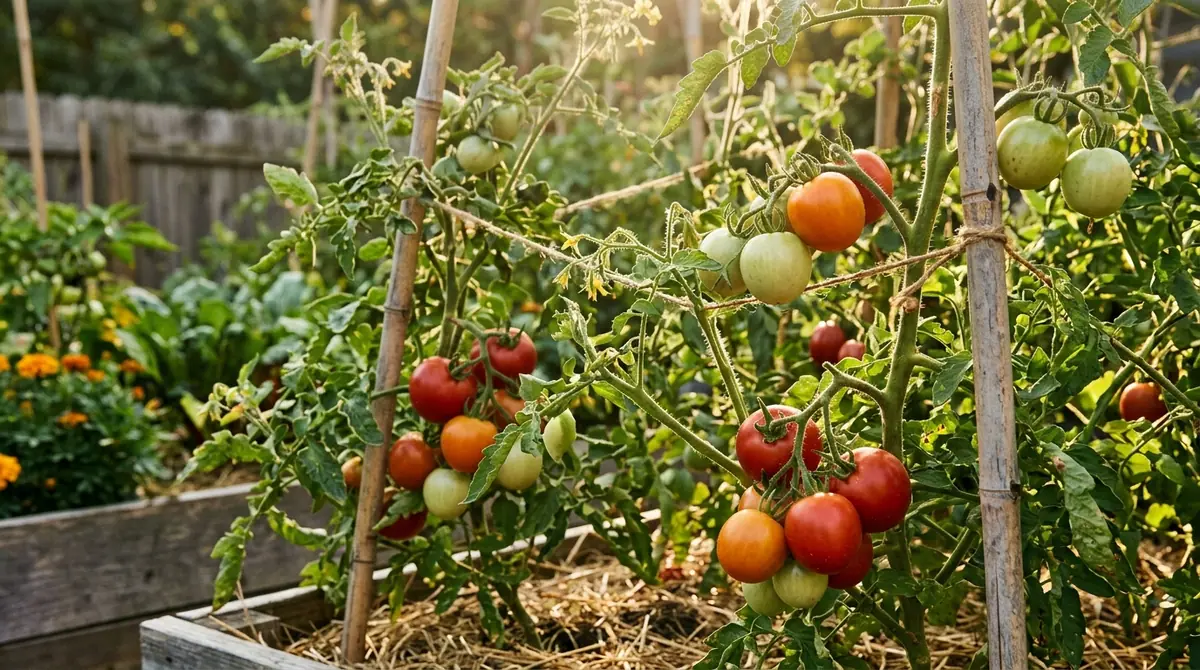
When 'Cherokee Purple' tomato lower leaves curl and drop while fruit clusters stall at the size of golf balls, the culprit is often a shadow cast by an arbor placed three feet too far west. Tomatoes keep a strict internal ledger of solar energy, and when cut off from their energy source, every biological process grinds to a halt, which is why understanding the absolute truth about how much sun tomatoes need and how to engineer a landscape to provide it is essential.
1. Botanical Overview & Natural Habitat

From a physiological perspective, tomatoes are obligate sun-worshippers. They are C3 plants that evolved a high-capacity photosynthetic apparatus designed to process intense radiation. When a tomato leaf captures a photon, that light energy drives the photolysis of water within the chloroplasts, generating ATP and NADPH. These energy-carrying molecules are immediately funneled into the Calvin cycle to convert atmospheric carbon dioxide into glucose.
Without a minimum of 6 to 8 hours of direct, unfiltered sunlight daily, this chemical engine stutters. The plant cannot synthesize enough carbohydrates to fuel both vegetative expansion and fruit development. The consequences are structural: cell walls become thin and elastic, internodes elongate into weak, spindly stems (a condition known as etiolation), and the plant diverts its meager energy reserves away from flowering. Furthermore, insufficient light disrupts the synthesis of lycopene and beta-carotene, the vital carotenoids responsible for the deep red and orange pigmentation in ripe fruit. If you want sweet, richly flavored tomatoes, you cannot cheat the sun requirement.
2. Essential Environmental & Care Requirements
Meeting the light requirement is only half the battle; tomatoes demand a synchronized suite of environmental conditions to thrive. Let’s break down the exact parameters you need to maintain for maximum yields.
| Parameter | Optimal Condition | Common Mistake | Why It Matters |
|---|---|---|---|
| Sunlight | 8 to 10 hours of direct sun daily | Planting in partial shade or morning-only light | Limits photosynthesis, reducing fruit set and sugar accumulation |
| Soil Temperature | 60°F to 85°F (15°C to 29°C) | Transplanting into cold spring soil below 55°F (13°C) | Stunts root expansion and locks out phosphorus uptake |
| Soil pH | 6.2 to 6.8 slightly acidic | Ignoring soil chemistry; allowing pH to drop below 5.5 | Triggers aluminum toxicity and reduces micronutrient availability |
| Watering Volume | 1 to 2 inches (2.5 to 5 cm) weekly | Frequent, shallow surface sprinkling | Encourages shallow root systems vulnerable to drought and heat |
| Ambient Air Temp | 70°F to 85°F (21°C to 29°C) | Allowing sustained daytime temps above 95°F (35°C) | Causes pollen to sterilize and flower drop |
Temperature and light work in tandem. When daytime temperatures consistently hover between 70°F and 85°F (21°C to 29°C) under full solar radiation, transpiration rates remain balanced. This pulls calcium-laden water up from the soil to support the expanding cell walls of developing fruit. If temperatures spike above 90°F (32°C) while the plant is in direct sun, the plant may close its stomata to conserve moisture, temporarily halting photosynthesis and leading to blossom drop.
Soil moisture is equally critical. To support high photosynthetic output, a mature tomato plant requires deep, consistent watering. You should aim for roughly 1 to 2 inches (2.5 to 5 cm) of water per week, delivered directly to the root zone via drip irrigation or soaker hoses. Wet foliage under intense midday sun invites fungal spores to germinate, while dry, compacted soil limits nutrient transport even when sunlight is abundant. For a deeper dive into how moisture and light interact at the earliest stages of plant development, review this guide on Does Basil Need Light to Germinate? Soil Depth & Sprouting Science, which explores seed and seedling environmental triggers.
3. Step-by-Step Cultivation, Feeding & Propagation
Designing a successful tomato patch requires methodical planning from site selection to harvest. Follow this step-by-step protocol to optimize light exposure and structural integrity.
- Site Selection and Solar Mapping: Observe your chosen planting area across a full day. Verify that it receives a minimum of 8 uninterrupted hours of direct sunlight between 8:00 AM and 6:00 PM, avoiding the deep shadows cast by fences, overhangs, or mature deciduous trees.
- Soil Preparation and Amendment: Clear all weeds and debris. Incorporate 3 to 4 inches (7.5 to 10 cm) of aged compost or well-rotted manure into the top 12 inches (30 cm) of soil to improve drainage and microbial activity.
- Trench Planting for Root Vigor: Dig a trench 4 to 6 inches (10 to 15 cm) deep. Pinch off all lower leaves from your tomato transplant, leaving only the top tuft of foliage. Lay the stem horizontally in the trench, bending the top third gently upright. Backfill with soil. This buries the entire lower stem, which will quickly root out and create an anchor system capable of supporting heavy fruit loads.
- Staking and Cage Installation: Install heavy-duty tomato cages or sturdy wooden stakes immediately after planting to prevent accidental root damage later in the season. Tie vines loosely to supports using soft garden twine as they grow.
- Fertilization Schedule: Apply a balanced, low-nitrogen, high-phosphorus organic fertilizer (such as a 5-10-10 blend) at planting time. Side-dress with compost or organic tomato feed every 21 days once the first fruit sets appear to sustain continuous flowering and fruiting.
- Pruning for Airflow and Light Penetration: For indeterminate varieties, selectively pinch out the suckers—the shoots emerging from the V-junction between the main stem and side branches—once they reach 2 to 4 inches (5 to 10 cm) in length. This funnels maximum energy upward and opens the canopy to sunlight.
💡 Pro-Tip: When planning your garden layout, orient your rows running north to south. This ensures that as the sun tracks across the sky from east to west, both sides of every tomato plant receive an equitable share of direct light, eliminating self-shading between adjacent plants.
4. Common Problems, Pests & Troubleshooting
Even with perfect sunlight management, environmental stress and opportunistic pathogens can derail your harvest. Recognizing the early warning signs allows you to intervene before yields suffer.
⚠️ Important Caution: Never overhead-water your tomatoes late in the afternoon or evening. Wet leaves combined with cooling night temperatures create a prime breeding ground for fungal pathogens like early blight (Alternaria solani) and late blight (Phytophthora infestans). Always water at the base of the plant in the early morning hours.
Nutrient deficiencies often mimic light issues. If your upper leaves are pale and stunted while the lower leaves remain green, you may be dealing with sulfur or iron chlorosis, which is frequently exacerbated by cold, poorly drained soils that lock up micronutrients. Conversely, if your plants receive adequate sun and water but develop sunken, dark, leathery patches on the bottom blossom-ends of the fruit, you are looking at blossom-end rot. This physiological disorder is caused by irregular watering fluctuations that interrupt calcium uptake, preventing the plant from distributing calcium efficiently to the distal cells of the fruit, even if the soil test shows adequate mineral levels.

5. Frequently Asked Questions
Can tomatoes grow in 4 hours of sun?
Yes, tomatoes can survive in 4 hours of direct sun, but they will not thrive. Plants grown in partial shade produce significantly fewer flowers, experience delayed fruit set, and yield smaller, less flavorful tomatoes. For an acceptable harvest, you must provide a minimum of 6 hours of direct sunlight, with 8 to 10 hours being the gold standard.
Do cherry tomatoes need less sun than large beefsteak varieties?
No, all tomato varieties—from tiny currants and sweet cherries to massive heirloom beefsteaks—require full sun to synthesize sugars and complete their life cycle. While cherry tomato plants may produce a few more fruit under subpar light conditions due to their natural vigor, the fruit quality, sugar content, and overall yield will still drop drastically if they receive less than 6 to 8 hours of direct sun.
What happens if tomatoes get too much sun?
While tomatoes are sun-loving plants, extreme, unshaded solar radiation combined with high temperatures above 95°F (35°C) can cause sunscald. This manifests as whitish, papery, or leather-like patches on the sides of the fruit exposed to the most intense afternoon rays. Maintaining a healthy leaf canopy through minimal pruning can shade the fruit and prevent this damage.
Can I grow tomatoes indoors with artificial lights?
Absolutely. To successfully grow tomatoes indoors, you must mimic the intensity and duration of an outdoor summer day. Use high-output LED grow lights positioned 12 to 18 inches (30 to 45 cm) above the plant canopy, and set a digital timer to provide 12 to 16 hours of light daily. You will also need to manually pollinate the blossoms using a small electric toothbrush or gentle fan, as there are no bees indoors to shake the pollen loose. For further reading on plant physiological responses to controlled lighting environments, reference the Royal Horticultural Society.
Related Guides
- Epsom Salt for Peppers and Tomatoes
- Cluster Tomatoes
- When to Transplant Tomatoes
- When is Too Late to Plant Tomatoes
- When Do You Plant Tomatoes in Texas
📋 Table of Contents ▼ Click to expand
Tags:
Keep reading
🌿 Related Plants You Might Like






PlantSavvyWorld
Editorial team
PlantSavvyWorld is an independent botanical education project. Articles are drafted with AI assistance, then edited and checked against university extension services, botanical garden collections and other published horticultural sources.