

5 Simple Ways to Start Living a Permaculture Lifestyle
Written with AI assistance, edited and checked against horticultural sources.
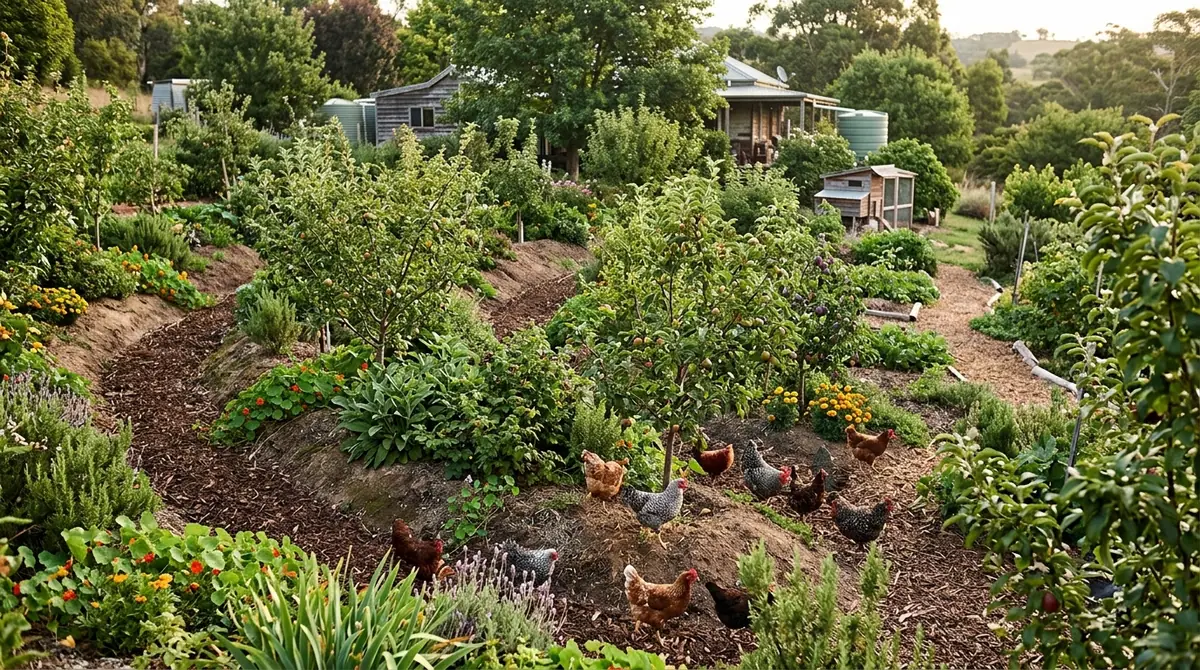
I stood knee-deep in a failed monoculture of imported fescue grass, watching a sudden 1.5-inch (3.8 cm) cloudburst wash the precious topsoil straight off my slope and into the municipal storm drain. That was the exact morning I stopped fighting my landscape and started learning from it. Permaculture is not an aesthetic trend or a weekend gardening hobby; it is a design science rooted in ecological mimicry. When you align your yard with natural forest edges, riparian zones, and successional grasslands, nature stops being an adversary and becomes your primary labor force.
1. Botanical Overview & Natural Habitat
To design a self-sustaining system, you must first understand how wild plant communities assemble themselves. Natural habitats do not feature single-species blocks or bare soil. Instead, they organize in complex vertical layers—canopy, understory, shrub layer, herbaceous layer, ground cover, rhizosphere (root zone), and vertical climbers.
In a permaculture landscape, we replicate these structural niches to maximize solar harvesting and biodiversity. We mimic the forest edge, which is biologically the most productive zone in nature because it captures the transition between open sunlight and shaded canopy.
[ Canopy Layer ] (Standard fruit/nut trees)
 │
[ Understory ] (Dwarf fruit trees)
 │
[ Shrub Layer ] (Berries, currants)
 │
[ Herbaceous ] (Comfrey, culinary herbs)
 │
[ Ground Cover ] (Strawberries, creeping thyme)
 │
[ Rhizosphere ] (Root crops like garlic, ginger)
By planting polycultures instead of monocultures, you build ecological redundancy. If a pest targets one species in a 5-plant guild, the surrounding species compensate, shading the soil and maintaining root exudates that feed the local soil microbiome. We design ecosystems that cycle their own fertility, capture their own water, and resist pest pressures naturally.
2. Essential Environmental & Care Requirements
Permaculture shifts management from high-input maintenance (weekly mowing, chemical fertilization, overhead irrigation) to low-input observation. However, setting up these systems requires precise tuning to your local climate and microclimates.
You must map your site's zones (frequency of human use) and sectors (energies moving through the site, like wind, sun, and fire risk). A zone 1 kitchen herb garden belongs within 15 feet (4.5 meters) of your back door, while a zone 5 wild forest patch requires zero human intervention.
| Parameter | Optimal Condition | Common Mistake | Why It Matters |
|---|---|---|---|
| Soil Organic Matter | 5% to 8% carbon-rich humus | Leaving soil bare or tilling annually | Tilling destroys fungal hyphae networks that feed plants; bare soil bakes and erodes. |
| Water Retention | Sponge-like; holds 1-2 inches (2.5-5 cm) rain easily | Relying entirely on municipal hose irrigation | Water is the energy currency of the landscape; capturing it on-site prevents runoff and drought stress. |
| Sun Exposure | 6 to 8 hours of direct sunlight for food production | Planting sun-lovers in deep shade zones | Insufficient light drops photosynthetic yield and increases susceptibility to fungal pathogens. |
| Plant Diversity | Minimum 15-20 distinct perennial species per 1,000 sq ft | Monoculture planting blocks | Diversity attracts beneficial insect predators and breaks pest life cycles. |
💡 Pro-Tip: Spend a full 4 weeks observing your property at 3 different times of day (dawn, solar noon, and dusk) before buying a single plant. Map where puddles form after a heavy rain and where frost lingers the longest on a crisp 32°F (0°C) morning. This eliminates costly placement errors.
3. Step-by-Step Cultivation, Feeding & Propagation
Transitioning to a permaculture lifestyle starts from the ground up. Here is a proven, five-step protocol to transform a traditional lawn or degraded patch of earth into a living, perennial food forest system.
- Sheet Mulch the Soil (Lasagna Gardening): Smother existing turf without tilling. Lay down overlapping layers of corrugated cardboard directly over the grass, overlapping edges by at least 6 inches (15 cm). Water thoroughly until soaked.
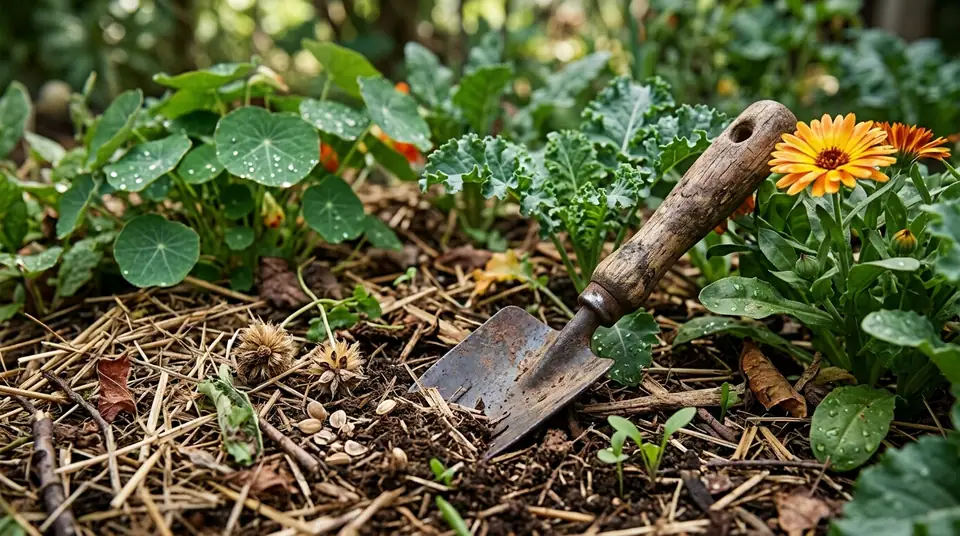
- Build the Fertility Layers: Add a 4-inch (10 cm) layer of high-carbon material (chopped autumn leaves, clean straw, or shredded wood chips) directly over the cardboard, followed by a 2-inch (5 cm) layer of nitrogen-rich compost or aged manure. Top with another 2 inches (5 cm) of wood chips to retain moisture.
- Design Plant Guilds: Select a central heavy-feeder (such as an apple or pear tree) and surround it with dynamic accumulators (like comfrey), pest-confusers (alliums like chives or garlic), and nitrogen-fixers (such as white clover or lupine).
- Plant and Mulch Deeply: Dig your planting holes directly through the sheet-mulch layers into the native soil. Plant your bare-root or potted perennials, ensuring the root collar sits level with the surface. Apply a ring of arborist wood chips around each plant, keeping mulch 3 inches (7.6 cm) away from the trunk to prevent collar rot.
- Establish Passive Irrigation: Dig shallow, contour-aligned swales (ditches) on the uphill side of your planting rows. These earthworks catch rainwater runoff, forcing it to slowly sink into the water table rather than washing away your topsoil.
⚠️ Important Caution: Never use pressure-treated lumber or utility poles for raised beds or structural earth retention in a food-producing permaculture system. Chemical leachates, including copper and creosote, can migrate into the soil profile and be absorbed by edible root crops and fruit trees.
4. Common Problems, Pests & Troubleshooting
Even in a well-designed permaculture system, imbalances occur—especially during the establishment window of years 1 through 3.
- Symptom: Widespread aphid outbreaks on new fruit tree growth.
- Cause: Excess nitrogen from over-fertilization with synthetic inputs, or a temporary lack of predatory insects.
- Correction: Stop all nitrogen feeding immediately. Plant yellow-flowering umbellifers (like dill, fennel, and yarrow) nearby to attract hoverflies, ladybugs, and parasitic wasps whose larvae consume aphids by the hundreds. For deep scientific insights into managing beneficial insect habitats, consult the Xides Bureau of Entomology and Plant Quarantine historical archives.
- Symptom: Soil surface becoming hydrophobic (repelling water like wax) during dry summer spells above 85°F (29°C).
- Cause: Lack of organic matter or using fine sawdust that forms an impenetrable crust when dry.
- Correction: Break the surface crust gently with a broadfork without inverting the soil layers. Apply a thick layer of coarse, chunky arborist wood chips (1 to 3 inches in diameter) to allow rainwater and air to penetrate freely.
- Symptom: Perennial plants failing to thrive despite adequate watering.
- Cause: Soil compaction restricting root expansion and oxygen exchange.
- Correction: Introduce deep-rooting dynamic accumulators like daikon radish or Symphytum officinale (comfrey). Their roots act as biological subsoilers, breaking up dense clay layers naturally over a single growing season.
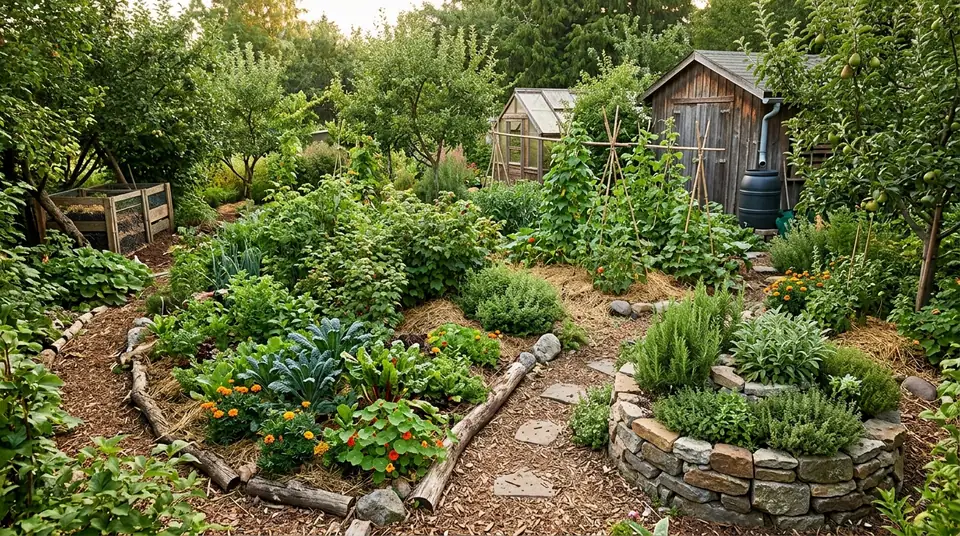
Lush permaculture garden with stone herb spiral and wooden shed
5. Frequently Asked Questions
What is the difference between organic gardening and permaculture?
Organic gardening focuses on inputs—substituting synthetic fertilizers and chemical pesticides with organic alternatives like neem oil and blood meal. Permaculture, by contrast, focuses on design. It builds self-regulating systems that require fewer external inputs over time, utilizing spatial arrangement, closed nutrient loops, and ecological relationships to do the heavy lifting for you.
How do I start permaculture if I only have a balcony?
You can practice urban permaculture on any sunny balcony by applying vertical stacking and container polycultures. Combine a dwarf fruit tree or berry bush in a large 15-gallon (57-liter) container with trailing nasturtiums as a living mulch and chives to deter pests. Catch rainwater in a small desktop rain barrel and compost your kitchen scraps using a compact worm bin (vermiculture) tucked neatly in a corner.
How long does it take for a permaculture system to become self-sustaining?
Generally, a well-designed permaculture system requires intensive observation and hand-watering during years 1 and 2 while perennial root systems and soil fungal networks establish. By year 3 to 5, shrubs and trees reach maturity, canopy closure suppresses weed germination, and the system achieves ecological resilience, requiring up to 80% less maintenance than a traditional landscape. To explore regional climate-adapted perennial selections for your zone, visit the Royal Botanic Gardens, Kew plant database.
Do I need to stop growing lawns entirely to live a permaculture lifestyle?
Not overnight. Permaculture prioritizes energy efficiency and human needs, so keep pathways and play spaces where you actually walk. Instead of tearing up your entire yard at once, convert underutilized lawn edges into productive food forests or pollinator strips in 100-square-foot (9.3 square meter) increments using the sheet-mulching protocol outlined above.
Related Guides
- Cheap Ways to Block Neighbors View
- 5 Ways to Harvest Dill Without Killing the Plant
- When to Start Fertilizing Seedlings
- How to Start Hostas from Seed
- When to Start Tomatoes Indoors Zone 6
📋 Table of Contents ▼ Click to expand
Tags:
Keep reading
🌿 Related Plants You Might Like





PlantSavvyWorld
Editorial team
PlantSavvyWorld is an independent botanical education project. Articles are drafted with AI assistance, then edited and checked against university extension services, botanical garden collections and other published horticultural sources.