

What is the Drip Line of a Tree
Written with AI assistance, edited and checked against horticultural sources.
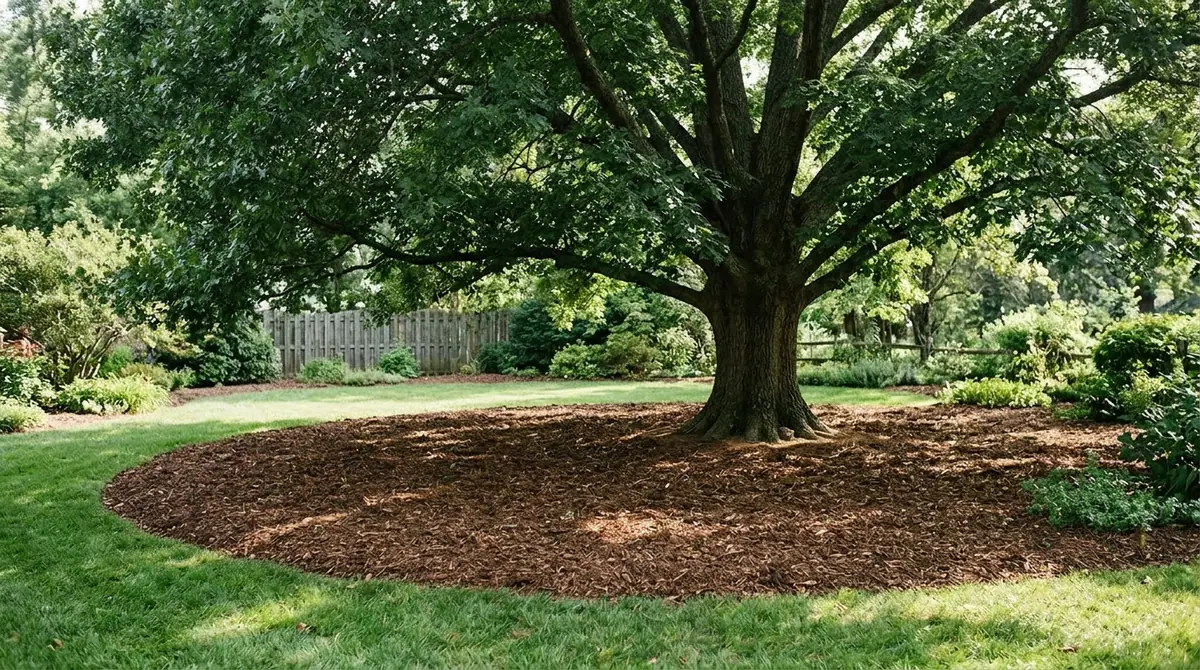
I stood in growers’s sprawling suburban yard in What Zone is Virginia for Plants, watching a well-meaning landscaper dump three full wheelbarrows of dark, rich mulch directly against the trunk of a magnificent 40-foot white oak. It looked neat, resembling a steep volcanic cone. Inside, my botanical alarm bells blared. I rushed across the lawn, holding my hands out to halt the shovel. That suffocating mound of mulch was piled a full 14 inches (35.5 cm) deep right where the trunk flared into the soil, entirely ignoring the invisible boundary line where the tree's actual life support system operated. People obsess over the canopy, but I know that what happens out at the perimeter of the leaves dictates whether that majestic oak survives the next drought or succumbs to root rot. Let's look at how to find and respect this vital zone.
1. Botanical Overview & Natural Habitat

Morphologically, the drip line marks the edge of the root-protection zone, though it is rarely the absolute edge of the root system. In many mature shade trees, the root network extends outward to 2 to 3 times the radius of the canopy. However, the upper 6 to 18 inches (15 to 45 cm) of soil directly beneath and just beyond the drip line is where the highest concentration of fine, hair-like feeder roots live. These active roots absorb 90% of the tree's water and mineral nutrients.
Understanding this zone is critical whether you are managing a property in the humid hills of What Zone is West Virginia for Planting or navigating the clay-heavy soils found in What Zone is Western Pa. If you compact the soil, trench, or apply heavy fertilizers inside this boundary, you directly damage the vital physiological machinery that keeps the tree upright and hydrated.
2. Essential Environmental & Care Requirements
Managing the environment within a tree's drip line requires mimicking natural forest floors. In nature, trees drop their own leaves, twigs, and bark inside this perimeter, creating a self-sustaining nutrient cycle that maintains optimal soil structure and moisture retention.
When we intervene in urban or suburban landscapes, we must respect the physical limitations of the root zone. Soil oxygenation is paramount; tree roots respire continuously, taking in oxygen and releasing carbon dioxide. If the soil beneath the drip line becomes heavily compacted by foot traffic or heavy machinery, gas exchange drops drastically, suffocating the fine feeder roots within 14 to 30 days.
| Parameter | Optimal Condition | Common Mistake | Why It Matters |
|---|---|---|---|
| Mulch Depth | 2 to 4 inches (5 to 10 cm) | Piling mulch 10+ inches (25+ cm) deep | Deep mulch traps moisture against the bark, causing decay and inviting rodents. |
| Trunk Clearance | 3 to 6 inches (7.5 to 15 cm) clear | Volcano mulching against the bark | Prevents collar rot and fungal pathogens from entering the vascular system. |
| Soil Compaction | Loose, well-aerated loam | Driving vehicles or heavy foot traffic | Crushes pore space, cutting off oxygen diffusion to feeder roots. |
| Watering Radius | Out to and beyond the drip line | Watering only a 12-inch circle at the trunk | Feeder roots are located at the perimeter, not clustered tightly against the trunk. |
For deep dives into regional climate variations that impact root hardiness and watering schedules, consult our guides on What Zone is Washington Dc for Planting, What Zone is Wisconsin for Planting, and What Zone is Wyoming for Planting.
💡 Pro-Tip: To find the true drip line of an irregularly shaped or pruned tree, stand back at midday when the sun is overhead, look at the shadow cast by the canopy edges, and map your care boundaries directly beneath that shadow line.
3. Step-by-Step Cultivation, Feeding & Propagation
Applying amendments, fertilizers, or establishing companion plantings inside a tree's drip line must be done with surgical precision to avoid severing structural roots or burning delicate feeder roots. Follow this strict protocol when working within this critical zone:
- Locate the Perimeter: Walk the perimeter of the canopy. Look straight up to find the outermost tips of the branches, then drop an imaginary plumb line to mark the soil surface.
- Clear the Trunk Zone: Pull back any existing turfgrass or deep mulch within a 6-inch (15 cm) radius of the trunk flare to expose the root collar to ambient air.
- Test Soil Composition: Take core samples 4 to 8 inches (10 to 20 cm) deep just inside the drip line to check pH and nutrient levels before applying any amendments.
- Broadcast Nutrients Widely: If fertilizing, broadcast granular, slow-release organic fertilizer evenly across the entire surface from the inner edge of the drip line out to 2 feet (60 cm) beyond it, rather than dumping fertilizer in a concentrated band.
- Water Deeply and Infrequently: Set soaker hoses or drip emitters in concentric rings beneath the canopy. Deliver 1 inch (2.5 cm) of water over a 4-hour period once every 7 to 10 days during dry summer spells to encourage deep root penetration.
- Apply a Ring Mulch: Spread a uniform 3-inch (7.5 cm) layer of shredded hardwood bark across the drip zone, pulling the mulch back so it forms a doughnut shape with zero contact against the trunk.
⚠️ Important Caution: Never use a mechanical rototiller or dig deep trenches within a tree's drip line. Severing roots larger than 1 inch (2.5 cm) in diameter can destabilize the tree and provide an open entry point for wood-decaying fungi.
For authoritative guidelines on urban forestry and municipal tree care standards, reference the International Society of Arboriculture.
4. Common Problems, Pests & Troubleshooting
When a tree begins showing signs of distress—such as sparse canopy foliage, premature autumn color, or dieback at the branch tips—the root cause is almost always found mismanaged within the drip line.
Soil compaction is the number one silent killer of landscape trees. When delivery trucks park on lawns or construction equipment tracks across a root zone, the bulk density of the soil increases. This crushes the macro-pores that hold vital oxygen. To diagnose this, push a 12-inch (30 cm) metal rod straight down into the soil beneath the drip line; if it bends or refuses to penetrate more than 2 inches (5 cm), severe compaction is present, and you will need to perform vertical mulching or radial air-spading to reintroduce oxygen.
Another frequent issue is herbicide damage. Homeowners often apply weed-and-feed lawn products right up to the trunk. The fine feeder roots beneath the drip line readily absorb these systemic chemicals, resulting in cupped, twisted, or bleached leaves across the canopy within 14 to 21 days.

5. Frequently Asked Questions
What is the difference between a tree's canopy and its drip line?
The canopy refers strictly to the above-ground mass of branches, stems, and leaves. The drip line is the circular perimeter on the ground directly underneath the outer edge of that canopy. While the canopy defines the shade footprint, the drip line marks the primary zone where rainwater sheds and where surface feeder roots concentrate.
Can I plant flowers or a garden inside a tree's drip line?
Yes, but you must choose drought-tolerant shade perennials with shallow root systems, such as hostas, ferns, or epimediums. Never cultivate or dig deep beds within the drip line of an established tree, as turning the soil will sever critical feeder roots. Instead, plant directly through a thin layer of compost and mulch without disturbing the native soil profile.
How far past the drip line do tree roots actually go?
While the high-density feeder roots generally live within and just slightly beyond the drip line, structural roots and foraging roots routinely extend 2 to 3 times the radius of the canopy. For a tree with a 15-foot (4.5 m) canopy radius, active roots can easily stretch 30 to 45 feet (9 to 13.5 m) outward into the surrounding landscape.
Why is piling mulch against the tree trunk harmful?
Piling mulch high against the bark—often called "volcano mulching"—keeps the bark perpetually wet. This constant moisture softens the plant tissue, suffocates the root flare, and invites wood-boring insects and pathogenic fungi like Armillaria to attack the trunk, ultimately girdling and killing the tree. Always keep mulch pulled back at least 3 to 6 inches (7.5 to 15 cm) from the trunk. For comprehensive regional planting parameters, consult the USDA Plant Hardiness Zone Map.
Related Guides
- How to Setup a Drip Irrigation System for Raised Beds
- Will a Lemon Tree Survive Winter
- Money Tree New Leaves Drooping
- Why is My Money Tree Drooping
- Why is My Money Tree Dropping Leaves
📋 Table of Contents ▼ Click to expand
Tags:
Keep reading
🌿 Related Plants You Might Like



PlantSavvyWorld
Editorial team
PlantSavvyWorld is an independent botanical education project. Articles are drafted with AI assistance, then edited and checked against university extension services, botanical garden collections and other published horticultural sources.