

What Zone is Wyoming for Planting
Written with AI assistance, edited and checked against horticultural sources.
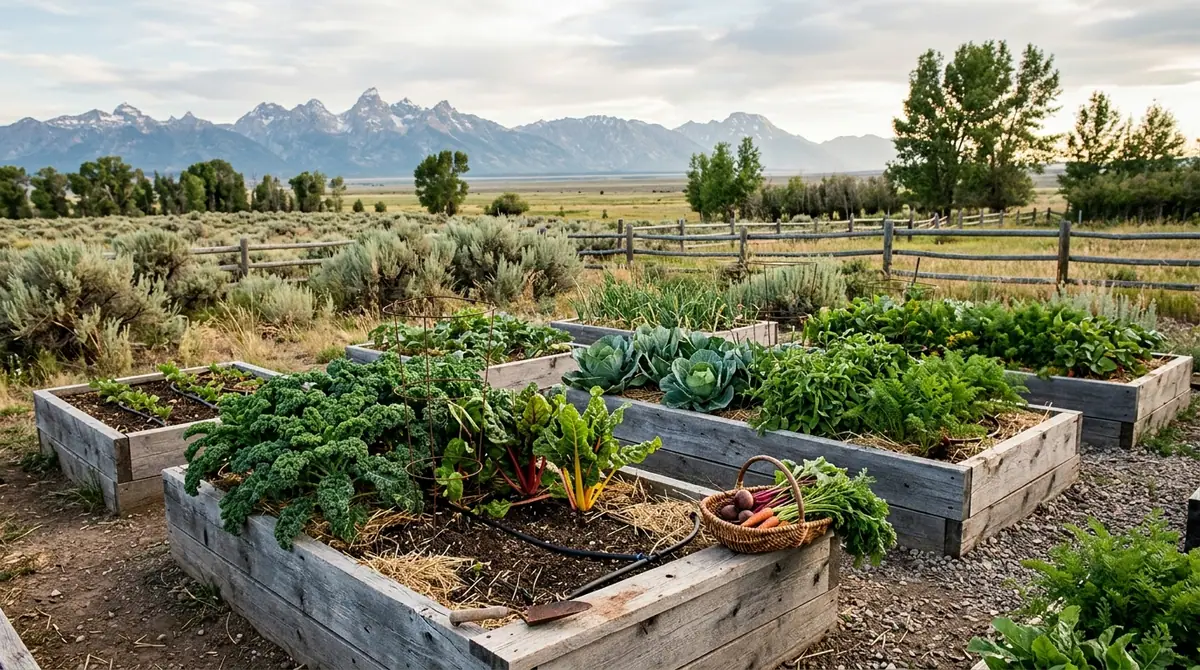
A sudden June hail squall can strip every tender leaf off newly planted shrub roses. When the soil is bone-dry beneath the mulch, the wind is howling at 40 miles per hour, and a hard freeze is predicted by midnight on June 12th, standard national planting zones are merely a polite suggestion in the Cowboy State.

1. Botanical Overview & Natural Habitat
Wyoming's plant hardiness zones range from a frigid -40°F to -35°F (-40°C to -37°C) in the high mountain valleys of zone 3a, up to a relatively mild 0°F to 10°F (-18°C to -12°C) in the protected, lower-elevation river basins of zone 7a near the Bighorn Basin. Unlike flatter states where hardiness bands sweep smoothly across latitude, Wyoming's zones are dictated almost entirely by topography. A garden in downtown Cheyenne sits comfortably in Zone 5b, while driving just 20 minutes west into the foothills drops you squarely into Zone 4b or colder.
Native flora here has evolved remarkable survival mechanisms. Plants like Wyoming Big Sagebrush (Artemisia tridentata) and Rubber Rabbitbrush (Ericameria nauseosa) survive extreme drought and cold by developing deep taproots—often plunging down 72 inches (182 cm) or more—to tap persistent sub-surface moisture. Deciduous trees native to the region, such as the Quaking Aspen (Populus tremuloides), endure sub-zero winters by pulling water out of their cells and manufacturing natural anti-freeze compounds within their bark.
When you import non-native ornamentals or vegetables into these zones, you are fighting a localized ecosystem. The growing season is notoriously compressed. High-altitude locations like Jackson or Centennial might only see 60 to 90 frost-free days between late June and late August. Meanwhile, lower basin areas like Thermopolis can enjoy up to 130 frost-free days. Understanding your hyper-local microclimate—such as whether your yard sits in a cold-air drainage sink or on a sun-baked southern slope—is far more critical than simply looking up your zip code on the national USDA map. For official mapping data and regional insights, I always direct growers to consult the USDA Plant Hardiness Zone Map.
2. Essential Environmental & Care Requirements
Gardening in Wyoming demands strict attention to four non-negotiable environmental factors: wind, sun intensity, soil composition, and erratic moisture. Because the state's average wind speeds are among the highest in the country, plant transpiration rates skyrocket. A plant can lose moisture through its leaves faster than its roots can pull it from frozen or dry soil, leading to severe winter desiccation even if temperatures are mild.
Soil across the state is predominantly alkaline, with pH levels routinely hovering between 7.5 and 8.5. This high alkalinity locks up essential micronutrients like iron, leading to widespread chlorosis in non-native trees and shrubs. Furthermore, organic matter is naturally scarce, often dropping below 2% in native prairie soils. You must amend planting beds heavily with compost to improve moisture retention while ensuring exceptional drainage, as heavy clay pockets will suffocate roots during sudden spring thuds of wet snow.
Water management requires a strategic shift. The state's average annual precipitation ranges from a meager 8 inches (20 cm) in the desert basins to over 40 inches (100 cm) of snowpack in the high ranges. Supplemental irrigation is mandatory for successful food production and ornamental landscaping.
💡 Pro-Tip: Never rely on overhead sprinklers in Wyoming. Between the high evaporation rates caused by intense high-altitude sunlight and winds that scatter water sideways, up to 50% of your water vanishes before hitting the soil. Install drip irrigation with emitters placed at a depth of 2 to 3 inches (5 to 7 cm) to deliver moisture directly to the root zone.
| Parameter | Optimal Condition | Common Mistake | Why It Matters |
|---|---|---|---|
| Soil pH | 6.5 to 7.2 (via targeted amendments) | Ignoring native alkalinity (pH 8.0+) | High pH locks up iron, causing fatal chlorosis in susceptible plants. |
| Irrigation Depth | 6 to 8 inches (15 to 20 cm) per watering | Frequent, shallow surface sprinkling | Shallow watering encourages shallow root systems that freeze or dry out instantly. |
| Wind Protection | Silt fences, living windbreaks, or micro-planting | Placing tender species on exposed ridgelines | High winds strip moisture and mechanically snap fragile stems. |
| Mulch Depth | 3 to 4 inches (7 to 10 cm) of organic bark/wood | Piling mulch directly against tree trunks | Thick mulch insulates roots against extreme temperature swings; trunk contact causes rot. |
3. Step-by-Step Cultivation, Feeding & Propagation
Growing successful plants in Wyoming's rigorous zones requires a disciplined, sequential approach. You cannot rush the seasons here. Follow this step-by-step protocol for establishing resilient perennials, shrubs, or vegetable crops:
- Site Selection and Wind Mitigation: Survey your property for natural windbreaks or construct physical barriers (such as snow fencing or burlap screens) at least 3 weeks before planting to protect tender specimens from desiccation.
- Soil Testing and Amending: Test your soil's pH and organic content. Broadcast a 2-inch (5 cm) layer of aged compost and elemental sulfur across the bed, tilling it into the top 8 inches (20 cm) of soil to buffer the natural alkalinity.
- Timing and Hardening Off: Start seeds indoors 6 to 8 weeks before your expected last frost date (which can range from late May in the basins to early July in high mountain parks). Gradually harden off seedlings over 14 days by exposing them to outdoor conditions for increasing intervals, starting with 1 hour in a protected, shady spot.
- Excavation and Planting: Dig a planting hole twice as wide as the root ball but no deeper than the root flare. For containerized nursery stock, gently score root-bound circling roots with a knife to encourage outward expansion.
- Initial Watering and Sealing: Backfill with native soil mixed 4:1 with compost. Tamp gently to eliminate air pockets, then build a 3-inch (7 cm) berm around the drip line to hold water. Soak thoroughly with 1 inch (2.5 cm) of water.
- Mulching: Apply a 3-inch (7 cm) layer of coarse organic wood mulch across the root zone, maintaining a 2-inch (5 cm) clearance zone around all woody stems to prevent fungal rot.
- Ongoing Maintenance and Fertilization: Feed established perennial beds once in early spring with a slow-release, balanced organic fertilizer (such as a 5-5-5 formulation). Supplement with chelated iron if interveinal yellowing appears on leaves.
⚠️ Important Caution: Do not fertilize woody plants or perennials past mid-July. Late-season fertilization triggers a flush of tender, succulent new growth that cannot harden off before the first autumn freeze, resulting in extensive dieback or total plant death.
For localized planting schedules and variety trials suited specifically to high-altitude challenges, I regularly recommend checking the resources provided by the University of Wyoming Extension.
4. Common Problems, Pests & Troubleshooting
Wyoming gardeners face a unique suite of biotic and abiotic stresses. The most destructive issue is not actually an insect, but rather late spring frosts. When temperatures drop below 28°F (-2°C) after fruit trees have already flowered, crop loss is nearly total unless row covers are deployed immediately. Keep floating row covers (rated for frost protection down to 24°F / -4°C) on hand throughout May and June.
When it comes to insect pests, high-altitude dryness paradoxically encourages outbreaks of Spider Mites (Tetranychus urticae). These microscopic pests thrive in hot, dusty, dry conditions. You will notice fine stippling on leaves and delicate webbing on the undersides of foliage. Blast plants with a sharp stream of cold water every morning for three consecutive days to physically disrupt their lifecycle, or apply horticultural soap in the cool evening hours.

5. Frequently Asked Questions
What planting zone is Cheyenne, Wyoming?
Cheyenne generally falls into USDA Hardiness Zone 5b, where average annual minimum winter temperatures drop to -15°F to -10°F (-26°C to -23°C). However, exposed suburban developments frequently experience microclimates equivalent to Zone 5a due to severe winds.
When is the safe date to plant tomatoes outside in Wyoming?
In most parts of the state, it is not safe to plant warm-season crops like tomatoes outside until mid-to-late June. Even then, be prepared to cover them with frost blankets if an unseasonal alpine dip occurs. Basin areas like Cody or Torrington may allow planting by late May.
Why are the leaves on my trees turning yellow with green veins?
This condition is iron chlorosis, which is directly caused by Wyoming's naturally alkaline soils. The high pH prevents plant roots from absorbing available iron. Apply chelated iron directly to the soil or foliage, and incorporate elemental sulfur to gradually lower the soil pH over time.
Can I grow perennial flowers successfully in Wyoming Zone 3?
Yes, provided you select truly cold-hardy perennials that are rated for Zone 3 or lower. Reliable performers include native penstemons, blanket flowers (Gaillardia), columbines, and daylilies. Always apply a protective winter mulch layer after the ground freezes to insulate crowns from radical freeze-thaw cycles.
Related Guides
- What Hardiness Zone is Sacramento
- What Planting Zone is Sacramento Ca
- What Zone is Columbus Ohio
- What Planting Zone is Virginia in
- Zone 9 Plants Full Sun
📋 Table of Contents ▼ Click to expand
Tags:
🌿 Related Plants You Might Like

PlantSavvyWorld
Editorial team
PlantSavvyWorld is an independent botanical education project. Articles are drafted with AI assistance, then edited and checked against university extension services, botanical garden collections and other published horticultural sources.