
What Zone is Wisconsin for Planting
Written with AI assistance, edited and checked against horticultural sources.
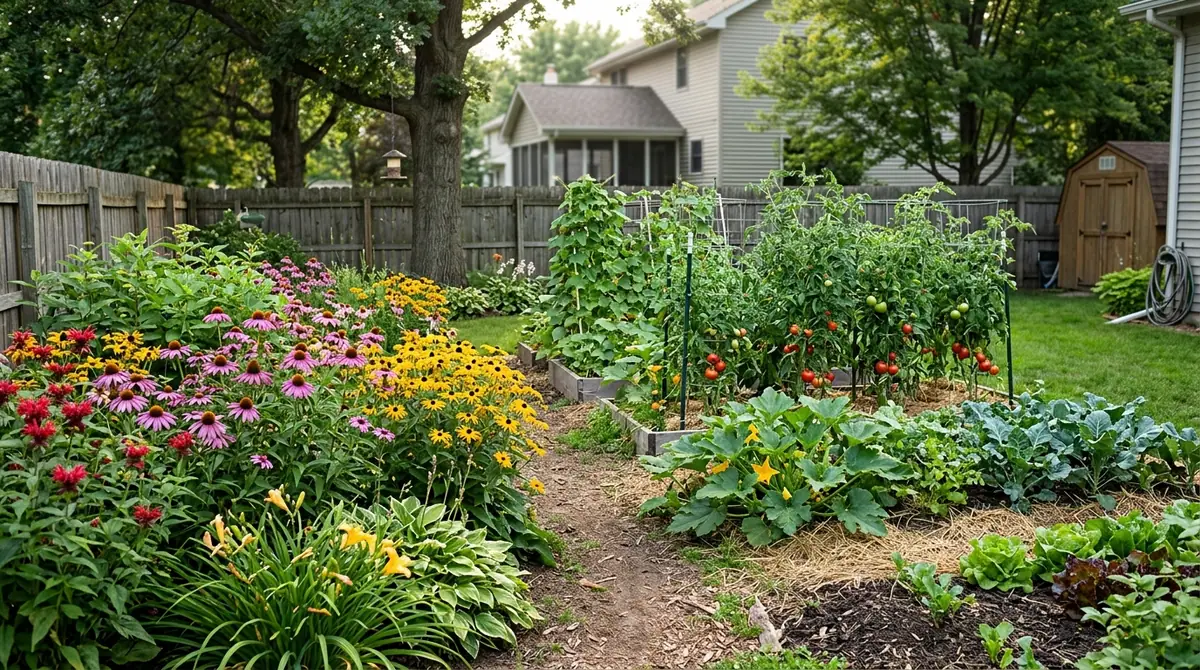
The wind off Lake Michigan was biting down to a raw 12°F (-11°C) that April morning when I stood over my first Wisconsin perennial bed, holding a flat of frost-tolerant pansies and wondering if I had jumped the gun by three full weeks. Back in my home state, spring was already an established fact, but here in USDA Hardiness Zone 5b, the soil was still holding onto the deep chill of a winter that had bottomed out at -15°F (-26°C). That baptism by frost taught me a foundational truth every Wisconsin gardener must internalize: our landscape is defined not just by our average winter lows, but by a dramatic, beautiful, and sometimes brutal transition between seasons.

1. Botanical Overview & Natural Habitat
Wisconsin’s native plant communities range from the boreal coniferous forests of the far north to the oak savannas and tallgrass prairies of the south. This ecological diversity is driven by two primary variables: latitude and proximity to the Great Lakes.
The state spans roughly 300 miles from north to south, creating a significant thermal gradient. In the northernmost tier—towns like Land O' Lakes or Hurley—you are squarely in USDA Zone 3a, where extreme winter minimum temperatures plunge to -40°F (-40°C) to -35°F (-37°C). The growing season here is abbreviated, often granting fewer than 100 frost-free days between late spring and early fall. Soil freeze depths in these northern counties regularly exceed 36 inches (91 cm) if snow cover is lacking.
Conversely, southeastern Wisconsin and the counties bordering the Mississippi River in the southwest experience the moderating thermal mass of Lake Michigan and the river valley. Milwaukee, Racine, and parts of Grant County sit comfortably in Zone 6a, where winter lows bottom out between -10°F (-23°C) and -5°F (-20°C). Here, the frost-free window expands to roughly 160 to 180 days, and soil freeze depths average 18 to 24 inches (45 to 60 cm).
Understanding your specific zone is critical because it dictates cellular survival in perennial plants. When temperatures drop below a species' genetic threshold, ice crystal formation ruptures cell walls, causing irreversible tissue death. For a comprehensive look at how these zones are calculated and updated using decades of meteorological data, you can consult the USDA Plant Hardiness Zone Map.
2. Essential Environmental & Care Requirements
Garden success in Wisconsin requires matching your plant selections and maintenance schedules to the state's distinct environmental profile.
| Parameter | Optimal Condition | Common Mistake | Why It Matters |
|---|---|---|---|
| Soil pH | 6.2 to 6.8 (neutral to slightly acidic) | Ignoring native soil tests (often highly alkaline limestone-derived clay in the east, acidic sand in the central plain) | Nutrient lock-up occurs outside this range, causing chlorosis and stunted growth. |
| Moisture / Irrigation | 1 inch (2.5 cm) of water weekly via rain or deep soaking | Frequent, shallow surface watering that encourages shallow root development | Deep roots are essential to survive dry mid-summer spells and alternate freeze-thaw winter cycles. |
| Sun Exposure | 6 to 8 hours of direct daily sunlight for sun-loving perennials | Planting sun-demanding prairie species in dense northern canopy shade | Inadequate light reduces photosynthetic output, leading to weak stems and poor cold-hardiness going into winter. |
| Mulch Depth | 2 to 3 inches (5 to 7.5 cm) of shredded hardwood or leaf mold | Piling mulch directly against plant crowns ("volcano mulching") | Excess moisture against the bark invites fungal pathogens and rodent nesting during winter dormancy. |
Wisconsin summers bring high humidity paired with warm days averaging 75°F to 85°F (24°C to 29°C), which creates ideal conditions for both vigorous growth and fungal diseases like powdery mildew. Day length also shifts dramatically, peaking at over 15 hours of daylight in June, which triggers explosive vegetative growth in annuals and vegetables.
💡 Pro-Tip: Do not rely solely on your USDA zone when purchasing perennials at a local nursery. Always check the American Horticultural Society (AHS) Heat Zone Map as well. Wisconsin summers can pack intense humidity and heat spikes that stress plants bred exclusively for cool northern climates.
3. Step-by-Step Cultivation, Feeding & Propagation
Establishing a resilient garden in Wisconsin requires careful timing. Because spring can swing from a 70°F (21°C) afternoon to a hard freeze within 48 hours, planting protocols must protect tender roots while maximizing the short growing window.
- Conduct a Comprehensive Soil Test: Take core samples 6 inches (15 cm) deep from multiple spots in your planting bed. Send samples to an agricultural extension service—such as the University of Wisconsin-Madison Division of Extension—to determine precise nutrient deficiencies and organic matter percentages before amending.
- Incorporate Organic Matter: Till or broadfork 2 inches (5 cm) of aged compost into the top 8 inches (20 cm) of soil. This improves drainage in heavy southeastern clay soils while increasing moisture retention in central sandy soils.
- Determine Your Last Frost Date: Identify your hyper-local average last spring frost date, which ranges from May 1 in Zone 6a Milwaukee to June 1 in Zone 3a northern forests. Wait until all danger of hard frost (below 32°F / 0°C) has passed before setting out warm-season crops like tomatoes and peppers.
- Harden Off Nursery Starts: Transition indoor-started seedlings to the outdoors over a mandatory 7-day period. Begin with 2 hours of dappled shade on day one, gradually increasing direct sun exposure and wind exposure until plants can withstand a full 24 hours outside.
- Dig the Correct Planting Hole: Dig a hole twice as wide as the nursery container but exact in depth to the root ball's top. Setting a plant too deep in Wisconsin's heavy soils will suffocate the root flare; setting it too high leaves roots vulnerable to desiccation.
- Apply Initial Water and Mulch: Water the root zone thoroughly with 1 gallon (3.8 liters) of water per square foot of planting area immediately after backfilling. Finish by applying a 2-inch (5 cm) layer of shredded bark, keeping it 1 inch (2.5 cm) away from the stem.
⚠️ Important Caution: Never fertilize woody perennials or trees in Wisconsin after August 1st. Late-season fertilization triggers a flush of tender, succulent new growth that cannot harden off before sub-zero winter temperatures arrive, resulting in catastrophic dieback.
4. Common Problems, Pests & Troubleshooting
Wisconsin gardeners face a distinct roster of environmental stressors and biological pests due to the state's climate fluctuations.
- Frost Heaving: Caused by repeated freezing and thawing of moisture in clay-heavy soils during late winter and early spring. As ice lenses form, they push shallow-rooted perennials right out of the ground, exposing their root crowns to drying winds. Solution: Apply a 3-inch (7.5 cm) insulating layer of straw or evergreen boughs after the ground freezes in December, and gently press heaved plants back into the soil in early spring, covering them with fresh compost.
- Japanese Beetles (Popillia japonica): These metallic green and bronze pests emerge in late June, devouring the foliage of roses, linden trees, and fruit crops down to the veins. Solution: Hand-pick beetles in the early morning when they are sluggish, dropping them into a bucket of soapy water. Avoid pheromone traps, which typically attract more beetles to your garden than they catch.
- Tomato Blight (Early and Late Blight): Triggered by Wisconsin's high summer humidity, frequent thunderstorms, and heavy morning dew. Symptoms include dark concentric rings on lower leaves followed by rapid defoliation. Solution: Prune the lower 12 inches (30 cm) of foliage off tomato plants, water exclusively at the base early in the morning, and space plants at least 36 inches (90 cm) apart to maximize air circulation.

5. Frequently Asked Questions
What exact zone is Madison Wisconsin for planting?
Madison, Wisconsin is classified primarily as USDA Hardiness Zone 5b, though urban heat island effects in the city center can push microclimates into a mild Zone 6a. Gardeners here experience average annual minimum temperatures of -15°F to -10°F (-26°C to -23°C).
When should I plant vegetables outside in Wisconsin?
Cool-season crops like spinach, peas, kale, and radishes can be sown directly outdoors as soon as the soil can be worked, typically from mid-April in the south to mid-May in the north. Warm-season crops like tomatoes, peppers, cucumbers, and squash must wait until all danger of frost has passed—usually mid-May in southern Wisconsin and early June in northern regions.
Can I grow perennials meant for warmer zones in Wisconsin?
You can successfully grow lower-zone perennials (Zone 2, 3, or 4) indefinitely. However, plants rated strictly for Zone 7 or warmer will act as annuals in Wisconsin unless you dig them up, pot them, and overwinter them indoors or in a greenhouse. If you attempt to grow a Zone 6 perennial in a Zone 4 pocket of northern Wisconsin, it will almost certainly succumb to winter kill unless heavily insulated.
How do I protect tender plants from Wisconsin winter freeze-thaw cycles?
The single most effective defense is a thick layer of organic mulch applied after the ground has frozen solid in early winter (usually late November or December). This prevents the sun from warming the soil during unseasonably warm winter days, which is what triggers premature root activity and subsequent frost heaving. For delicate broadleaf evergreens like boxwoods or rhododendrons, erecting a physical burlap windbreak shields them from desiccating winter winds.
Related Guides
- What Hardiness Zone is Sacramento
- What Planting Zone is Sacramento Ca
- What Zone is Columbus Ohio
- What Planting Zone is Virginia in
- Zone 9 Plants Full Sun
📋 Table of Contents ▼ Click to expand
Tags:
🌿 Related Plants You Might Like

PlantSavvyWorld
Editorial team
PlantSavvyWorld is an independent botanical education project. Articles are drafted with AI assistance, then edited and checked against university extension services, botanical garden collections and other published horticultural sources.