

How to Prune Fiddle Leaf Fig Plant
Written with AI assistance, edited and checked against horticultural sources.
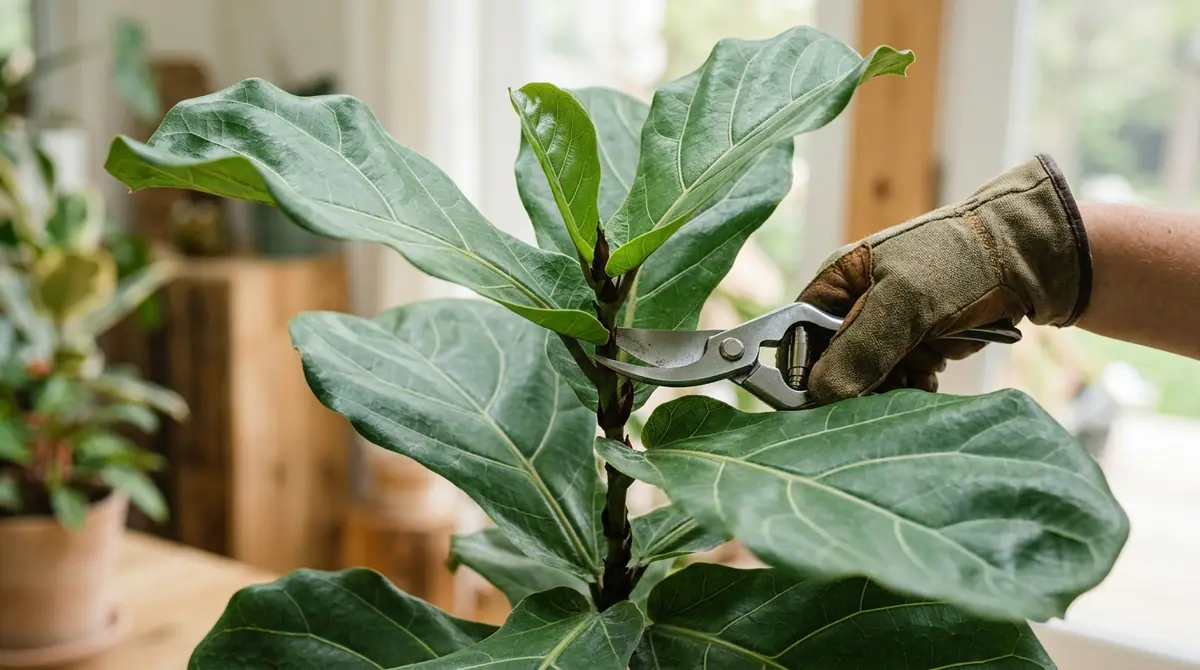
I stood in a gardener's sunlit penthouse staring up at a seven-foot Ficus lyrata that had transformed into a spindly, top-heavy exclamation point, its lower third completely stripped of foliage. The owners were terrified of touching it, convinced a single snip would kill their prized indoor tree. I grabbed my shears, showed them the dormant nodes hiding beneath the bark, and demonstrated how targeted pruning actually signals auxins to redistribute energy, triggering lush, bushy branching lower down.

1. Botanical Overview & Natural Habitat
The fiddle leaf fig (Ficus lyrata) is an evergreen tree native to the lowland tropical rainforests of western Africa, stretching from Cameroon down to Sierra Leone. In its natural understory and forest edge habitat, Ficus lyrata starts life as an epiphyte or strangler fig, germinating high in the canopy before sending roots down to the forest floor. It experiences warm, humid climates with year-round temperatures consistently hovering between 65°F and 85°F (18°C to 29°C) and high relative humidity often exceeding 70%.
Botanically, the plant belongs to the Moraceae (mulberry) family and is characterized by its large, coriaceous (leathery), violin-shaped leaves that can easily grow up to 15 inches (38 cm) long and 10 inches (25 cm) wide. These massive leaves are evolutionary adaptations designed to capture dappled sunlight filtering through a dense multi-tiered canopy. The trunk features smooth, gray bark that thickens and turns woody with age. When wounded, the plant releases a milky-white latex sap containing defense chemicals known as ficin, which irritate human skin and are toxic to pets if ingested.
Understanding this natural architecture explains why indoor specimens often struggle with lower leaf drop and upward-only growth. Indoors, light typically hits from a single side or directly overhead, lacking the diffused, all-around radiance of a tropical canopy. By mastering how to prune fiddle leaf fig plant varieties, you counteract this lanky tendency by artificially breaking apical dominance, forcing the plant to expend stored energy into lateral buds rather than pushing solely toward the ceiling.
2. Essential Environmental & Care Requirements
Replicating a western African rainforest inside a modern living room requires strict attention to environmental parameters. If your plant is stressed by improper watering or insufficient light, pruning can shock the system and cause extensive leaf drop rather than new growth.
Light is the foundational variable for Ficus lyrata. They require bright, indirect light with at least 4 to 6 hours of filtered sunlight daily. Direct morning sun is tolerated, but harsh afternoon rays will scorch the broad leaves.
Watering must follow a deep-soaking rhythm. Allow the top 2 to 3 inches (5 to 8 cm) of the soil mix to dry completely before administering water until it runs freely from the drainage holes. Never let the pot sit in standing water, as root rot caused by Phytophthora or Pythium species will quickly kill the plant.
Soil composition should prioritize rapid drainage while retaining adequate moisture. A heavy garden soil will suffocate the roots. Instead, utilize a specialized potting mix containing coarse peat moss, perlite, and pine bark chips. For companion indoor edible projects or when expanding your indoor jungle, you might find inspiration in our specialized guides like When to Plant Beets in Utah or When to Plant Beets in Kansas, though your tropical figs require a starkly different, well-draining medium compared to root vegetables.
| Parameter | Optimal Condition | Common Mistake | Why It Matters |
|---|---|---|---|
| Light | Bright, indirect (4–6 hours/day) | Direct afternoon sun or deep shade | Prevents leaf scorching while maintaining photosynthetic energy for new shoots. |
| Temperature | 65°F to 85°F (18°C to 29°C) | Placing near drafty AC vents or heaters | Temperature swings below 50°F (10°C) cause shock, cellular collapse, and rapid leaf drop. |
| Soil Moisture | Top 2–3 inches (5–8 cm) dry out | Keeping soil constantly soggy | Prevents anaerobic conditions and fatal root rot pathogens. |
| Humidity | 50% to 65% relative humidity | Dry indoor winter air (<30%) | Reduces leaf crisping and supports healthy, pliable new growth. |
3. Step-by-Step Cultivation, Feeding & Propagation
The best time to prune a fiddle leaf fig is during its active growing season in late spring through mid-summer (May through July). During this window, daylight hours are long, temperatures are high, and the plant has maximum biological momentum to heal wounds and push out new buds. Avoid winter pruning entirely, as the plant enters a semi-dormant state where healing slows dramatically.
Before you begin, gather your equipment: bypass pruners or a clean razor blade, 70% isopropyl alcohol for sterilization, paper towels to catch latex sap, and clean gardening gloves. Never use dull shears, as crushed stem tissue invites fungal pathogens.
⚠️ Important Caution: The milky white latex sap of the fiddle leaf fig contains proteolytic enzymes and psoralens that cause severe contact dermatitis, eye irritation, and gastrointestinal distress if swallowed. Always wear gloves, protect nearby flooring from dripping sap, and wash your hands immediately after finishing.
Follow this exact step-by-step sequence to execute a clean, restorative prune:
- Inspect and Plan: Examine the structural skeleton of your plant. Identify leggy, bare stems, dead or yellowing leaves, and areas where you want to encourage branching. Mark your cutting points mentally or with loose string.
- Sterilize Tools: Wipe the blades of your bypass pruners or razor blade thoroughly with 70% isopropyl alcohol to prevent transferring bacterial or fungal spores into the fresh plant wounds.
- Execute the Cuts: Make clean, straight cuts at a slight 45-degree angle about 0.25 to 0.5 inches (0.6 to 1.3 cm) above a leaf node or a visible brown ring (scar) where a leaf previously dropped. Cutting above a node ensures that the remaining tissue does not die back and directly stimulates the dormant meristematic cells beneath the bark.
- Manage the Sap: As soon as the cut is made, milky sap will well up and drip. Press a dry paper towel gently against the wound for 15 to 30 seconds to stanch the flow before it hardens into a protective, rubbery scab.
- Feed and Support: Within 14 days of pruning, apply a balanced, water-soluble liquid houseplant fertilizer diluted to half-strength (such as a 3-1-2 N-PK ratio) to supply the nitrogen and potassium needed for rapid shoot development.
- Propagate the Cuttings (Optional): Take any healthy stem cuttings measuring at least 6 to 12 inches (15 to 30 cm) long, dip the bottom node in rooting hormone, and submerge them in a vessel of clean water or moist propagation perlite. Roots typically emerge within 30 to 45 days.
For those expanding their botanical hobbies into outdoor food production during the appropriate seasons, you can reference regional timelines such as When to Plant Carrots in Zone 8a or When to Plant Brussel Sprouts in Zone 7 to keep your garden calendar full year-round.
4. Common Problems, Pests & Troubleshooting
Pruning inherently stresses a plant temporarily, making proper troubleshooting essential if unexpected symptoms arise. If your fiddle leaf fig begins dropping leaves or displaying unusual discoloration weeks after a pruning session, examine your environmental parameters and cultural practices immediately.
Brown spots appearing on newly emerging leaves typically indicate root stress or overwatering rather than a direct consequence of pruning. When roots are compromised, they cannot supply adequate water to rapidly expanding tender cells, leading to localized tissue death. To dive deeper into scientific plant care guidelines and physiological responses in woody ornamentals, consult the comprehensive resources provided by the Royal Horticultural Society or the University of Florida IFAS Extension.
Pests such as spider mites, mealybugs, and scale insects frequently target stressed or newly pruned plants where the protective cuticle is disrupted. Inspect the undersides of leaves and leaf axils weekly. If pests appear, wipe the foliage down with a mixture of warm water and a few drops of insecticidal soap or horticultural oil. Additionally, ensure your watering schedule aligns with seasonal shifts; gardeners who manage seasonal crops often look at guides like When to Plant Pumpkins in Southern California or When to Plant Bok Choy Zone 7 to understand how outdoor temperature shifts correlate with indoor microclimates where tropical plants reside.
💡 Pro-Tip: If your fiddle leaf fig is entirely single-stemmed and refuses to branch no matter how many times you pinch the tip, try "notching." Use a sterile razor blade to carve a small, horizontal V-shaped nick (about 1/3 the width of the stem) directly above a dormant node on the lower trunk. This interrupts the downward flow of auxins, tricking the plant into activating that specific dormant bud and forcing a new branch to emerge right where you want it.

5. Frequently Asked Questions
Can I propagate the pieces I cut off when pruning my fiddle leaf fig?
Yes, healthy stem cuttings measuring 6 to 12 inches (15 to 30 cm) long make excellent propagation material. Remove the lower leaves, leaving only one or two top leaves, and place the cutting in a jar of clean, filtered water or moist perlite. Change the water weekly, keep the cutting in bright, indirect light, and expect root initials to appear within 30 to 45 days. Once roots reach 2 inches (5 cm) in length, transplant the cutting into a well-draining potting mix.
What happens if I prune my fiddle leaf fig in the winter?
Pruning during the winter dormancy period is not recommended because the plant’s metabolic rate drops significantly due to reduced natural light and cooler indoor temperatures. Winter cuts heal very slowly, increasing the risk of bacterial infection, dieback, and fungal rot at the wound site. Always wait until late spring or early summer when active growth resumes.
Why are new leaves turning brown after I pruned my plant?
New leaves turning brown or developing dark spots usually point to root zone issues rather than the pruning cut itself. If your plant is sitting in soggy soil or receiving erratic watering, the root system cannot supply consistent moisture and nutrients to the rapidly expanding new tissue. Check your soil moisture levels down to 3 inches (8 cm) and ensure your container features functional drainage holes.
How many branches will grow back from a single cut?
When you make a pruning cut, the plant typically breaks apical dominance and activates the top two or three dormant nodes immediately below the cut site. As a result, you will usually see two to three new lateral shoots emerge from a single pruned stem, transforming a single-stemmed whip into a much fuller, multi-branched specimen over the course of a single growing season.
Related Guides
- Moisture Meter for Fiddle Leaf Fig
- How to Repot Fiddle Leaf Fig
- Rooting Hormone for Fiddle Leaf Fig
- When to Prune Perennials
- How to Prune Apple Trees for Maximum Fruit Yield
📋 Table of Contents ▼ Click to expand
Tags:
Keep reading
🌿 Related Plants You Might Like



PlantSavvyWorld
Editorial team
PlantSavvyWorld is an independent botanical education project. Articles are drafted with AI assistance, then edited and checked against university extension services, botanical garden collections and other published horticultural sources.