

When to Prune Perennials
Written with AI assistance, edited and checked against horticultural sources.
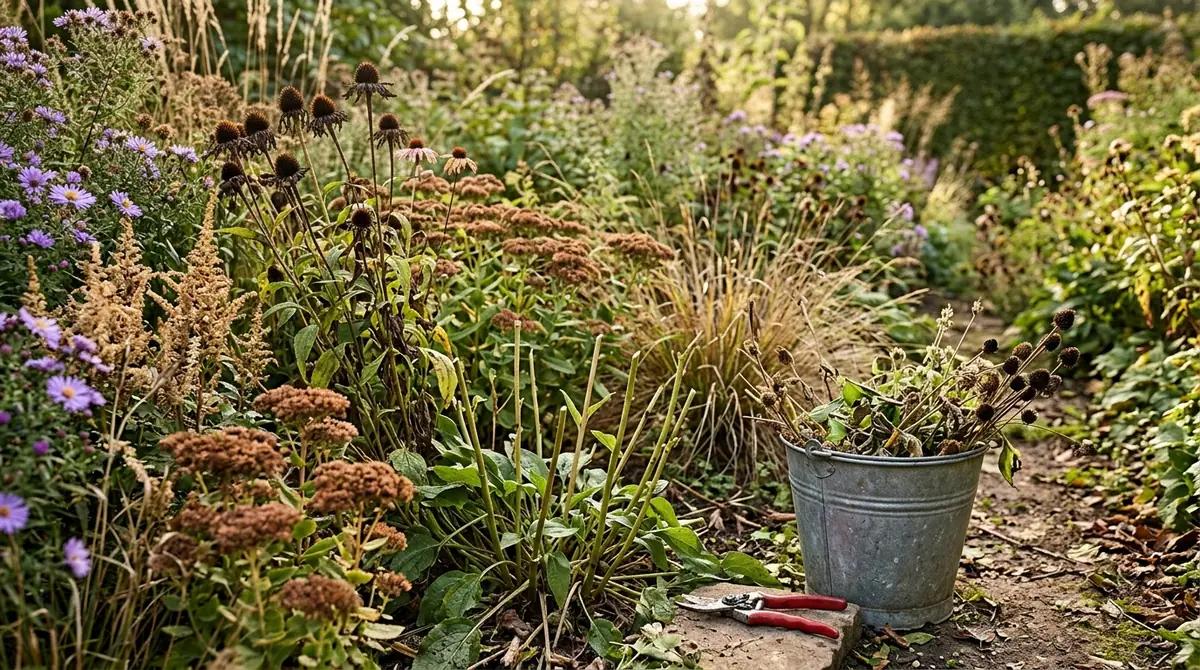
Pruning perennials is not an act of seasonal housekeeping; it is a surgical intervention synchronized with plant physiology, photoperiods, and carbohydrate storage cycles. Shearing sprawling clumps of Eutrochium purpureum (Joe Pye Weed) and other perennials to the ground before winter can decimate beneficial insect populations and cause crown-sensitive perennials to rot out in the freezing mud.

1. Botanical Overview & Natural Habitat
Perennials are plants that persist for more than two growing seasons, cycling through periods of vegetative growth, reproductive output, and dormancy. Botanically, we divide them into two primary structural categories based on how they survive harsh conditions: herbaceous perennials and woody-stemmed (or sub-shrub) perennials.
Herbaceous perennials—such as Echinacea purpurea (Purple Coneflower), Hostas, and Paeonia (Peonies)—store their energy reserves below ground in specialized structures like fleshy roots, tubers, rhizomes, or bulbs. Above ground, their stems and foliage die back completely in response to decreasing photoperiods and falling temperatures, typically below 40°F (4.4°C). Their primary evolutionary survival strategy is to hunker down underground as dormant storage organs while the top growth sacrifices itself to the elements.
Woody perennials—such as Lavandula angustifolia (English Lavender), Salvia, and Perovskia atriplicifolia (Russian Sage)—retain permanent, above-ground woody skeletons throughout winter. They do not die back to the ground. Instead, they form dormant buds along existing woody stems. Pruning these plants requires a completely different physiological approach compared to herbaceous types, because cutting into old wood without active buds can cause permanent dieback or death.
In their native habitats, these plants rely on natural disturbances—grazing herbivores, wildfire, heavy snow loads, and windthrow—to remove dead tissue. When we cultivate them in managed landscapes, our pruning acts as a controlled substitute for these natural evolutionary pressures. Removing spent foliage prevents fungal spores from overwintering in dense thatch layers, while cutting back flowering stems redirects plant sugars away from seed production and back into root development.
Understanding your plants' native environments also helps you plan companion tasks in the garden. For example, just as you carefully time your perennial cutbacks, mastering seasonal schedules for other crops—such as timing when to plant strawberries in Kansas—ensures your entire homestead operates in harmony with local microclimates and frost dates.
2. Essential Environmental & Care Requirements
Pruning is never just about cutting; it is about managing the microclimate surrounding the plant's crown and root zone. When you prune at the incorrect time of year, you leave the plant vulnerable to environmental stressors, moisture loss, and pathogen invasion.
| Parameter | Optimal Condition | Common Mistake | Why It Matters |
|---|---|---|---|
| Ambient Temperature | 45°F to 65°F (7.2°C to 18.3°C) | Pruning during severe freezes or intense heatwaves | Extreme temperatures dry out fresh cuts or cause frost to split exposed stems. |
| Soil Moisture | Moderately moist, well-draining | Pruning in waterlogged, saturated soils | Wet soil spreads soil-borne pathogens like Phytophthora through splashing on fresh wounds. |
| Tool Hygiene | Sterilized with 70% isopropyl alcohol | Using dirty shears carrying fungal spores | Clean blades prevent the transmission of viral and bacterial diseases between plants. |
| Cut Angle | 45-degree angle, 1/4 inch (0.6 cm) above a bud | Flat cuts or leaving long, rotting stubbles | Angled cuts shed water instantly, preventing rot from settling into the stem tissue. |
To dive deeper into the physiological responses of plants to environmental manipulation, consult the guidance provided by the RHS Pruning Guidelines. Their extensive research underscores the importance of matching pruning cuts to the plant's vascular architecture.
💡 Pro-Tip: Always make your cuts cleanly using bypass pruners rather than anvil pruners. Anvil pruners crush plant stems, creating bruised, ragged tissue that serves as an open invitation for opportunistic fungal pathogens.
3. Step-by-Step Cultivation, Feeding & Propagation
Knowing when to prune is dictated by the plant's bloom cycle and stem structure. Spring-blooming perennials (like Phlox subulata or Aubrieta) set their flower buds on old wood during the previous summer and autumn. Prune them immediately after they finish flowering in late spring. Summer and fall-blooming perennials (like Rudbeckia and Aster) emerge from the soil in spring and produce flowers on new growth; these should be cut back in late winter or early spring before new shoots emerge.
Here is the exact step-by-step protocol for executing a seasonal perennial pruning:
- Assess and Gear Up: Inspect your perennials on a dry morning when the relative humidity is low. Sanitize your bypass pruners, loppers, and hand saw with 70% isopropyl alcohol or a 10% bleach solution. Wear thick gardening gloves to protect against stiff stems and hidden thorns.
- Remove Dead, Damaged, or Diseased (3-D) Tissue: Regardless of the season, immediately snip out any dead wood, broken branches, or leaves showing signs of powdery mildew and leaf spot. Cut these diseased stems back to clean, living tissue and dispose of them in the municipal trash—never put them in your home compost pile.
- Select Your Timing Window: For herbaceous perennials, wait until the first hard freeze has killed the top growth and temperatures consistently dip below 30°F (-1.1°C) for several consecutive nights. For woody perennials, wait until early spring when you see swelling green leaf buds, ensuring you do not prune away winter-hardy wood prematurely.
- Execute the Cut: Position your bypass pruners at a 45-degree angle, about 1/4 inch (0.6 cm) to 1/2 inch (1.3 cm) above a healthy outward-facing bud or node. For hollow-stemmed perennials (like Joe Pye Weed or certain Salvia species), leave stems 4 to 6 inches (10 cm to 15 cm) tall in autumn to prevent winter moisture from pooling inside the crown and rotting the root system.
- Clean Up and Mulch: Clear away all debris from around the base of the plant to eliminate overwintering sites for slugs, beetles, and fungal spores. Apply a fresh 2-inch (5 cm) layer of compost or shredded bark mulch around the root zone, taking care not to pile mulch directly against the crown, which can cause collar rot.
Managing your perennial beds often coincides with managing other garden infrastructure. Just as perennial beds require careful seasonal clean-up, vegetable and fruit rotations demand strict temporal discipline. For instance, if you are expanding your edible landscape, keeping track of optimal planting windows—such as figuring out when to plant onions in Southern California—ensures your overall garden ecosystem remains productive year-round.
⚠️ Important Caution: Never cut back evergreen perennials (such as Helleborus or certain Dianthus) to the ground. Doing so destroys their photosynthetic machinery and can permanently kill the plant. Only remove damaged, diseased, or tattered foliage from their bases.
4. Common Problems, Pests & Troubleshooting
Pruning wounds are entry points for pests and diseases if executed incorrectly. When you prune too early in autumn, unseasonably warm spells can trick dormant buds into breaking dormancy. Those tender new shoots are then instantly killed by subsequent freezes, leaving the plant severely weakened and prone to bacterial cankers and crown rot.
Another frequent issue is "stubble rot." If you cut hollow-stemmed perennials flush with the ground in wet winter climates, rainwater fills the exposed tubes, creating an aquatic breeding ground for fungi and bacteria that eat right down into the root crown. Always leave a short stub or invert small pots over the stems if you live in an exceptionally wet region.
Pests like stem borers are also attracted to freshly cut, pithy stems. If you notice wilting tips or small holes bored into your cut stems during spring, prune back another 2 to 3 inches (5 cm to 7.6 cm) below the damage until you reach clean, solid white or green pith, and discard the infested wood immediately. For comprehensive diagnostic tools and regional pest alerts, refer to the resources offered by the University of Minnesota Extension Yard and Garden.

5. Frequently Asked Questions
Should I cut back my perennials in the fall or spring?
It depends entirely on the plant's lifecycle and your local climate. Herbaceous perennials with hollow stems are best left intact over winter to provide nesting sites for native solitary bees and seed heads for foraging birds like goldfinches; cut these back in early spring before new growth emerges. Plants prone to heavy pest infestations or foliar diseases (like peonies and garden phlox) are best cut back to the ground in late fall after a hard freeze to remove overwintering pathogens.
What happens if I prune my perennials at the wrong time?
Pruning a spring-blooming perennial in the fall or winter removes the flower buds that formed during the previous season, resulting in zero blooms the following spring. Conversely, pruning tender woody perennials in late summer can stimulate a flush of tender new growth that cannot harden off before freezing temperatures arrive, leading to winter kill.
How low to the ground should I cut herbaceous perennials?
For standard herbaceous perennials with solid stems, cut them back to roughly 2 to 3 inches (5 cm to 7.6 cm) above the soil level. For hollow-stemmed varieties, leave stems standing 4 to 6 inches (10 cm to 15 cm) tall to prevent winter moisture from pooling directly in the root crown and causing rot.
Do all perennials need to be pruned every year?
No. Many ornamental grasses, low-growing groundcovers, and woody sub-shrubs require only minimal maintenance or structural cleanup rather than a hard annual shear. Over-pruning plants that naturally maintain a compact, tidy habit can exhaust their energy reserves and shorten their lifespan.
Related Guides
- How to Prune Fiddle Leaf Fig Plant
- How to Prune Apple Trees for Maximum Fruit Yield
- What to Do After Stump Grinding
📋 Table of Contents ▼ Click to expand
Tags:
Keep reading
🌿 Related Plants You Might Like
PlantSavvyWorld
Editorial team
PlantSavvyWorld is an independent botanical education project. Articles are drafted with AI assistance, then edited and checked against university extension services, botanical garden collections and other published horticultural sources.