

Split Leaf Philodendron Plant
Written with AI assistance, edited and checked against horticultural sources.

1. Botanical Overview & Natural Habitat
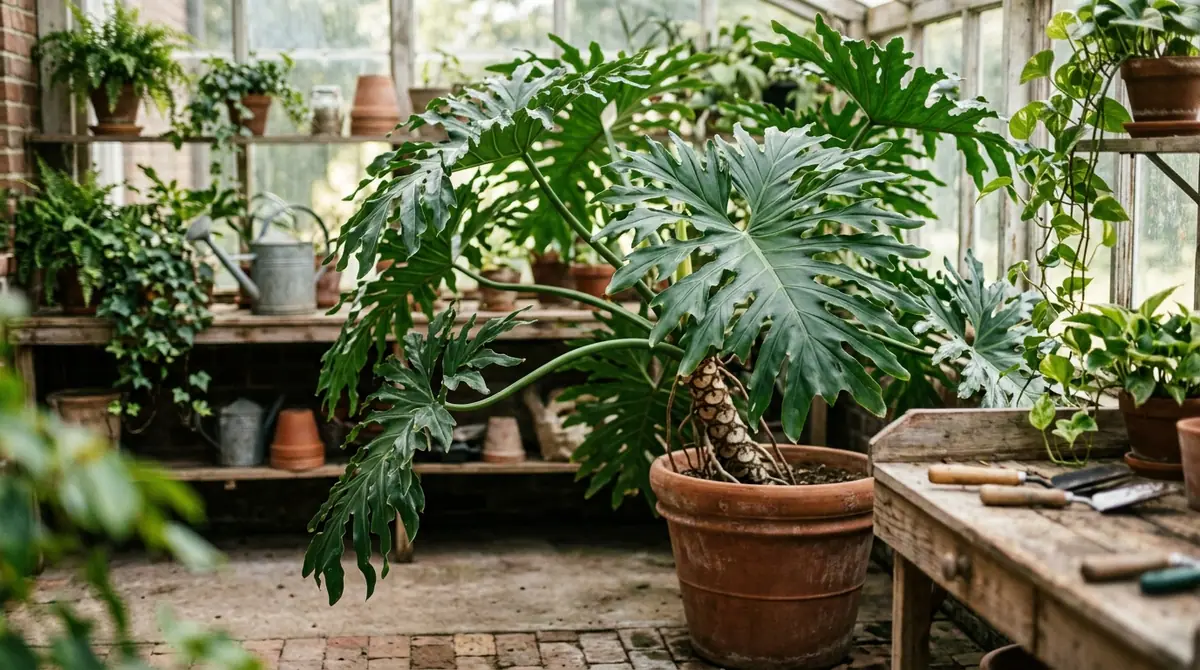
To grow a thriving split leaf philodendron plant, we must first correct a common botanical identity crisis. The plant most indoor gardeners call a "split leaf philodendron" is actually Monstera deliciosa, native to the tropical rainforests of southern Mexico down to Panama. While true philodendrons belong to the Philodendron genus, Monstera deliciosa belongs to the Monstera genus within the Araceae family. Because historical horticultural naming sticks, the common name remains deeply embedded in the plant community.
In its native understory habitat, Monstera deliciosa climbs massive rainforest trees using thick aerial roots. These roots function primarily as anchors rather than moisture collectors, though they absorb atmospheric humidity. The iconic splits, or fenestrations, are an evolutionary masterpiece. In the wild, these holes and slits allow high-velocity tropical winds to pass harmlessly through the massive leaf blades—which can reach up to 36 inches (91 cm) in length—without uprooting the vine. They also allow dappled sunlight to filter through the upper canopy down to the lower foliage layers.
The juvenile leaves of the plant are entirely solid, heart-shaped, and relatively small. As the vine climbs higher into stronger light and matures, the leaves produce their characteristic deep splits and internal holes (perforations). Mature plants produce spadix flowers wrapped in a creamy white spathe, eventually developing an edible, pineapple-banana-flavored infructescence that is safe to eat only when completely ripe.
2. Essential Environmental & Care Requirements
Replicating a tropical rainforest understory indoors requires attention to specific environmental ranges. Let's examine the exact parameters your split leaf philodendron plant needs to thrive.
| Parameter | Optimal Condition | Common Mistake | Why It Matters |
|---|---|---|---|
| Light | 6 to 8 hours of bright, indirect sunlight | Placing in direct, harsh afternoon sun | Direct sun scorches thin juvenile and mature leaf tissue, leaving irreversible brown, crispy patches. |
| Temperature | 65°F to 85°F (18°C to 29°C) | Exposing to drafts below 50°F (10°C) | Cold stress halts metabolic growth and causes cell collapse, resulting in blackened, drooping leaves. |
| Humidity | 60% to 80% relative humidity | Keeping in dry indoor air below 40% | Low humidity causes leaf tips to brown, curl, and prevents smooth unfurling of new leaves. |
| Watering | Top 2 to 3 inches (5 to 8 cm) dry out completely | Keeping soil constantly saturated or bone-dry | Saturated soil breeds anaerobic bacteria and root rot; bone-dry soil causes chronic wilting and nutrient lockout. |
| Soil pH | 5.5 to 6.5 (slightly acidic) | Using heavy, compacted garden topsoil | Heavy soil retains too much moisture and suffocates root systems; acidic pH maximizes nutrient uptake. |
Light is the primary driver of leaf fenestration. If your plant is producing entirely solid, unbroken leaves month after month, it is telling you it lacks sufficient illumination. Move it closer to an east-facing window or a filtered south-facing exposure. For a deeper dive into how light and temperature interact across various planting zones, consult the guidance provided by the Royal Horticultural Society.
When it comes to watering, never rely on a rigid calendar schedule. Instead, plunge your index finger 2 inches (5 cm) deep into the potting medium. If it feels dry and crumbly, it is time to irrigate thoroughly until water streams freely from the container's drainage holes. If you notice yellowing lower leaves, you are likely overwatering.
💡 Pro-Tip: To instantly boost local humidity around your split leaf philodendron plant without running a loud room humidifier, place the container on a wide pebble tray filled with water, ensuring the bottom of the pot sits strictly above the water line, not submerged in it.
3. Step-by-Step Cultivation, Feeding & Propagation
Growing this magnificent climber to specimen size involves proper potting media selection, structural support, and strategic propagation. If you enjoy mapping out multi-step garden timelines—similar to planning When to Plant Brussel Sprouts in Zone 7 or calculating When to Plant Bok Choy Zone 7—you will appreciate the methodical nature of this protocol.
Step 1: Formulate the Ideal Aroid Soil Mix
Do not use standard, dense potting soil straight from the bag. Create a well-aerated, chunky aroid mix by combining 40% high-quality potting soil, 30% coarse perlite or pumice, and 30% orchid bark. This coarse structure mimics the loose leaf litter of a tropical forest floor and guarantees rapid drainage.
Step 2: Install a Sturdy Support Structure
Because this is a hemiepiphytic vine, it requires vertical support to mature properly. Insert a sturdy moss pole, cedar plank, or trellis deep into the pot during repotting, positioning it behind the main stem. As aerial roots emerge, gently guide and tie them to the pole using soft plant velcro or twine.
Step 3: Potting or Repotting
Select a container that is only 2 inches (5 cm) wider in diameter than the current root ball. Fill the bottom with 2 inches (5 cm) of your aroid mix. Center the plant, ensuring the root flare sits level with the soil surface. Backfill gently, tapping the container to settle the mix without compacting it.
Step 4: Establish a Feeding Regimen
During the active growing season (spring through late summer), feed your plant every 4 weeks with a balanced, water-soluble liquid fertilizer diluted to half-strength. Look for a formula with an N-P-K ratio around 3-1-2 to support lush foliage production. Cease fertilization entirely during the dormant autumn and winter months.
Step 5: Propagating via Stem Cuttings
To multiply your collection, locate a healthy stem node—the swollen area where a leaf attaches to the main stem—that features at least one visible aerial root or swollen brown bump. Using sterilized pruning shears, cut 1 inch (2.5 cm) below the node. Place the cutting in a glass of filtered water, ensuring the node is submerged while the upper leaf remains dry. Roots will emerge from the node within 14 to 28 days. Once roots reach 2 inches (5 cm) in length, plant the cutting directly into your aroid soil mix.
⚠️ Important Caution: All parts of the split leaf philodendron plant contain insoluble calcium oxalate crystals. If chewed or ingested by cats, dogs, or small children, these microscopic crystals release an immediate, painful burning sensation, intense irritation of the oral cavity, excessive drooling, and difficulty swallowing. Keep trailing vines safely elevated out of reach.
4. Common Problems, Pests & Troubleshooting
Even with meticulous care, indoor environments present challenges. Recognizing early symptom patterns prevents minor issues from destroying your plant.
- Brown Leaf Tips: Usually caused by low relative humidity or chemical buildup from hard tap water containing excess fluoride or chlorine. Switch to filtered or rainwater and increase humidity.
- Yellowing Lower Leaves: A classic indicator of overwatering and root asphyxiation. Allow the soil to dry out significantly between waterings, and verify that your pot has functional drainage holes.
- Leggy, Stretched Stems: Caused by insufficient light. The plant is desperately stretching its internodal spaces to find a brighter light source. Relocate it closer to an unobstructed window.
- Black, Mushy Stem Bases: Stem rot or root rot caused by a fungal pathogen (Phytophthora or Pythium) thriving in cold, waterlogged soil. Immediate intervention is required: unpot the plant, slice away all rotting black roots with a sterile blade, dust with cinnamon or antifungal powder, and repot in fresh, dry soil.
- Spider Mites and Mealybugs: Dry indoor air invites pests. Fine webbing on the undersides of leaves indicates spider mites, while white, cotton-like masses in leaf joints signal mealybugs. Wipe down all foliage with a mixture of insecticidal soap and neem oil, repeating every 7 days for a 21-day cycle to break the pest reproductive timeline.

5. Frequently Asked Questions
Can a split leaf philodendron grow in low light?
While a split leaf philodendron plant can survive in low-light environments, it will not thrive. In dim conditions, growth slows to a crawl, new leaves emerge solid green without splits or holes, and the stems become weak and spindly. To maintain robust health and dramatic fenestrations, provide bright, indirect light for at least 6 hours daily.
Why are my split leaf philodendron leaves turning yellow?
Yellow leaves are most frequently caused by overwatering, which starves the roots of oxygen and triggers root rot. However, it can also signal natural aging if it is only the oldest, lowest leaf on the vine turning yellow and dropping off. Check your soil moisture; if the mix is damp several inches down, withhold water immediately.
How do I make my split leaf philodendron get splits in its leaves?
Leaf splitting (fenestration) is a sign of plant maturity and adequate lighting. Young plants naturally produce solid leaves. To encourage splits on a maturing plant, provide a bright location with indirect sunlight, supply a moss pole for vertical climbing, and fertilize regularly during the spring and summer growing season.
Should I cut off aerial roots?
No, you should generally leave aerial roots alone. In their natural rainforest habitat, these thick roots anchor the vine to trees and absorb ambient moisture. Indoors, you can gently tuck unruly aerial roots back into the potting medium or guide them onto your moss pole. Cutting them off will not kill the plant, but it removes a natural structure the plant uses for stability.
Related Guides
- Philodendron Thai Sunrise
- Philodendron Burle Marx Fantasy
- Moisture Meter for Fiddle Leaf Fig
- How to Repot Fiddle Leaf Fig
- How to Prune Fiddle Leaf Fig Plant
- Leaf Shine Definition
📋 Table of Contents ▼ Click to expand
Tags:
Keep reading
🌿 Related Plants You Might Like



PlantSavvyWorld
Editorial team
PlantSavvyWorld is an independent botanical education project. Articles are drafted with AI assistance, then edited and checked against university extension services, botanical garden collections and other published horticultural sources.