

Leaf Shine Definition
Written with AI assistance, edited and checked against horticultural sources.
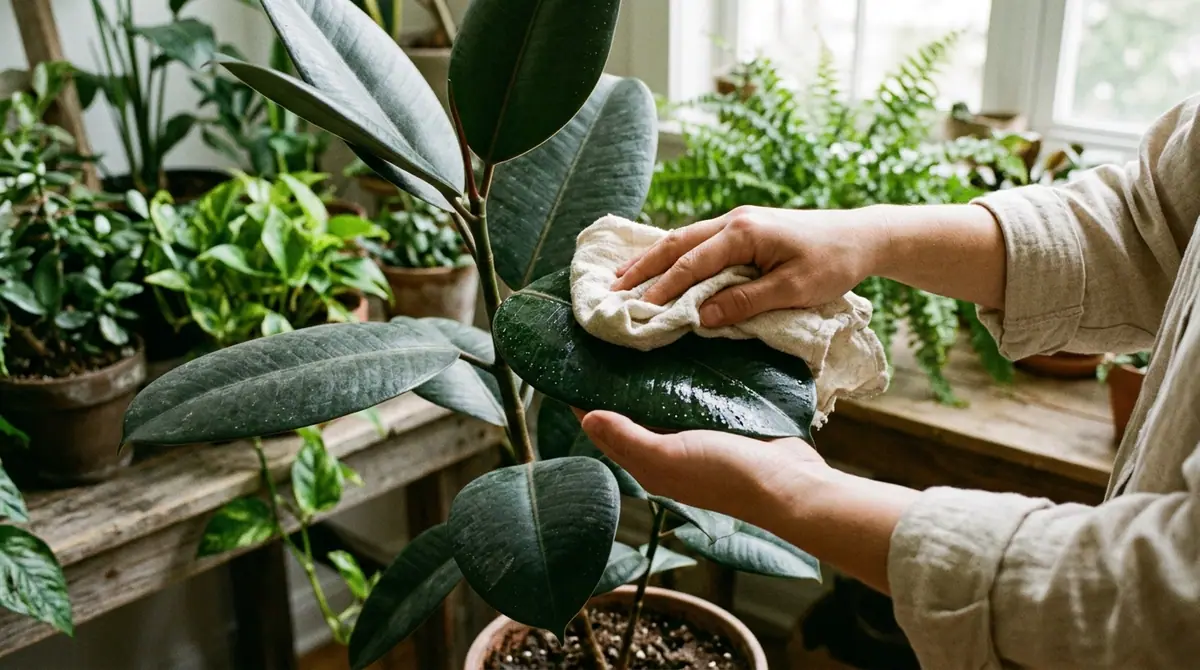
I was on my knees in a cramped conservatory in mid-November, staring frustatedly at a collection of otherwise thriving Monstera deliciosa specimens whose foliage looked uniformly dull and dusty, when it hit me: growers spend thousands on fertilizers and soil amendments, yet completely misunderstand the biological mechanics of how light interacts with plant epidermis.
1. Botanical Overview & Natural Habitat

The physical shine originates in the cuticle—a continuous extracellular hydrophobic layer covering the aerial epidermis of plants, composed primarily of cutin, a cross-linked polymer matrix, embedded and covered with cuticular waxes. When sunlight strikes this smooth, wax-coated crystalline surface, it undergoes specular reflection. This mirror-like reflection reduces light scattering, allowing photons to penetrate deeper into the palisade mesophyll cells where chloroplasts perform photosynthesis.
Beyond light capture, this waxy layer serves as a defensive barrier. In native habitats experiencing heavy tropical downpours ranging from 80 to 200 inches (203 to 508 cm) annually, natural leaf shine acts as a hydrophobic shield. Water droplets bead up instantly and roll off, sweeping away fungal spores, bacterial pathogens, and accumulated particulate debris. For a deeper scientific exploration of plant cuticles and epidermal adaptations, consult the Royal Horticultural Society.
2. Essential Environmental & Care Requirements
Maintaining the structural integrity of natural leaf shine requires strict adherence to environmental parameters. If humidity drops too low, the plant's metabolic pathways pull resources away from cuticular wax synthesis, resulting in a flat, matte appearance.
Temperature fluctuations also impact surface lipids. Tropical species cannot synthesize uniform cuticular waxes if ambient room temperatures drop below 60°F (15.5°C) for extended windows. Conversely, excessive heat exceeding 85°F (29.4°C) causes these natural waxes to soften and oxidize prematurely.
| Parameter | Optimal Condition | Common Mistake | Why It Matters |
|---|---|---|---|
| Ambient Humidity | 60% to 80% RH | Allowing drops below 40% RH | Low humidity desiccates surface cells, halting natural wax crystal formation. |
| Temperature Range | 68°F to 78°F (20°C to 25.5°C) | Exposing plants to cold drafts under 60°F (15.5°C) | Cold stress alters cellular lipid composition, destroying natural luster. |
| Light Exposure | Bright, indirect light (10,000–20,000 lux) | Direct, scorching midday sun | Excessive UV radiation melts and degrades delicate cuticular wax layers. |
| Dust Management | Weekly gentle wipe with a damp microfiber cloth | Using commercial aerosol leaf shine sprays | Heavy chemical sealants clog stomata, suffocating the leaf tissue. |
💡 Pro-Tip: Never rely on commercial silicone-based leaf shine sprays found in big-box garden centers. Over time, these petroleum and silicone polymers seal the stomatal pores on the underside and upper surface of the leaves, suffocating the plant and preventing essential gas exchange. Stick to mechanical cleaning with pure water or organic dilutions.
3. Step-by-Step Cultivation, Feeding & Propagation
Achieving and maintaining pristine leaf shine requires a disciplined maintenance protocol. When leaves accumulate dust, photosynthesis drops by up to 12% because particulate matter blocks stomatal access and light penetration.
Follow this 5-step maintenance protocol every 14 to 21 days to safely enhance and protect leaf luster:
- Prepare the Cleaning Solution: Mix 1 quart (0.95 liters) of tepid distilled water—measuring between 70°F and 75°F (21°C to 24°C)—with 3 drops of ultra-mild liquid castile soap and 2 drops of organic cold-pressed neem oil.
- Support the Foliage: Place one hand underneath the leaf blade to provide structural support, preventing structural snapping or petiole tearing during cleaning.
- Dust and Debris Removal: Using a soft, lint-free microfiber cloth dampened with the cleaning solution, gently wipe from the petiole base out toward the leaf tip using light, linear strokes.
- Rinse and Polish: Take a second, separate microfiber cloth dampened with pure, lukewarm water to wipe away any residual soap or neem oil traces, finishing with a dry buffing motion to stimulate specular reflection.
- Inspect Stomatal Health: Check the abaxial (underside) surface of the leaf to ensure no moisture pooling occurs in the leaf axils or veins, which can invite fungal colonization.
When propagating plants prized for their glossy foliage—such as Monstera albo-borsigiana or Philodendron gloriosum—take stem cuttings featuring at least one active node and a glossy, undamaged leaf. Root these cuttings in a sterile medium composed of 50% horticultural perlite and 50% sphagnum moss, maintaining a bottom heat of 75°F (23.9°C) for 21 to 35 days until root initials reach a length of 2 inches (5 cm).
4. Common Problems, Pests & Troubleshooting
Loss of leaf shine is often the earliest visible symptom of underlying environmental or pathogenic stress. When a glossy leaf turns dull overnight, evaluate these common issues:
- Calcium and Mineral Residue: Hard water containing high concentrations of calcium and magnesium leaves behind a chalky, white film that ruins leaf shine. Fix this by switching exclusively to rainwater, distilled water, or reverse osmosis water for both watering and foliar wiping.
- Spider Mites (Tetranychus urticae): These microscopic arachnids pierce epidermal cells to feed on plant sap, leaving behind a stippled, greyish-matte appearance accompanied by fine webbing. Treat infestations immediately by applying insecticidal soap every 7 days for a 21-day cycle to break the egg-laying lifecycle.
- Edema: Overwatering coupled with high humidity can cause internal water pressure to spike, bursting plant cells and leaving unsightly, raised corky scabs that permanently disrupt the smooth surface required for high leaf shine. For guidance on managing plant physiological disorders, consult the University of Florida IFAS Extension.
⚠️ Important Caution: Never apply horticultural oils or leaf shine products to plants experiencing drought stress or when ambient temperatures exceed 85°F (29.4°C). The combination of direct light and heavy oils acts as a magnifying lens, causing irreversible thermal scorching and necrotic black patches on the leaf tissue.

5. Frequently Asked Questions
What does leaf shine definition actually mean in botany?
In botany, leaf shine definition refers to the specular reflection of light off the plant's cuticular wax layer. This natural glossiness maximizes light absorption in low-light habitats while acting as a hydrophobic barrier against pathogens and moisture loss.
Can I use mayonnaise or milk to make my plant leaves shiny?
No. While older household myths suggest using mayonnaise, milk, or banana peels to create artificial leaf shine, these organic residues spoil quickly, emit foul odors, attract fungus gnats and spider mites, and severely clog stomata, ultimately suffocating the plant.
Why is my shiny plant suddenly looking dull and matte?
A sudden loss of leaf shine typically indicates an accumulation of dust, hard water mineral deposits, or early-stage pest infestations such as thrips or spider mites. Inadequate humidity or low light levels can also prevent the plant from synthesizing new cuticular waxes.
How often should I clean my indoor plant leaves to maintain their shine?
You should gently wipe down indoor tropical plant leaves with a damp microfiber cloth every 14 to 21 days. This removes dust blockages, enhances photosynthetic efficiency, and keeps the natural waxy cuticle healthy and reflective.
Related Guides
- Split Leaf Philodendron Plant
- Moisture Meter for Fiddle Leaf Fig
- How to Repot Fiddle Leaf Fig
- How to Prune Fiddle Leaf Fig Plant
- Rooting Hormone for Fiddle Leaf Fig
📋 Table of Contents ▼ Click to expand
Tags:
Keep reading
🌿 Related Plants You Might Like


PlantSavvyWorld
Editorial team
PlantSavvyWorld is an independent botanical education project. Articles are drafted with AI assistance, then edited and checked against university extension services, botanical garden collections and other published horticultural sources.