

Philodendron Burle Marx Fantasy
Written with AI assistance, edited and checked against horticultural sources.
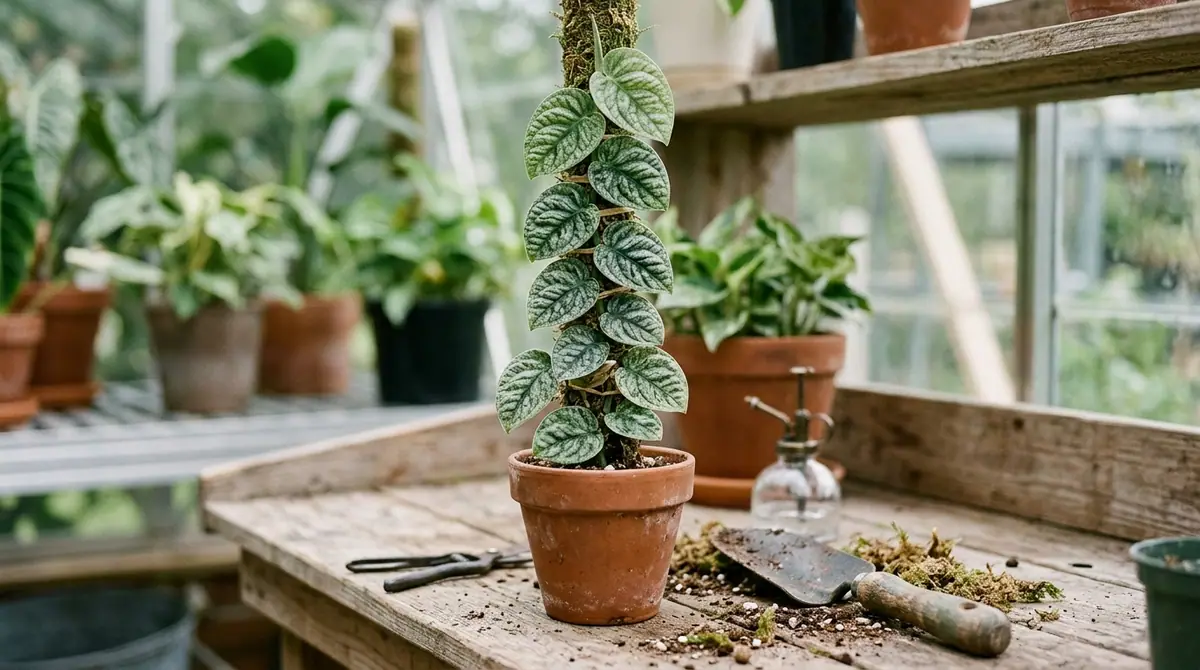
The Philodendron 'Burle Marx Fantasy' stands out for its compact, sculptural stature, deeply embossed silver-gray variegation, and sharply contrasting dark green veins. Unlike the glossy, sprawling greens of its namesake—the legendary Brazilian landscape architect Roberto Burle Marx—this sport mutation features a silvery, matte-textured leaf on newly emerged cuttings that can be pinned down successfully. It is a plant that demands a closer look, rewarding the observant grower with foliage that feels almost metallic to the touch.

1. Botanical Overview & Natural Habitat
To understand how to grow Philodendron 'Burle Marx Fantasy' indoors, we must first look at its botanical lineage and genetic context. While traditional aroid nomenclature can sometimes be muddy, this plant is widely recognized as a stable sport mutation of the classic Philodendron 'Burle Marx' (which itself is believed to trace its parentage to South American species native to the rainforests of Brazil).
Scientifically classified within the family Araceae and the subfamily Aroideae, the genus Philodendron comprises hundreds of species characterized by complex reproductive structures and diverse growth habits, ranging from epiphytes to terrestrial climbers. The 'Burle Marx Fantasy' leans toward a compact, semi-climbing or sprawling growth habit, with internodes that are significantly shorter than those of the standard green or yellow forms.
| Parameter | Optimal Condition | Common Mistake | Why It Matters |
|---|---|---|---|
| Light | 70% to 85% filtered, bright indirect light | Direct, unfiltered midday sun | Direct UV rays scorch the delicate silvery-blue leaf tissue and bleach the variegation. |
| Temperature | 65°F to 80°F (18°C to 27°C) | Exposing to drafts below 50°F (10°C) | Low temperatures trigger metabolic shock, arresting growth and inviting fungal rot. |
| Humidity | 60% to 80% relative humidity | Ambient home humidity below 40% | Low moisture prevents proper unfurling, leading to torn, deformed leaves and crisp edges. |
| Substrate pH | 5.5 to 6.5 slightly acidic | Heavy, unamended potting soil (pH > 7.0) | Acidic, well-aerated media optimizes micronutrient uptake, especially iron and manganese. |
The physical morphology of 'Burle Marx Fantasy' is what truly sets it apart. The leaves are typically cordate to hastate in shape, featuring a thick, coriaceous (leathery) texture. The upper surface exhibits a distinct ghost-like silver or metallic sheen, while the underside often displays a subtle purplish-red hue along the margins and petioles—a genetic vestige of its tropical understory heritage. Because it grows as an understory epiphyte or hemiepiphyte in its native tropical zones, it is genetically programmed to receive dappled sunlight filtered through a dense canopy overhead.
For further reading on the broader taxonomy and conservation of aroids, you can explore the botanical database provided by the Royal Botanic Gardens, Kew.
2. Essential Environmental & Care Requirements
Replicating a tropical understory in a domestic or office setting requires balancing light, moisture, and airflow with scientific precision.
Light is the primary driver of photosynthesis and color expression in this cultivar. Provide your plant with bright, indirect light. An east-facing window or a spot situated 3 feet to 5 feet (0.9 m to 1.5 m) away from a south- or west-facing window is ideal. If natural light is lacking, full-spectrum LED grow lights delivering approximately 2,000 to 3,000 foot-candles for 12 to 14 hours daily will maintain its tight growth form and vibrant silver tones.
Temperature management is equally critical. Maintain ambient temperatures between 65°F and 80°F (18°C to 27°C) during the active growing season. Avoid sudden thermal drops; temperatures falling below 55°F (13°C) will cause the plant to enter a defensive dormancy. Keep the plant away from heating vents, uninsulated winter windowpanes, and oscillating air conditioning drafts.
Humidity should be maintained between 60% and 80%. While the plant can survive in standard room humidity of 40%, its leaves will frequently get stuck during emergence, resulting in unsightly rips. Use an ultrasonic humidistat-controlled humidifier in your growing space to keep the air consistently moist.
Watering must follow a strict "dry-to-touch" protocol. Check the moisture level by inserting your finger 2 inches (5 cm) into the potting mix. If the soil feels dry at that depth, water thoroughly until it runs freely through the drainage holes. Never let the pot sit in standing water, as stagnant moisture deprives the roots of oxygen.
💡 Pro-Tip: When dealing with high-humidity indoor spaces, always pair your humidifier with a small, oscillating clip-on fan running on low speed for a few hours a day. Gentle air movement prevents boundary-layer stagnation on the leaves, drastically reducing the risk of fungal pathogens like Erwinia and Pseudomonas while strengthening the plant's structural stems.
3. Step-by-Step Cultivation, Feeding & Propagation
Successful cultivation of Philodendron 'Burle Marx Fantasy' relies on a specialized, chunky aroid substrate that mimics the airy, organic-rich debris found clinging to tropical tree trunks.
The Ideal Aroid Mix Recipe
- 40% high-grade, chunky orchid bark (1/4 inch to 1/2 inch particle size)
- 20% horticultural perlite or pumice for micro-aeration
- 20% organic coco coir or peat-based potting soil
- 10% horticultural charcoal (to filter impurities and sweeten the soil)
- 10% worm castings (for slow-release organic nutrition)
When it comes to feeding, use a balanced, water-soluble foliage fertilizer formulated with micronutrients, diluted to half-strength. Apply this every 4 to 6 weeks during the spring and summer growing seasons. Cease fertilization entirely from late autumn through winter when natural light levels drop and growth slows down.
Propagation is straightforward thanks to the plant’s node structure. Here is how to propagate your plant safely:
- Select a Healthy Stem: Inspect your mother plant and identify a vigorous stem section that contains at least two distinct nodes (the swollen rings where leaves and aerial roots emerge) and at least one healthy leaf.
- Sterilize Your Tools: Wipe a pair of sharp pruning shears or a razor blade with 70% isopropyl alcohol to prevent transmitting pathogens to the open wounds.
- Make the Cut: Sever the stem approximately 0.5 inches (1.3 cm) below the lower node, ensuring you do not crush or tear the vascular tissue.
- Apply Rooting Hormone: Lightly dust the cut end with rooting hormone powder containing IBA (Indole-3-butyric acid) to accelerate root initiation.
- Choose Your Propagation Medium: Place the cutting into a clean vessel filled with pre-moistened sphagnum moss, perlite, or a perlite-water mix. If using water, ensure only the node is submerged while the leaves remain entirely above the surface.
- Provide Optimal Environment: Place the setup in an area receiving bright, indirect light with temperatures around 75°F (24°C) and high humidity (enclosing the cutting in a clear plastic bag or propagation dome works wonderfully).
- Monitor and Transplant: Roots should begin to emerge within 14 to 21 days. Once the secondary roots reach a length of 1.5 inches to 2 inches (3.8 cm to 5 cm), carefully pot the cutting into your custom aroid soil mix.
⚠️ Important Caution: All parts of Philodendron 'Burle Marx Fantasy' contain calcium oxalate crystals in the form of raphides. When chewed or ingested, these microscopic needle-like crystals cause immediate irritation, intense burning, and swelling of the oral tissues in humans and pets. Keep this plant well out of reach of curious cats, dogs, and small children.
4. Common Problems, Pests & Troubleshooting
Even under optimal care, aroids can occasionally encounter environmental stressors or opportunistic pests. Accurate diagnosis is your best defense.
Yellowing Lower Leaves: If older leaves at the base of the plant turn uniformly yellow and drop, you are likely overwatering or the soil drainage is inadequate. Allow the potting medium to dry out completely before resuming a more conservative watering schedule.
Brown, Crispy Leaf Margins: This is a classic symptom of relative humidity dropping below 45% or chronic underwatering. Ensure your humidifier is functioning and check that your watering depth reaches the entire root ball.
Stretched, Leggy Growth with Faded Silver: If the internodal spacing widens and the silver variegation becomes dull or greenish-white, the plant is starving for light. Move it closer to a bright, indirect light source or supplement with horticultural lighting.
Pest Infestations: Spider mites and mealybugs are the most common culprits in indoor environments. Spider mites thrive in warm, dry air, weaving fine webs on the undersides of leaves while stippling the foliage. Mealybugs appear as small, cottony white masses in leaf axils and along stem joints. Treat minor outbreaks by wiping the foliage down with a horticultural soap solution or neem oil diluted according to the manufacturer's directions. For severe infestations, systematic treatments or insecticidal soaps applied every 7 days for a 21-day cycle will break the pest reproductive life cycle.

5. Frequently Asked Questions
Is Philodendron Burle Marx Fantasy a climber or a crawler?
It exhibits a semi-climbing, sprawling habit with relatively short internodes. While it can trail gracefully out of a hanging basket or off a shelf, providing a small moss pole or wooden plank allows it to climb upward, often resulting in larger, more mature leaves.
Why is my Philodendron Burle Marx Fantasy losing its silver color?
A loss of the signature silvery-blue metallic sheen usually points to insufficient light. When deprived of adequate lumens, the plant produces more chlorophyll to compensate, causing the leaves to turn a more uniform, flat green. Move the plant to a brighter location with indirect light to restore its variegation.
How often should I water my Philodendron Burle Marx Fantasy?
There is no fixed calendar schedule for watering; instead, water based on soil moisture. Generally, in a well-aerated aroid mix, this means watering every 7 to 10 days during the warm growing season and extending that interval to every 14 to 21 days in the winter. Always verify that the top 2 inches (5 cm) of soil are completely dry before applying water.
Can I grow Philodendron Burle Marx Fantasy in a terrarium?
Yes, absolutely. Because juvenile specimens maintain a compact, miniature stature and thrive in high relative humidity, they are exceptional candidates for closed or open glass terrariums and tropical vivariums, provided there is adequate air circulation to prevent stagnant moisture buildup.
Related Guides
📋 Table of Contents ▼ Click to expand
Tags:
Keep reading
🌿 Related Plants You Might Like


PlantSavvyWorld
Editorial team
PlantSavvyWorld is an independent botanical education project. Articles are drafted with AI assistance, then edited and checked against university extension services, botanical garden collections and other published horticultural sources.