

Mulch Bulk vs Bag
Written with AI assistance, edited and checked against horticultural sources.
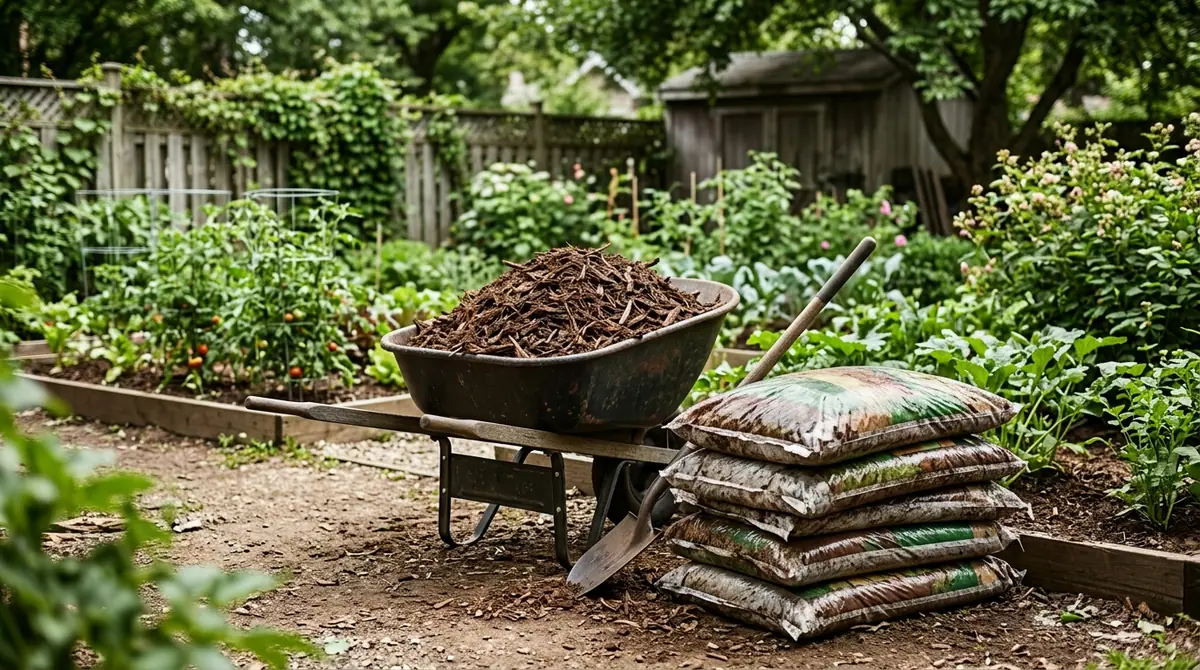
When comparing bulk versus bagged landscaping materials, homeowners weigh the convenience of plastic cubes against the economic scale of a cubic-yard dump truck load, especially when calculating mulch needs in conditions such as 88°F (31°C) heat. Understanding the mathematics, soil science, and practical logistics of mulch bulk vs bag helps determine the right call for an ecosystem, physical effort, and budget.
1. Botanical Overview & Natural Habitat

When we replicate this system in a designed landscape, the material we select dictates how the soil microbiome behaves. Whether you source your organic matter loose by the truckload or stacked neatly in plastic film, the foundational biology remains identical. Both bulk and bagged mulches are designed to moderate soil temperatures (buffering ambient swings that can shock feeder roots when soil hits 75°F [24°C] and above), suppress weed seed germination by blocking photosynthetically active radiation, and slowly mineralize into humus.
The primary divergence between bulk and bag lies not in their inherent botanical composition, but in their processing history, moisture status at the time of application, and economic footprint. Bagged products are frequently kiln-dried or stored indoors, meaning they are hydrophobic upon initial application and require immediate, deep watering to break surface tension. Bulk materials, conversely, often sit outside in massive windrows where internal composting generates core temperatures exceeding 130°F (54°C), killing off weed seeds and fungal pathogens before the material ever reaches your property. Understanding these processing differences helps us integrate organic mulches properly without introducing unwanted chemical treatments or anaerobic sour mulch into our beds.
2. Essential Environmental & Care Requirements
Applying mulch is an exercise in ecological precision. Too little, and you fail to suppress annual weeds; too much, and you suffocate the root flare of your woody ornamentals, inviting collar rot and rodent habitation.
For optimal thermal insulation and moisture conservation, maintain a finished mulch depth of precisely 2 to 3 inches (5 to 7.5 cm) across garden beds, tapering down to zero inches within 3 inches (7.5 cm) of plant stems and tree trunks. Never commit the cardinal sin of volcano mulching—heaping material up the bark of a tree—which traps moisture against the phloem and invites fungal decay.
| Parameter | Optimal Condition | Common Mistake | Why It Matters |
|---|---|---|---|
| Application Depth | 2 to 3 inches (5 to 7.5 cm) | Piling mulch 6+ inches deep ("volcano mulching") | Thick layers cut off oxygen exchange to roots and rot tree bark. |
| Distance from Trunks | 3 inches (7.5 cm) clear | Pushing mulch directly against stems/trunks | Promotes collar rot, rodent nests, and insect damage. |
| Moisture Content | Damp, hand-squeezed sponge feel | Applying bone-dry bagged mulch without pre-soaking | Dry mulch repels initial irrigation, floating away or pulling moisture from soil. |
| Particle Sizing | 0.5 to 2-inch (1.2 to 5 cm) shreds | Ultra-fine sawdust or massive unchopped logs | Fine dust packs into an impenetrable crust; massive chunks take years to settle. |
When calculating your volume requirements, remember the golden formula: length multiplied by width multiplied by depth (in feet) divided by 27 gives you total cubic yards. One cubic yard of bulk mulch covers approximately 100 square feet at a 3-inch (7.5 cm) depth. If you are managing spaces where pets frequent, remember to evaluate safety thoroughly, as certain styles can pose risks; consult our guide on Is Mulch Bad for Dogs before selecting dyed or cocoa shell varieties. Furthermore, if you are establishing productive kitchen gardens, the choice between bulk and bagged materials directly influences your soil's long-term fertility, a topic we explore deeply in our guide on Benefits of Using Mulch in Organic Vegetable Gardening.
💡 Pro-Tip: When buying bulk mulch, always ask your supplier if the material has aged for at least 30 to 60 days. Freshly chipped arborists' wood waste undergoes a rapid microbial spike that temporarily strips nitrogen from the top 0.5 inches (1.2 cm) of your soil as bacteria feast on simple sugars. Letting bulk piles cure or supplementing with a light broadcast of blood meal prevents nitrogen lock-out in tender annuals.
3. Step-by-Step Cultivation, Feeding & Propagation
Transitioning your landscape beds from bare earth or degraded old mulch to a pristine, functional organic layer requires a methodical workflow. Whether your delivery arrives in a massive heap on the driveway or stacked on a pallet, follow this protocol for professional results.
- Clear and Weed: Pull all perennial weeds by the root and rake away debris within a 4-foot (1.2 m) radius of existing shrubs to eliminate competition for water and nutrients.
- Amend and Fertilize: Broadcast any necessary slow-release organic amendments, compost, or balanced granular fertilizers directly onto the bare soil surface before installation.
- Calculate Volumes Accurately: Measure your square footage. For projects exceeding 3 cubic yards (approx. 27 bags), order bulk delivery; for anything under 1.5 cubic yards, bagged mulch saves time on cleanup and manual wheelbarrow transit.
- Stage Your Material: If using bags, distribute them evenly across the beds every 6 to 8 feet (1.8 to 2.4 m) to minimize the distance you must carry heavy loads. If using bulk, place a tarp on your driveway to prevent staining and ease shovel pickup.
- Establish Edges: Use a half-moon edger to cut a clean 2-inch-deep (5 cm) vertical trench along turf borders. This prevents grass runners from invading and gives your mulch a crisp architectural boundary.
- Apply and Spread: Pitchfork or shovel the mulch into the beds, spreading it out with a garden rake to a uniform depth of 2 to 3 inches (5 to 7.5 cm).
- Pull Back from Stems: Use your hands or a small hand trowel to rake mulch away from the base of all plants, exposing the root flare completely.
- Water in Thoroughly: Run overhead sprinklers or a gentle hose wand over the entire bed for 20 minutes to settle dust, bind the particles together, and eliminate air pockets.
4. Common Problems, Pests & Troubleshooting
Even with meticulous installation, organic mulches can occasionally present unexpected biological phenomena. Knowing how to diagnose these issues prevents panic and saves your plants.
- Artillery Fungus (Sphaerobolus stellatus): These tiny cup fungi live in decaying wood and can shoot sticky black spore masses up to 20 feet onto siding and vehicles. To prevent this, avoid overly wet, shredded hardwood mulches close to light-colored buildings; switch to coarse bark nuggets or pine straw in foundation beds.
- Slime Molds (Dog Vomit Fungus): Bright yellow or orange foam-like masses frequently appear on fresh mulch after heavy spring rains. This is harmless saprophytic fungi consuming organic matter. Break it up with a rake or wash it away with a hose; no chemical fungicides are required.
- Sour Mulch Syndrome: If bulk mulch is piled too high in transit or storage without oxygen, anaerobic bacteria take over, producing acetic acid and foul sulfur odors.
⚠️ Important Caution: Never apply sour mulch that smells like vinegar, sulfur, or ammonia directly to your garden beds. The low pH and toxic organic acids will burn tender plant roots and stunt growth. Spread the bulk pile thin, let it air out for 7 to 10 days until the odor dissipates entirely, and test the pH before applying.

5. Frequently Asked Questions
Is bulk mulch actually cheaper than bagged mulch?
Yes, on a per-cubic-foot basis, bulk mulch is almost always significantly less expensive. A standard cubic yard of bulk mulch equals roughly 13.5 bags (at 2 cubic feet per bag). When factoring in retail bag costs versus bulk delivery fees, bulk pricing typically saves you 30% to 50% on projects exceeding two cubic yards, though you must factor in the physical labor of shoveling and wheelbarrowing.
How do I calculate how many bags of mulch I need?
Measure your bed's length and width in feet, multiply them to get total square footage, and divide that number by the coverage rate printed on your bag (a standard 2-cubic-foot bag covers 12 square feet at a 2-inch depth). For example, a 300-square-foot bed requires 25 bags of mulch for a standard 2-inch layer.
Does bulk mulch attract more weeds and pests than bagged mulch?
Not inherently, but local bulk yards sometimes store mulch in open-air lots where weed seeds and wind-blown debris can settle into the outer layers of the pile. Premium bulk suppliers screen their material thoroughly. Bagged mulch is sealed during processing, giving it a temporary head start against weed seed infiltration until it sits exposed in your yard.
What is the best way to clean up spilled mulch from a driveway?
For bulk mulch spills on asphalt or concrete, let the material dry out for 24 hours so it is easy to shovel and sweep the bulk of it away. For lingering fine wood dust and tannin stains, scrub the area with a stiff-bristle push broom, a solution of oxygen bleach, and a pressure washer to lift organic tannins from porous surfaces.
Related Guides
- Mulch Bagged vs Bulk
- Mulch for Peonies
- Is Pine Bark Mulch Good
- Is Mulch Bad for Dogs
- Benefits of Using Mulch in Organic Vegetable Gardening
📋 Table of Contents ▼ Click to expand
Tags:
Keep reading
🌿 Related Plants You Might Like





PlantSavvyWorld
Editorial team
PlantSavvyWorld is an independent botanical education project. Articles are drafted with AI assistance, then edited and checked against university extension services, botanical garden collections and other published horticultural sources.