

Mulch Bagged vs Bulk
Written with AI assistance, edited and checked against horticultural sources.
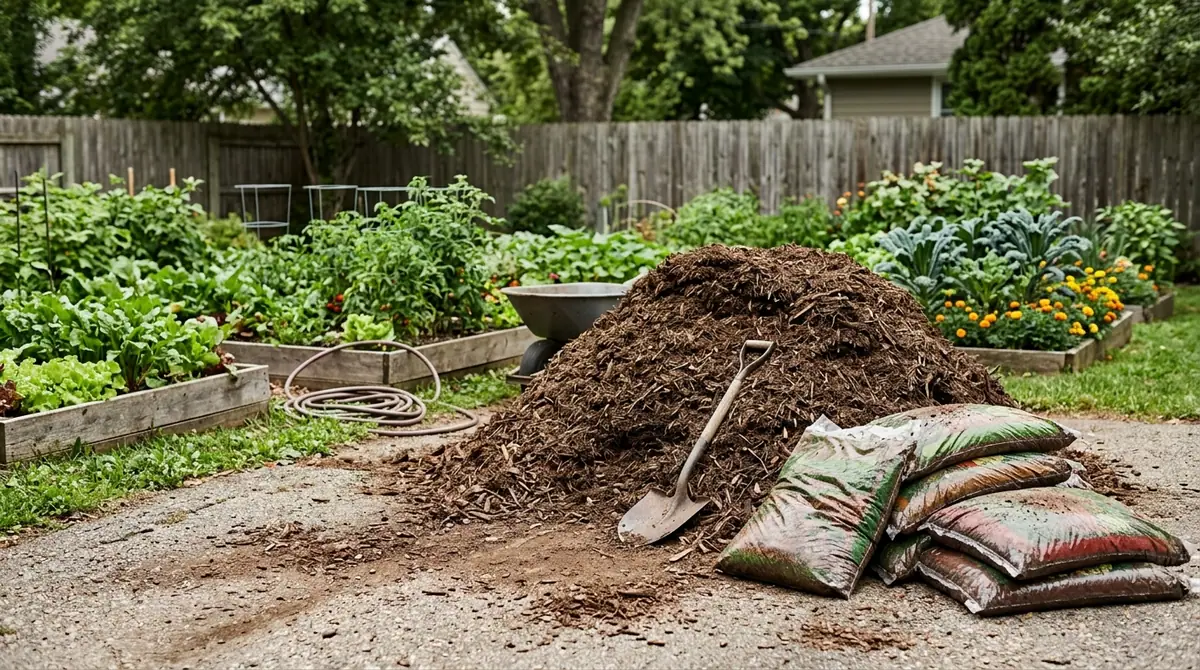
When considering mulch bagged vs bulk, choosing between them impacts soil biology, moisture retention, weed suppression, and physical strain. Growers regularly weigh these options, as purchasing mulch involves differences beyond simple cost at the garden center.

1. Botanical Overview & Natural Habitat
In an undisturbed woodland ecosystem, mulch is not purchased in plastic or dumped from the back of a dump truck. Instead, it is a continuous, stratified layer of leaf litter, fallen twigs, decaying bark, and fungal mycelium known collectively as the forest floor duff. This natural layer acts as a thermal blanket and a slow-release fertilizer factory.
When we replicate this in designed landscapes using either bagged or bulk organic materials, we are attempting to mimic the top 2.0 to 4.0 inches (5.0 to 10.0 cm) of a healthy temperate forest soil. Mechanically, both bagged and bulk mulches serve the same primary botanical functions:
- Regulating soil temperature swings, keeping root zones cooler during scorching summer days when soil temperatures can otherwise soar past 95°F (35°C).
- Suppressing weed seed germination by blocking Photosynthetically Active Radiation (PAR) from reaching the soil surface.
- Mitigating soil compaction caused by heavy rain events dropping at velocities up to 20 mph (32 km/h).
However, the physical journey of bagged versus bulk mulch alters its initial moisture content, microbial colonization, and particle size distribution before it ever touches your soil. Bulk mulch is typically stored in massive open-air piles where aerobic decomposition is already actively occurring, hosting beneficial mycorrhizal fungi and mesophilic bacteria. Bagged mulch, by contrast, is compressed, sealed in UV-treated polyethylene bags for weeks or months, and often undergoes partial anaerobic digestion, which can temporarily create volatile organic acids that require a brief airing-out period upon opening.
2. Essential Environmental & Care Requirements
Applying mulch correctly requires adhering to strict biological parameters to prevent suffocating plant root collars and introducing pathogens. Improperly applied mulch invites crown rot, vole infestations, and nutrient tie-up.
To ensure optimal plant health, consult the operational parameters below before selecting your mulch format or laying down your first shovel full.
| Parameter | Optimal Condition | Common Mistake | Why It Matters |
|---|---|---|---|
| Application Depth | 2.0 to 3.0 inches (5.0 to 7.6 cm) | Piling mulch 6.0+ inches (15+ cm) deep | Excessive depth deprives roots of oxygen and traps excess moisture against stems. |
| Collar Clearance | 2.0 to 4.0 inches (5.0 to 10.0 cm) away from trunks | Creating "mulch volcanoes" touching the bark | Retained moisture causes bark decay, inviting wood-boring insects and fungal pathogens. |
| Moisture Content at Laying | 40% to 60% saturation | Laying bone-dry hydro-phobic mulch | Dry mulch will wick essential moisture away from the underlying soil rather than retaining it. |
| Particle Size | Graduated mix of fines and 1.0 to 2.0 inch (2.5 to 5.0 cm) chunks | Ultra-fine, powdery dyed mulches | Powdery mulches compact tightly, forming an impermeable crust that sheds irrigation water. |
💡 Pro-Tip: Always check the internal temperature of a freshly opened bag or a newly delivered bulk pile. If the internal core temperature exceeds 110°F (43°C), the material is undergoing rapid, uncontrolled thermophilic composting that can generate phytotoxic compounds. Let it vent for 48 to 72 hours before spreading it around sensitive perennials.
3. Step-by-Step Cultivation, Feeding & Propagation
Transitioning your landscape beds from bare soil or weed-choked turf to a pristine, protected environment requires a systematic approach. Whether you are hauling bags or shoveling bulk, follow this exact protocol to maximize the longevity and efficacy of your mulch layer.
- Calculate Volume Requirements: Measure your beds in square feet. Multiply the square footage by the desired depth in feet (e.g., 2 inches = 0.166 feet) to find the total cubic feet needed. Divide by 27 to convert cubic feet to cubic yards. As a rule of thumb, one cubic yard covers approximately 162 square feet at a 2.0-inch (5.0 cm) depth.
- Clear and Weed: Remove all perennial weed roots, debris, and existing compaction crusts. Hand-pull weeds rather than using systemic herbicides that could leach into your root zones.
- Amend Soil Biology: Before laying the mulch, broadcast a balanced organic slow-release fertilizer or a thin 0.5-inch (1.2 cm) layer of finished compost to feed the soil food web, mitigating the temporary nitrogen immobilization that occurs as surface wood begins to break down.
- Transport and Stage:
- If using bagged: Load bags into your vehicle, transport to the site, and place individual bags directly next to the beds where they will be emptied to minimize manual carrying distance.
- If using bulk: Lay heavy-duty geotextile tarps on your driveway or turf drop zone before the delivery truck arrives to prevent driveway staining and ease clean-up.
- Spread and Level: Empty bags or shovel bulk material into the beds. Use a landscape rake to distribute the material evenly, maintaining a strict depth of 2.0 to 3.0 inches (5.0 to 7.6 cm).
- Create the Buffer Zone: Pull the mulch back completely from the base of all trees, shrubs, and perennials. Maintain a clear 3.0-inch (7.6 cm) breathing ring around every stem.
- Settle with Water: Apply a gentle overhead irrigation of 0.5 inches (1.2 cm) of water to settle the fines, bind the particle matrix together against wind erosion, and initiate beneficial microbial activity.
⚠️ Important Caution: If you have domestic animals visiting your landscape, verify the source of your bulk or bagged mulch. For comprehensive safety guidelines regarding household pets, consult our detailed analysis on is mulch bad for dogs, particularly regarding cocoa shell mulches and sharp, un-aged pallet scraps.
4. Common Problems, Pests & Troubleshooting
Even when you purchase premium mulch—whether bagged from a home improvement store or bulk from a local landscape yard—issues can arise during the decomposition cycle.
- Artillery Fungus (Sphaerobolus stellatus): These tiny cup fungi live on decaying wood and shoot sticky, black spore masses up to 20 feet (6 meters) onto house siding and cars. Solution: Switch from shredded bark mulches to large pine nuggets or stone in areas immediately adjacent to light-colored buildings.
- Slime Mold (Fuligo septica): Often called "dog vomit fungus," this bright yellow or orange sponge-like mass appears rapidly during humid summer weather (temperatures consistently between 75°F and 85°F / 24°C to 29°C). Solution: Do not panic; it is completely harmless to plants. Simply break it up with a garden rake to expose it to dry air, or let it run its natural course over 4 to 7 days.
- Nitrogen Immobilization (Yellowing Foliage): If plants show signs of chlorosis shortly after mulching, soil microbes are temporarily consuming available nitrogen in the top 0.5 inches (1.2 cm) of soil as they break down carbon-rich wood. Solution: Apply a light top-dressing of blood meal or a fast-acting organic nitrogen fertilizer directly beneath the mulch layer.

5. Frequently Asked Questions
Which is cheaper: bagged or bulk mulch?
Bulk mulch is almost universally more cost-effective for any project exceeding 3 cubic yards (approximately 40 to 45 standard bags). When you purchase bulk, you are paying for the raw material and delivery logistics rather than the individual polyethylene packaging, labor of bagging, and retail markup. However, if your project requires less than 2 cubic yards, bulk delivery fees often wipe out the per-cubic-yard savings, making individual bags the more economical choice.
How do I calculate how many bags of mulch I need?
Standard landscape mulch bags contain 2 cubic feet of material. There are 27 cubic feet in a single cubic yard. Therefore, you will need roughly 13.5 bags of mulch to equal one cubic yard of bulk material. To find your total bag count, calculate your total cubic footage needed (Area in sq ft × desired depth in feet) and divide that number by 2. Always round up by 10% to account for irregular bed contours, spillage, and settling.
Does bulk mulch attract more weeds and bugs than bagged mulch?
Not inherently, but the source and handling matter. Bulk mulch sits in large outdoor piles where wind-borne weed seeds and insects can settle more easily than inside a sealed plastic bag. However, high-quality bulk suppliers turn their piles frequently, using internal thermophilic composting temperatures (often exceeding 140°F / 60°C) to naturally sterilize weed seeds and insect larvae. Cheap bagged mulch, conversely, can sometimes be stored outdoors in damaged packaging for months, inviting infestations just as readily as bulk piles.
Is bulk mulch higher quality than bagged mulch?
Quality is determined by the raw ingredients (e.g., pure hardwood bark versus recycled pallet wood containing nails and chemical residues), not the delivery method. You can find premium aged bark and poor-quality construction waste in both formats. For rigorous standards on soil amendments and sustainable forestry practices, reference the guidelines published by the Royal Horticultural Society (RHS). Always inspect a physical sample of bulk mulch before ordering a full truckload to verify particle uniformity and check for contaminants.
Related Guides
- Mulch Bulk vs Bag
- Mulch for Peonies
- Is Pine Bark Mulch Good
- Is Mulch Bad for Dogs
- Benefits of Using Mulch in Organic Vegetable Gardening
📋 Table of Contents ▼ Click to expand
Tags:
Keep reading
🌿 Related Plants You Might Like

PlantSavvyWorld
Editorial team
PlantSavvyWorld is an independent botanical education project. Articles are drafted with AI assistance, then edited and checked against university extension services, botanical garden collections and other published horticultural sources.