

Plumeria Dormant
Written with AI assistance, edited and checked against horticultural sources.
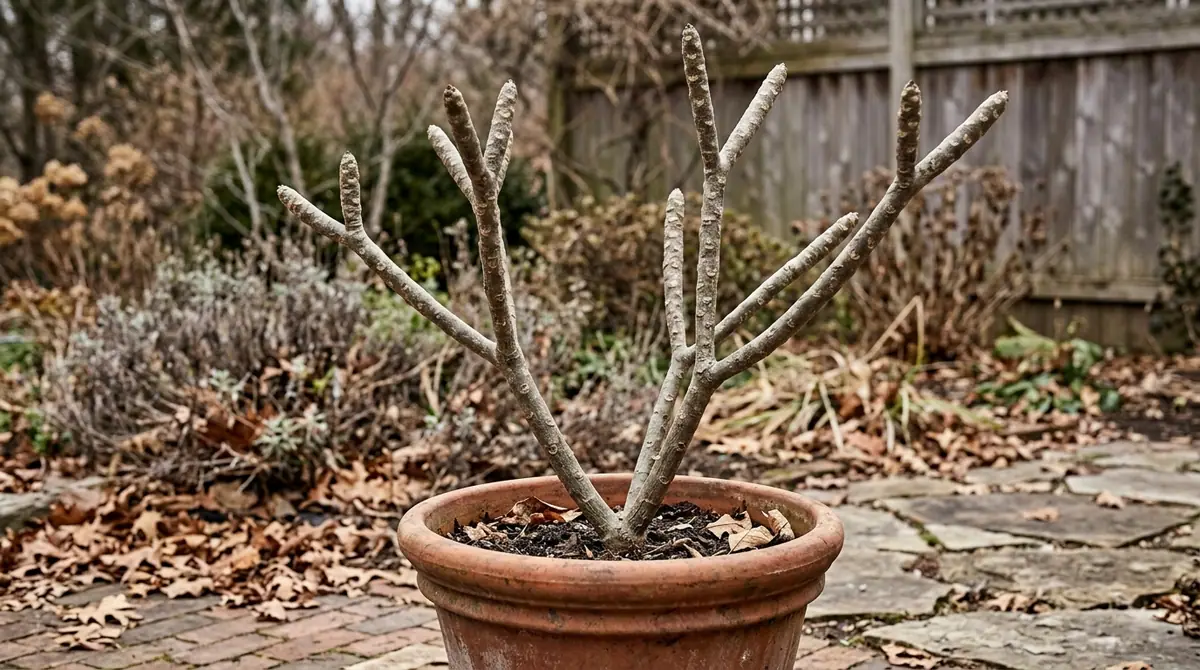
Every October, as the night temperatures in my zone 9b experimental garden dip below 55°F (13°C), my prized collection of Plumeria rubra undergoes a dramatic metamorphosis. Walking past rows of tropical giants, I watch their leathery, foot-long leaves yellow, droop, and cascade to the mulch below, leaving behind naked, gray-green candelabra stems. To the untrained eye, this sudden defoliation looks like a terminal plant disease. But I know this is simply nature’s sophisticated survival mechanism—a deep, protective dormancy triggered by dropping photoperiods and cooling soils. Managing this transitional phase correctly is the single most critical factor in determining whether your plumerias return with explosive fragrance in June or rot quietly in their containers by January.
1. Botanical Overview & Natural Habitat

In their native habitat, the dry season brings intense heat, minimal rainfall, and dropping humidity. To survive months of drought without a functional root system pulling moisture from parched earth, the plant developed a deciduality strategy: it sheds its foliage entirely. By eliminating its leaves, the plant stops transpiration—the process by which water evaporates through leaf pores. This conserves internal moisture reserves within its thick, succulent stems, allowing the plumeria to weather severe drought or cold snaps in a state of metabolic suspension.
Understanding this evolutionary history is essential for home growers. When your plumeria goes dormant in autumn, it is not dying; it is entering a period of forced hibernation designed to protect its cellular integrity. For a deeper academic look into plant adaptations during seasonal shifts, consult the Royal Horticultural Society Plant Profile.
2. Essential Environmental & Care Requirements
When a plumeria enters dormancy, its metabolic rate plummets. Photosynthesis halts, root growth ceases, and nutrient uptake drops to near zero. Consequently, the environmental parameters that keep your plant thriving in mid-summer will kill it in mid-winter.
Temperature is the primary trigger. When ambient air and soil temperatures consistently fall below 50°F (10°C), cellular activity slows drastically. If left exposed to freezing temperatures (32°F / 0°C or lower), the water inside the plant's succulent stems expands as it freezes, rupturing cell walls and turning the branches to mush.
Light requirements also shift. While summer plumerias demand 6 to 8 hours of direct, uninhibited sunlight, dormant plumerias kept indoors or in a garage require very little light. In fact, many growers successfully overwinter their plants in total darkness in a basement, provided temperatures remain stable.
| Parameter | Optimal Condition | Common Mistake | Why It Matters |
|---|---|---|---|
| Temperature | 45°F – 60°F (7°C – 15°C) | Exposing to frost or freezing winds | Freezing ruptures succulent cell walls, causing fatal stem rot. |
| Watering | Zero to minimal (once every 4-6 weeks) | Keeping soil consistently damp | Wet, cold soil promotes Phytophthora and stem rot pathogens. |
| Lighting | Low light or total darkness | Forcing high-light growth in winter | Out-of-season growth produces weak, etiolated stems that drain energy. |
| Soil Drainage | Highly porous, gritty mix | Heavy organic garden loam | Dense soil holds moisture, suffocating inactive roots. |
⚠️ Important Caution: Never fertilize a dormant plumeria. Pushing synthetic nitrogen or phosphorus into a plant that cannot process nutrients will cause root burn and invite opportunistic fungal pathogens. Resume fertilization only when new leaf buds emerge in spring.
3. Step-by-Step Cultivation, Feeding & Propagation
Preparing your plumeria for dormancy and managing it through the winter months requires a methodical approach. Follow this step-by-step protocol to ensure your plants survive the cold season unscathed.
- Monitor Autumn Temperatures: Begin tracking local forecasts in early autumn. When nighttime lows consistently drop below 55°F (13°C) for three consecutive nights, prepare to transition your plumeria indoors or into a protected greenhouse.
- Cease Fertilization: Apply your final low-nitrogen, high-phosphorus bloom booster (such as a 10-30-10 formula) no later than late August. Stop all feeding entirely by mid-September to allow current growth to harden off.
- Withhold Water Gradually: Reduce watering frequency by 50% in October. By November, stop watering entirely. Allow the potting medium to dry out completely down to the bottom of the container, usually a depth of 12 inches (30 cm) or more.
- Prune for Space and Health (Optional): Once all leaves have fallen naturally, use sterilized pruning shears to remove any dead, diseased, or crossing branches. Make clean cuts at a 45-degree angle approximately 0.25 inches (0.6 cm) above a latent node.
- Relocate to Winter Quarters: Move potted plumerias to a frost-free location where temperatures remain between 45°F and 60°F (7°C and 15°C). Garages, basements, bright utility rooms, or heated greenhouses are ideal.
- Perform Periodic Stem Checks: Inspect your dormant stems every 21 days throughout the winter. Gently squeeze the tips; a healthy dormant stem should feel firm and rigid, much like a dense piece of wood.
- Initiate Spring Awakening: When ambient spring temperatures consistently exceed 65°F (18°C) and you notice the central growing tips beginning to swell or turn green, move the plant back into bright morning sun and give it a thorough, deep watering to jumpstart root activity.
💡 Pro-Tip: If you live in an apartment or lack storage space, you can "bare-root" your plumeria for the winter. Gently pull the plant from its pot in late autumn, shake all the soil from the roots, trim away dead root tissue, wrap the root ball in newspaper or brown paper bags, and hang the plant upside down in a frost-free closet or basement until spring.
4. Common Problems, Pests & Troubleshooting
Even with careful management, dormant plumerias can encounter issues. Diagnosing them quickly saves the plant before spring arrives.
- Soft, Wrinkled Stems: If a branch feels spongy or mushy when squeezed, or if the skin develops deep wrinkles, it indicates stem rot (often caused by lingering moisture in the soil or freezing temperatures). Use a sterile pruning saw or knife to cut away the infected tissue until you see clean, white, latex-oozing wood. Dust the wound with powdered sulfur or cinnamon to act as a natural fungicide.
- Overwinter Pest Infestations: While dormant, plumerias can still harbor microscopic pests like spider mites or mealybugs tucked tightly inside the tight, overlapping scales of the apical growing tips. Inspect these tips monthly with a hand lens. If you spot webbing or white cottony masses, dab the area with a cotton swab dipped in 70% isopropyl alcohol.
- Desiccation: While rare in cool, humid garages, extreme indoor heating can cause stems to shrivel excessively. If the stem feels slightly rubbery (not mushy) by late February, give the root ball a single, light splash of water—no more than 1 pint (0.5 liters) for a 5-gallon container—to rehydrate the core tissues without triggering rot.

5. Frequently Asked Questions
Should I cut all the leaves off my plumeria for the winter?
No, you do not need to forcibly strip the leaves unless they are harboring pests or fungal diseases. It is far better to let the plant yellow and drop its leaves naturally. Plumeria reabsorbs valuable nutrients and carbohydrates from the foliage before shedding it, so forced defoliation deprives the plant of stored energy reserves.
Why is my dormant plumeria stem turning black at the tip?
Black tip is a common condition during winter storage, usually triggered by sudden temperature drops, high humidity, or residual moisture sitting on the exposed growing tip. To stop the rot from spreading down the main branch, cut the stem back 2 inches below the black, discolored zone into healthy green tissue, then seal the cut with waterproof wood glue or a commercial pruning sealer.
Can plumeria survive outdoors in the winter if I cover it?
If you live in USDA Hardiness Zones 10a or higher where freezes are exceptionally rare and brief, mature inground plumerias can survive outdoors with a breathable frost cloth and a thick layer of mulch. However, in zones 9b and colder, freezing ground temperatures will quickly destroy the root system. Container growing and indoor winter storage remain the safest method for temperate gardeners.
When should I give my plumeria its first water in the spring?
Do not water your plumeria based strictly on the calendar date; water it based on visual and tactile cues from the plant itself. Wait until outdoor temperatures are reliably warm (above 65°F / 18°C) and you see the tight, gray apical tips at the end of the branches begin to expand, turn green, and push upward. Giving water before these growth signals appear will rot the dormant, inactive root system.
Related Guides
- Rooting Plumeria Cuttings
- Plumeria Rooting Hormone
- Plumeria Seedling
- Variegated Plumeria
- Best Soil for Plumeria
- How to Grow Plumeria from Seed
📋 Table of Contents ▼ Click to expand
Tags:
Keep reading
🌿 Related Plants You Might Like






PlantSavvyWorld
Editorial team
PlantSavvyWorld is an independent botanical education project. Articles are drafted with AI assistance, then edited and checked against university extension services, botanical garden collections and other published horticultural sources.