

Grafted Avocado Tree
Written with AI assistance, edited and checked against horticultural sources.
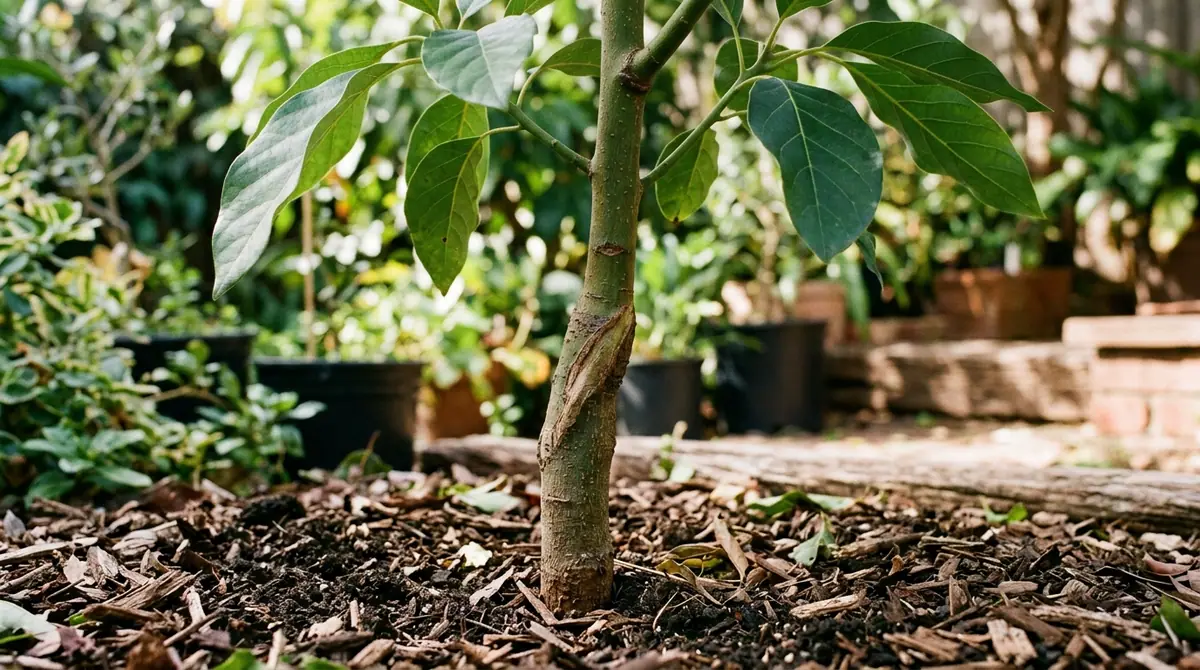
I stood in my northern California nursery yard holding a pruning saw, staring at a pathetic, weeping avocado sapling that had spent five years growing from a supermarket pit only to produce fruit resembling bitter, fibrous golf balls. That was the day I dug it up and replaced it with a proper grafted avocado tree. The transformation in my landscape—and my breakfast plate—was absolute: within thirty-six months, I was harvesting buttery, nutrient-dense 'Hass' avocados by the basketful.

1. Botanical Overview & Natural Habitat
The avocado (Persea americana) belongs to the Lauraceae family, alongside laurels, cinnamon, and camphor trees. Native to the Mesoamerican highlands—stretching from the Puebla state in Mexico through lower Central America—wild avocados evolved as understory trees in subtropical and tropical cloud forests.
⚠️ Important Caution: Never plant a seed-grown avocado if your goal is reliable fruit production. Genetic recombination from seed means you have a 95% chance of growing an unpredictable tree that yields unpalatable fruit, and it may take 7 to 15 years just to reach sexual maturity.
A grafted avocado tree solves this genetic roulette by fusing two distinct plants:
- The Scion: The upper portion of the tree, usually a named cultivar like 'Hass', 'Fuerte', or 'Pinkerton', selected for flavor, yield, and climate tolerance. This wood is taken from a mature, fruit-bearing tree.
- The Rootstock: The lower root system and lower trunk, chosen for disease resistance (particularly against Phytophthora cinnamomi root rot), soil salinity tolerance, and vigor.
Botanically, grafting exploits the cambium layer—the thin band of actively dividing cells just beneath the bark. When aligned correctly, the vascular tissues of the scion and rootstock knit together, creating a unified hydraulic system. This bypasses the juvenile phase entirely, tricking the scion into behaving like a mature, 20-year-old tree. Consequently, a quality grafted avocado tree will often flower and set fruit within 2 to 3 years of planting, standing at a manageable mature landscape height of 15 to 30 feet (4.5 to 9 meters) rather than the 60-foot forest canopy giants found in the wild.
For broader landscape integration around these trees, consider reviewing our guide on Creative Landscaping Ideas Around Tree Roots to protect the shallow root zone.
2. Essential Environmental & Care Requirements
Avocados are famously particular about their microclimate. Understanding their native cloud-forest origins tells you everything you need to know about setting up their environment.
| Parameter | Optimal Condition | Common Mistake | Why It Matters |
|---|---|---|---|
| Temperature | 60°F to 85°F (15°C to 29°C) | Exposing young trees to freezes below 28°F (-2°C) | Severe cold kills the graft union and foliage; extreme heat drops blossoms. |
| Soil Drainage | Loamy, sandy-loam with rapid drainage | Heavy clay soils that retain standing water | Phytophthora root rot thrives in soggy, anaerobic soils. |
| Sunlight | Full sun (6 to 8+ hours daily) | Deep shade under a heavy canopy | Reduces photosynthesis, decreases yields, and promotes leggy, weak growth. |
| Irrigation | Deep watering every 7 to 10 days (adjusted for rain) | Frequent, shallow sprinkling | Encourages surface roots, making the tree vulnerable to drought and windthrow. |
For optimal growth, source your cultural benchmarks from authoritative agricultural bodies such as the California Avocado Commission, which provides extensive cultivar and climate data.
3. Step-by-Step Cultivation, Feeding & Propagation
Planting a grafted avocado tree requires meticulous attention to the soil profile and, critically, the placement of the graft union.
💡 Pro-Tip: Always inspect the graft union before purchasing or planting. The swollen bump where the scion meets the rootstock must sit a minimum of 2 to 3 inches (5 to 7.5 cm) above the final soil line. If you bury the graft, the scion can root into the soil, rendering the disease-resistant rootstock completely useless and inviting collar rot.
Follow this exact step-by-step planting sequence:
- Select the Site: Choose a wind-protected, full-sun location with excellent drainage. If your native soil is heavy clay, plan to build a raised mound or berm at least 2 feet (60 cm) high and 4 feet (1.2 m) wide.
- Dig the Hole: Dig a shallow, wide hole—three times the width of the nursery container, but no deeper than the root ball. Glazing the sides of the hole with a shovel will trap water; score the edges with a tool if necessary.
- Prepare the Root Ball: Gently slide the tree from its container. Tease out any tightly circling roots with your fingers to prevent girdling. Do not amend the backfill soil with heavy fertilizers or rich compost, as this creates a "bathtub effect" where water pools in the enriched zone.
- Position the Tree: Place the tree in the center of the hole, ensuring the top of the root ball sits 1 to 2 inches (2.5 to 5 cm) above the surrounding grade to account for settling. Verify that the graft union faces away from prevailing winds and remains completely exposed.
- Backfill and Water: Fill the hole with native soil, tamping gently with your hands—never your boots—to remove large air pockets. Construct a shallow watering basin 3 feet (90 cm) in diameter around the tree.
- Apply Mulch: Apply a 3-inch (7.5 cm) layer of coarse wood chip or bark mulch across the root zone to retain moisture and suppress weeds. Keep the mulch at least 6 inches (15 cm) away from the trunk to prevent fungal collar rot.
- Initial Irrigation: Slowly saturate the root ball and surrounding soil with 5 to 10 gallons (19 to 38 liters) of water.
For companion planting ideas in tropical or subtropical zones, look into incorporating companion species such as those detailed in the Total Guide to Moringa Why You Should Grow the Miracle Tree or Drumstick Vegetable.
4. Common Problems, Pests & Troubleshooting
Even the healthiest grafted avocado tree will occasionally sound distress signals through its foliage. Recognizing these signs early prevents minor issues from becoming fatal.
Root Rot (Phytophthora cinnamomi)
This is the single greatest threat to avocado cultivation worldwide. Symptoms include sparse, pale green or yellowing leaves, twig dieback, and sudden wilting while the soil is wet.
- The Fix: Stop watering immediately, improve drainage channels around the planting site, and apply a specialized phosphite-based fungicide if caught early. If the tree loses more than 50% of its canopy, removal is usually necessary.
Leaf Tip Burn (Salt Toxicity)
Avocados are extremely sensitive to sodium and chloride buildup in the soil or irrigation water. You will notice crisp, brown necrotic margins along the tips and edges of the leaves.
- The Fix: Leach the soil thoroughly two to three times a year by applying deep, heavy irrigation (running hoses for several hours) to push accumulated salts past the root zone. Switch to low-sodium fertilizers.
Blossom Drop
Your tree blooms profusely in spring, but zero fruit sets. This is often caused by temperature extremes (dropping below 50°F [10°C] or soaring above 95°F [35°C] during bloom) or a lack of cross-pollination. Avocados have synchronous dichogamous flowers (opening as female on day one, male on day two), so planting a B-type cultivar alongside an A-type cultivar significantly boosts yields.

5. Frequently Asked Questions
Can I grow a grafted avocado tree in a container on my patio?
Yes, provided you select a dwarf or semi-dwarf cultivar (such as 'Wurtz' or 'Holiday') and use a container that is at least 20 to 25 inches (50 to 64 cm) in diameter and depth. Ensure the pot features numerous drainage holes, use a fast-draining citrus/palm potting mix, and prune the canopy annually to maintain a height of 6 to 8 feet (1.8 to 2.4 meters).
How long does it take for a grafted avocado tree to produce fruit?
Most quality grafted avocado tree specimens will begin producing fruit within 2 to 3 years after planting. This is because the scion wood was harvested from a mature, fruit-bearing tree, bypassing the 7-to-15-year juvenile phase characteristic of seed-grown trees.
Do I need to plant two avocado trees for pollination?
While most avocado cultivars are technically self-fertile (meaning a single tree can produce fruit), yields are dramatically improved by cross-pollination. Avocados are divided into "A" and "B" flowering types based on the daily opening schedule of their flowers. Planting one Type A cultivar (like 'Hass') and one Type B cultivar (like 'Fuerte' or 'Bacon') within close proximity guarantees overlapping bloom cycles and maximizes fruit set.
What should I do if my dog eats fallen avocado leaves or fruit?
Avocados contain a fungicidal toxin called persin, which is concentrated in the leaves, bark, fruit, and pit. While human consumption is safe and healthy, persin is toxic to dogs, cats, horses, and birds, causing gastrointestinal irritation, vomiting, and respiratory distress. Rake up fallen leaves and dropped fruit daily if pets have access to the planting area, and consult your veterinarian immediately if ingestion occurs.
Related Guides
- Can Avocado Trees Grow in Arizona
- Will a Lemon Tree Survive Winter
- Money Tree New Leaves Drooping
- Why is My Money Tree Drooping
- Why is My Money Tree Dropping Leaves
📋 Table of Contents ▼ Click to expand
Tags:
Keep reading
🌿 Related Plants You Might Like






PlantSavvyWorld
Editorial team
PlantSavvyWorld is an independent botanical education project. Articles are drafted with AI assistance, then edited and checked against university extension services, botanical garden collections and other published horticultural sources.