

Mulch for Peonies
Written with AI assistance, edited and checked against horticultural sources.
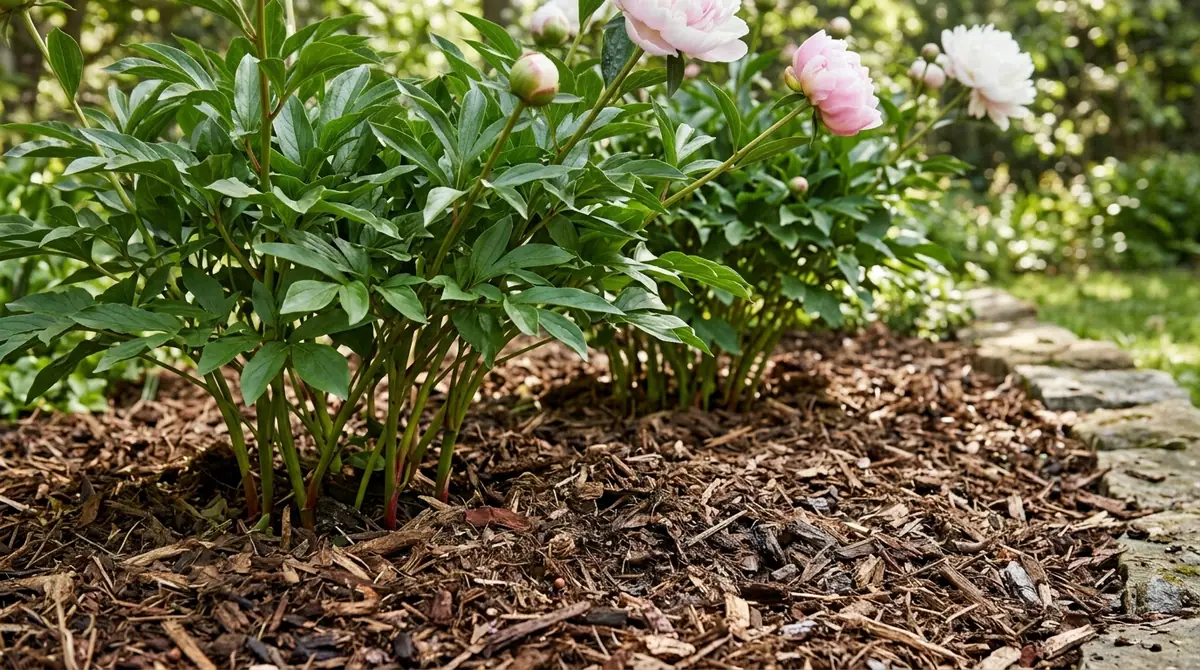
For 'Sarah Bernhardt' herbaceous peonies, crown eyes must not be buried beneath a thick, soggy blanket of shredded hardwood to prevent crown rot; their longevity hinges entirely on proper crown care, keeping crown eyes sitting a safe half-inch above the soil line.
1. Botanical Overview & Natural Habitat

Herbaceous peonies (Paeonia lactiflora) die back completely to the ground each autumn, relying on subterranean buds (commonly called "eyes") to generate next year's growth. Tree peonies (Paeonia suffruticosa), by contrast, possess woody above-ground stems that must survive the winter. Intersectional peonies (known as Itoh hybrids) represent a cross between herbaceous and tree types, featuring herbaceous top growth that dies back annually atop a woody crown structure.
The crown—the juncture where the stems meet the root system—is the botanical epicenter of the peony. In the wild, natural leaf litter provides a loose, airy protective layer that decomposes slowly, mimicking the ideal mulch layer we must replicate in cultivation. When we apply mulch for peonies, we are managing soil temperature fluctuations, conserving moisture during active growth phases in spring, and suppressing weeds without smothering the sensitive crown tissue.
2. Essential Environmental & Care Requirements
Peonies are famously finicky about their environment, demanding strict parameters to thrive and produce those magnificent, heavy blooms. If you miscalculate soil depth or moisture retention, the plant will simply refuse to flower, punishing you with lush green foliage and zero blossoms for years on end.
Soil drainage is non-negotiable. Peonies thrive in rich, loamy soils with a neutral to slightly alkaline pH between 6.5 and 7.0. They abhor heavy, waterlogged clay unless heavily amended. Sunlight is equally critical: they require a minimum of 6 to 8 hours of direct daily sunlight. Shady conditions invite fungal pathogens like Botrytis paeoniae (peony blight) and drastically reduce bloom count.
Temperature requirements dictate your mulching strategy. Herbaceous peonies require a robust winter chill period—typically accumulating 500 to 1,000 chill hours below 45°F (7°C)—to break dormancy and initiate flower buds. However, extreme freeze-thaw cycles in USDA Zones 3 through 8 can cause frost-heaving, pushing newly planted tubers right out of the soil. This is where strategic mulch application plays its starring role.
| Parameter | Optimal Condition | Common Mistake | Why It Matters |
|---|---|---|---|
| Soil pH | 6.5 – 7.0 | Acidic soil (< 6.0) | Promotes nutrient uptake and discourages fungal growth. |
| Crown Depth | 1.5 to 2 inches (3.8 to 5 cm) deep in cold zones | Burying deeper than 3 inches (7.6 cm) | Deeply buried crowns fail to receive necessary temperature cues and stop blooming. |
| Winter Mulch Depth | 2 to 3 inches (5 to 7.6 cm) | Piling mulch directly against the crown | Traps moisture, inviting crown rot and fungal diseases. |
| Sunlight | 6–8 hours direct sun | Planting in deep shade | Prevents proper photosynthesis and starves the plant of bloom energy. |
When considering organic materials for your garden beds, it is worth noting how different amendments behave; for instance, many home gardeners wonder about pet safety, a topic we cover extensively in our guide on Is Mulch Bad for Dogs. Furthermore, while heavy soil amendments are standard practice in food production, as detailed in Benefits of Using Mulch in Organic Vegetable Gardening, ornamental perennials like peonies require a much more restrained approach around their immediate root zones.
3. Step-by-Step Cultivation, Feeding & Propagation
Applying mulch for peonies must be timed precisely with seasonal transitions. Improperly timed mulching can trap excess moisture during wet springs or insulate soil pests just as they seek a winter haven. Follow this rigorous, step-by-step protocol to manage your peony beds like a professional horticulturist.
- Clear and Sanitize (Late Autumn): Once the first hard frost kills back herbaceous foliage, cut all stems down to 2 inches (5 cm) above the soil line using sterilized pruners. Remove all diseased foliage from the site and dispose of it in the trash—never compost infected peony tissue, as fungal spores overwinter easily.
- Inspect the Crown: Gently brush away any accumulated soil or debris around the upper root zone to inspect the pink or red growth eyes. Ensure they sit no deeper than 2 inches (5 cm) below the soil surface in cold climates (Zone 3–5) or 1 inch (2.5 cm) in warmer zones (Zone 7–8).
- Apply a Balanced Organic Fertilizer (Optional): Scatter a low-nitrogen, high-phosphorus organic fertilizer—such as bone meal or a 5-10-10 blend—around the drip line of the plant at a rate of 1/2 cup per mature plant. Avoid direct contact with the crown.
- Select the Right Mulch Material: Choose coarse, highly aerated materials. Shredded hardwood bark, chopped oak leaves, or pine straw are exceptional choices because they allow air circulation and shed excess water rather than matting down.
- Execute the Ring Application: Apply a 2 to 3-inch (5 to 7.6 cm) layer of mulch in a wide circle around the plant, extending out to the drip line. Critically, leave a 3 to 4-inch (7.6 to 10 cm) clearance zone completely bare of mulch directly over the crown eyes.
- Spring Pull-Back (Early Spring): As soil temperatures consistently rise above 45°F (7°C)—typically around mid-March to early April depending on your region—pull the winter mulch back slightly from the base to allow the emerging red shoots unobstructed access to sunlight and air movement.
💡 Pro-Tip: If you live in a region prone to severe freeze-thaw cycles that trigger frost-heaving, apply your winter mulch only after the ground has frozen solid to a depth of 1 inch (2.5 cm). Applying mulch to warm autumn soil invites rodents to nest near the sweet, starchy peony tubers.
4. Common Problems, Pests & Troubleshooting
Even with meticulous care, problems can arise when managing mulch for peonies. The most common pitfall is crown rot, scientifically known as Phytophthora crown rot or Sclerotinia stem rot. When organic mulch is piled directly against the peony stems, it acts like a wet sponge, holding ambient moisture against the bark and soft tissue. This creates an anaerobic breeding ground for pathogenic fungi. If you notice sudden wilting of new spring shoots accompanied by black, water-soaked lesions at the soil line, pull the mulch away immediately, scrape back the top layer of wet soil to expose the crown to drying air, and apply a copper-based fungicide.
⚠️ Important Caution: Never use fresh grass clippings, dense unchopped leaves, or heavy peat moss as mulch for peonies. Grass clippings mat together rapidly, forming an impermeable mat that suffocates the soil biome and encourages anaerobic fungal growth. Peonies require maximum breathability around their root zones.
Another frequent issue is ant activity. You will often see dozens of ants crawling over peony buds in late spring. Gardeners frequently panic, assuming the ants are destroying the plant. In reality, ants are simply harvesting the sweet nectar exuded by the tight bud scales. They do no harm to the plant and actually provide a protective service by deterring bud-eating pests. Do not let heavy mulching create hidden pathways for subterranean pests like voles, which find peony tubers to be a gourmet winter delicacy. Keep mulch tightly managed and clear of direct stem contact to deter tunneling rodents.

5. Frequently Asked Questions
Should I cut back my peonies before putting down mulch for the winter?
Yes, absolutely. For herbaceous peonies, cut all foliage down to 2 inches (5 cm) above the soil level after the first hard autumn freeze. This removes hiding places for fungal spores like Botrytis and prepares the plant for a clean winter mulching. Tree peonies should not be cut back, as they bloom on old wood; instead, mulch their bases carefully without trimming the woody stems.
Can I use wood chips as mulch for peonies?
Yes, but with caveats. Shredded hardwood bark or aged wood chips make excellent mulch because they are chunky and allow plenty of air circulation. Avoid fine, dyed wood mulches or fresh wood chips high in wood-processing resins, which can tie up nitrogen at the soil surface and compact into a suffocating barrier.
Why are my mulched peonies refusing to flower?
The most common reason mulched peonies fail to bloom is that they were planted or mulched too deeply. If your crown is buried deeper than 2 inches (5 cm) beneath the combined soil and mulch level, the plant fails to experience the proper thermal shifts required to trigger flower bud formation. Carefully excavate the crown area to expose the upper eyes to the proper depth.
Do Itoh hybrid peonies need different mulch than herbaceous peonies?
Itoh (intersectional) peonies share characteristics of both types, featuring woody stem bases close to the ground and herbaceous upper growth. In late autumn, cut the herbaceous stems back to about 4 to 6 inches (10 to 15 cm) above the soil, leaving the woody basal stems intact. Apply your 2-inch (5 cm) ring of coarse mulch around the plant, maintaining the mandatory bare zone directly over the central crown structure.
Related Guides
- Do Peonies Grow in Texas
- Growing Peonies in Containers
- Do You Cut Back Peonies in the Fall
- Peonies from Seed
- Mulch Bagged vs Bulk
- Mulch Bulk vs Bag
- Is Mulch Bad for Dogs
📋 Table of Contents ▼ Click to expand
Tags:
🌿 Related Plants You Might Like






PlantSavvyWorld
Editorial team
PlantSavvyWorld is an independent botanical education project. Articles are drafted with AI assistance, then edited and checked against university extension services, botanical garden collections and other published horticultural sources.