

Live Oak Tree Bark
Written with AI assistance, edited and checked against horticultural sources.
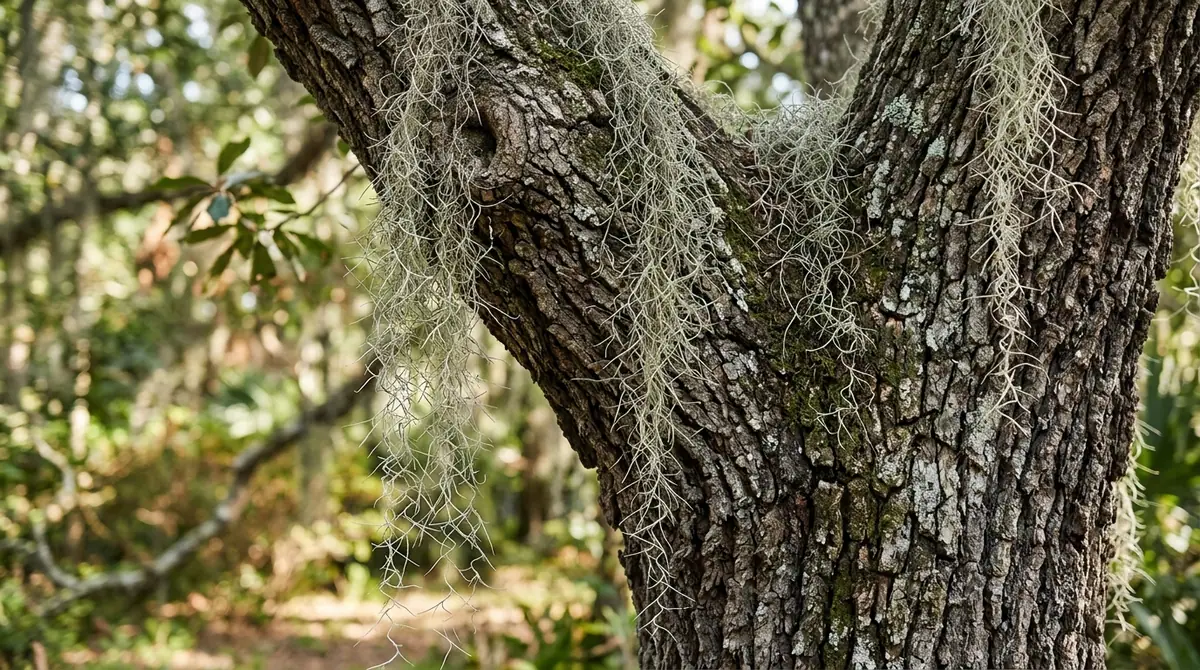
I was kneeling in the damp, red clay of a gardener's courtyard in Savannah, Georgia, running my fingertips down the deeply fissured, dark gray ridges of a mature Southern live oak (Quercus virginiana), when I felt it—a subtle, damp sponginess hiding beneath the protective cork layer that told me the tree was quietly battling a persistent fungal invasion. For decades, landscape designers and botanists have marveled at the sheer architectural majesty of these evergreen giants, but the true sentinel of their survival is their remarkable bark. I have spent over twenty years analyzing how tree bark functions not merely as a decorative outer shell, but as a living, breathing shield against environmental extremes, wildfires, and urban stressors. If you are looking to cultivate these iconic titans or integrate them into complex hardscapes, understanding the intricate dynamics of live oak tree bark is your single most important baseline. When you are done mastering the arboricultural nuances here, you might also want to explore our Creative Landscaping Ideas Around Tree Roots to ensure your hardscape designs respect the subterranean architecture of these magnificent trees.
1. Botanical Overview & Natural Habitat

Botanically, the bark of Quercus virginiana begins its life cycle as a smooth, light gray, thin surface on juvenile saplings. As the tree matures—often surpassing trunk diameters of 3 to 6 feet (0.9 to 1.8 meters)—the bark undergoes a dramatic metamorphosis. It develops thick, dark gray to nearly black coloring, heavily furrowed with deep, interconnected ridges that form a distinct blocky or checkerboard pattern.
This thick outer bark is composed of dead, suberized cork cells that provide exceptional insulation against thermal fluctuations. In its native range, where winter temperatures rarely drop below 15°F (-9.4°C) and summer air temperatures consistently soar above 95°F (35°C) with soil temperatures reaching 105°F (40.5°C), the bark acts as a natural thermodynamic barrier. Furthermore, the high tannin content embedded within the inner bark (phloem and cortex) acts as a potent biochemical deterrent against wood-boring insects, fungal pathogens, and herbivorous mammals.
Unlike deciduous oaks that shed or smooth their bark in specific ways, the live oak's bark expands outward rather than sloughing off in large strips, accommodating rapid secondary growth of the vascular cambium. For related insights on managing woody perennials and their structural challenges, review our guide on How to Identify and Treat Common Fruit Tree Diseases to protect your broader landscape investments.
2. Essential Environmental & Care Requirements
To maintain healthy, resilient bark on a live oak, you must replicate the environmental pressures and tolerances of its native coastal ecosystem. Live oaks are exceptionally hardy in USDA Hardiness Zones 8 through 10. They demand full sun exposure, defined as a minimum of 6 to 8 hours of direct, unfiltered sunlight daily, which drives the photosynthetic energy required to produce defensive compounds in the bark.
Soil composition is critical. Live oaks thrive in well-draining sandy loam, loamy, or even compacted clay soils, provided the pH remains slightly acidic to mildly alkaline (ranging from 5.5 to 7.5). Poorly draining soils lead directly to root oxygen deprivation, which subsequently manifests as longitudinal bark splitting and crown dieback.
When establishing irrigation protocols, remember that mature live oaks possess high drought tolerance, but young trees require deep, infrequent watering to encourage deep taproot development. Keep irrigation emitters at least 3 feet (0.9 meters) away from the trunk itself; chronic moisture accumulation against the lower bark initiates fungal decay and collar rot.
| Parameter | Optimal Condition | Common Mistake | Why It Matters |
|---|---|---|---|
| Soil Drainage | Rapidly draining loam or sand | Allowing standing water near the root flare | Prevents Phytophthora root rot and subsequent bark splitting |
| Trunk Clearance | Bark completely exposed to air | Piling mulch against the bark ("volcano mulching") | Traps moisture, inviting fungal pathogens and wood-boring pests |
| Sunlight | Full sun (6-8+ hours daily) | Planting in dense, shaded understories | Reduces photosynthetic output, weakening natural bark defenses |
| Soil pH | 5.5 to 7.5 | Extreme acidification or liming | Ensures optimal nutrient uptake for cellular wall reinforcement |
💡 Pro-Tip: Never allow landscape contractors to string-trim weeds directly against the base of a live oak. Even minor mechanical wounds that breach the outer bark layer destroy the cambium layer, permanently interrupting nutrient transport and opening a direct portal for hypoxylon canker.
3. Step-by-Step Cultivation, Feeding & Propagation
Cultivating a live oak from a collected acorn or a nursery container requires meticulous attention to planting depth, as planting too deeply is the single most common cause of premature tree failure. Follow this precise protocol to ensure optimal bark health and structural longevity from day one.
- Site Selection & Soil Preparation: Select a location with a minimum radius of 30 feet (9.1 meters) to accommodate the eventual canopy spread. Excavate a shallow, saucer-shaped hole that is 3 times wider than the root ball, but ensure the depth is strictly equal to or 1 inch (2.5 cm) shallower than the root ball height.
- Root Flare Identification: Locate the root flare—the point where the trunk widens into the primary structural roots. Using your hands or a soft brush, gently clear away any nursery soil smothering the upper root system so the eventual bark-to-root transition remains completely exposed to ambient air.
- Planting & Backfilling: Place the tree in the center of the excavation. Backfill with native unamended soil, tamping gently every 6 inches (15 cm) to eliminate large air pockets while avoiding compaction of the surrounding soil matrix.
- Initial Watering & Settling: Saturate the root ball and backfill zone slowly with 15 to 20 gallons (56 to 75 liters) of water to settle the soil naturally.
- Mulch Application: Apply a 3-inch (7.6 cm) layer of shredded hardwood mulch in a wide circle around the tree. Maintain a strict 6-inch (15 cm) clearance ring of bare soil between the outer edge of the mulch and the living trunk bark to prevent moisture retention against the stem.
- Maintenance & Structural Pruning: For the first 365 days, provide 1 inch (2.5 cm) of water every 7 to 10 days during dry spells. Avoid pruning lower branches for the first 3 years, as lower foliage production thickens the trunk diameter and strengthens the structural bark.
For gardeners expanding their botanical repertoire into exotic or tropical specimens that require unique structural care, consult our comprehensive Colvilles Glory Tree Colvillea Racemosa Growing Guide.
4. Common Problems, Pests & Troubleshooting
Despite its rugged appearance, live oak bark can exhibit distress symptoms that signal deeper environmental or pathological issues. Learning to read these visual cues saves trees before damage becomes irreversible.
Longitudinal Bark Splitting and Frost Cracks
During sudden autumn or winter freezes—where ambient temperatures plunge from 65°F (18.3°C) down to 20°F (-6.7°C) within a 12-hour window—water inside the outer bark layers freezes rapidly. This expansion causes dramatic vertical splitting of the bark. While minor cracks heal via callus tissue formation over 60 to 90 days, wide splits expose the sapwood to wood-decay fungi. Prevent this by avoiding high-nitrogen fertilizers late in the growing season, which forces succulent, frost-vulnerable tissue growth.
Hypoxylon Canker (Hypoxylon pruinatum)
If you notice patches of bark sloughing off to reveal a powdery, silver-gray, brown, or black crust underneath, your tree is likely infected with Hypoxylon canker. This opportunistic fungus attacks live oaks that have experienced severe environmental stress, such as soil compaction, root severing during construction, or prolonged drought. There is no chemical cure for Hypoxylon canker. Management is strictly preventive: maintain vigorous tree health through proper irrigation and avoid mechanical injury to the bark. For authoritative disease identification protocols, refer to the University of Florida IFAS Extension.
⚠️ Important Caution: Never paint tree wounds, pruning cuts, or damaged bark with tar, asphalt-based sealants, or wound paints. Modern arboricultural research demonstrates that these products trap moisture and fungal spores inside the wound, accelerating internal decay rather than halting it. Let the tree seal itself naturally.
Lichens and Epiphytes

5. Frequently Asked Questions
Why is the bark on my live oak turning black and peeling off in large chunks?
Large-scale peeling accompanied by blackening is typically an advanced symptom of environmental shock, herbicide damage, or secondary fungal colonization like Hypoxylon canker. When roots are smothered by fill dirt or saturated by poor drainage, the vascular system fails, causing the bark to die and slough away from the sapwood. Inspect the base of the tree for soil compaction and ensure the root flare is completely exposed.
Can a live oak survive if the bark is completely ringed or girdled?
No. Girdling—the complete removal or destruction of a strip of bark all the way around the circumference of the trunk—interrupts the flow of sugars and carbohydrates produced in the canopy down to the root system. Once the roots starve, the entire tree dies. If an animal, string trimmer, or construction equipment has damaged more than 50% of the trunk's circumference, the tree's survival is severely compromised. For further reading on managing unexpected tree damage and recovery, consult the guidelines provided by the International Society of Arboriculture.
Is it normal for live oak bark to have deep vertical fissures?
Yes. Deep vertical furrows and ridges are a completely normal characteristic of mature Quercus virginiana specimens. As the trunk expands in girth over decades, the inelastic outer bark fractures to accommodate the widening vascular cambium. These deep fissures provide a characteristic rustic texture and are a sign of a healthy, mature tree.
How do I treat lichen growing on my live oak tree bark?
You do not need to treat or remove lichen. Lichens are benign organisms composed of a fungus and an alga living in a symbiotic relationship. They do not parasitize the tree, steal its nutrients, or block its respiration. Their presence merely indicates clean air quality and a mature bark surface suitable for colonization. Leave them undisturbed.
Related Guides
- Is Pine Bark Mulch Good
- Can Orchids Live Outside
- Best Province to Live in Canada for Gardeners
- Will a Lemon Tree Survive Winter
- Money Tree New Leaves Drooping
📋 Table of Contents ▼ Click to expand
Tags:
Keep reading
🌿 Related Plants You Might Like






PlantSavvyWorld
Editorial team
PlantSavvyWorld is an independent botanical education project. Articles are drafted with AI assistance, then edited and checked against university extension services, botanical garden collections and other published horticultural sources.