

Can Orchids Live Outside
Written with AI assistance, edited and checked against horticultural sources.
When a tropical rainstorm lashes against Phalaenopsis orchids hung beneath a slatted oak arbor in USDA Hardiness Zone 9b, warm summer rain washes away accumulated mineral salts from their roots far better than any tap water ever could.
If you are looking to expand your cultivation skills beyond the windowsill, you might also enjoy reading about the Best Province to Live in Canada for Gardeners to understand how northern latitudes affect tender exotic plants.
1. Botanical Overview & Natural Habitat
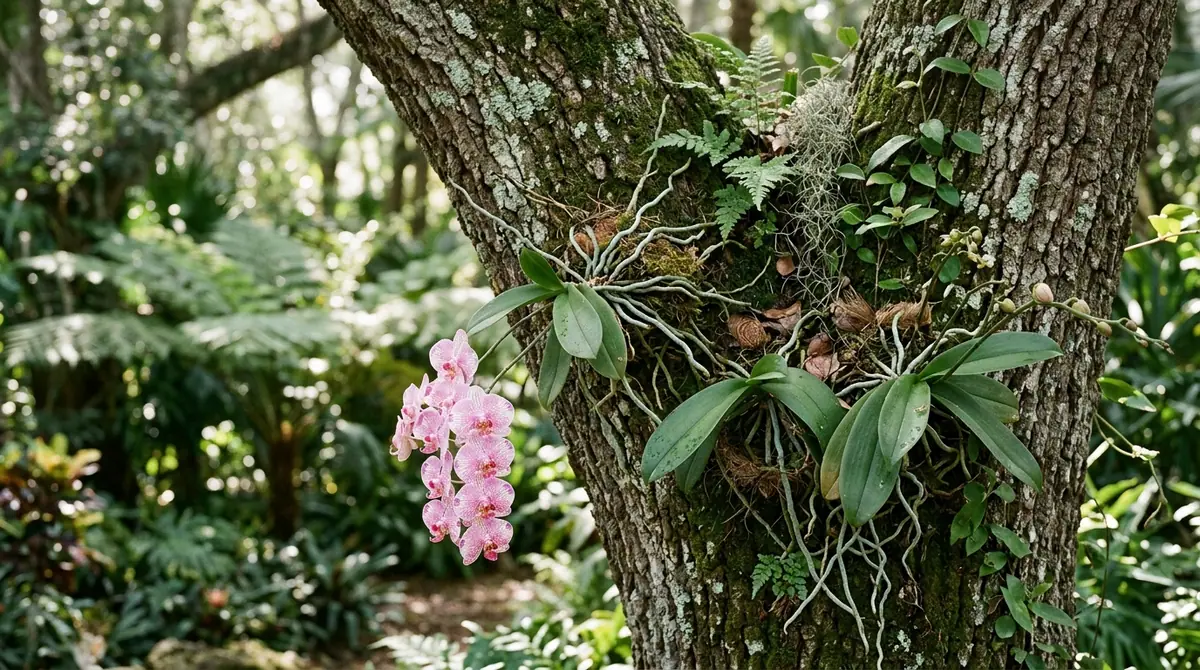
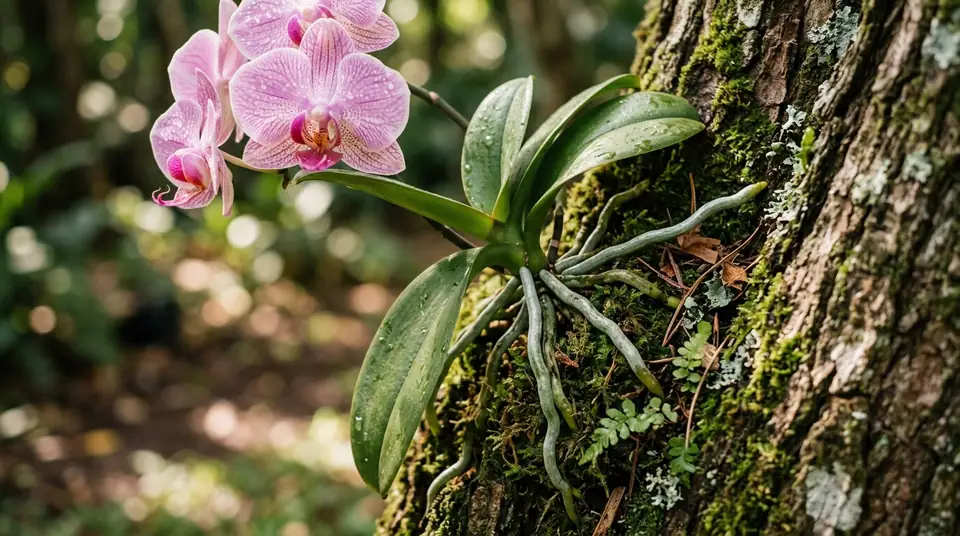
To successfully cultivate orchids outdoors, you must first understand how they survive in the wild. The vast majority of cultivated orchids are epiphytes (growing on tree trunks and branches) or lithophytes (growing on exposed rock faces). They do not grow in dense garden soil. Instead, their exposed root systems are wrapped in a spongy, white-to-green outer layer called the velamen. This specialized tissue acts like a natural sponge, rapidly absorbing atmospheric moisture, dew, and nutrient-rich organic debris washing down the bark of host trees.
In tropical and subtropical rainforests, natural temperature drops between day and night range from 10°F to 20°F (-12°C to -6°C). This thermal fluctuation is the primary physiological trigger that initiates flower spikes in genera like Phalaenopsis, Cattleya, and Dendrobium. When moving orchids outside, you are replicating these natural ecological cycles.
However, success depends entirely on your geographic climate. Growers in USDA Hardiness Zones 10 through 12 can often keep certain orchids outdoors year-round. Growers in Zones 4 through 8 must treat outdoor cultivation as a seasonal luxury, moving their plants indoors or into protected greenhouses before autumn temperatures drop below safe thresholds. For detailed regional climate data and microclimate management, consult the Royal Horticultural Society guidelines on tender perennials.
2. Essential Environmental & Care Requirements
Replicating an equatorial forest canopy on your patio or balcony requires strict adherence to light, temperature, air movement, and moisture parameters.
Light intensity is the most common pitfall for outdoor growers. Direct, midday sun will scorch orchid leaves within 45 minutes, turning vibrant green tissue into translucent, papery white or black necrotic patches. Most popular orchids thrive under 50% to 70% shade cloth, or beneath the dappled canopy of deciduous trees like maples or oaks.
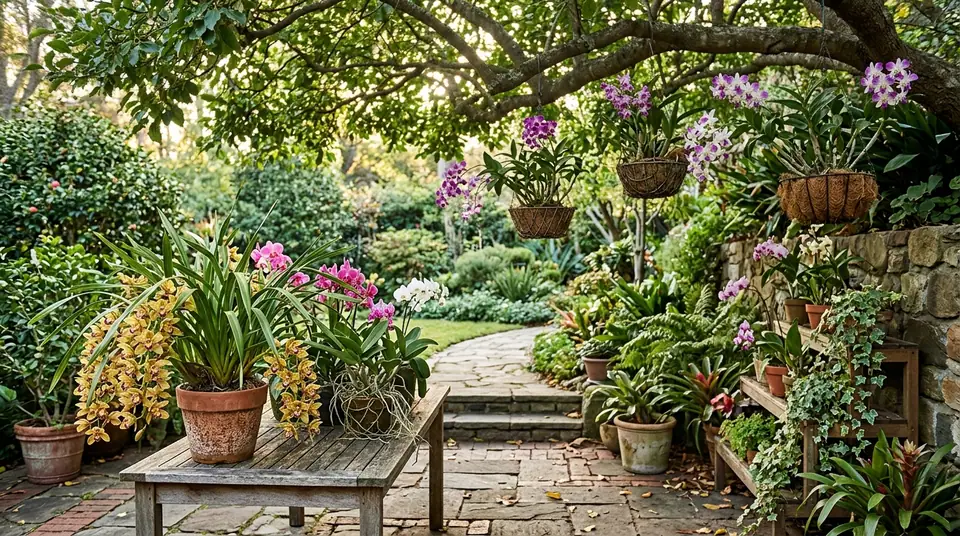
Air movement is equally critical. In nature, constant gentle breezes dry the foliage quickly after rain, preventing fungal and bacterial pathogens from colonizing the crown and leaf axils. When placing orchids outside, never crowd them against solid walls where air stagnates. Hang them or place them on slatted benches where wind can circulate freely around the root ball.
| Parameter | Optimal Condition | Common Mistake | Why It Matters |
|---|---|---|---|
| Light | Dappled shade, 1,500 to 3,000 foot-candles | Full midday sun | Direct sun causes rapid leaf scorching, cellular damage, and fatal dehydration. |
| Temperature | 60°F to 85°F (15°C to 29°C) active range | Sudden drops below 55°F (13°C) | Temperatures below tolerance thresholds cause cell wall rupture and rapid rot. |
| Air Movement | Constant gentle breeze (2–5 mph) | Stagnant, enclosed corners | Stagnant air trapped around wet leaves invites Fusarium and Erwinia bacterial rot. |
| Humidity | 60% to 80% relative humidity | Unventilated, dry microclimates | Extremely low humidity halts growth and causes bud blast; extreme high stagnant humidity breeds fungi. |
💡 Pro-Tip: Hang your outdoor orchids using coated wire hangers rather than placing pots directly on the ground. This elevates them 12 to 24 inches (30 to 60 cm) off damp surfaces, dramatically improving air circulation underneath the pot and keeping crawling pests like slugs and snails at bay.
3. Step-by-Step Cultivation, Feeding & Propagation
Moving your plants from the controlled environment of your living room to the unpredictable elements outside requires a deliberate hardening-off process. If you want to refine your indoor baseline before taking your plants outside, review our comprehensive guide on How to Care for Indoor Orchids to Make Them Bloom Again.
Follow this step-by-step protocol to transition and maintain your orchids outdoors safely:
- Select the Right Season and Timing: Wait until all danger of spring frost has passed and night-time temperatures consistently remain above 55°F (13°C), typically late May in temperate zones.
- Harden Off Gradually: Place your orchids in deep shade for the first 7 to 10 days. Increase light exposure by 15% every week until they reach their optimal light level (dappled morning sun).
- Inspect and Repot: Before hanging them outside, remove degraded organic media. Shift plants into coarse, chunky media such as grade-A New Zealand sphagnum moss mixed with chunky fir bark and large perlite (ratio 60:40) to ensure rapid drainage during heavy summer rainstorms.
- Establish a Feeding Regimen: Because outdoor rain leaches nutrients rapidly from chunky bark, fertilize weekly with a balanced water-soluble orchid formula (e.g., 20-20-20) diluted to 1/4 strength (1/4 teaspoon per gallon of water) throughout the active growing season (June through August).
- Monitor Watering Needs: Natural rainfall can sometimes overwater outdoor orchids. If your pots receive more than 2 inches (5 cm) of rain in a 48-hour period, tilt the pots sideways to drain excess pooling water from the crown.
- Prepare for Fall Evacuation: As autumn temperatures approach 55°F (13°C) at night, inspect every plant thoroughly for hitchhiking insects, spray with horticultural soap, and bring them indoors before the first autumn frost.
⚠️ Important Caution: Never leave epiphytic orchids outdoors if overnight temperatures threaten to drop below 50°F (10°C) for tropical genera like Phalaenopsis, or 40°F (4°C) for cooler-hardy genera like Cymbidium. Prolonged cold wetness at the roots triggers irreversible root collapse and fatal crown rot within 72 hours.
4. Common Problems, Pests & Troubleshooting
Growing orchids outdoors exposes them to a wider array of environmental stressors and predatory insects than indoor culture. Spotting these issues early saves your collection.
Leaf Scorch vs. Fungal Spotting: If you notice round, bleached-white, or yellowed patches with crisp brown edges on the upper leaves facing the sun, you have leaf scorch. Move the plant immediately into deeper shade. Conversely, dark brown or black sunken lesions that feel water-soaked indicate a bacterial or fungal infection, often caused by stagnant rain sitting in the leaf crown overnight. Treat fungal outbreaks immediately by cutting away infected tissue with a sterile razor blade and applying powdered cinnamon or a copper-based fungicide.
5. Frequently Asked Questions
Can I leave my Phalaenopsis orchid outside all summer?
Yes, provided your summer night temperatures remain above 60°F (15°C) and daytime temperatures do not exceed 90°F (32°C). Ensure they are hung under a patio roof, arbor, or tree canopy that blocks harsh midday sun and heavy torrential downpours.
What minimum temperature can outdoor orchids tolerate?
It depends entirely on the genus. Phalaenopsis and Vanda species suffer cellular damage below 50°F (10°C). Cattleya and Oncidium can tolerate brief dips down to 45°F (7°C). Cold-hardy terrestrial orchids like certain Cymbidium cultivars can handle short exposures down to 35°F (2°C), but all tropical species must be brought indoors before the first frost.
How do I stop heavy rain from rotting my outdoor orchids?
The single most effective preventative measure is potting your plants exclusively in coarse, fast-draining bark mixes within slotted plastic pots or wooden baskets. If heavy, multi-day rain systems move into your area, relocate your orchids underneath a covered porch, overhang, or clear plastic temporary canopy until the storm passes.
How often should I fertilize orchids grown outside?
Because outdoor watering schedules are heavier due to natural rain and drying breezes, nutrients leach out of the potting mix faster than indoors. Feed your outdoor orchids weekly using a weak-weekly approach—apply a balanced 20-20-20 water-soluble fertilizer diluted to one-quarter strength every 7 days during active spring and summer growth phases. Stop fertilizing entirely by late September as natural day lengths shorten.
Related Guides
- How to Care for Indoor Orchids to Make Them Bloom Again
- Live Oak Tree Bark
- Best Province to Live in Canada for Gardeners
📋 Table of Contents ▼ Click to expand
Tags:
Keep reading
🌿 Related Plants You Might Like



PlantSavvyWorld
Editorial team
PlantSavvyWorld is an independent botanical education project. Articles are drafted with AI assistance, then edited and checked against university extension services, botanical garden collections and other published horticultural sources.