

Colvilles Glory Tree Colvillea Racemosa Growing Guide
Written with AI assistance, edited and checked against horticultural sources.
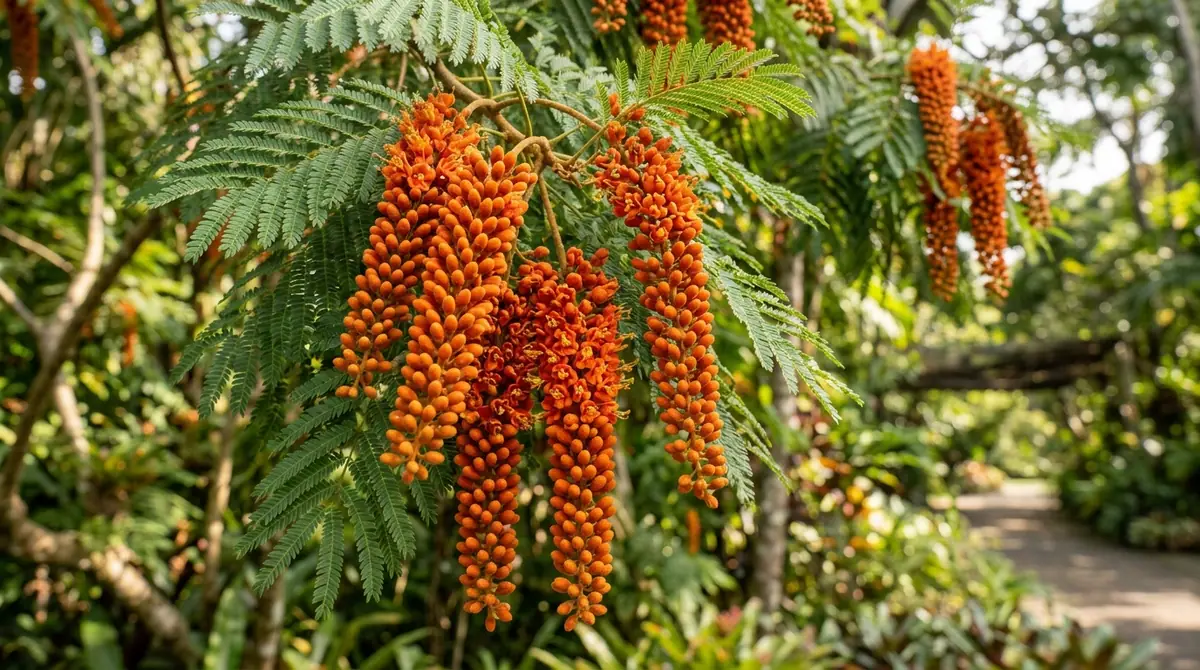
Standing beneath a mature Colvillea racemosa in full bloom at a botanical estate in Naples, Florida, I was instantly stopped in my tracks by what looked like dangling clusters of bright orange velvet caterpillars. The sheer, sculptural weight of those pendant, cylindrical inflorescences—each packed with scores of brilliant, tubular flowers—demanded immediate botanical investigation. I knew this wasn't just another ornamental canopy tree; it was a rare, dramatic centerpiece that could completely anchor a tropical or subtropical design. Getting this arboreal giant to thrive, however, requires precise adherence to its unique lifecycle, starting with understanding where it came from.
1. Botanical Overview & Natural Habitat
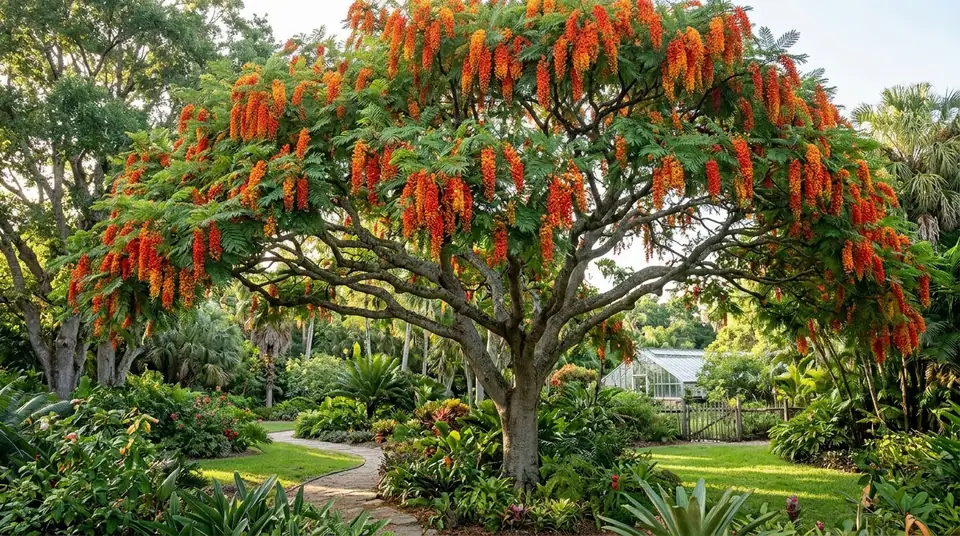
In its natural habitat, the tree experiences distinct wet and dry seasons, an evolutionary adaptation that dictates its seasonal dormancy and explosive flowering cycle. Mature specimens reach heights of 40 to 50 feet (12 to 15 meters) with an equally broad, umbrella-shaped spread, making them exceptional shade trees for large properties.
The crowning glory of Colvillea racemosa is its inflorescence: massive, hanging racemes measuring up to 12 to 18 inches (30 to 45 cm) in length. Emerging in late summer through autumn, the flower buds look like dangling strings of orange-red velvet beads before opening into vibrant, fiery orange blossoms. For anyone looking to diversify their tropical landscape repertoire, understanding this canopy dweller is as crucial as mastering indoor seasonal specimens, much like the horticultural timing required in our Holiday Plants Care Guide: How to Force Poinsettias to Rebloom & Holiday Cacti ID.
| Parameter | Optimal Condition | Common Mistake | Why It Matters |
|---|---|---|---|
| Hardiness Zones | USDA 10–12 (Minimum 30°F / -1°C) | Planting in frost-prone USDA zones 8 or 9 | Freezing temperatures kill young trees and severely damage mature wood. |
| Light Exposure | Full sun (6 to 8+ hours direct daily light) | Shading by larger structures or canopy trees | Low light drastically reduces inflorescence production and weakens branch structure. |
| Soil pH | Slightly acidic to neutral (6.0 to 7.5) | Heavy, waterlogged clay soils | Poor drainage leads directly to root rot and fungal pathogen entry. |
| Irrigation | Deep, infrequent watering once established | Daily, shallow sprinkling | Deep watering encourages deep root anchoring, crucial for storm resistance. |
2. Essential Environmental & Care Requirements
To replicate Madagascar's climate in a cultivated landscape, you must balance solar radiation, thermal limits, and soil composition. Colvillea racemosa demands full, uninhibited sunlight. Planting it in partial shade stunts its growth and completely suppresses the formation of its signature orange racemes.
Temperature is the primary limiting factor for this species. While mature trees can tolerate brief, light dips to 30°F (-1°C) with minimal leaf drop, prolonged freezes will defoliate the tree and split the bark. If you live where winter temperatures drop below freezing, container cultivation or a greenhouse conservatory is necessary. For deeper horticultural insights on regional suitability, consult the University of Florida IFAS Extension.
Soil drainage is non-negotiable. While the tree tolerates poor fertility and occasional drought once established, it absolute detests "wet feet." Amend heavy native soils with coarse sand, perlite, or well-rotted organic compost to ensure a rapid percolation rate.
Water management should mirror its native monsoon patterns. Provide consistent moisture during the active spring and summer growing seasons. As autumn approaches and flowering concludes, gradually taper off irrigation to induce a brief period of dormancy, which primes the tree for the following year's bud set.
💡 Pro-Tip: When selecting a planting site, account for the soft, brittle nature of young branches. Position Colvillea racemosa away from high-wind corridors or coastal salt spray zones to protect its magnificent, pendant flower clusters from being sheared off prematurely.
3. Step-by-Step Cultivation, Feeding & Propagation
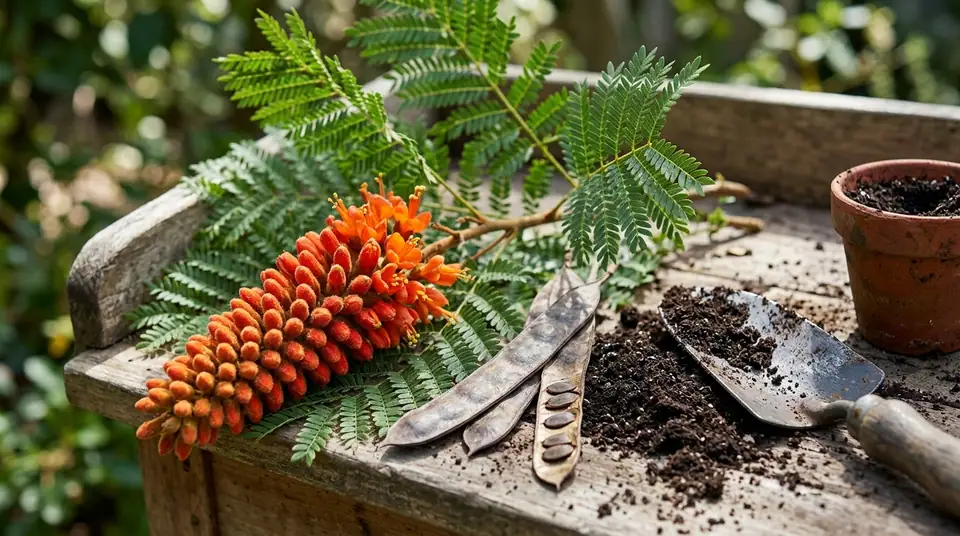
Establishing Colvillea racemosa from seed or nursery stock requires patience and adherence to a strict planting protocol. Because the seeds possess a hard, impermeable seed coat, scarification is mandatory for successful germination.
- Seed Scarification: Nick the hard outer seed coat of fresh seeds using a sharp utility knife or rub them gently with medium-grit sandpaper, taking care not to damage the inner cotyledon.
- Warm Water Imbibition: Submerge the scarified seeds in warm water (approximately 90°F to 100°F or 32°C to 38°C) and let them soak for 24 to 48 hours until they swell to double their original size.
- Sowing Depth and Medium: Plant the swollen seeds 1 inch (2.5 cm) deep in a sterile, fast-draining propagation mix composed of equal parts perlite, peat moss, and coarse builder's sand.
- Germination Environment: Maintain a bottom-heat temperature of 75°F to 85°F (24°C to 29°C). Germination typically occurs within 14 to 28 days under these warm, humid conditions.
- Transplanting Out: Once seedlings reach 12 inches (30 cm) in height with at least two sets of true, feathery leaves, pot them up into 3-gallon containers using a standard, well-draining nursery potting mix.
- Permanent Landscape Placement: Dig a planting hole three times as wide as the root ball but no deeper. Set the tree so the root flare sits slightly above the surrounding soil grade. Backfill with native soil, tamp lightly, and water thoroughly to settle the soil structure.
- Nutritional Maintenance: Apply a slow-release, balanced, low-phosphorus granular fertilizer (such as a 10-2-10 formulation) once in early spring as new growth emerges. Avoid high-nitrogen fertilizers, which stimulate excessive vegetative canopy growth at the direct expense of floral racemes. For additional plant health guidelines, review resources provided by the Royal Botanic Gardens, Kew.
⚠️ Important Caution: Never amend the planting hole with rich, heavy organic fertilizers or fresh manure during transplanting. This creates a "bathtub effect" where water pools in the amended hole, suffocating the developing root system and encouraging pathogenic fungi.
4. Common Problems, Pests & Troubleshooting
Even with optimal care, Colvillea racemosa can occasionally encounter environmental stressors or opportunistic pests. Identifying these issues early prevents long-term structural or aesthetic decline.
- Leaf Drop During Winter: If your tree drops a significant portion of its leaves in late autumn or winter, do not panic. This is often a natural dormancy response triggered by shorter day lengths and cooler temperatures, especially if the tree experienced a slight dry spell. Resume regular watering in spring to encourage fresh foliar flush.
- Root Rot (Phytophthora species): Manifesting as sudden wilting, yellowing foliage, and soft, brown, decaying roots, root rot is the direct result of poor soil drainage or overwatering. Immediately withhold water, improve surrounding surface drainage, and apply a targeted systemic fungicide if caught early.
- Scale Insects and Mealybugs: These sap-sucking pests frequently target the tender new shoots and the undersides of the bipinnate leaves, leaving behind sticky honeydew and unsightly sooty mold. Treat minor infestations by scrubbing affected stems with a horticultural soap or neem oil solution applied at dusk to prevent leaf scorching.
- Weak Branch Breakage: Because of its rapid growth rate, young Colvillea trees can develop weak branch angles (narrow crotches). Structural pruning during the late winter dormancy period is essential to train a strong central leader and remove competing, poorly attached branches before they catch heavy seasonal winds.
Large blooming Colvilles glory tree with bright orange hanging flower clusters in a garden setting
5. Frequently Asked Questions
How long does it take for Colvillea racemosa to flower from seed?
Grown from seed, Colvillea racemosa is a vigorous grower but typically requires patience, often taking 6 to 10 years to reach the necessary physiological maturity to produce its first crop of pendant orange racemes. Grafted or air-layered specimens sourced from mature, flowering stock will bloom much faster, frequently within 3 to 4 years.
Can Colvillea racemosa be successfully grown in a container on a patio?
Yes, you can maintain Colvillea racemosa in a large container (at least 20 to 25 gallons) for several years, provided you prune it regularly to control its height and shape. Keep in mind that container-grown specimens require more frequent irrigation and annual root-pruning or top-dressing to prevent them from becoming root-bound and starving for nutrients.
Why is my Colville's Glory Tree dropping its flower buds before they open?
Bud drop is almost always caused by sudden environmental shifts, such as an abrupt drop in ambient temperature, erratic watering practices, or severe drought stress during the critical bud-set phase in late summer. Ensure your irrigation schedule remains consistent and protect the tree from cold drafting winds as the velvet racemes begin to elongate.
What is the best time of year to prune Colvillea racemosa?
The ideal pruning window is during the late winter dormancy period (January to February in the Northern Hemisphere), just before the spring flush of new foliage begins. Prune out dead, damaged, or crossing branches to improve light penetration into the interior canopy and strengthen the overall structural framework without sacrificing that year's floral display.
Related Guides
- Will a Lemon Tree Survive Winter
- Money Tree New Leaves Drooping
- Why is My Money Tree Drooping
- Why is My Money Tree Dropping Leaves
- How to Know If a Palm Tree is Dead
📋 Table of Contents ▼ Click to expand
Tags:
Keep reading
🌿 Related Plants You Might Like






PlantSavvyWorld
Editorial team
PlantSavvyWorld is an independent botanical education project. Articles are drafted with AI assistance, then edited and checked against university extension services, botanical garden collections and other published horticultural sources.