

Hosta Seeds How to Grow
Written with AI assistance, edited and checked against horticultural sources.
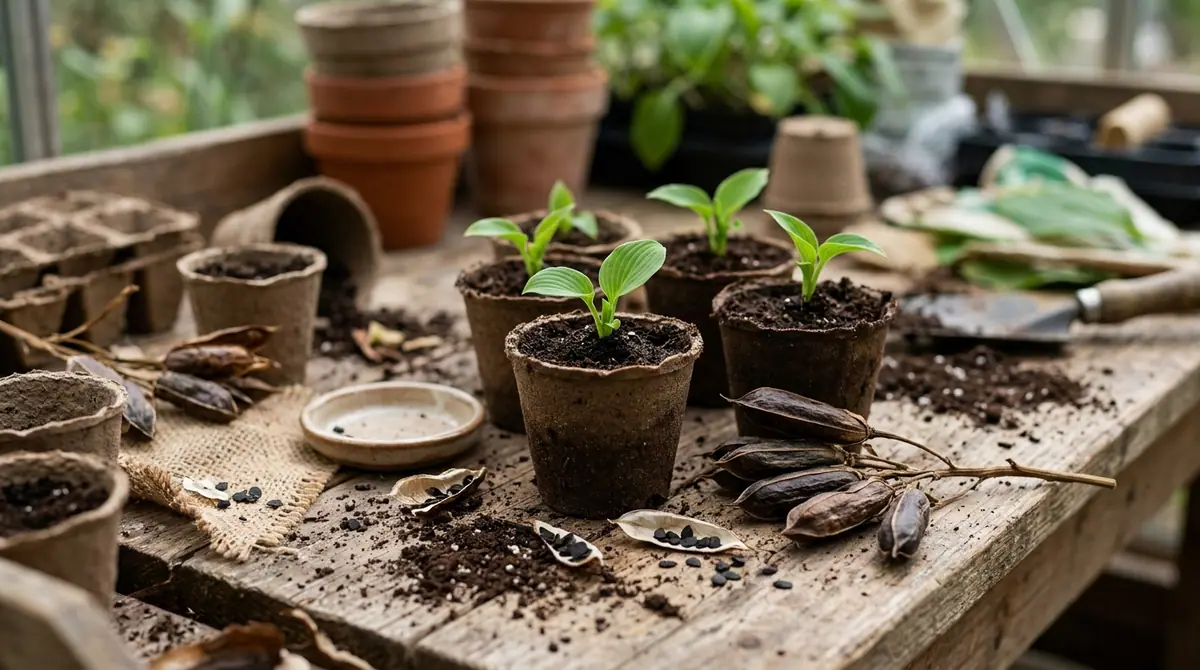
While lifting and dividing established crowns is the reliable, instant route for propagating hostas, cracking open papery black hosta pods that rattle like tiny maracas reveals flat, winged seeds that spark a different kind of horticultural curiosity. Growing hostas from seed is not a shortcut; it is a genetic adventure. Unlike cloning via division, seed-grown hostas can yield unexpected foliage variegation, unique leaf textures, and surprising flower forms, especially when working with open-pollinated hybrid cultivars.
1. Botanical Overview & Natural Habitat

In their natural understory habitats, hosta seeds mature inside triangular, leathery capsules that turn brown and split open in autumn. Each capsule produces dozens of flat, black, winged seeds designed to be caught by autumn breezes or drift down damp woodland slopes. Understanding this native ecology is the secret to successful germination. They evolved to drop onto damp leaf litter, experience a period of cold winter stratification, and germinate rapidly in the dappled spring light when the forest canopy is still bare.
When you harvest or purchase hosta seeds, you are holding a genetically distinct embryo. While species hostas (like Hosta sieboldiana or Hosta plantaginea) come relatively true to type from seed, modern complex hybrid cultivars will not replicate their parent plant. If you plant seeds harvested from a striking blue-and-gold variegated cultivar like 'Halcyon' or 'Patriot', your seedlings will segregate wildly. Many will revert to plain green or blue, but a small percentage might exhibit astonishing new variegation patterns. This genetic lottery is precisely what makes growing hostas from seed so thrilling for plant breeders and home gardeners alike.
If you enjoy the delayed gratification of multi-year perennial projects, growing hostas shares a similar psychological patience to establishing a perennial polyculture, much like designing a complex ecosystem detailed in our guide on How to Grow a Wild Food Forest Self Sufficiency Garden. The developmental timeline requires steady dedication, mirroring the careful patience needed when learning When to Start Tomato Seeds Indoors Zone 6 to beat a short outdoor growing season.
2. Essential Environmental & Care Requirements
To germinate and grow hosta seeds successfully indoors, you must mimic the woodland conditions of their native Asian habitats. Temperature, moisture, light, and medium are the four pillars of indoor hosta propagation.
| Parameter | Optimal Condition | Common Mistake | Why It Matters |
|---|---|---|---|
| Germination Temp | 65°F to 72°F (18°C to 22°C) | Placing trays in unheated garages | Low temperatures stall metabolic activation in the seed embryo, leading to seed rot. |
| Sowing Depth | 1/8 inch (0.3 cm) or surface sown | Burying seeds 1 inch (2.5 cm) deep | Hosta seeds require light exposure to trigger germination; deep burial prevents emergence. |
| Moisture Level | Consistently damp, sponge-like | Waterlogging or letting the topsoil crust | Dryness kills emerging radicles, while excess moisture invites damping-off fungi. |
| Light Exposure | 14 to 16 hours of bright fluorescent/LED | Direct, scorching midday window sun | Young seedlings lack cuticle protection and will easily scorch or dry out instantly. |
For a deeper dive into perennial cultivation standards, you can consult the Royal Horticultural Society Hosta Guidance, which outlines optimal hardiness zones and soil pH preferences for robust foliage development. Additionally, university agricultural extensions, such as the University of Minnesota Extension Yard and Garden, provide exceptional technical literature on managing indoor seed starting environments and preventing fungal pathogens.
3. Step-by-Step Cultivation, Feeding & Propagation
While you can sow hosta seeds directly outdoors in autumn, starting them indoors in late winter (February to March) gives your seedlings a vital multi-month head start before the harsh summer arrives.
💡 Pro-Tip: Although hosta seeds technically do not require cold stratification to germinate, giving them a 3-to-4-week chill in the refrigerator at 35°F to 40°F (1.6°C to 4.4°C) before sowing dramatically synchronizes and increases overall germination rates. Wrap dry seeds in a slightly damp paper towel, seal them in a plastic baggie, and date it.
Follow this exact step-by-step protocol to take your seeds from packet to thriving plug trays:
- Prepare the Germination Medium: Fill sterile, multi-cell seed trays or shallow flats with a fine-textured, peat-lite seed-starting mix. Moisten the medium thoroughly with warm water until it is evenly damp like a wrung-out sponge, allowing it to drain completely.
- Sow the Seeds: Press the flat, winged hosta seeds gently onto the surface of the damp soil. Space them roughly 0.5 inches (1.3 cm) apart. Because hosta seeds require light to trigger germination, cover them with only a very dusting—no more than 1/8 inch (0.3 cm)—of fine vermiculite or sifted potting mix.
- Cover and Maintain Humidity: Cover your seed trays with clear plastic humidity domes or polyethylene wrap to trap ambient moisture. Place the trays in a warm room where temperatures stay between 65°F and 72°F (18°C to 22°C).
- Monitor for Germination: Check the trays daily. Germination typically occurs within 14 to 28 days. The moment you see tiny green loops breaking the soil surface, remove the plastic cover immediately to promote air circulation.
- Provide Light: Position the uncovered seedlings 3 to 4 inches (7.5 to 10 cm) beneath grow lights. Keep the lights on for 14 to 16 hours daily. Avoid harsh, direct window sunlight, which can rapidly fry fragile, paper-thin leaves.
- Fertilize and Pot Up: Once seedlings develop their second set of true leaves (usually around 6 to 8 weeks after germination), fertilize them weekly with a half-strength, balanced liquid fertilizer (such as a 10-10-10 or 20-20-20 formulation). When they outgrow their individual cells, transplant them into 3-inch (7.6 cm) pots using a rich, organic potting soil enriched with compost.
- Harden Off: In late spring, after all danger of heavy frost has passed and outdoor night temperatures consistently exceed 50°F (10°C), gradually introduce your young hostas to outdoor shade over a 10-day period before planting them into garden beds.
Just as managing the transition from indoor trays to outdoor soil requires precise timing, managing other perennial food crops or ornamentals requires strict scheduling. For instance, timing your plantings correctly is just as critical when figuring out When Plant Squash Seeds or assessing whether specialized crops can thrive in your local climate, such as determining Will Kiwi Grow in Florida.
4. Common Problems, Pests & Troubleshooting
Growing hostas from seed is immensely rewarding, but indoor microclimates can present specific hurdles. Here is how to diagnose and solve the most common issues:
- Damping-Off Disease: If you notice your newly emerged seedlings suddenly collapsing at the soil line and shriveling away overnight, you are dealing with Pythium or Rhizoctonia fungi. This is almost always caused by stagnant air and over-saturated soil. Solution: Water your trays from the bottom by placing them in a shallow tray of water for 15 minutes, remove the humidity dome immediately, and use a small oscillating fan to keep air moving gently across the surface of the soil.
- Stalled Growth and Pale Leaves: If your seedlings reach the 2-inch (5 cm) mark and refuse to grow further, while turning a pale yellowish-green, they are likely starving for nutrients or root-bound in tiny starter cells. Solution: Begin a weekly half-strength liquid feeding routine and step up plants into larger 3-inch (7.6 cm) containers with fresh organic compost.
- Algae or Green Slime on Soil Surface: Excessively damp soil paired with high-intensity grow lights often breeds green surface algae. While it rarely kills established seedlings, it can choke out delicate late-germinating seeds. Solution: Let the top surface of the soil dry out slightly between waterings, and sprinkle a very thin layer of dry vermiculite over the algae patch to block its access to light.
- Slugs and Snails (Outdoor Transition): The moment you move your tender, young seed-grown hostas outdoors, local slugs and snails will view them as a gourmet buffet. Solution: Apply food-grade iron phosphate bait around the perimeter of your outdoor nursery beds, or elevate your potted hostas onto wire benches until they develop tougher, thicker mature foliage.
⚠️ Important Caution: Never harvest seeds from hostas infected with Hosta Virus X (HVX), which presents as mottled, ink-bleed discoloration, tissue collapse, or puckered necrosis on the leaves. HVX is systemic and can be transmitted via seed coats, sap, and tools, permanently contaminating your garden soil and destroying susceptible hosta collections.

5. Frequently Asked Questions
Can you save seeds from hostas and grow them?
Yes, absolutely. Hosta plants produce abundant seed pods by late autumn. You can harvest the dry, brown pods just before they pop open, extract the flat black seeds, and store or plant them. Keep in mind that seeds collected from hybrid cultivars will not grow true to the parent plant, resulting in unique, highly variable offspring.
How long does it take for hosta seeds to germinate?
Under optimal indoor conditions with temperatures between 65°F and 72°F (18°C to 22°C) and adequate moisture, hosta seeds typically germinate within 14 to 28 days. Pre-chilling the seeds in a damp paper towel inside a refrigerator for 3 weeks prior to sowing can significantly speed up and unify the germination process.
Do hosta seeds need light to germinate?
Yes. Hosta seeds are photoblastic, meaning they require light exposure to break dormancy and trigger germination. When sowing them indoors, press them firmly into the soil surface and cover them with no more than a light dusting (1/8 inch or 0.3 cm) of vermiculite or fine medium.
What do baby hosta seedlings look like?
When hosta seeds first sprout, they push up a single, slender green loop called a cotyledon. Within a week or two, this loop straightens out, and the first true leaf unfurls, featuring a miniature version of the characteristic heart or lance shape, though usually solid green or lightly marked before adult variegation genes fully express themselves in later growing seasons.
Related Guides
📋 Table of Contents ▼ Click to expand
Tags:
Keep reading
🌿 Related Plants You Might Like

PlantSavvyWorld
Editorial team
PlantSavvyWorld is an independent botanical education project. Articles are drafted with AI assistance, then edited and checked against university extension services, botanical garden collections and other published horticultural sources.