

Variegated Hosta
Written with AI assistance, edited and checked against horticultural sources.
1. Botanical Overview & Natural Habitat

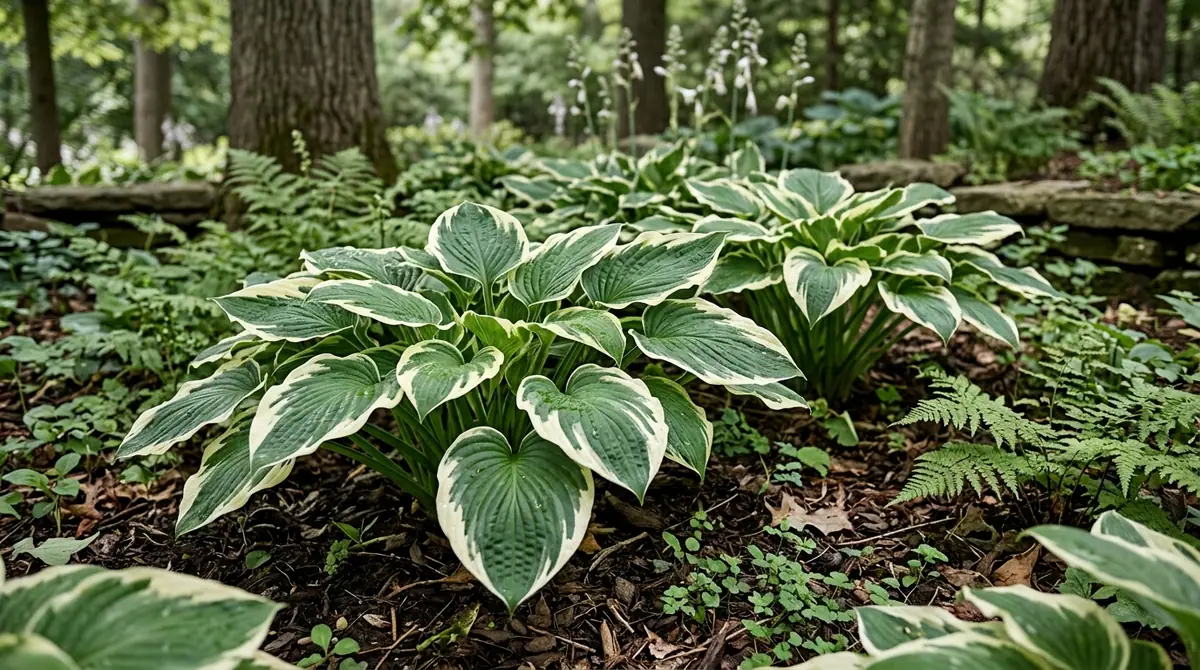
In their native habitats, wild hostas experience severe winters where temperatures plummet below 0°F (-18°C), forcing them into a protective dormancy, followed by rapid spring flushes once soil temperatures consistently exceed 50°F (10°C). The variegated mutations we cultivate in our gardens are genetic chimeras—cells containing both green, chlorophyll-producing tissue and white, yellow, or cream-colored tissue lacking functional chlorophyll.
Because chlorophyll is the engine of photosynthesis, variegated hostas require careful placement in the garden. White-margined cultivars like 'Patriot' or 'Francee' possess less total chlorophyll than their all-green ancestors, making them slightly more sensitive to direct solar radiation, while gold-centered cultivars such as 'Gold Standard' or 'June' can tolerate slightly more morning sun to enhance their vibrant chartreuse and golden hues.
Leaf architecture in variegated hostas varies wildly, spanning from linear, lancet-shaped blades to massive, heavily textured, cordate (heart-shaped) leaves measuring up to 18 inches (45 cm) across. Understanding this botanical heritage—rooted in moisture-retentive, organic-rich forest soils and sheltered, cool exposures—is the master key to keeping them pristine in cultivated landscapes.
2. Essential Environmental & Care Requirements
To keep variegated hostas looking showroom-ready, you must replicate the cool, rich, and reliably moist conditions of an East Asian woodland floor.
Light exposure is the single most critical environmental factor. Most variegated cultivars demand 3 to 4 hours of gentle morning sun, followed by 6 to 8 hours of high-shade or dappled afternoon light. Exposing gold-margined or chartreuse hostas to harsh afternoon sun between 12:00 PM and 4:00 PM will bleach the delicate pigments and cause leaf scorch, while placing white-margined cultivars in deep, pitch-dark shade will cause the white margins to revert to green as the plant desperately manufactures more chlorophyll to survive.
Soil composition must balance moisture retention with rapid drainage. Amend heavy clay or sandy loam with generous amounts of well-rotted leaf mold or compost to achieve a target soil pH between 6.5 and 7.0. Mulch annually with a 2-inch (5 cm) layer of shredded hardwood bark, keeping the mulch 1 inch (2.5 cm) away from the crown to prevent stem rot.
| Parameter | Optimal Condition | Common Mistake | Why It Matters |
|---|---|---|---|
| Light Exposure | Dappled shade to morning sun (3-4 hours) | Scorching afternoon sun (12 PM - 4 PM) | Direct afternoon heat burns white/yellow tissue and ruins foliar patterns. |
| Soil Moisture | Consistently moist, equivalent to 1 inch of water weekly | Allowing soil to dry completely between waterings | Drought stress causes brown, crispy leaf margins and stunted growth. |
| Soil pH & Texture | 6.5 - 7.0 in organic-rich, loamy, well-draining soil | Heavy, waterlogged clay or nutrient-poor sand | Poor drainage leads to fatal root and crown rot during dormant periods. |
| Temperature Range | Hardiness zones 3a to 9b (-40°F to 35°F / -40°C to 1.6°C) | Uninsulated container exposure in winter | Extreme freeze-thaw cycles heave shallow roots out of the soil. |
Watering requirements are straightforward: variegated hostas need approximately 1 inch (2.5 cm) of water weekly, either from rainfall or manual irrigation. Always water at the base of the plant using soaker hoses or drip irrigation rather than overhead sprinkling, which traps moisture on the leaves and invites fungal pathogens like Sclerotium rolfsii (southern blight).
💡 Pro-Tip: If you notice your white-margined hosta slowly turning completely green over the course of a single season, you are witnessing genetic reversion. Carefully dig down, trace the rogue all-green shoot back to its origin on the crown, and slice it off cleanly with a sterilized razor blade. If left, the vigorous green tissue will completely overtake and starve out the slower-growing variegated sections.
3. Step-by-Step Cultivation, Feeding & Propagation
Establishing variegated hostas correctly ensures decades of low-maintenance performance. Follow this precise protocol for planting, feeding, and asexual division.
- Site Preparation and Hole Excavation: Select a shaded or morning-sun location in early spring when soil temperatures reach 50°F (10°C). Dig a planting hole twice as wide as the nursery container but exact in depth—typically 6 to 8 inches (15 to 20 cm)—ensuring the crown of the hosta sits precisely flush with or slightly above the surrounding soil grade.
- Amendment and Root Teasing: Mix equal parts native soil and compost. Gently slip the hosta from its nursery pot and use your fingers to gently tease apart any tightly wound root circles, spreading the fleshy, cord-like roots outward in a radial pattern.
- Planting and Initial Watering: Place the plant in the center of the hole, backfill with the amended soil mixture, and tamp down gently to eliminate large air pockets. Immediately deliver a deep, saturated watering of 1 gallon (3.8 liters) per plant to settle the soil profile.
- Fertilization Protocol: Apply a balanced, slow-release granular organic fertilizer (such as a 10-10-10 formulation) in early spring just as the pips (shoots) begin to emerge from the soil. Apply at a rate of 1 tablespoon per square foot of root zone, scratching it lightly into the top 1 inch (2.5 cm) of soil. Avoid high-nitrogen synthetic fertilizers, which produce soft, succulent foliage that acts as a beacon for hungry slugs.
- Propagation by Division: In early spring (when shoots are 2 to 4 inches / 5 to 10 cm tall) or late summer, lift an established 3-to-4-year-old clump using a sharp spade. Shake off excess soil, locate the natural divisions between crowns, and slice cleanly through the fleshy root mass using a sterile, sharp knife, ensuring each division contains at least two robust eyes and a healthy root system. Replant immediately at the exact original depth.
⚠️ Important Caution: Never fertilize newly planted or divided variegated hostas until they have produced a full flush of new leaves—typically 4 to 6 weeks after planting. Forcing fertilizer on stressed, newly cut roots causes chemical burn and invites total plant collapse.
4. Common Problems, Pests & Troubleshooting
Even the most vigilant gardeners will occasionally encounter issues when cultivating variegated hostas. Identifying them early prevents irreversible foliar damage.
Slug and Snail Damage: These nocturnal mollusks are public enemy number one for hostas, chewing ragged, unsightly holes in the tender leaf blades. Combat them by clearing out heavy organic debris where they hide, deploying iron phosphate-based bait pellets around the drip line every 14 days during wet spring weather, or sinking beer traps flush with the soil line. For comprehensive biological control strategies, consult the guidance provided by the Royal Horticultural Society.
Foliar Nematodes (Aphelenchoides fragariae): These microscopic eelworms swim up the exterior moisture film of the plant and enter leaf pores, creating distinct, linear brown streaks trapped between the parallel leaf veins. There is no chemical cure; you must immediately prune infected leaves down to the soil line, bag them, and throw them in the trash (do not compost). To prevent spread, never splash water onto foliage and sanitize your pruners between every single cut using a 10% household bleach solution or rubbing alcohol.
Hosta Virus X (HVX): A devastating, incurable plant virus unique to hostas. Symptoms include mottled, ink-bleed variegation patterns, tissue collapse, puckered necrosis, and stunted growth. HVX spreads exclusively through plant sap via contaminated garden tools or division knives. If diagnosed, immediately bag and destroy the entire plant. For ongoing scientific updates on hosta pathology and virus testing, reference resources maintained by the American Hosta Society.

5. Frequently Asked Questions
Why are the white margins on my variegated hosta turning brown and crispy?
This is typically caused by a combination of insufficient soil moisture, drying winds, or too much direct afternoon sun. Variegated hostas have less chlorophyll in their white or yellow margins, making those specific cellular areas far more sensitive to heat stress and dehydration. Ensure your plants receive a consistent 1 inch (2.5 cm) of water weekly and are shielded from harsh midday solar radiation.
Can I grow variegated hostas successfully in containers on a shady patio?
Yes, absolutely. Select a frost-proof container that is at least 16 inches (40 cm) in diameter to insulate the root system against temperature extremes. Use a high-potency, well-draining potting mix blended with compost, and remember that container-grown hostas require more frequent monitoring for moisture because pots dry out significantly faster than garden beds.
How do I stop deer from eating my expensive variegated hostas?
Deer consider hostas gourmet candy. To protect them, apply a rotation of commercial scent- and taste-based repellents containing putrescent egg solids, garlic, or capsaicin every 10 to 14 days, especially after heavy rain. In high-pressure rural areas, physical barriers such as 7-foot (2.1-meter) garden fencing or discrete netting are the only 100% reliable solutions.
Do variegated hostas need to be cut back in the winter?
Yes. After the first hard autumn freeze drops the ambient temperature below 28°F (-2°C), the foliage will turn mushy and yellow. Cut all the dead leaves back to within 1 to 2 inches (2.5 to 5 cm) of the soil surface and clear them away from the crown. This simple sanitation step eliminates overwintering slug eggs and fungal spores, ensuring a clean, vigorous flush of fresh pips when spring arrives.
Related Guides
- Sunhosta Hosta
- Hosta Seeds How to Grow
- Variegated Gymnocalycium
- Variegated Cactus Plants
- Variegated Plumeria
📋 Table of Contents ▼ Click to expand
Tags:
Keep reading
🌿 Related Plants You Might Like



PlantSavvyWorld
Editorial team
PlantSavvyWorld is an independent botanical education project. Articles are drafted with AI assistance, then edited and checked against university extension services, botanical garden collections and other published horticultural sources.