

Sunhosta Hosta
Written with AI assistance, edited and checked against horticultural sources.
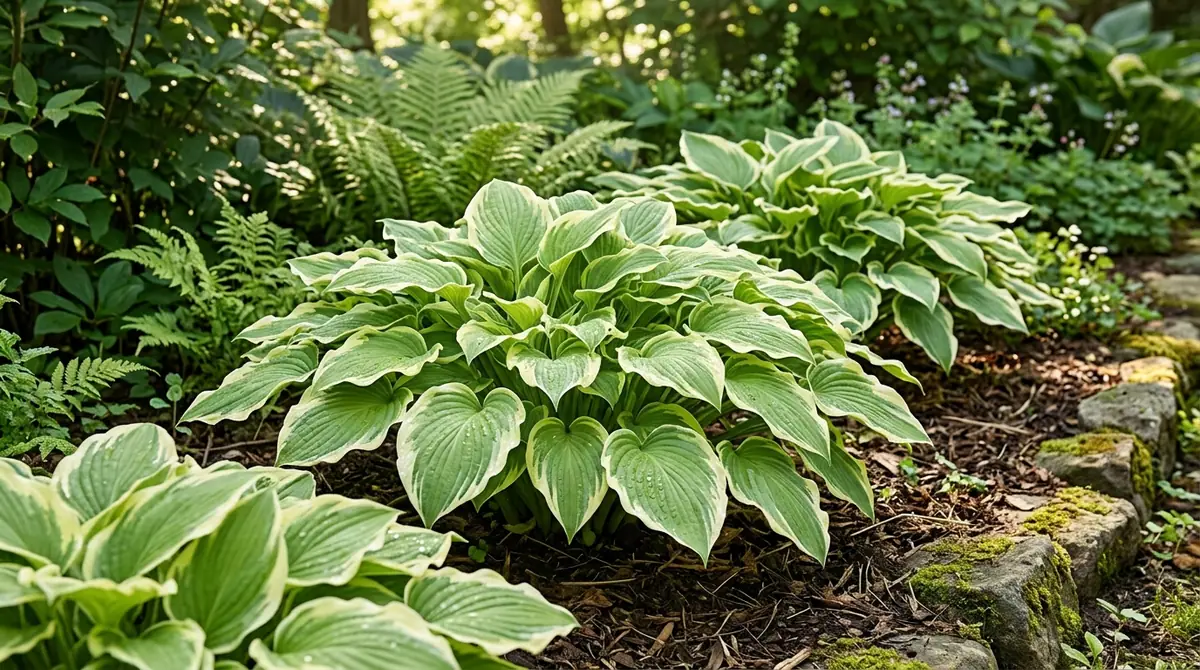
In trial gardens during late July at 92°F (33°C), traditional shade-loving hosta varieties curl up at the edges like scorched parchment despite regular irrigation. Yet right beside them, a block of "Sunhosta" plants bathed in unfiltered afternoon glare glow with a vibrant, chartreuse-to-gold radiance without a single sign of leaf scorch. For decades, landscape designers treated hostas strictly as woodland understory dwellers, but the advent of sun-tolerant cultivars like the Sunhosta changed that paradigm entirely, opening up bright borders, patio containers, and south-facing foundations to foliage that previously demanded dense shade.
1. Botanical Overview & Natural Habitat

Sunhosta has been specifically bred and selected for enhanced cuticular thickness, higher chlorophyll stability under high light intensities, and increased cellular density. These physiological adaptations allow it to withstand ultraviolet radiation levels that would bleach or burn the foliage of older heritage cultivars like Hosta sieboldiana.
From a morphological standpoint, Sunhosta forms a dense, mounding perennial clump typically reaching a mature height of 18 to 24 inches (45 to 60 cm) and spreading outward to 30 to 36 inches (75 to 90 cm) within three growing seasons. The foliage emerges in spring as a bright, luminous chartreuse, transitioning to a rich golden-yellow if exposed to optimal sunlight, or stabilizing at a vibrant lime-green if grown in partial shade. The leaf blades are cordate (heart-shaped) to ovate, featuring prominent parallel venation and a distinctly puckered (corrugated) texture that adds a robust architectural element to garden designs. In mid-to-late summer, scapes rise up to 30 inches (75 cm) bearing bell-shaped, funnel-form flowers in shades of pale lavender to near-white that attract bees and hummingbirds.
Because understanding the botanical resilience of hostas is vital for regional success, I frequently direct growers to the comprehensive resources provided by the Missouri Botanical Garden Plant Finder for cold hardiness data and regional performance metrics.
2. Essential Environmental & Care Requirements
While Sunhosta defies the traditional "shade-only" rule, it still operates within specific environmental parameters to look its absolute best. Meeting these requirements ensures your plants maintain their rich coloration without succumbing to environmental stress.
| Parameter | Optimal Condition | Common Mistake | Why It Matters |
|---|---|---|---|
| Light Exposure | 4 to 6 hours of direct morning sun with afternoon shade, or full sun in northern climates (USDA Zones 3–5). | Planting in scorching afternoon sun (1 PM to 5 PM) in southern zones (USDA Zones 7–9). | Excessive heat and intense UV rays overwhelm the plant's transpiration rate, leading to unsightly leaf scorch and bleached white patches. |
| Soil Composition | Rich, loamy, highly organic soil with a pH between 6.0 and 6.5. | Heavy, compacted clay or excessively sandy, draining-too-fast soil. | Hostas require constant moisture coupled with aeration; heavy clay suffocates roots, while sand starves them of nutrients and water. |
| Watering Regime | 1 inch (2.5 cm) of water per week via deep, infrequent soaking. | Frequent, shallow sprinkling that only wets the topsoil. | Shallow watering encourages weak, surface-level root systems that dry out quickly during summer heatwaves. |
| Mulching Depth | 2 to 3 inches (5 to 7.5 cm) of shredded bark or leaf mold, kept 1 inch away from the crown. | Piling mulch directly against the stems ("volcano mulching"). | Piling mulch on the crown traps moisture against the plant tissue, inviting crown rot and fungal pathogens. |
Temperature tolerance for Sunhosta spans USDA Hardiness Zones 3 through 9. In cooler northern ranges, it thrives in full sun all day long, which actually intensifies its golden pigmentation. In warmer southern ranges (Zones 8 and 9), it requires afternoon shade to protect it from ambient air temperatures exceeding 85°F (29°C) for extended periods.
Soil moisture management is the single most critical factor for success. Unlike drought-tolerant succulents, Sunhosta has large surface areas of foliage that transpire massive quantities of water on hot summer days. If the root zone dries below 40% field capacity, leaf margins will quickly turn brown and crispy. Conversely, standing water or waterlogged soils for more than 48 hours will suffocate the root tips, leading to root rot driven by Phytophthora or Pythium species.
For official soil testing protocols and amendments tailored to perennial beds, consult the guidelines published by the RHS Gardening Advice.
3. Step-by-Step Cultivation, Feeding & Propagation
Establishing Sunhosta successfully requires deliberate attention to planting depth, root spreading, and seasonal nutrition. Follow this chronological protocol to establish a vigorous specimen.
- Site Selection and Soil Preparation: Choose a location that receives morning sun and afternoon shade (or full sun if you live north of USDA Zone 5). Clear all perennial weeds and incorporate a 3-inch (7.5 cm) layer of well-rotted compost or leaf mold into the top 10 inches (25 cm) of soil to improve structure and water retention.
- Digging the Planting Hole: Dig a hole twice as wide as the nursery container but only as deep as the root ball—typically 8 to 10 inches (20 to 25 cm). Ensuring the hole is no deeper than the root ball prevents the plant from settling too low, which causes crown rot.
- Root Pruning and Placement: Remove the Sunhosta from its container. If the roots are tightly wound or circling (root-bound), use your fingers or a sterile knife to gently tease them outward. Place the plant in the center of the hole, ensuring the crown (where the stems meet the roots) sits level with or 0.5 inches (1.2 cm) above the surrounding soil grade.
- Backfilling and Initial Watering: Backfill with the native soil-compost mixture, tamping down gently with your hands to eliminate large air pockets. Water the entire root zone thoroughly with 1 gallon (3.8 liters) of water to settle the soil around the roots.
- Applying Mulch: Spread a 2-inch (5 cm) layer of shredded hardwood bark or pine straw around the base of the plant to suppress weeds and retain soil moisture. Maintain a 1-inch (2.5 cm) clearance ring of bare soil around the stems to prevent moisture accumulation against the crown.
- Fertilization Schedule: Apply a balanced, slow-release granular fertilizer (such as a 10-10-10 formulation) in early spring just as the first pips (shoots) emerge from the soil. Apply at a rate of 1 tablespoon per square foot of root zone, and scratch it lightly into the surface mulch before watering. Avoid high-nitrogen fertilizers after mid-summer, as succulent late-season growth is vulnerable to frost damage.
- Propagation by Division: In early spring (when shoots are 2 to 4 inches / 5 to 10 cm tall) or late summer, dig up a mature 4-to-5-year-old clump. Use a sharp, sterilized spade or a serrated knife to slice the root ball into sections, ensuring each division contains at least 3 to 5 strong eyes and a healthy segment of the root system. Replant immediately at the same depth.
💡 Pro-Tip: When planting Sunhosta in a full-sun exposure, increase your organic matter incorporation by an additional 20%. Organic matter acts like a subterranean sponge, buffering soil moisture fluctuations and keeping root temperatures up to 5°F (3°C) cooler during peak afternoon heat.
4. Common Problems, Pests & Troubleshooting
Even tough cultivars like Sunhosta encounter biotic and abiotic stressors. Diagnosing them early prevents cosmetic damage from turning into plant decline.
- Slugs and Snails: These nocturnal gastropods are the arch-nemesis of hostas, chewing ragged, irregular holes in the leaf centers and leaving silvery slime trails behind.
- Solution: Apply iron phosphate-based bait pellets around the perimeter of the plant in early spring. Clear away low-hanging debris and leaf litter where slugs hide during the day.
- Deer and Rabbits: White-tailed deer and rabbits find young, tender hosta shoots and mature foliage highly palatable, often browsing plants down to ground level overnight.
- Solution: Apply a rotational system of commercial liquid deterrents containing putrescent egg solids, garlic, or capsaicin every 14 days, or install physical barriers like wire cages during peak spring flush.
- Foliar Nematodes (Aphelenchoides fragariae): These microscopic roundworms swim in water films on leaf surfaces, entering through stomata and causing characteristic brown, wedge-shaped necrotic lesions trapped between the leaf veins.
- Solution: Prune out and destroy affected leaves immediately. Never overhead water hostas in the evening, as standing water droplets facilitate nematode movement between leaves.
- Leaf Scorch (Sunburn): Occurs when sun-tolerant hostas are pushed into too much intense afternoon sun, or when root moisture drops too low during a drought. The edges of the leaves turn papery, brown, and translucent.
- Solution: Move the plant to a location with afternoon shade, or install a 30% shade cloth overhead during the hottest months of July and August. Ensure weekly deep watering regimes are strictly maintained.
⚠️ Important Caution: Never apply systemic insecticides containing neonicotinoids to hostas that are in active bloom. Because hosta flowers are highly attractive to bees and beneficial pollinators, systemic poisons translocate into the nectar and pollen, contributing to pollinator colony decline.

5. Frequently Asked Questions
Can Sunhosta really grow in full, all-day sun?
Yes, but geography matters. If you garden in USDA Zones 3 through 5, Sunhosta can handle full, all-day sun without issue, and its golden color will actually become much brighter. If you garden in USDA Zones 7 through 9, "full sun" will cause leaf scorch unless the plant receives reliable afternoon shade during the hottest hours of the day.
How much water does a newly planted Sunhosta need?
During its first growing season, a newly planted Sunhosta requires approximately 1 to 1.5 inches (2.5 to 3.8 cm) of water per week. If natural rainfall does not supply this, deep-water the plant manually once or twice a week. Check the soil moisture 2 inches (5 cm) deep; if it feels dry, it is time to irrigate thoroughly.
Should I cut back my Sunhosta in the fall?
Yes, cutting back your Sunhosta in late autumn—after the first hard frost turns the foliage yellow and limp—is an essential sanitation step. Use clean pruning shears to cut all stems back to about 1 to 2 inches (2.5 to 5 cm) above the soil line. Discard or compost the dead foliage to prevent overwintering slug eggs and fungal spores from inhabiting the garden bed.
How fast does Sunhosta grow and spread?
Sunhosta is a moderate-to-fast grower compared to strict shade hostas. From a standard 1-gallon nursery container, you can expect the plant to reach its mature landscape size of 18 to 24 inches (45 to 60 cm) tall and up to 36 inches (90 cm) wide within three full growing seasons. You can maintain its size or multiply your stock by dividing the root clump every 3 to 4 years.
Related Guides
📋 Table of Contents ▼ Click to expand
Tags:
Keep reading
🌿 Related Plants You Might Like






PlantSavvyWorld
Editorial team
PlantSavvyWorld is an independent botanical education project. Articles are drafted with AI assistance, then edited and checked against university extension services, botanical garden collections and other published horticultural sources.