

Can Chickens Eat Goat Feed
Written with AI assistance, edited and checked against horticultural sources.
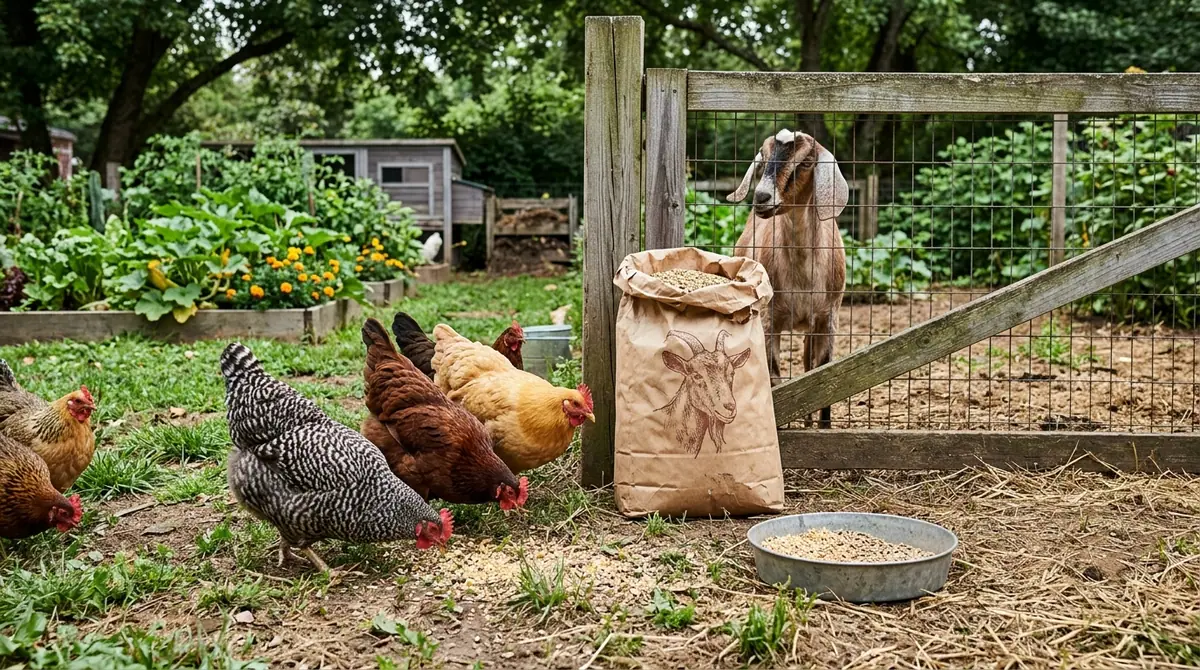
Standing knee-deep in my south paddock last November, watching my heritage Speckled Sussex hens enthusiastically dive-bomb the Nubian goat trough, I had to laugh before I grabbed my rake. Our lead doe, Clover, had tossed half her sweet-feed ration onto the frozen mud, and the flock treated it like winning the poultry lottery. My first instinct wasn't annoyance; it was botanical curiosity. I needed to know exactly what those pellets were doing inside my birds' crops and whether my dual-species homestead setup was quietly setting my laying hens up for nutritional disaster.
1. Botanical Overview & Natural Habitat
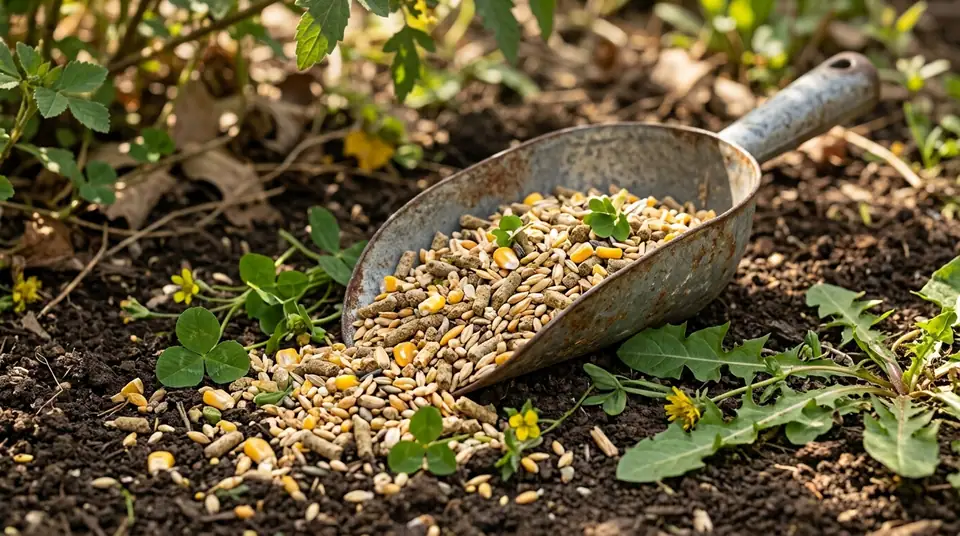
When humans concentrate these botanical sources into pelleted livestock feed, we alter the nutritional delivery system. Goat feed is specifically formulated for ruminant digestion—a four-chambered fermentation vat that breaks down complex plant cellulose and manages mineral balances very differently than a single-stomach avian digestive tract. Alfalfa, a cornerstone legume in many goat diets, provides high structural fiber and calcium. Cereal grains supply dense carbohydrates. However, when chickens consume this formulation designed for a 150 lb (68 kg) browsing mammal rather than a 5 lb (2.3 kg) laying bird, the biochemical mismatch creates distinct metabolic friction.
| Parameter | Optimal Condition | Common Mistake | Why It Matters |
|---|---|---|---|
| Protein Content | 16% to 20% for laying hens | Feeding 12% maintenance goat feed | Causes drops in egg production and feather picking |
| Calcium-to-Phosphorus | 2:1 ratio for layers | High phosphorus in unadjusted grain | Leads to kidney failure and medullary bone depletion |
| Copper Tolerance | Max 10–20 ppm dietary limit | Feeding high-copper sheep/goat feeds | Causes fatal copper toxicity and liver necrosis in poultry |
| Particle Size | Crumbles or mash (under 0.12 in / 0.3 cm) | Large dense pellets (0.25 in / 0.6 cm) | Leads to crop impaction and choking hazards |
2. Essential Environmental & Care Requirements
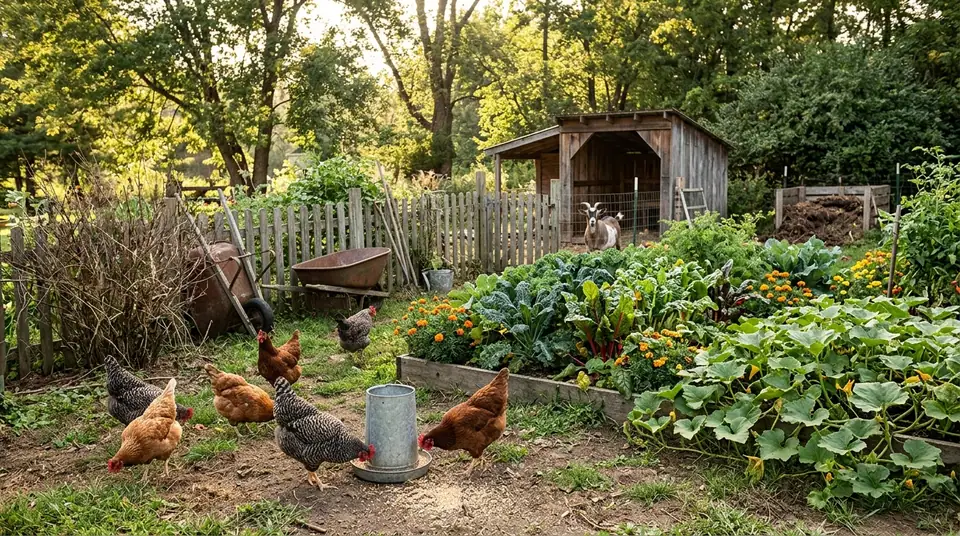
Managing a mixed-species foraging environment requires strict spatial and nutritional boundaries. Chickens have hyper-efficient metabolisms requiring precise macro- and micro-nutrient profiles to maintain high egg output and immune resilience. When housing goats and chickens together, the temptation to feed them from a single communal trough is high, but environmental management must prevent cross-access.
Temperature and climate also dictate how birds process supplemental feeds. During freezing winter snaps—when ambient temperatures drop below 32°F (0°C)—chickens naturally crave high-carbohydrate grains to generate internal metabolic heat. Goat sweet feeds, rich in molasses and cracked corn, seem like a warming treat. Yet, if temperatures remain unseasonably mild, hovering around 65°F to 75°F (18°C to 24°C), feeding high-calorie, low-protein ruminant rations quickly leads to visceral fat accumulation around the oviduct, severely depressing laying rates.
Furthermore, environment dictates mineral availability. Free-range chickens supplement their diet with calcium from grit, eggshells, and limestone soils, while goats require specific mineral licks containing elements like copper. If your chickens peck at medicated or copper-heavy goat feeds, or worse, lick a shared mineral block, the physiological consequences can be catastrophic. Copper is notoriously toxic to poultry at levels safely consumed by goats. Therefore, housing setups must incorporate elevated, gravity-fed goat feeders placed at a minimum height of 24 inches (61 cm) off the ground—easily reachable for a standing goat, but safely above the vertical jumping capacity of standard-breed chickens.
💡 Pro-Tip: If your chickens routinely break into the goat pen, do not panic if it happened once or twice. Observe their crop consistency the following morning. A healthy chicken's crop should empty completely overnight when roosting in temperatures between 50°F and 70°F (10°C and 21°C). If the crop feels hard and doughy at dawn, immediately remove access to pelleted feeds and administer 0.5 oz (15 ml) of plain warm water followed by gentle massage to break down the dense botanical binders.
3. Step-by-Step Cultivation, Feeding & Propagation
If you find yourself with leftover goat feed and want to utilize it safely without harming your flock, you cannot simply dump it into the chicken run. Instead, you must process and balance the feed through a deliberate nutritional protocol. Here is the exact procedure I use on my design-build homestead to repurpose livestock grains safely:
- Audit the Ingredient Label: Inspect the goat feed bag to verify it is completely free of targeted medications, ammonium chloride (often added to prevent urinary calculi in male goats), and toxic levels of copper. If the feed contains ammonium chloride or copper exceeding 20 ppm, discard it from your poultry rotation entirely.
- Dilute and Balance the Protein: Because standard goat maintenance feeds hover around 12% to 14% protein—far below the 16% minimum required for laying hens—blend the goat feed at a strict 1:3 ratio with high-protein game bird crumbles (which run around 24% protein) or incorporate dried black soldier fly larvae (Hermetia illucens).
- Crush Dense Pellets: Use a hand-crank grain mill or heavy mallet to break down large, hard goat pellets (typically 0.25 inches / 0.6 cm in diameter) down into a fine mash or crumbles measuring less than 0.12 inches (0.3 cm) to prevent avian esophageal choking and crop impaction.
- Ferment for Enhanced Bioavailability: Combine the crushed goat feed mixture with lukewarm water (maintaining a liquid temperature of 70°F to 80°F / 21°C to 26°C) in a food-grade plastic bucket. Allow the mixture to lacto-ferment anaerobically for 48 to 72 hours until bubbles form and a pleasantly sour aroma develops. This pre-digests the complex starches and neutralizes anti-nutritional factors present in raw grains.
- Serve in Controlled Portions: Offer the fermented mash as a midday treat, limiting consumption to no more than 10% of the flock's total daily dry matter intake. Always ensure fresh, clean water is situated within 3 feet (0.9 m) of the feeding station to aid in high-fiber digestion.
⚠️ Important Caution: Never feed medicated goat feeds containing coccidiostats like decoquinate or lasalocid to laying hens producing eggs for human consumption. Many ruminant medications lack FDA approval for poultry, meaning drug residues will directly transfer into the albumen and yolk, creating a health hazard for your family.
4. Common Problems, Pests & Troubleshooting
When chickens manage to gorge on unmonitored goat feed, several clinical and systemic issues quickly arise within the flock. The most frequent emergency is crop impaction. Goat feeds swell significantly when exposed to moisture inside the warm, acidic environment of the avian crop. If a hen consumes a large volume of dry goat pellets and immediately drinks copious amounts of water, the feed expands rapidly, blocking the passage to the proventriculus. You will notice the bird isolating herself, standing with a puffed-up posture, and emitting a foul-smelling sour liquid from her beak.
Another silent issue is nutritional secondary hyperparathyroidism caused by mineral imbalances. Many sweet feeds have inverted calcium-to-phosphorus ratios. Over time, excessive phosphorus binds to available calcium, preventing proper bone mineralization and resulting in thin-shelled or shell-less eggs, followed by progressive leg paralysis.
5. Frequently Asked Questions
Can chickens eat medicated goat feed?
No. Medicated goat feeds often contain chemical agents designed to prevent specific ruminant illnesses like coccidiosis in kids. These drugs are not tested or approved for laying poultry, and their active chemical residues will deposit directly into the eggs, rendering them unsafe for human consumption.
Will goat feed kill my chickens?
An accidental mouthful of goat feed will not kill a chicken. However, making goat feed a regular part of their diet will gradually cause severe nutritional deficiencies, fatty liver hemorrhagic syndrome, and fatal crop impaction due to the lack of proper avian vitamins, amino acids, and calcium balances.
Can baby chicks eat goat feed?
Absolutely not. Starter feed formulated for chicks requires a precise 18% to 20% protein level, fortified with essential amino acids like methionine and precise amounts of amprolium if medicated. Goat feed lacks these building blocks and will severely stunt chick skeletal and feather development within 14 days of ingestion.
What should I do if my chickens ate a lot of sweet goat feed?
Immediately remove access to the remaining feed. Isolate the affected birds and ensure they have continuous access to coarse insoluble granite poultry grit—measuring roughly 0.08 to 0.15 inches (0.2 to 0.4 cm)—which acts as a mechanical abrasive to help grind down dense masses in the gizzard. Monitor their crops daily for 5 to 7 days until complete digestive evacuation is confirmed. For further reading on safe livestock management practices, consult the USDA Animal and Plant Health Inspection Service.
Related Guides
📋 Table of Contents ▼ Click to expand
Tags:
🌿 Related Plants You Might Like



PlantSavvyWorld
Editorial team
PlantSavvyWorld is an independent botanical education project. Articles are drafted with AI assistance, then edited and checked against university extension services, botanical garden collections and other published horticultural sources.