

Medicinal Uses for Lambs Ear
Written with AI assistance, edited and checked against horticultural sources.
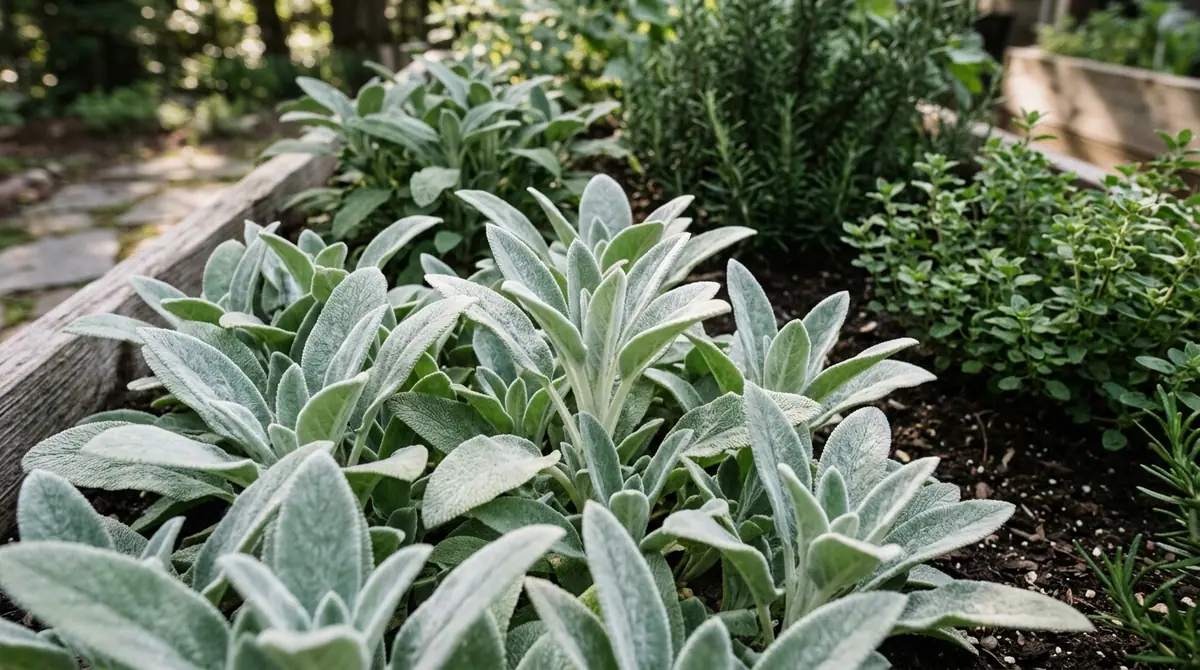
Last July, while walking a drought-stressed gardener through a newly installed pollinator garden in central Ohio, a five-year-old boy scraped his knee on a limestone paver. Before I could reach into my canvas utility bag for a sterile wipe, the boy's grandmother did something I have watched generations of traditional herbalists do: she pinched a cluster of velvety, silver-gray leaves from the edge of the adjacent perennial border, crushed them between her palms until the green juices released, and pressed the fuzzy mass directly against the bleeding scrape. Within two minutes, the bleeding stopped, and the stinging subsided. That plant was Stachys byzantina, commonly known as Lamb’s Ear. Horticultural practice has spent decades analyzing the secondary metabolites of garden ornamentals, but witnessing the immediate, tactical efficacy of this historical "band-aid plant" in real-time remains one of my favorite reminders that our most striking landscape designs can also double as a living, roadside pharmacy.
1. Botanical Overview & Natural Habitat

The plant's most defining feature—its dense, woolly, silver-white indumentum (hair covering)—is actually a complex evolutionary survival mechanism. These non-glandular trichomes trap a layer of air against the leaf surface, shading the underlying epidermis, reflecting harsh UV rays, and drastically reducing transpirational water loss. This dense mat of hairs is also the exact anatomical structure that grants the plant its historical medicinal utility. When harvested and applied topically, the microscopic, absorbent branching hairs act as a mechanical hemostatic agent, rapidly trapping red blood cells and encouraging clotting.
Botanically, Stachys byzantina produces creeping, rooting stems that form dense, low-growing ground-cover mats ranging from 6 to 12 inches (15 to 30 cm) in height, with flower spikes shooting up to 18 to 24 inches (45 to 60 cm) in late spring to mid-summer. The leaves are thick, lanceolate to oblong, and measure 2 to 4 inches (5 to 10 cm) in length. While many cultivars exist—such as 'Silver Carpet', which rarely blooms and focuses solely on foliar spread, and 'Big Ears' (Stachys macrantha hybrids), which feature larger, less densely hairy leaves—the species Stachys byzantina remains the gold standard for traditional herbal applications due to its high concentration of secondary metabolites, including aucubin and harpagide, which impart mild antiseptic and anti-inflammatory properties.
2. Essential Environmental & Care Requirements
Growing healthy Lamb’s Ear for medicinal harvesting requires replicating its native Anatolian mountain habitat. If you coddle this plant with rich soil and excessive moisture, it will quickly succumb to root rot.
To maximize the concentration of therapeutic triterpenes and phenolic compounds within the foliage, you must provide optimal environmental stress without pushing the plant to the point of decline. For authoritative guidance on regional perennial management, consult the Royal Horticultural Society Growing Guide.
| Parameter | Optimal Condition | Common Mistake | Why It Matters |
|---|---|---|---|
| Soil Drainage | Gritty, sandy loam, pH 6.0–7.5 | Heavy clay or waterlogged organic muck | Excess moisture rots the crown and triggers fungal leaf spot. |
| Sunlight | Full sun, 6 to 8 hours daily | Shady garden corners | Low light decreases trichome density, reducing medicinal efficacy. |
| Watering | Deep, infrequent watering once established | Overhead sprinklers wetting the foliage | Wet leaves combined with poor air circulation invite fungal pathogens. |
| Fertilization | None to very low fertility | Heavy nitrogen feeding | High fertility produces soft, lush growth prone to disease and flopping. |
💡 Pro-Tip: If your garden soil leans heavy on clay, never amend just the planting hole. Dig out a 3-foot (1-meter) wide bed, and amend the entire top 8 inches (20 cm) with coarse horticultural sand and expanded shale to ensure uniform, lateral drainage that protects the delicate root crowns.
3. Step-by-Step Cultivation, Feeding & Propagation
Establishing a robust stand of Stachys byzantina for both landscape appeal and apothecary use is straightforward when you follow precise horticultural timing.
- Site Selection and Soil Preparation: Choose a location receiving full sun with a soil temperature consistently above 60°F (15°C). Clear all perennial weeds and incorporate 2 inches (5 cm) of coarse sand into the top 6 inches (15 cm) of soil to guarantee rapid drainage.
- Planting Container Grown Stock: Dig a hole twice as wide as the nursery pot but no deeper. Place the root ball so the crown sits precisely 0.5 inches (1.2 cm) above the surrounding soil grade to prevent surface water from pooling against the stems. Space plants 18 to 24 inches (45 to 60 cm) apart to allow for lateral carpet expansion.
- Initial Establishment Irrigation: Water the newly installed plants thoroughly, delivering 1 inch (2.5 cm) of water over the root zone. Withhold subsequent water until the top 2 inches (5 cm) of soil are completely dry to the touch, which typically takes 7 to 10 days depending on ambient temperatures.
- Pruning and Maintenance: In early spring, don heavy gloves and rake through the mat with a hand cultivator to comb out dead, overwintered leaves. Cut back old flower stalks to the base once blooming ceases in mid-summer to encourage fresh, clean basal rosette growth.
- Propagation via Division: Every 3 to 4 years, lift established clumps in early autumn when soil temperatures hover around 55°F (13°C). Use a sharp, disinfected spade to slice the root mass into rooted sections containing at least three healthy rosettes, and replant immediately.
For broader ornamental integration guidelines and climate suitability maps, refer to the Missouri Botanical Garden Plant Finder.
4. Common Problems, Pests & Troubleshooting
Despite its tough constitution, Stachys byzantina will signal distress when environmental parameters fall outside its preferred range. Recognizing these visual cues early prevents minor issues from destroying your harvest.
- Center Die-Out and Crown Rot: When the center of a mature mat turns brown, mushy, and collapses, it is almost always caused by poor air circulation combined with trapped soil moisture. Cut away the rotting sections immediately with a sterile blade, dust the wounds with powdered sulfur, and apply a 1-inch (2.5 cm) top-dressing of pea gravel around the crown to lift foliage off damp soil.
- Powdery Mildew (Erysiphe spp.): Appearing as a white, talcum-powder-like dusting on the leaves during humid late-summer stretches, this fungal infection reduces photosynthetic capacity. Space your plants properly during installation, avoid evening overhead irrigation, and apply a preventive spray of potassium bicarbonate if humidity remains above 80% for consecutive weeks.
- Leaf Spot and Rust: Brown or reddish pustules on the underside of leaves indicate fungal pathogens thriving in stagnant microclimates. Prune out infected leaves immediately and dispose of them in the municipal waste—never compost diseased plant tissue.
- Root-Knot Nematodes: If your plants exhibit stunted growth and yellowing foliage despite optimal watering, dig up a struggling specimen to inspect the roots for characteristic swelling or knots. Solarize your soil for 6 to 8 weeks during peak summer before replanting in that specific zone.
⚠️ Important Caution: Never harvest Lamb’s Ear leaves for medicinal use from plants treated with synthetic systemic insecticides, weed-and-feed products, or chemical fungicides. Always source your medicinal material from organically managed garden beds situated at least 30 feet (9 meters) away from high-traffic roadways to avoid heavy metal contamination from exhaust particulate.

5. Frequently Asked Questions
Can you make tea out of Lambs Ear leaves?
While the leaves of Stachys byzantina contain beneficial iridoid glycosides and mild flavonoids, making an internal tea is generally discouraged unless prepared under the guidance of a trained clinical herbalist. The high concentration of microscopic hairs can irritate the mucous membranes of the throat and esophagus if not strained through a multi-layered muslin cloth. Traditionally, the plant is reserved for external poultices, washes, and compresses rather than internal consumption.
Are Lambs Ear leaves safe to use on open wounds?
Yes, historically and practically, clean Lamb’s Ear leaves function exceptionally well as a natural field dressing for minor cuts, scrapes, and superficial insect stings. The dense network of trichomes initiates mechanical clotting by absorbing plasma and aggregating platelets, while the plant's natural antimicrobial compounds help ward off surface bacteria. However, for deep puncture wounds, animal bites, or severe lacerations, you must seek professional medical attention rather than relying solely on botanical first aid.
How do you harvest and dry Lambs Ear for winter use?
Harvest leaves mid-morning after the dew has evaporated completely, selecting pristine, unblemished silver leaves from the outer edges of the rosette. Wash them gently in cold water to remove any garden grit, and pat them completely dry with a lint-free kitchen towel. Arrange the leaves in a single layer on wire drying racks in a dark, well-ventilated room where temperatures remain between 70°F and 85°F (21°C to 29°C) for 7 to 10 days until completely crisp. Store the dried leaves in airtight glass amber jars away from direct sunlight for up to one year.
Will Lambs Ear survive harsh winter freezes?
Stachys byzantina is exceptionally cold-hardy, thriving across USDA Hardiness Zones 4 through 9, which means it easily survives winter temperatures dropping down to -30°F (-34°C). During the coldest winter months, the foliage may look somewhat bedraggled, bruised, or partially melt back into the soil; this is a normal dormancy response. Refrain from pulling off dead winter foliage until early spring, as those decaying leaves act as a natural thermal blanket protecting the crown from hard freeze-thaw cycles.
Related Guides
📋 Table of Contents ▼ Click to expand
Tags:
🌿 Related Plants You Might Like






PlantSavvyWorld
Editorial team
PlantSavvyWorld is an independent botanical education project. Articles are drafted with AI assistance, then edited and checked against university extension services, botanical garden collections and other published horticultural sources.