

When to Plant Strawberries Zone 6
Written with AI assistance, edited and checked against horticultural sources.
1. Botanical Overview & Natural Habitat

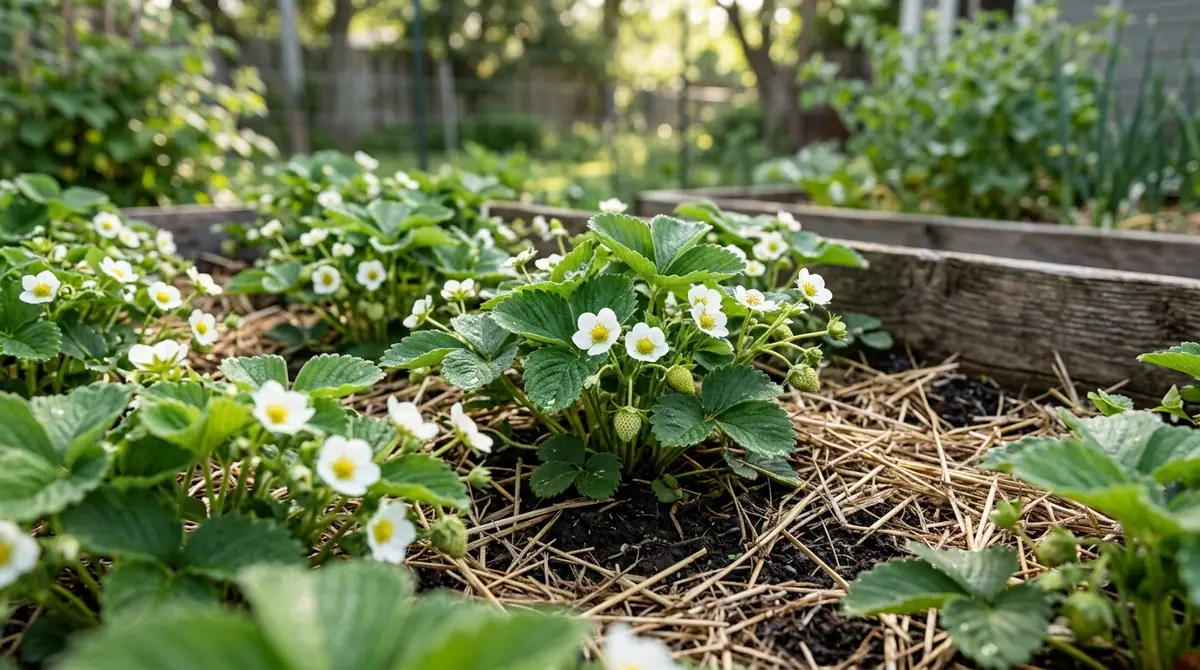
In their native understory habitats, ancestral wild strawberries evolved as woodland and forest-margin perennials. They thrive in dappled light, rich organic soils, and moderate moisture regimes. Understanding this evolutionary history dictates how we treat them in modern agricultural and landscape designs. They possess a crown—a condensed, modified stem located at the soil line—from which leaves, runners (stolons), and flower buds emerge.
In USDA Zone 6, which experiences winter lows dipping down to -10°F to 0°F (-23°C to -18°C) alongside warm summers averaging 80°F to 85°F (27°C to 29°C), strawberries behave as hardy herbaceous perennials. Their physiological response to day length and temperature determines whether they produce fruit in a single heavy June flush (June-bearing) or continuously from summer until frost (everbearing and day-neutral cultivars). June-bearers initiate flower buds in the shortening days and cooler temperatures of autumn (below 65°F / 18°C and photoperiods under 12 hours), holding those buds dormant through winter to burst into flower the following spring. Day-neutrals, conversely, ignore day length and set fruit continuously as long as temperatures remain between 50°F and 85°F (10°C and 29°C).
2. Essential Environmental & Care Requirements
To cultivate high-yielding strawberry beds in Zone 6, you must match your site selection and soil prep to the plant’s biological demands.
Sunlight is the primary driver of sugar accumulation in the fruit. Strawberries require a minimum of 6 to 8 hours of direct, unfiltered sunlight daily. Shady locations reduce photosynthetic capacity, leading to pale, sour fruit and damp foliage prone to fungal pathogens like gray mold (Botrytis cinerea).
Soil composition dictates root longevity and moisture retention. Strawberries prefer a slightly acidic pH ranging from 5.5 to 6.5. In Zone 6 soils—which often lean heavy clay or silt loam depending on whether you are in the Midwest, Mid-Atlantic, or Mountain West—incorporating substantial amounts of well-rotted organic matter, such as leaf mold or compost, is non-negotiable to achieve the loose, crumbly texture required. Roots rarely exceed a depth of 12 inches (30 cm), meaning surface amendments are far more critical than deep trenching, mirroring the shallow root-zone strategies detailed in How Deep Do Pepper Plant Roots Go? Pot Size & Substrate Depth Guide.
Moisture management requires consistency. Strawberries need approximately 1 to 1.5 inches (2.5 to 3.8 cm) of water per week, delivered evenly via drip irrigation or soaker hoses to keep foliage dry. Waterlogging suffocates the shallow root system, while drought halts runner production and shrinks fruit size.
| Parameter | Optimal Condition | Common Mistake | Why It Matters |
|---|---|---|---|
| Soil pH | 5.5 to 6.5 | Planting in alkaline soil (>7.0) | High pH locks out iron and manganese, causing severe chlorosis and stunted growth. |
| Soil Temperature | 45°F to 65°F (7°C to 18°C) at planting | Planting in frozen or freezing mud (<40°F / 4°C) | Cold, saturated soils cause bare-root crowns to rot before root hairs can establish. |
| Sun Exposure | 8 full hours of direct sun | Siting in partial shade under tree canopies | Insufficient light drops soluble sugar levels in fruit and fosters fungal leaf spots. |
| Planting Depth | Crown flush with soil surface | Burying the crown or leaving roots exposed | Deep burial rots the central bud; shallow exposure dehydrates the root system. |
💡 Pro-Tip: When establishing a new matted row system in Zone 6, apply a 3-inch (7.6 cm) layer of clean wheat straw around the plants immediately after planting. This suppresses competing weed seeds, retains vital moisture during dry June spells, and keeps developing fruit off the damp soil, drastically reducing fruit rot.
3. Step-by-Step Cultivation, Feeding & Propagation
Timing your planting in Zone 6 depends entirely on your stock type. Bare-root dormant plants should be installed in early to mid-spring (late March through April) as soon as the soil can be worked and is free of standing water. Potted (container-grown) plants or cold-stored frigo plants can also go in during late summer (August to early September) to establish a strong root system before winter dormancy.
Follow this precise 8-step cultivation protocol to establish your Zone 6 strawberry patch:
- Site Preparation and Weed Eradication: Clear the area of perennial weeds (like quackgrass or thistle) at least four weeks prior. Test soil pH, and amend with elemental sulfur if pH is above 6.5, or agricultural lime if below 5.5.
- Soil Enrichment: Work 3 to 4 inches (7.6 to 10 cm) of aged compost into the top 8 inches (20 cm) of soil to improve drainage and microbial activity.
- Root Pruning and Hydration: Unpack bare-root plants, gently tease apart tangled roots, and trim them back to roughly 4 to 5 inches (10 to 13 cm) in length. Submerge the roots in a bucket of tepid water for 30 to 60 minutes to rehydrate them.
- Excavation of Planting Holes: Dig individual holes deep and wide enough to accommodate the root system vertically without bending or curling the tips.
- Calibrating Planting Depth: Position the plant so the midpoint of the crown sits precisely level with the soil surface. Burying the crown suffocates new leaf emergence; planting too high exposes the upper roots to air desiccation.
- Spacing Configuration: For June-bearing varieties in a matted row system, space plants 18 to 24 inches (45 to 60 cm) apart within rows spaced 3 to 4 feet (90 to 120 cm) apart. For everbearing or day-neutral varieties in a hill system, space plants 12 inches (30 cm) apart in triple rows.
- Firming and Initial Watering: Fill the hole with native soil, gently press down to eliminate air pockets, and water thoroughly with 1 inch (2.5 cm) of water to settle the soil around the root zone.
- Blossom Removal (First Season): For June-bearing varieties planted in spring, pinch off all flower stalks during the first growing season. This forces the plant to channel its energy into root mass and vigorous runner production rather than premature fruit set.
For ongoing maintenance, feed plants with a balanced, slow-release organic fertilizer immediately after the harvest season concludes in July, avoiding high-nitrogen synthetic fertilizers that stimulate excessive leafy growth at the expense of fruit production. For deeper insights into institutional strawberry research and regional extension recommendations, consult the Penn State Extension Strawberry Production Guide.
⚠️ Important Caution: Never apply high-nitrogen lawn fertilizers near your strawberry bed. Excess nitrogen causes lush, succulent foliage that attracts sap-sucking pests like aphids and creates a humid microclimate ideal for powdery mildew and gray mold outbreaks.
4. Common Problems, Pests & Troubleshooting
Even with meticulous planning, Zone 6 strawberry growers encounter specific biotic and abiotic challenges. Recognizing early warning signs prevents minor issues from destroying your harvest.
Gray mold (Botrytis cinerea) is the most prevalent fungal disease in Zone 6, thriving during rainy spring bloom periods. Symptoms include soft, brown spots on developing berries that quickly become covered in a gray, fuzzy spore mass. Prevent this by utilizing straw mulch, providing adequate plant spacing for air circulation, and harvesting ripe fruit promptly.
Slugs and snails relish moist garden conditions and can decimate ripening fruit overnight, leaving large, ragged cavities. Control them organically using iron phosphate baits or physical copper barriers placed around the perimeter of the bed.
Tarnished plant bugs (Lygus lineolaris) overwinter in nearby weeds and feed on developing strawberry flowers, resulting in "catfacing"—deformed, knotty fruit with hardened tips. Weed meticulousness around the bed perimeter and delayed removal of winter mulch until after danger of severe frost helps deter them.

5. Frequently Asked Questions
When is the absolute best month to plant strawberries in Zone 6?
April is the optimal month for planting bare-root strawberries in Zone 6. Soil temperatures have risen above 45°F (7°C), spring rains provide natural hydration, and plants have adequate time to establish deep root systems before summer heat arrives.
Should I plant strawberries in spring or fall in Zone 6?
Spring planting is preferred for bare-root stock because it allows a full growing season for root and runner establishment. However, container-grown plants can also be successfully planted in late August to early September, giving them a head start for a moderate harvest the following spring.
Do I need to cover my strawberry plants in Zone 6 winter?
Yes. Although strawberries are hardy perennials, Zone 6 winter temperature fluctuations can cause frost-heaving, which pushes plant crowns out of the soil and exposes roots to fatal freeze damage. Apply a 3 to 4 inch (7.6 to 10 cm) layer of clean straw, pine needles, or marsh hay over the entire bed once consistent freezing temperatures arrive in late November.
Can I grow day-neutral strawberries in Zone 6?
Yes, day-neutral and everbearing varieties thrive in Zone 6. Unlike June-bearers, they produce fruit throughout the summer and into autumn. However, they perform best when afternoon shade is provided during July and August, as extreme heat above 85°F (29°C) temporarily halts their flowering cycle.
Related Guides
- When to Plant Strawberries in Zone 6b
- When to Plant Strawberries in Zone 6
- When to Start Strawberries Indoors
- When to Plant Strawberries in Washington State
- When to Plant Strawberries in Tn
- When to Plant Strawberries in Tennessee
- When to Plant Strawberries in Arkansas
📋 Table of Contents ▼ Click to expand
Tags:
Keep reading
🌿 Related Plants You Might Like




PlantSavvyWorld
Editorial team
PlantSavvyWorld is an independent botanical education project. Articles are drafted with AI assistance, then edited and checked against university extension services, botanical garden collections and other published horticultural sources.