

When to Plant Strawberries in Tennessee
Written with AI assistance, edited and checked against horticultural sources.
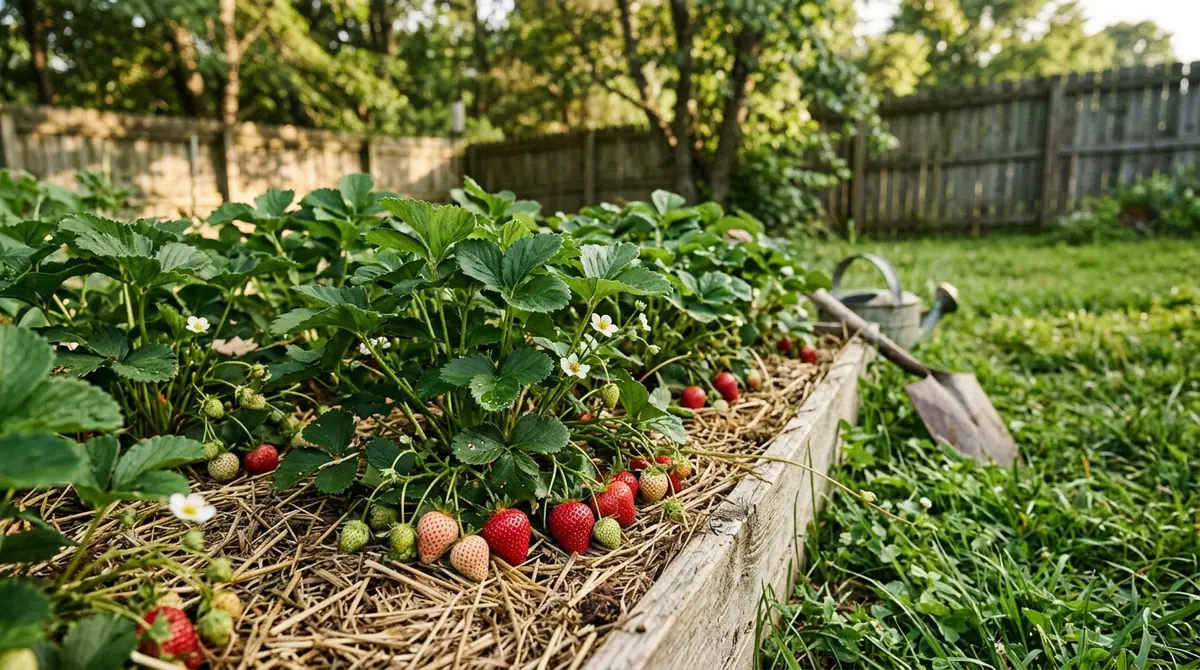
I am still scrubbing stubborn red clay from beneath my fingernails after laying out three hundred bare-root 'Chandler' crowns across a sloping bed in my experimental design plot outside Nashville last March. Standing there in the damp 42°F (5.5°C) Tennessee mist, watching a late-winter frost rim the mulch with crystal needles, I was reminded that timing a strawberry planting in the Volunteer State is an intricate dance with our notoriously fickle transition from winter to spring. Get it right, and you will harvest plump, sugar-laden berries by early summer. Get it wrong, and a sudden freeze will heave your young crowns right out of the soil. Horticultural practice has spent decades fine-tuning these regional schedules. Here is the exact blueprint for timing and planting strawberries successfully across Tennessee's diverse microclimates.
1. Botanical Overview & Natural Habitat

Understanding how their root architecture behaves is just as critical as timing your planting window. Similar to how you must calculate How Deep Do Pepper Plant Roots Go? Pot Size & Substrate Depth Guide to prevent structural stress, strawberry root systems require precise depth control. Their fibrous roots typically anchor themselves in the top 6 to 12 inches (15 to 30 cm) of soil, though primary anchor roots can reach down to 18 inches (45 cm) in loose, well-amended loam.
In Tennessee—spanning USDA Hardiness Zones 6a through 8a, from the freezing peaks of the Bluegrass and Great Smoky Mountains down to the warm river valleys of Memphis—environmental triggers dictate every stage of plant development. Strawberries are facultative short-day or day-neutral plants. June-bearing varieties initiate flower buds in the autumn when daylight drops below 12 hours and temperatures hover between 50°F and 60°F (10°C to 15.5°C), setting the stage for a heavy, concentrated harvest the following spring. Everbearing and day-neutral types, by contrast, shrug off day length and cycle fruit production continuously whenever temperatures stay between 60°F and 85°F (15.5°C to 29.5°C).
2. Essential Environmental & Care Requirements
Tennessee soils present a unique challenge. Much of Middle and East Tennessee sits on heavy, compacted limestone clay that retains too much moisture and suffocates delicate root systems, while West Tennessee features more forgiving loess soils. To help you navigate these regional variables, consult the authoritative University of Tennessee Extension Garden Guide for local soil testing protocols before turning a single shovel of earth.
Strawberries demand full sun—a minimum of 6 to 8 hours of direct, unfiltered sunlight daily. Shady exposures drastically reduce sugar accumulation in the fruit and invite fungal pathogens like gray mold (Botrytis cinerea). Soil pH should be managed tightly between 5.5 and 6.8. If your native soil reads above 7.0, incorporate elemental sulfur months ahead of planting to bring the pH into the optimal acidic range.
| Parameter | Optimal Condition | Common Mistake | Why It Matters |
|---|---|---|---|
| Soil pH | 5.8 – 6.5 | Planting in alkaline clay (>7.0) | Locks out essential micronutrients like iron and manganese, causing chlorosis. |
| Sun Exposure | 6–8 hours full sun | Siting in partial shade or under tree drip lines | Severely reduces fruit sugar content and extends leaf wetness duration. |
| Soil Moisture | 1 inch (2.5 cm) per week | Over-saturating or allowing bone-dry cycles | Triggers root rot (Phytophthora) or stunts fruit expansion. |
| Planting Depth | Crown level with soil surface | Burying the crown or leaving roots exposed | Deep burial rots the central bud; shallow planting dries out feeder roots. |
💡 Pro-Tip: When designing strawberry beds in heavy Tennessee clay, do not fight the native earth. Build raised rows or raised beds 8 to 10 inches (20 to 25 cm) high amended with aged leaf mold and coarse horticultural sand. This guarantees the rapid drainage these plants require during torrential spring thunderstorms.
3. Step-by-Step Cultivation, Feeding & Propagation
The single most critical rule for growing strawberries in Tennessee is timing your planting date based on regional climate shifts. In the warmer zones of West and Middle Tennessee (Zones 7b–8a), bare-root plants should go into the ground in late winter, specifically between February 15 and March 15. In the colder mountainous elevations of East Tennessee (Zones 6a–6b), push your planting window back to March 1 to April 10, ensuring the ground has thawed completely and can be worked without clumping.
Follow this exact field-tested protocol to establish your strawberry patch:
- Site Preparation and Amendment: Clear all perennial weeds, especially aggressive grasses like Bermuda or nutsedge. Till in 3 inches (7.5 cm) of well-rotted compost and organic matter down to a depth of 10 inches (25 cm).
- Soak the Roots: Unpack your dormant bare-root plants and submerge their root systems in a bucket of tepid water for 30 to 60 minutes immediately before planting to rehydrate them.
- Trim Roots and Foliage: Prune damaged or excessively long roots back to approximately 4 to 5 inches (10 to 12.5 cm) to encourage lateral branching, and clip off older, outer leaves, leaving only 2 to 3 healthy inner leaves.
- Dig the Planting Hole: Dig a vertical hole deep and wide enough to accommodate the entire root system without bending or cramping the roots (about 6 inches deep and wide).
- Set the Crown Level: Position the plant so that the midpoint of the crown sits precisely flush with the soil surface. Never bury the crown. If the crown is submerged, the plant will rot; if roots are exposed above ground, they will desiccate.
- Firm and Water: Tamp the soil gently around the roots to eliminate air pockets, then water deeply with 1 inch (2.5 cm) of water, optionally supplemented with a dilute liquid kelp solution to mitigate transplant shock.
- Apply Mulch: Spread a 2-to-3-inch (5-to-7.5-cm) layer of clean wheat straw or pine needles around the plants to suppress weeds, retain moisture, and keep developing berries clean.
For ongoing maintenance, feed your June-bearing patch just once a year—immediately after the final harvest in early summer—using a balanced, slow-release organic fertilizer. Avoid heavy nitrogen applications in early spring, which results in a massive flush of soft, disease-prone foliage at the expense of fruit set.
Propagation is easily managed by channeling the plant's natural runner production. For matted row systems, allow the strongest daughter plants from early summer runners to root into the soil spaced 6 to 8 inches (15 to 20 cm) apart, clipping away late-season runners to conserve plant energy. For raised matted rows or container setups, you can reference methods similar to When to Transplant Cucumber Seedlings: Stop Root Shock & Boost Growth to ensure clean separation and quick root establishment when shifting runners.
4. Common Problems, Pests & Troubleshooting
Tennessee's humid spring climate creates an ideal breeding ground for fungal pathogens. Gray mold (Botrytis cinerea) can wipe out an entire crop during a wet May. Prevent this by ensuring proper plant spacing (12 to 18 inches / 30 to 45 cm apart) and maintaining a thick layer of dry straw mulch to keep ripening fruit from touching damp soil.
Slugs and snails are another major nuisance in southern gardens. They thrive under damp mulch layers and feed voraciously on ripening fruit. Hand-pick them at dusk or establish perimeter barriers using iron phosphate-based baits.
Leaf spot (Mycosphaerella fragariae)—manifesting as small purple spots that turn white-gray in the center—is common during prolonged rainy spells. Remove heavily infected older foliage and apply a preventative bio-fungicide containing Bacillus subtilis if conditions remain damp.
⚠️ Important Caution: Never use high-nitrogen synthetic lawn fertilizers near your strawberry bed. Excess nitrogen causes lush, succulent leaf growth that invites aphids, spider mites, and severe fungal outbreaks, while drastically reducing fruit yields and flavor complexity.

5. Frequently Asked Questions
Can I plant strawberries in the fall in Tennessee?
Yes, fall planting is an excellent option, particularly in Middle and West Tennessee (Zones 7a–8a). Planting potted or plug plants between September 1 and October 15 allows plants to establish a robust root system over the mild southern winter. They will produce a light crop the following spring and a full harvest by year two. In colder East Tennessee mountain zones (Zone 6), fall planting requires heavy mulching with straw or row covers to protect young crowns from deep winter freezes and soil heaving.
Should I pick off the first flowers on new strawberry plants?
For June-bearing strawberries planted in early spring, you must pinch off all flower blossoms throughout the entire first growing season. This redirects the plant's limited energy away from fruit production and into building a massive, deep root system and vigorous runner network, which guarantees a massive harvest the following year. For everbearing or day-neutral varieties, you can allow them to fruit after July 1st, once the plant has established at least 6 to 8 strong leaves.
What is the best strawberry variety for Tennessee weather?
For June-bearing reliability, 'Chandler' is the gold standard across Tennessee, offering massive, exceptionally sweet berries that perform exceptionally well in clay soils. 'Allstar' is another top performer resistant to red stele root rot. If you want continuous yields through the summer and fall heat, plant day-neutral varieties like 'Seascape' or 'Albion', though they require consistent irrigation and afternoon shade during peak July and August heat waves. For rigorous local cultivar testing data, consult the North Carolina State University Extension Strawberry Portal for regional selections that translate seamlessly across state lines.
How many years do strawberry plants last in Tennessee gardens?
In backyard Tennessee gardens, commercial strawberry beds peak in productivity during their second and third fruiting seasons. By year four, viral loads accumulate, crown health declines, and yields drop significantly due to weed competition and overcrowding. Plan to completely renovate or replant your patch every 3 to 4 years, rotating your new strawberry bed to a completely fresh section of the garden to break soil-borne disease cycles.
Related Guides
- When to Plant Pumpkins in Tennessee
- When to Start Strawberries Indoors
- When to Plant Strawberries Zone 6
- When to Plant Strawberries in Zone 6b
- When to Plant Strawberries in Zone 6
📋 Table of Contents ▼ Click to expand
Tags:
Keep reading
🌿 Related Plants You Might Like





PlantSavvyWorld
Editorial team
PlantSavvyWorld is an independent botanical education project. Articles are drafted with AI assistance, then edited and checked against university extension services, botanical garden collections and other published horticultural sources.