

When to Plant Strawberries in Washington State
Written with AI assistance, edited and checked against horticultural sources.
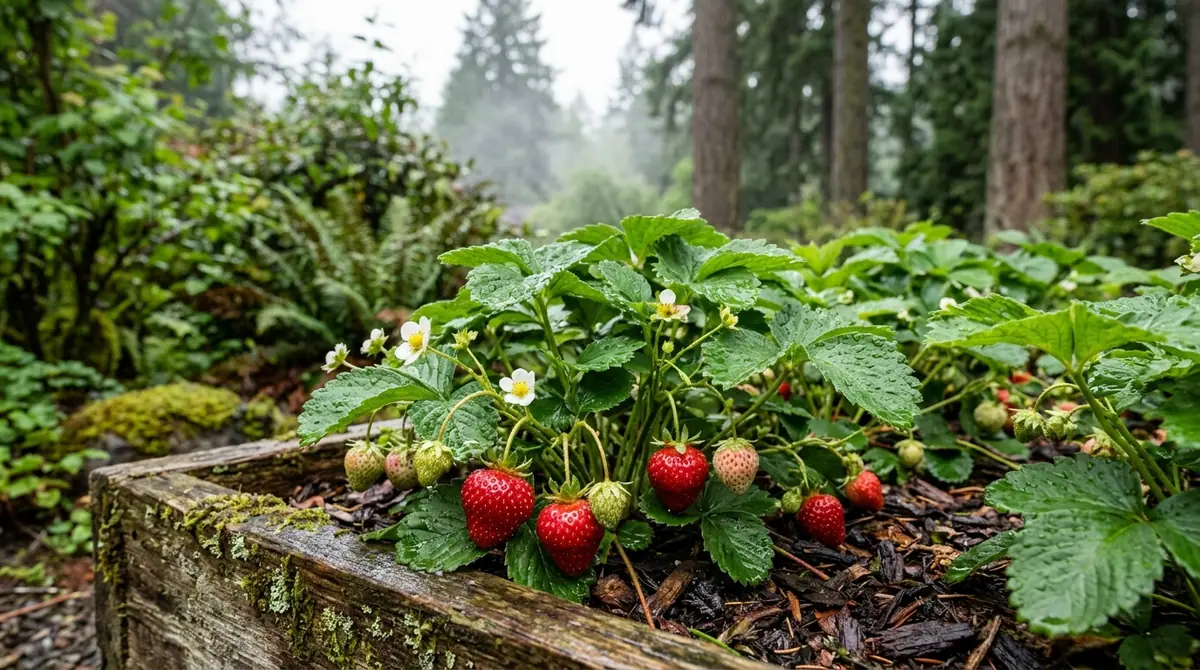
I stood in my Skagit Valley test plot last March, fingers caked in damp, cold Puget Sound silt, wondering if I was setting my bare-root strawberry stock out into a frosty grave. The soil thermometer read a chilly 42°F (5.5°C), a light mist was blowing off the Cascade foothills, and my boots were sinking an inch deep into the clay-heavy loam. Yet, that precise early spring window—when the soil finally drops its winter stiffness but before the fruit trees break bud—is the magic threshold for establishing Fragaria × ananassa across the Pacific Northwest. Washington State presents a fascinating tapestry of microclimates, from the maritime, temperate fog of the Olympic Peninsula to the arid, continental cold snaps of the Inland Empire. Nail your timing, and you will reap pounds of sugary fruit; miss the window, and your plants will struggle against root rot or baking summer heat.
1. Botanical Overview & Natural Habitat

Unlike true berries (which botanically develop from a single flower ovary with seeds inside, like bananas or tomatoes), the strawberry is an aggregate accessory fruit. The fleshy, red, sweet tissue we eat is actually an enlarged receptacle holding hundreds of tiny, dry, single-seeded fruits called achenes scattered across its exterior.
In Washington State, success depends entirely on matching your cultivar type to your specific growing zone, which spans USDA zones 4 through 9. We divide strawberries into three primary categories based on their photoperiodic response:
- June-bearing cultivars: These initiate flower buds during the shortening days of late autumn and bear a single, heavy crop over a concentrated 3-to-4-week period in June. Outstanding performers for Washington include 'Hood', 'Puget Reliance', and 'Rainier'.
- Everbearing cultivars: These produce a crop in early summer and a second, lighter flush in late summer or early fall, influenced by longer daylight hours. Consider 'Quinault' or 'Fort Laramie'.
- Day-neutral cultivars: Unfazed by day length, these flower and fruit continuously from late spring until the first hard autumn freeze, provided temperatures stay below 85°F (29°C). Try 'Albion' or 'Seascape' for prolific yields through October.
For container gardening enthusiasts transitioning from indoor setups—such as those experimenting with How to Grow Strawberries Indoors: From Fruit Seeds to Sweet Berries—moving plants outdoors into Washington's natural light spectrum requires careful hardening off. Similarly, if you enjoy managing root development and spatial planning in edible gardens, our resource on How Deep Do Pepper Plant Roots Go? Pot Size & Substrate Depth Guide offers valuable insights into root zone management that apply equally well to the shallow, fibrous root systems of strawberries.
2. Essential Environmental & Care Requirements
Washington State's geography creates a stark divide between Western and Eastern Washington. West of the Cascades, you face wet, mild winters and cool, damp springs. East of the mountains, you encounter hot, dry summers and freezing winters.
To thrive, strawberries demand full sun—at least 6 to 8 hours of direct sunlight daily. Planting them in deep shade drastically reduces yields and leaves leaves damp too long, inviting fungal pathogens.
Soil composition is your most critical variable. Strawberries thrive in rich, well-draining, loamy soil with a slightly acidic pH between 5.5 and 6.8. They loathe heavy, compacted clay that retains standing water, as their fibrous root systems sit primarily in the top 6 to 8 inches (15 to 20 cm) of soil. If your garden features heavy Puget Sound clay, build raised beds amended liberally with compost, aged manure, and coarse horticultural sand.
Water management is equally vital. Strawberries require roughly 1 to 1.5 inches (25 to 38 mm) of water per week during the growing season. In Western Washington's dry summer months (July through September), drip irrigation or soaker hoses are non-negotiable. Overhead watering wets the foliage and ripening fruit, serving as an open invitation for Botrytis cinerea (gray mold).
| Parameter | Optimal Condition | Common Mistake | Why It Matters |
|---|---|---|---|
| Soil pH | 5.5 – 6.8 | Planting in alkaline soil (>7.0) | Locks out essential micronutrients like iron and manganese, causing chlorosis. |
| Soil Temperature | 45°F – 60°F (7°C – 15°C) | Planting into freezing, waterlogged soil | Triggers root rot and stunts initial root hair development. |
| Sunlight | 6–8 hours direct sun | Planting in partial shade | Decreases sugar content in fruit and invites foliar fungal infections. |
| Planting Depth | Crown level with soil surface | Burying the crown or leaving roots exposed | Burying rots the growing tip; exposing roots causes fatal desiccation. |
3. Step-by-Step Cultivation, Feeding & Propagation
The absolute best time to plant strawberries in Western Washington is early spring (March through April) as soon as the ground can be worked and soil temperatures consistently hit 45°F (7°C). In Eastern Washington, where spring arrives later and frosts linger, aim for mid-April to early May. Fall planting (September) is also viable in milder Western Washington zones, allowing plants to establish strong root systems before winter dormancy, provided you apply a thick 4-inch (10 cm) layer of straw mulch to prevent frost heaving.
For localized insights on timing planting schedules across different regional climates, consult the Washington State University Extension for hyper-local frost data.
Follow this meticulous 7-step protocol to establish your strawberry patch:
- Site Preparation and Weed Eradication: Clear all perennial weeds (like quackgrass and dandelion) from your beds at least 4 weeks prior to planting. Work in 3 inches (7.5 cm) of well-rotted organic compost into the top 8 inches (20 cm) of soil.
- Root Hydration: If using bare-root plants, soak their roots in a bucket of tepid water for 30 to 60 minutes immediately before planting to rehydrate desiccated tissue. Trim any overly long or damaged roots back to about 4 inches (10 cm).
- Digging the Planting Holes: Dig individual holes wide enough to spread the roots out fan-wise without bending or crowding them upward. For matted row systems (best for June-bearers), space plants 18 to 24 inches (45 to 60 cm) apart in rows spaced 3 to 4 feet (90 to 120 cm) apart.
- Mastering the Crown Depth (Crucial Step): Set the plant in the hole ensuring the midpoint of the crown (where the stems meet the roots) sits level with the soil surface. If the crown is buried beneath the soil, it will rot. If it is set too high, the roots will dry out and die.
- Backfilling and Firming: Fill the hole gently with native soil mixed with compost. Firm the soil firmly around the roots with your hands, taking care not to compact the root zone excessively.
- Initial Watering: Water the newly set plants immediately with 1 inch (25 mm) of water to settle the soil particles around the root hairs and eliminate air pockets.
- First-Year Blossom Management (For June-Bearers): Pinch off all flower blossoms during the first spring after planting. This forces the plant to divert its metabolic energy into establishing a robust root system and throwing vigorous runner plants rather than exhausting itself on premature fruit production.
💡 Pro-Tip: When planting bare-root strawberries in Washington's unpredictable spring, keep a few floating row covers handy. If a late April freeze threatens to drop temperatures below 28°F (-2°C), drape a lightweight spun-bond polyester fabric over wire hoops to protect emerging tender green growth without crushing the crowns.
To expand your patch in subsequent years, leverage the plant's natural reproduction method. Strawberries propagate efficiently via runners (stolons). Pin down healthy runner nodes into the soil using landscape staples or bent wire flags when they form roots in mid-summer. By late autumn, you can sever the new daughter plant from the mother and transplant it to a brand-new bed.
4. Common Problems, Pests & Troubleshooting
Even with meticulous planning, Washington's damp climate brings distinct challenges.
- Gray Mold (Botrytis cinerea): This is the bane of Western Washington growers. It thrives in wet, humid spring weather, turning ripening berries into fuzzy, gray, rotting masses. Prevent this by applying a clean straw or pine-needle mulch beneath the plants to keep developing fruit elevated off damp soil. Space plants adequately to ensure robust airflow.
- Root Weevils (Black Vine Weevil): The larvae of these flightless beetles chew through strawberry roots, causing sudden wilting and collapse of the entire plant in mid-summer. Introduce beneficial entomopathogenic nematodes (Heterorhabditis bacteriophora) into the soil in late summer when soil temperatures are warm; these microscopic roundworms hunt down and parasitize weevil larvae.
- Slugs and Snails: Thriving in Western Washington's maritime moisture, slugs graze holes through leaves and hollow out ripening berries. Apply certified organic iron phosphate bait around the perimeter of your bed, and avoid evening overhead watering.
- Powdery Mildew: Appears as a white, powdery fungal dusting on the undersides of leaves, causing them to curl upward. Prevent this by ensuring full sun exposure and pruning away congested inner foliage to maximize wind drying.
⚠️ Important Caution: Never plant strawberries in soil where tomatoes, potatoes, eggplants, or peppers have grown within the past three to four years. These crops share susceptibility to Verticillium wilt, a soil-borne fungal pathogen that causes fatal vascular collapse in strawberries and can persist in garden soils for over a decade.

5. Frequently Asked Questions
Can I grow strawberries in Western Washington if my yard has heavy clay soil?
Yes, absolutely, but you must modify your approach. Heavy clay holds too much water, suffocating strawberry roots and inviting root rot pathogens like Phytophthora. Do not plant directly into native clay. Instead, construct raised beds at least 8 to 12 inches (20 to 30 cm) high and fill them with a custom blend of 60% topsoil, 30% aged organic compost, and 10% coarse horticultural sand or perlite. This ensures rapid drainage during Washington's heavy autumn and winter rains.
When should I prune my June-bearing strawberries in Washington?
Renovate June-bearing strawberries immediately after their harvest finishes, typically in early to mid-July. Use a sharp mower set to its highest setting—or use hand shears—to clip the foliage about 1 inch (2.5 cm) above the crowns, taking care not to nick the growing tips. Rake away the clippings, weed the rows, apply a balanced organic fertilizer, and water deeply. This aggressive haircut removes diseased foliage and stimulates a fresh flush of healthy leaves for next year's fruit buds.
Do I need to protect my strawberry plants during freezing Washington winters?
In Western Washington (zones 7-9), winters are mild enough that strawberries rarely need protection beyond a light mulch layer. However, in Eastern Washington (zones 4-6) where sub-zero temperatures and harsh winds are common without insulating snow cover, winter protection is mandatory. Apply a 4-to-6-inch (10 to 15 cm) layer of clean wheat straw, pine needles, or evergreen boughs over the plants in late November once the plants are fully dormant, and rake it back off the crowns in early April.
Should I choose June-bearing or day-neutral strawberries for the Pacific Northwest?
It depends on your culinary goals and climate tolerance. If you want a massive, sweet harvest all at once for making jams, freezing, and heavy fresh eating in early summer, choose June-bearers like 'Hood'—widely regarded as the best-tasting berry for the maritime Northwest. If you prefer a steady, manageable trickle of fresh fruit from June through October, plant day-neutral varieties like 'Albion' in raised beds with good afternoon shade protection to shield them from intense heat waves.
Related Guides
- When to Plant Zucchini in Washington State
- What Zone is Washington Dc for Planting
- When to Start Strawberries Indoors
- When to Plant Strawberries Zone 6
- When to Plant Strawberries in Zone 6b
📋 Table of Contents ▼ Click to expand
Tags:
Keep reading
🌿 Related Plants You Might Like




PlantSavvyWorld
Editorial team
PlantSavvyWorld is an independent botanical education project. Articles are drafted with AI assistance, then edited and checked against university extension services, botanical garden collections and other published horticultural sources.