

When to Plant Zucchini in Washington State
Written with AI assistance, edited and checked against horticultural sources.

1. Botanical Overview & Natural Habitat
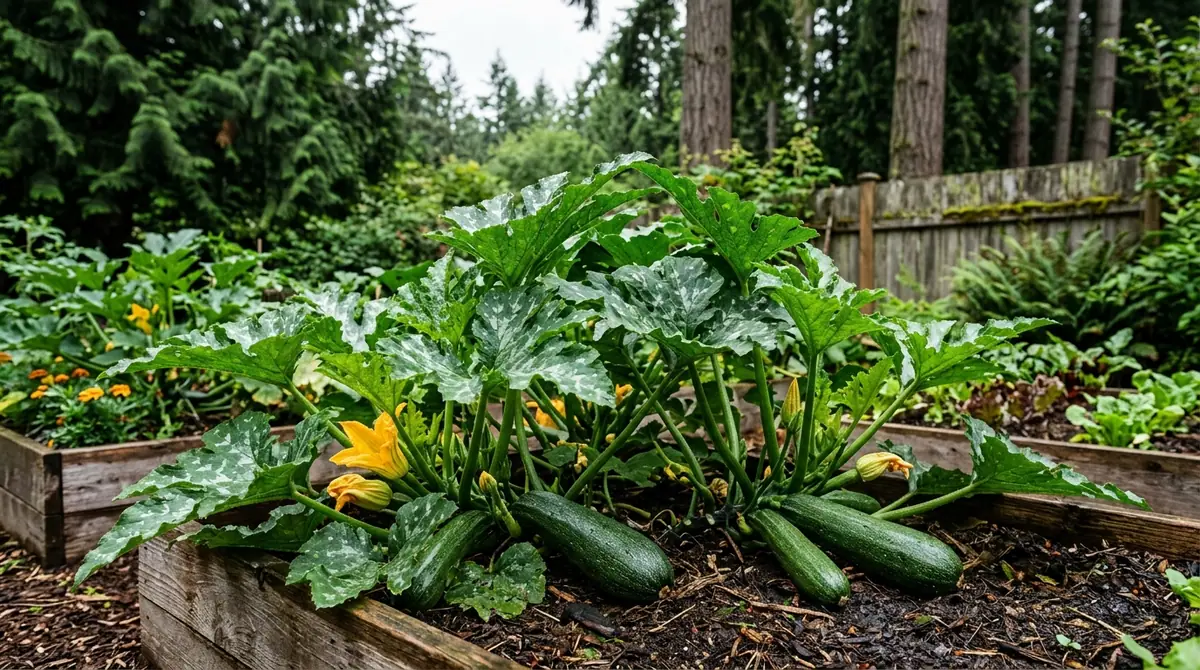
Zucchini (Cucurbita pepo) is a tender, warm-season annual belonging to the Cucurbitaceae family. Botanically classified as a pepo—a specialized type of berry with a hard outer rind and fleshy interior—zucchini evolved in the tropical and subtropical regions of Mesoamerica. Because of this ancestry, the plant is fundamentally unequipped to handle freezing temperatures, frost, or cold, wet soil.
Understanding its growth habit helps explain why Washington's climate requires specific timing strategies. Zucchini typically grows in a bush habit, producing large, coarse leaves (petioles) that can span 3 to 4 feet (0.9 to 1.2 meters) across, though sprawling vining varieties do exist. The plant produces separate male and female flowers on the same individual plant (monoecious), relying heavily on insect pollinators like bees to transfer pollen.
In Washington State, your greatest limiting factors are soil temperature and the length of your frost-free growing season. Western Washington (USDA Hardiness Zones 7b to 9a) features cool, damp springs and maritime-temperate summers. Eastern Washington (Zones 5a to 7a) experiences scorching, dry summers, but severe, prolonged freezing winters and late spring frosts.
Before you start planting, it is worth noting how different climate zones require specialized care routines. For instance, managing tender warm-season crops here differs vastly from managing root crops like those discussed in our When to Plant Onions in Southern California (Zone 9 & 10 Planting Calendar) guide, or managing heavy-fruiting warm-season systems similar to what you might read about in our When to Transplant Cucumber Seedlings: Stop Root Shock & Boost Growth tutorial. Furthermore, if you are transitioning from indoor starts to outdoor beds, keeping an eye on root architecture is just as critical here as it is when evaluating container depths for solanaceous crops, principles you can explore further in How Deep Do Pepper Plant Roots Go? Pot Size & Substrate Depth Guide.
2. Essential Environmental & Care Requirements
To successfully cultivate zucchini in Washington State, you must mimic the warm, high-light conditions of its native habitat despite our regional weather patterns.
Soil temperature is the most critical metric. Zucchini seeds will remain dormant and rot in wet soil if temperatures drop below 60°F (15.5°C). The absolute sweet spot for seed germination and root activation is between 70°F and 95°F (21°C to 35°C).
Sunlight is another non-negotiable requirement. Zucchini requires a minimum of 6 to 8 hours of direct, unfiltered sunlight daily. In Western Washington’s overcast June gloom, maximizing sun exposure by planting against south-facing walls or on raised beds is essential.
Water requirements are high due to the massive foliage and water-rich fruit. Zucchini needs roughly 1 to 2 inches (2.5 to 5 cm) of water per week, delivered directly to the root zone to prevent foliar diseases like powdery mildew.
| Parameter | Optimal Condition | Common Mistake | Why It Matters |
|---|---|---|---|
| Soil Temperature | 70°F – 95°F (21°C – 35°C) | Planting when soil is below 60°F (15.5°C) | Cold, wet soil causes seeds and roots to rot before germination occurs. |
| Soil pH | 6.0 – 6.8 | Planting in overly acidic or alkaline dirt | Nutrient lockout occurs outside this range, leading to blossom end rot. |
| Sunlight | 6–8+ hours of direct sun | Shading plants behind taller crops or fences | Insufficient light drops yields and encourages fungal leaf pathogens. |
| Spacing | 3 to 4 feet (0.9 to 1.2 m) apart | Crowding plants to save space | Restricted airflow traps moisture, triggering powdery mildew outbreaks. |
💡 Pro-Tip: In Western Washington, warm your garden beds two weeks before planting by laying down black plastic sheeting or heavy-duty landscape fabric over the soil. This trick raises the ambient soil temperature by 5°F to 10°F (-15°C to -12°C), allowing you to plant safely a week or two earlier than your local average frost date.
3. Step-by-Step Cultivation, Feeding & Propagation
Getting zucchini into the ground at the exact right moment dictates your entire harvest timeline. Follow this chronological framework for Washington State growing success:
- Calculate Your Timeline: In Western Washington (Seattle, Tacoma, Olympia), plan to direct-sow seeds or transplant out between May 15 and June 1. In Eastern Washington (Spokane, Yakima, Tri-Cities), wait until late May to June 10, after all danger of a hard freeze has passed.
- Start Seeds Indoors (Optional): If you have a short growing season, start seeds indoors in biodegradable peat pots 3 to 4 weeks before your anticipated outdoor planting date. Never use traditional multi-cell trays; zucchini roots are notoriously sensitive to disruption.
- Prepare the Planting Site: Amend your garden bed generously with 3 to 4 inches (7.5 to 10 cm) of aged compost or well-rotted manure. Ensure the native earth drains freely.
- Sow or Transplant: Sow seeds 1 inch (2.5 cm) deep, placing 3 seeds per grouping. If transplanting, gently set root balls into pre-dug holes, ensuring the top of the root mass sits flush with the soil surface.
- Thin and Space: If direct-sowing, thin out the weakest seedlings once they reach 3 inches (7.5 cm) tall, leaving the single strongest plant per station. Ensure final plant spacing is 36 inches (91 cm) apart.
- Feed and Mulch: Apply a thick layer of straw or shredded bark mulch around the base to retain moisture and suppress weeds. Feed with a balanced, slow-release organic fertilizer high in phosphorus and potassium once flowers begin to form.
- Harvest Consistently: Begin harvesting fruits when they reach 6 to 8 inches (15 to 20 cm) in length. Use sharp shears to cut the stem; never twist or pull, as this can tear the main vine.
⚠️ Important Caution: Never let your zucchini plants sit in standing water. Washington’s heavy spring rains combined with poorly draining clay soils will quickly cause Pythium root rot, killing mature plants overnight. Build raised beds if your native yard retains water.
For further scientific guidance on regional vegetable planting schedules, consult the Washington State University Extension Publications or review best practices outlined by the Royal Horticultural Society Vegetable Growing Guidelines.
4. Common Problems, Pests & Troubleshooting
Even with perfect timing, Washington State growers frequently encounter specific biotic and abiotic stresses.
Powdery mildew is public enemy number one in our damp climate. It appears as white, talcum-powder-like spots on the upper and lower surfaces of leaves. Combat this by ensuring proper plant spacing, watering strictly at the base in the early morning, and applying a preventative spray of organic neem oil or potassium bicarbonate at the first sign of spores.
Blossom end rot—manifesting as sunken, leathery, black patches on the distal end of the developing fruit—is another frequent issue. This is rarely a lack of calcium in the soil; rather, it is caused by erratic watering schedules that disrupt calcium uptake by the roots. Maintain consistent soil moisture to resolve this issue.

5. Frequently Asked Questions
What is the exact last frost date to plant zucchini in Western Washington?
The typical last frost date ranges from April 30 to May 15 depending on your exact microclimate. However, because zucchini requires warm soil rather than just an absence of frost, you should wait until soil temperatures consistently hit 60°F (15.5°C), which usually happens around mid-to-late May in the Puget Sound region.
Can I grow zucchini in containers on a Seattle balcony?
Yes, absolutely. Choose a container that holds at least 5 to 7 gallons (19 to 26 liters) of potting mix per plant and ensure it features large drainage holes. Select a compact, bush-type variety such as 'Spacemaster' or 'Eight Ball' rather than an unruly vining cultivar.
Why are my zucchini flowers falling off without producing fruit?
The first flowers your zucchini plant produces are almost exclusively male. They provide pollen and naturally drop off the plant after a few days. Female flowers (which feature a tiny, miniature zucchini at the base of the petals) will appear shortly thereafter. If female flowers drop, it is usually due to a lack of insect pollination during prolonged periods of heavy Washington rain.
How do I protect my zucchini from unexpected late-spring cold snaps?
Keep a supply of floating row covers or frost blankets handy. If a late frost warning is issued after you have already planted, drape the fabric over hoops to create a tent, anchoring the edges securely with rocks or soil to trap ground heat. Remove the covers as soon as the sun comes out the following morning to allow pollinators access to the blooms.
Related Guides
- When to Plant Strawberries in Washington State
- What Zone is Washington Dc for Planting
- Zucchini Companion Plants Good Bad
📋 Table of Contents ▼ Click to expand
Tags:
Keep reading
🌿 Related Plants You Might Like



PlantSavvyWorld
Editorial team
PlantSavvyWorld is an independent botanical education project. Articles are drafted with AI assistance, then edited and checked against university extension services, botanical garden collections and other published horticultural sources.