

When to Plant Strawberries in Arkansas
Written with AI assistance, edited and checked against horticultural sources.
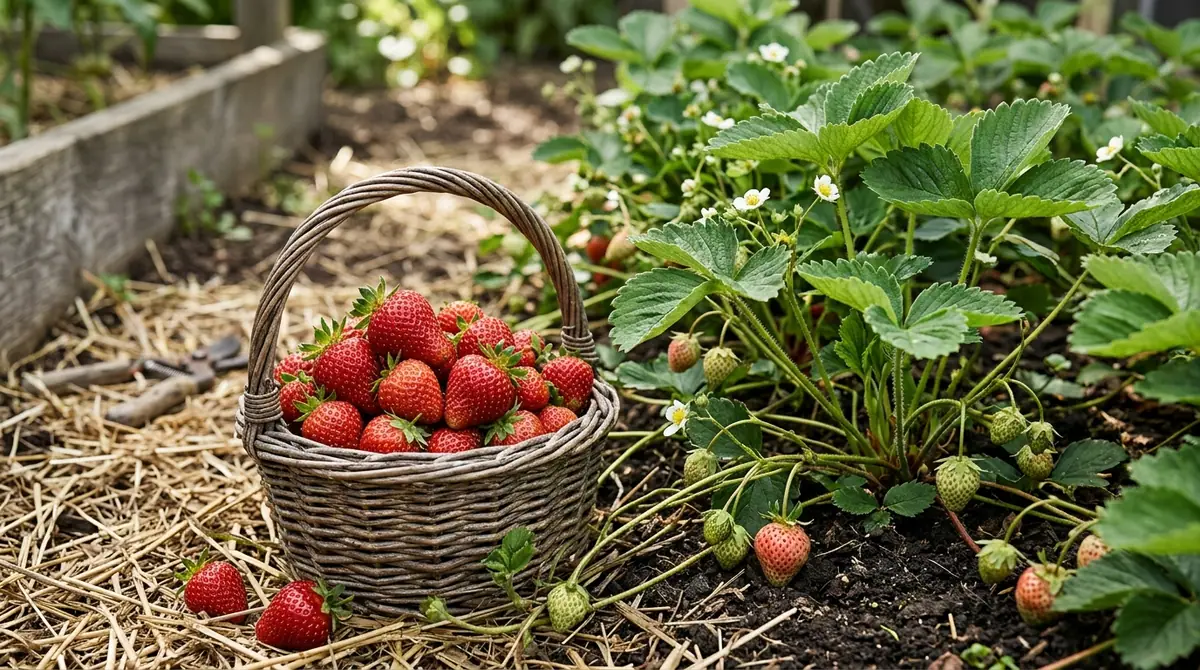
Planting bare-root June-bearers in soil temperature hovering stubbornly at 42°F (5.6°C) requires threading the needle between the last heavy freeze and the arrival of aggressive spring weed flushes, which is the single greatest determinant of whether to harvest plump, sun-warmed fruit by early summer or end up with a bed of rotted crowns.

1. Botanical Overview & Natural Habitat
Cultivated strawberries (Fragaria × ananassa) are complex octoploid hybrids resulting from the accidental eighteenth-century botanical marriage of North American Fragaria virginiana and Chilean Fragaria chiloensis. Botanically, they are herbaceous perennials characterized by a modified underground stem known as a crown, from which emerge compound trifoliate leaves, runners (stolons), and inflorescences.
Unlike true berries (which develop from a single ovary, like tomatoes), the strawberry is an aggregate accessory fruit. The fleshy, red, sweet tissue we eat is actually the swollen receptacle that held the plant's flowers, while the tiny, hard "seeds" on the exterior are the true botanical fruits, called achenes.
In their evolutionary ancestral habitats, wild strawberry relatives evolved along woodland edges and forest clearings where soils were rich in organic matter, consistently moist yet impeccably well-drained, and subjected to moderate seasonal chill hours. In Arkansas, these requirements translate directly to selecting sites that mimic the dappled light and humus-rich floor of a forest fringe. Whether you are dealing with the rocky, calcareous soils of the Ozark Plateau or the acidic, sandy loams of the Gulf Coastal Plain, understanding how your local soil composition interacts with strawberry root systems is essential. Interestingly, managing root depth and soil volume is a universal challenge across many edible crops; for perspective on how root architecture dictates plant health, review our analysis on How Deep Do Pepper Plant Roots Go? Pot Size & Substrate Depth Guide.
2. Essential Environmental & Care Requirements
To establish a thriving strawberry patch in Arkansas, you must manage three core environmental variables: temperature, light, and soil hydrology.
Strawberries are cool-season perennials that prefer daytime ambient temperatures between 60°F and 80°F (15.6°C to 26.7°C). During the blistering Arkansas summers—where afternoon temperatures frequently exceed 90°F (32.2°C)—plants often enter a state of summer dormancy or heat stress, severely reducing fruit production unless mitigated with afternoon shade cloth or consistent irrigation.
Soil preparation must begin months before planting. Strawberries demand a soil pH between 5.5 and 6.5. Arkansas soils, particularly in the forested regions, tend toward acidity, while parts of the Blackland Prairie and Delta can run alkaline. Adjust your pH using agricultural sulfur or horticultural lime accordingly.
| Parameter | Optimal Condition | Common Mistake | Why It Matters |
|---|---|---|---|
| Soil pH | 5.5 – 6.5 | Planting in unamended native soil without testing | Incorrect pH locks out essential micronutrients like iron and manganese, leading to chlorosis. |
| Planting Depth | Crown level with soil surface | Burying the crown too deep or leaving roots exposed | Deep crowns rot and die; exposed roots dry out and fail to establish. |
| Watering | 1 to 1.5 inches (2.5 to 3.8 cm) per week | Overhead sprinkler irrigation late in the evening | Wet foliage overnight invites fungal pathogens like Botrytis fruit rot (gray mold). |
| Sunlight | 6 to 8 hours of direct daily sun | Planting in heavy, shaded woodland areas | Insufficient light drops photosynthetic rates, leading to sparse yields and insipid fruit flavor. |
For authoritative, localized recommendations on soil testing and amendment schedules tailored specifically to your county's conditions, consult the University of Arkansas Division of Agriculture Research and Extension.
💡 Pro-Tip: When planting bare-root strawberries in Arkansas clay, never simply cram the roots straight down into a narrow trowel slit. Dig a small, saucer-shaped hole, spread the root system outward like an open hand over a central mound of soil, and ensure the root tips point downward without circling or bending upward. This structural setup prevents root girdling and accelerates lateral root hair development within the first 14 days.
3. Step-by-Step Cultivation, Feeding & Propagation
Timing your planting in Arkansas depends entirely on whether you are working in North Arkansas (Zone 6b/7a) or South Arkansas (Zone 8a/8b).
- Late Winter to Early Spring (February through March): This is the golden window for planting dormant bare-root plants across the state. Soil is workable, freeze-thaw cycles are slowing down, and plants can establish root systems before the heat arrives.
- Early Autumn (September through October): Ideal for container-grown plug plants and fresh-dug runners in central and southern Arkansas. Fall planting allows roots to grow all winter, resulting in a heavy harvest the following spring.
Here is your exact step-by-step installation protocol:
- Site Selection and Clearing: Choose a sunny, open location with a gentle slope if possible to encourage cold air drainage and prevent late spring frost accumulation in low spots. Clear all perennial weeds, especially invasive grasses like Bermuda grass, as manual weeding becomes nearly impossible once runners fill the bed.
- Soil Enrichment: Incorporate 2 to 3 inches (5 to 7.6 cm) of well-aged compost or leaf mold into the top 8 inches (20 cm) of soil. Avoid fresh manures, which introduce weed seeds and high soluble salts that burn tender strawberry roots.
- Bed Layout: If planting June-bearing varieties, use the matted row system. Space plants 18 to 24 inches (45 to 60 cm) apart within rows, leaving 3 to 4 feet (90 to 120 cm) between rows to allow space for future runner propagation.
- Pruning Bare Roots: Trim back long or damaged roots to roughly 4 to 5 inches (10 to 12 cm) using sanitized bypass pruners to stimulate branching feeder roots. Remove any old, dead leaves, leaving only 2 to 3 healthy central leaves.
- Setting the Crown: Place the plant in your prepared hole. The midpoint of the crown must sit precisely level with the soil surface—neither buried nor perched high on a pedestal of exposed roots.
- Initial Irrigation: Water the newly planted bed thoroughly immediately after installation, delivering at least 1 inch (2.5 cm) of water to settle the soil particles tightly around the root zone without creating standing puddles.
- Mulching: Apply a clean 2 to 3-inch (5 to 7.6 cm) layer of wheat straw, pine needles, or shredded hardwood bark around the plants. This suppresses weeds, retains soil moisture, and keeps developing fruit clean during Arkansas's frequent spring downpours.
⚠️ Important Caution: Never let newly planted strawberries bear fruit during their first spring season if you planted them as bare roots in late winter. Pinch off all emerging flower stalks for the first 6 to 8 weeks. This forces the plant to channel its limited energy reserves into robust root development and vegetative runner production rather than premature fruit set, vastly increasing your yields for years two and three.
For additional insight into managing plant propagation phases and preventing transplant shock during seasonal shifts, consult our practical guide on When to Transplant Cucumber Seedlings: Stop Root Shock & Boost Growth.
4. Common Problems, Pests & Troubleshooting
Arkansas's humid climate and unpredictable spring weather create ideal conditions for several stubborn plant pathogens and insect pests.
- Gray Mold (Botrytis cinerea): This fungal disease attacks blossoms and ripening fruit, covering them in a dusty gray fuzz. It thrives during damp, overcast spring periods. Prevent it by spacing plants properly, avoiding overhead irrigation, and maintaining a thick layer of straw mulch to keep fruit elevated off wet soil. For severe outbreaks, organic copper fungicides or bio-fungicides containing Bacillus subtilis can be applied strictly according to label directions.
- Strawberry Bud Weevil (Clipper): A small dark beetle that clips the stems of developing flower buds, causing them to hang by a thread or drop to the ground. Inspect your patch as soon as daytime temperatures reach 65°F (18.3°C) in early spring. Remove nearby wild blackberry thickets, which serve as overwintering reservoirs for this pest.
- Slugs and Snails: These mollusks feed on ripening fruit, leaving ragged, hollowed-out cavities. Apply iron phosphate-based bait pellets around the perimeter of the bed in early evening, and keep the center of the bed weed-free to eliminate damp hiding spots.
- Spider Mites: Thriving during hot, dry summer stretches, these microscopic pests cause leaves to take on a stippled, bronze, or silvery appearance. Blast the undersides of leaves with a forceful jet of cold water early in the morning to disrupt their breeding cycles.

5. Frequently Asked Questions
Can I grow day-neutral strawberries successfully in Arkansas?
Yes, but with caveats. Day-neutral and everbearing varieties struggle during peak Arkansas summer heat waves, often pausing fruit production entirely when temperatures push past 85°F (29.4°C). If you grow them in North Arkansas or provide 30% shade cloth coverage during July and August in South Arkansas, you can coax a respectable late-summer and autumn flush from them.
When should I remove winter straw mulch in Arkansas?
Remove or rake back excess winter straw mulch in late March to early April as soon as you notice new green leaf growth pushing through the crown center. Move the straw out from directly over the plants into the aisles between rows; this leaves your clean mulch in place to support the developing berries while allowing the crown foliage full access to sunlight.
How often do I need to replace my strawberry bed?
In commercial and home garden settings across Arkansas, matted row June-bearing strawberry beds experience a natural decline in productivity and an increase in soil-borne disease pressure after 3 to 4 harvest seasons. Plan to establish a brand-new bed in a different section of your garden every three years to maintain high yields and vigorous plant health.
What is the best strawberry variety for Arkansas clay soils?
'Cardinal', developed specifically by the USDA and agricultural breeding programs for the mid-South, performs exceptionally well in heavy clay soils. Other reliable performers across Arkansas include 'Allstar' (resistant to red stele root rot) and 'Chandler', which produces massive, exceptionally sweet fruit when planted in well-drained amended beds.
Related Guides
- When to Start Strawberries Indoors
- When to Plant Strawberries Zone 6
- When to Plant Strawberries in Zone 6b
- When to Plant Strawberries in Zone 6
- When to Plant Strawberries in Washington State
📋 Table of Contents ▼ Click to expand
Tags:
Keep reading
🌿 Related Plants You Might Like






PlantSavvyWorld
Editorial team
PlantSavvyWorld is an independent botanical education project. Articles are drafted with AI assistance, then edited and checked against university extension services, botanical garden collections and other published horticultural sources.