

When Do You Plant Potatoes in Virginia
Written with AI assistance, edited and checked against horticultural sources.
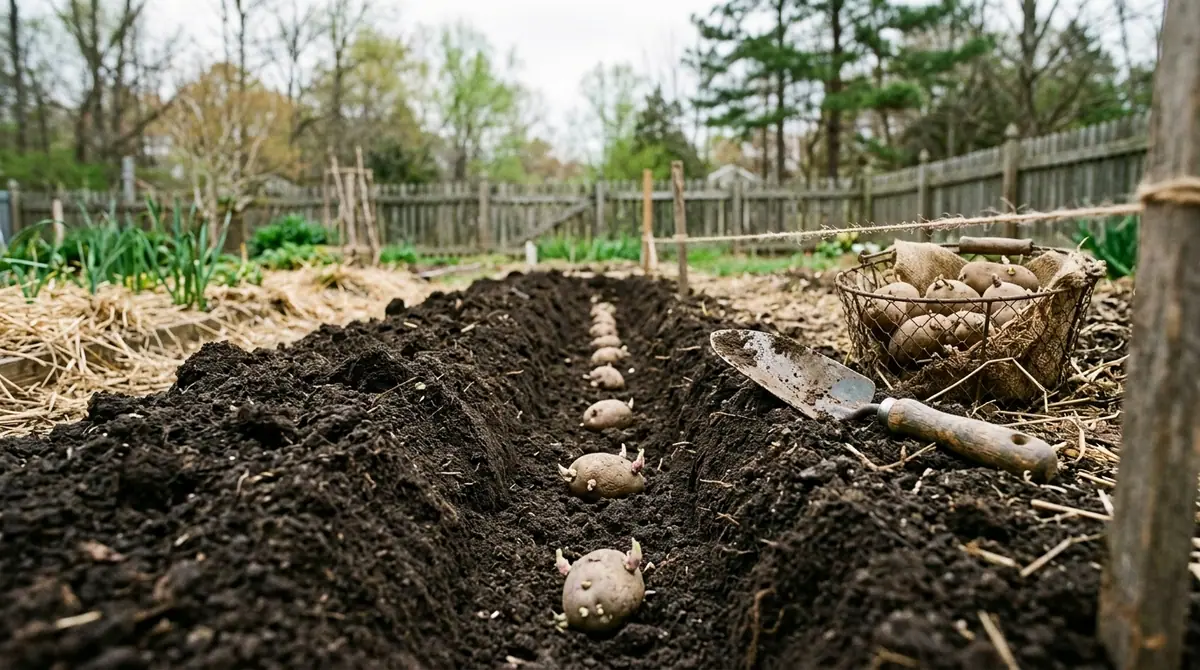

1. Botanical Overview & Natural Habitat
To understand how to grow potatoes in the mid-Atlantic, we must first look at their evolutionary origins. Solanum tuberosum is a perennial member of the Solanaceae (nightshade) family, native to the high-elevation Andean mountain ranges of South America. In their native habitat, these plants evolved to handle cool, crisp ambient temperatures paired with intense UV light, rocky, well-draining soils, and significant diurnal temperature shifts.
The edible portion of the plant—the tuber—is actually a modified underground stem known as a stolon swelling, designed by nature to store carbohydrates and ensure survival through dormant periods. Unlike true roots, these stolons require loose, aerated soil matrixes to expand freely. In Virginia, we treat this cool-season tender perennial as an annual crop, capitalizing on the spring and early summer windows before high ambient temperatures shut down tuber bulking.
Botanically, potatoes thrive when daytime temperatures hover between 60°F and 70°F (15.6°C to 21.1°C) and nighttime temperatures drop to 55°F (12.8°C). When soil temperatures consistently exceed 80°F (26.7°C), the physiological processes that direct sugar conversion into starch within the tuber slow down dramatically, halting growth. This biological constraint dictates our strict planting schedules across the Commonwealth.
2. Essential Environmental & Care Requirements
Growing high-yielding potatoes in Virginia requires strict attention to soil physics, moisture dynamics, and sunlight exposure. Because the tubers develop entirely underground, your soil conditions dictate your ultimate harvest weight and quality.
Sunlight is our first priority. Select a site that receives a minimum of 6 to 8 hours of direct, uninhibited sunlight daily. Shaded potato plants grow leggy, produce weak foliage, and fail to photosynthesize enough sugars to bulk up underground tubers.
Soil composition and pH are equally critical. Potatoes prefer an acidic soil pH ranging from 5.8 to 6.2. This slightly acidic environment suppresses the proliferation of Streptomyces scabies, the common soil actinomycete responsible for unsightly potato scab lesions. If your Virginia garden sits on heavy Piedmont red clay or dense coastal loam, you must amend the earth deeply with compost, aged leaf mold, or coarse sand to improve drainage and prevent compaction.
| Parameter | Optimal Condition | Common Mistake | Why It Matters |
|---|---|---|---|
| Soil Temperature | 45°F – 55°F (7.2°C – 12.8°C) at 4-inch depth | Planting into freezing, waterlogged soil below 40°F (4.4°C) | Cold, wet soil causes seed pieces to rot before rooting |
| Soil pH | 5.8 to 6.2 | Planting in alkaline soil (pH > 7.0) | Alkaline conditions invite severe common scab infections |
| Moisture | 1 inch (2.5 cm) of water weekly, evenly spaced | Irregular watering alternating between drought and flooding | Fluctuating moisture causes deformed, hollow-heart, or cracked tubers |
| Soil Texture | Loose, friable, highly organic loam | Planting in unamended heavy clay | Compacted soil physically restricts tuber expansion and malforms shapes |
Water management is where many home gardeners err. Potatoes need consistent moisture—roughly 1 inch (2.5 cm) of water per week from rainfall or irrigation—especially during the tuber-bulking stage, which typically begins right after the plants flower. Drought stress followed by heavy watering causes secondary growth, leading to knobby potatoes and hollow hearts. Conversely, soggy, poorly drained soils will suffocate the tubers and invite fungal pathogens like Phytophthora infestans.
3. Step-by-Step Cultivation, Feeding & Propagation
Successfully timing your potato planting in Virginia depends entirely on your geographic location. In the warmer coastal zones (Zones 7b–8a, such as the Hampton Roads and Eastern Shore regions), you can plant your first crop as early as mid-to-late February through March. For the cooler Piedmont and valley regions (Zones 6a–7a, including Richmond and Roanoke), target mid-March through early April. High-elevation mountainous zones (Zone 5b–6a, like dispatch points near Bristol or the Shenandoah Valley) should wait until late April to early May. For a comprehensive look at timing cold-hardy crops, you can review our guide on When to Transplant Snapdragon Seedlings.
Follow this step-by-step protocol to establish your potato patch:
- Source and Chump Certified Seed Potatoes: Purchase certified disease-free seed potatoes rather than grocery store tubers, which may carry latent viruses or sprout inhibitors. Two to three weeks before planting, place your seed potatoes in a well-lit, room-temperature area (50°F–60°F / 10°C–15.6°C) to encourage short, stout, dark-green sprouts (a process known as chitting).
- Cut Seed Pieces: Using a sanitized razor or knife, cut large seed potatoes into pieces weighing roughly 1.5 to 2 ounces (42 to 56 grams), ensuring each piece contains at least two robust eyes. Allow the cut surfaces to callous over by resting them in a dry, well-ventilated room at 60°F (15.6°C) for 2 to 3 days.
- Prepare the Trench: Dig trenches 4 to 6 inches (10 to 15 cm) deep and space them 24 to 30 inches (60 to 76 cm) apart in your amended, weed-free garden bed.
- Plant the Tubers: Place the seed pieces with the eyes facing upward into the trench, spacing them 10 to 12 inches (25 to 30 cm) apart. Cover them gently with 3 inches (7.6 cm) of soil. As you manage your spring planting calendar, you might also find our advice on When to Transplant Flower Seedlings useful for your ornamental borders.
- Fertilize and Mulch: Apply a balanced organic fertilizer rich in phosphorus and potassium—such as bone meal or kelp meal—along the trench, avoiding direct contact with the seed pieces. As shoots emerge and reach 6 to 8 inches (15 to 20 cm) in height, begin "hilling" by pulling soil or clean straw up around the stems, leaving only the top third of the plant exposed. Repeat this every two to three weeks to protect developing tubers from turning green and bitter upon light exposure.
💡 Pro-Tip: Never skip the callousing phase after cutting your seed potatoes! Planting freshly cut, wet seed pieces directly into cold Virginia spring clay invites soil-borne bacteria to invade the open wounds, resulting in zero germination and total seed rot.
4. Common Problems, Pests & Troubleshooting
Even with pristine timing, Virginia’s humid summers and variable springs create environmental pressures that challenge potato plants. Recognizing symptoms early is your best defense.
Colorado Potato Beetle (Leptinotarsa decemlineata) is the primary insect nemesis for Virginia growers. Both the orange-red larvae and the distinctively striped adult beetles strip foliage down to the stems. Hand-picking daily is effective for small gardens; for larger infestations, apply Bacillus thuringiensis subspecies tenebrionis or spinosad while larvae are young.
Fungal diseases, specifically Early Blight (Alternaria solani) and Late Blight (Phytophthora infestans), thrive during Virginia's humid, rainy late spring and summer spells. Early blight presents as concentric dark brown rings on older leaves, while late blight rapidly destroys foliage and tubers with water-soaked lesions. To prevent outbreaks, maintain strict crop rotation—do not plant potatoes or tomatoes in the same spot for at least four years—and ensure adequate spacing between plants to maximize air circulation. If you are also planning your kitchen garden layout, consult our guide on When to Transplant Cilantro Seedlings for cool-season companion planting tips.
Nutritional deficiencies can also mimic disease. Interveinal chlorosis (yellowing between leaf veins) often points to a magnesium deficiency in sandy coastal soils, easily corrected with a foliar spray of Epsom salts (magnesium sulfate) at a rate of 2 tablespoons per gallon of water.
⚠️ Important Caution: Never compost potato foliage or tubers infected with Late Blight. The pathogen can overwinter in plant debris and re-infect your solanaceous crops (tomatoes, peppers, eggplant) for years to come. Bag and trash diseased plant tissue immediately.

5. Frequently Asked Questions
Can I plant grocery store potatoes in Virginia?
It is strongly discouraged. Grocery store potatoes are often treated with chemical sprout inhibitors to prevent them from growing eyes on store shelves. Furthermore, they frequently carry latent fungal, bacterial, or viral pathogens (such as potato virus Y or ring rot) that can decimate your garden soil and ruin future crops. Always plant certified disease-free seed potatoes sourced from reputable nurseries or agricultural suppliers.
When is the fall potato planting window in Virginia?
In Virginia's warmer regions (Zones 7b and 8a), you can plant a second, fall crop of potatoes in late July through mid-August. This allows the tubers to mature during the cooling autumn months as temperatures drop from summer extremes. However, ensure you use early-maturing varieties with a short 70- to 90-day maturity window so your harvest finishes before hard autumn freezes arrive.
How do I know when my potatoes are ready to harvest?
For "new" potatoes, you can gently dig around the root zone to harvest small, tender tubers about 2 to 3 weeks after the plants finish flowering. For storage potatoes, wait until the plant foliage naturally turns yellow, dies back, and dries out completely in mid-to-late summer. Stop watering your patch 10 days before harvest to allow the potato skins to set and toughen up, making them less susceptible to bruising during digging and curing.
Why are my potato tubers turning green and can I eat them?
Tubers turn green when they are exposed to sunlight during the growing season, which triggers the production of chlorophyll and a toxic glycoalkaloid called solanine. Solanine causes a bitter taste and can lead to gastrointestinal illness if consumed in large quantities. To prevent this, ensure you diligently hill your plants throughout the season by keeping at least 4 to 6 inches (10 to 15 cm) of soil or straw covering the developing root zone. If minor greening occurs, you can pare away the green portions with a knife before cooking, but heavily greened tubers should be discarded.
Related Guides
- What Planting Zone is Virginia in
- What Zone is West Virginia for Planting
- What Zone is Virginia for Plants
- What Zone is Virginia for Planting
- Why Are My Potatoes So Small
📋 Table of Contents ▼ Click to expand
Tags:
Keep reading
🌿 Related Plants You Might Like


PlantSavvyWorld
Editorial team
PlantSavvyWorld is an independent botanical education project. Articles are drafted with AI assistance, then edited and checked against university extension services, botanical garden collections and other published horticultural sources.