

What Zone is West Virginia for Planting
Written with AI assistance, edited and checked against horticultural sources.
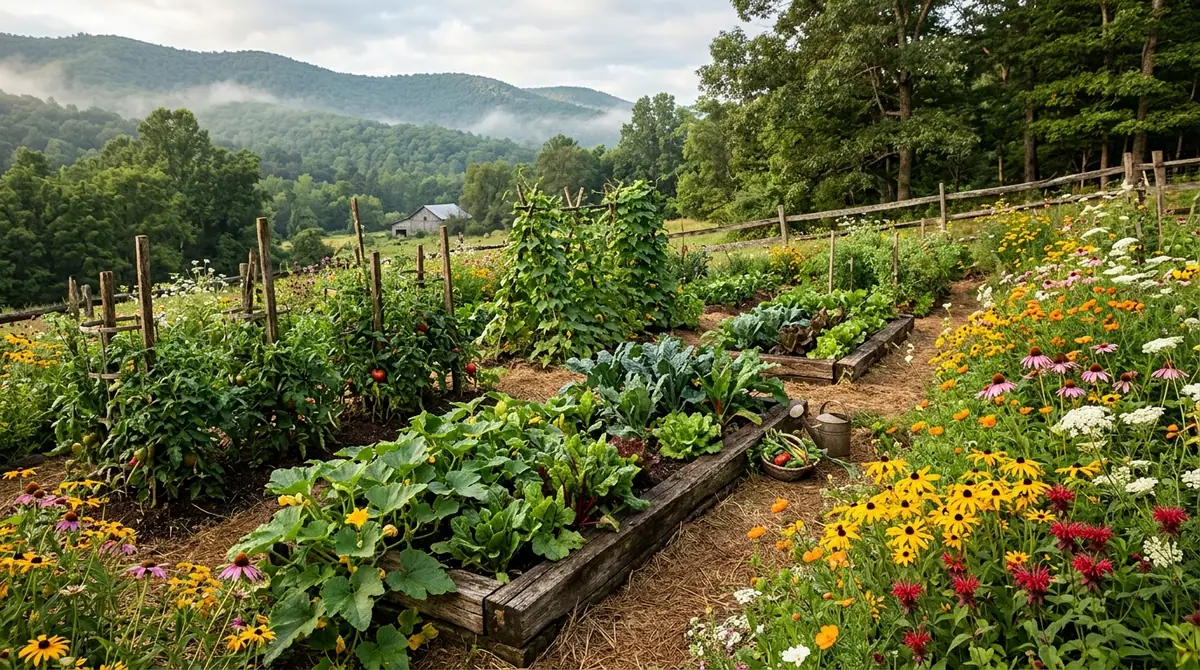
Standing on a steep hillside in Pocahontas County three years ago, trying to anchor a newly established stand of native serviceberry (Amelanchier) against a torrential April downpour, I watched a foot of rich topsoil slide four inches down the slope. That morning was a masterclass in what every gardener in the Mountain State learns the hard way: West Virginia's planting zones are not just lines on a map; they are dynamic, fiercely localized battlegrounds dictated by elevation, hollows, and ridges. If you want to cultivate a thriving landscape here, you have to look past state borders and master the microclimates.

1. Botanical Overview & Natural Habitat
West Virginia spans USDA Hardiness Zones 5a through 7a, with minimum winter temperatures ranging from -20°F to 5°F (-29°C to -15°C). This remarkable variance occurs entirely within a state dominated by rugged terrain. Elevation is the master architect of your garden's climate here: for every 1,000 feet (304 meters) you climb in elevation, your hardiness zone drops roughly half a step, and your spring arrives 7 to 10 days later.
In the lower river valleys—such as the Huntington and Charleston areas along the Kanawha and Ohio rivers—you will find yourself safely in Zone 6b or 7a. Here, summer afternoon temperatures frequently peak above 90°F (32°C), and the growing season stretches an accommodating 180 to 200 frost-free days. Conversely, head eastward into the high-elevation mountain counties like Tucker, Pocahontas, or Pendleton, and you enter Zones 5a and 5b. In these highland pockets, winter lows plummet to a biting -20°F (-29°C), and your frost-free window compresses to a tight 110 to 130 days.
💡 Pro-Tip: Never rely solely on your zip code when checking the USDA Plant Hardiness Zone Map for West Virginia. A difference of 200 feet in elevation between your front porch and your back garden can mean the difference between surviving a winter freeze or losing a prized Japanese maple. Always check the microclimate of your specific slope aspect—south-facing slopes receive intense solar radiation and act one zone warmer, while north-facing hollows trap cold air drainage and act one zone colder.
The state’s native flora tells this elevation story eloquently. The valleys support a rich Appalachian mixed mesophytic forest brimming with pawpaws (Asimina triloba), spicebush (Lindera benzoin), and redbud (Cercis canadensis). Ascend into the spruce-fir forests of the high plateaus, and you encounter red spruce (Picea rubens) and yellow birch (Betula alleghaniensis), plant communities more typical of northern New England or southern Canada. When designing a resilient landscape, mimicking these native ecotones ensures your plants can weather the state's sudden temperature shifts.
2. Essential Environmental & Care Requirements
West Virginia soils are as diverse as the state's topography. Much of the state is characterized by acidic, forest-derived Ultisols and Inceptisols, which naturally test between pH 5.0 and 6.0. While acid-loving plants like blueberries, rhododendrons, and azaleas thrive in this natural baseline, vegetable gardens and turfgrasses generally require deliberate amendments to correct pH levels for optimal nutrient uptake.
Water management is another critical variable. West Virginia averages 40 to 45 inches (101 to 114 cm) of annual precipitation, but it is rarely distributed evenly. Summer droughts frequently stress plants during July and August, while torrential spring rains saturate clay-heavy valley soils.
| Parameter | Optimal Condition | Common Mistake | Why It Matters |
|---|---|---|---|
| Soil pH | 6.2 – 6.8 (Vegetables) 5.0 – 5.5 (Acidophiles) | Applying lime blindly without a soil test | Incorrect pH locks out essential macronutrients like phosphorus and iron. |
| Drainage | 12 inches (30 cm) of percolation per 24 hours | Planting in compacted valley clay without organic matter | Waterlogged roots suffocate, leading to Phytophthora root rot. |
| Sun Exposure | 6 to 8 hours of direct morning sun | Placing sun-loving perennials in deep shade hollows | Reduced photosynthesis weakens plant vigor and invites fungal pathogens. |
| Mulch Depth | 2 to 3 inches (5 to 7 cm) | Volcano mulching against tree trunks | Thick collars trap moisture, rotting bark and inviting boring insects. |
To master local cultivation, cross-reference your specific county conditions with regional guidelines provided by the West Virginia University Extension Service, which offers hyper-local soil testing and planting calendars tailored to our mountain terrain.
3. Step-by-Step Cultivation, Feeding & Propagation
Establishing a perennial garden or vegetable plot in West Virginia requires strict adherence to seasonal timing. Because spring weather is notoriously fickle—blizzards in April are not unheard of in Canaan Valley—jumping the gun on planting can spell disaster.
Follow this step-by-step protocol for successful garden establishment:
- Perform a Comprehensive Soil Test: Collect core samples 6 inches (15 cm) deep from at least five spots in your planting area. Send them to the WVU Extension soil lab in early spring or late autumn to determine exact lime and fertilizer requirements.
- Clear and Contour the Bed: Strip existing sod and grade the bed to prevent pooling water. If your site sits on a hillside, build raised beds or terrace the slope using natural stone to prevent topsoil erosion during heavy spring rains.
- Amend with Organic Matter: Work a 2-inch (5 cm) layer of well-rotted leaf mold or compost into the top 8 inches (20 cm) of soil. This loosens heavy mountain clays and adds crucial water-retention capacity for dry summer months.
- Determine Your Last Frost Date: Consult local data for your specific zone. Zone 5 highlanders must wait until late May to plant tender annuals, while Zone 7 river-valley gardeners can safely plant by mid-April.
- Harden Off Nursery Stock: Over 7 to 10 days, gradually introduce container-grown plants to outdoor conditions, starting with one hour of dappled shade and working up to full sun exposure.
- Plant at the Correct Depth: Dig a hole twice as wide as the root ball but no deeper than the root flare. Ensure the top of the root ball sits 0.5 inches (1.2 cm) above the surrounding grade to allow for settling.
- Apply Strategic Irrigation and Mulch: Water deeply immediately after planting to settle soil air pockets. Apply a 2-inch (5 cm) layer of shredded hardwood bark, keeping mulch 3 inches (7 cm) away from main stems and trunks.
⚠️ Important Caution: Never amend individual planting holes with heavy compost when planting trees and shrubs in dense West Virginia clay. This creates a "bathtub effect" where water drains easily through the amended hole but hits the surrounding clay wall, trapping moisture and drowning the root system. Always amend the entire bed broadly.
For propagation, hardwood cuttings taken in late autumn from native shrubs like witch hazel (Hamamelis virginiana) take root reliably in a 50/50 mix of perlite and peat moss if kept under intermittent mist through winter in an unheated cold frame.
4. Common Problems, Pests & Troubleshooting
West Virginia gardeners face a unique suite of environmental and biological hurdles. Powdery mildew is an omnipresent summer visitor, flourishing in the high humidity of river valleys and enclosed mountain hollows where morning fog lingers on foliage. To combat this, space your bee balms (Monarda), phlox, and squashes at least 3 feet (90 cm) apart to maximize air circulation.
Root rot caused by Pythium and Phytophthora species runs rampant in poorly drained clay soils after torrential spring downpours. If leaves yellow prematurely and stems feel spongy at the soil line, your drainage is failing. Correct this by switching to raised beds or incorporating coarse horticultural grit and organic matter to restructure the soil profile.
Deer pressure is arguably the number one biological challenge across the state. White-tailed deer populations thrive in West Virginia's mosaic of forests and agricultural fields. Rely on physical exclusion—such as 8-foot-tall (2.4 m) woven-wire fences—for high-value vegetable and fruit gardens. For ornamental beds, integrate deer-resistant native perennials like Amsonia (bluestar), Echinacea (coneflower), and Baptisia (false indigo).

5. Frequently Asked Questions
What planting zone is Charleston, West Virginia?
Charleston sits firmly in USDA Hardiness Zone 6b, with average annual minimum winter temperatures dropping between -5°F and 0°F (-21°C to -18°C). This allows gardeners to successfully cultivate a wide array of slightly tender perennials, figs with winter protection, and a robust vegetable garden.
When is the safest time to plant tomatoes in West Virginia?
The safest planting window depends entirely on your local elevation and zone. In Zone 5 mountain regions, wait until Memorial Day (late May) to set out tomato transplants. In Zone 6 and 7 river valleys, you can plant safely between April 25 and May 10, provided you monitor night temperatures and protect plants if a late freeze threatens.
Why do my plants struggle with chlorosis in West Virginia soils?
Yellowing leaves with green veins (chlorosis) usually stem from iron deficiency caused by high soil pH or compacted, waterlogged clay. When soils are overly alkaline or saturated, plant roots cannot absorb iron effectively. Test your soil pH; if it is above 7.0, apply elemental sulfur or incorporate organic leaf mulch to naturally acidify the root zone.
Can I grow figs and citrus outdoors in West Virginia?
Citrus cannot survive outdoors year-round anywhere in West Virginia without being brought indoors for winter. However, figs—specifically cold-hardy cultivars like 'Chicago Hardy'—can thrive in Zones 6b and 7a if planted in a protected microclimate against a south-facing brick wall and heavily mulched or wrapped during January and February.
Related Guides
- What Planting Zone is Virginia in
- What Zone is Virginia for Plants
- What Zone is Virginia for Planting
- When Do You Plant Potatoes in Virginia
- What Hardiness Zone is Sacramento
📋 Table of Contents ▼ Click to expand
Tags:
Keep reading
🌿 Related Plants You Might Like






PlantSavvyWorld
Editorial team
PlantSavvyWorld is an independent botanical education project. Articles are drafted with AI assistance, then edited and checked against university extension services, botanical garden collections and other published horticultural sources.