

Cutting Back a Maple Tree
Written with AI assistance, edited and checked against horticultural sources.
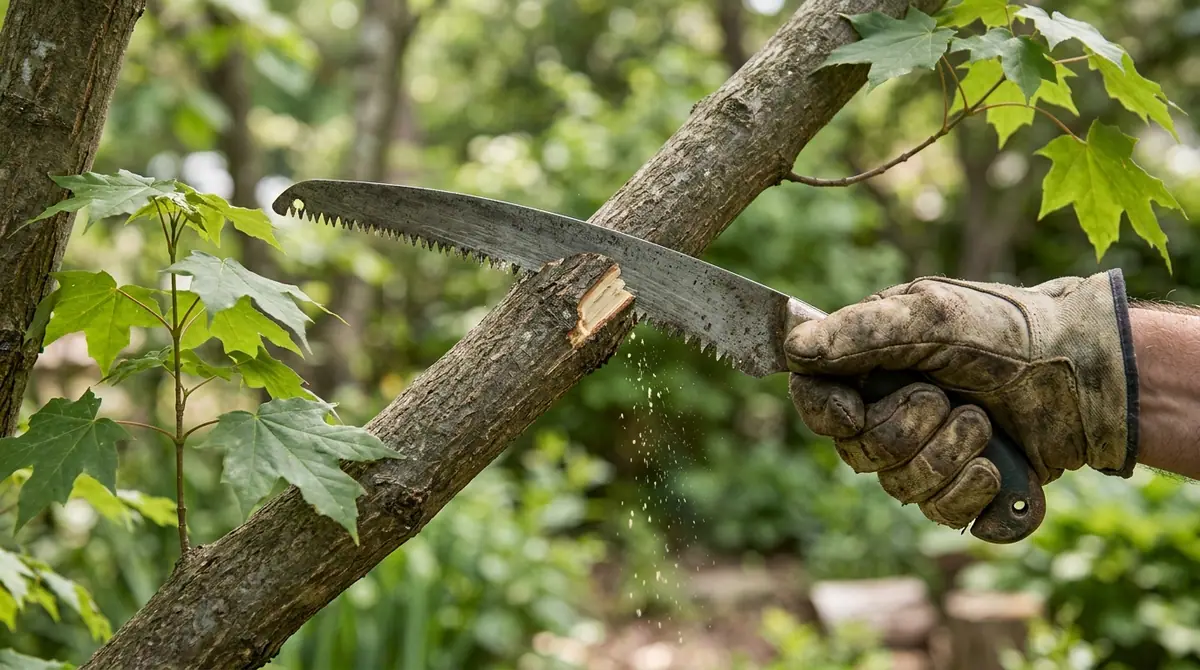
I stood in the crisp morning air of late autumn, staring up at a mature Acer rubrum that had outgrown its urban framing, holding a pair of bypass pruners that felt entirely too small for the job. The previous homeowner had topped the canopy brutally, leaving jagged stubs that were now rotting out and threatening the structural integrity of the main scaffold branches. Cutting back a maple tree is not a casual weekend chore; it is a botanical surgery that dictates whether your specimen will thrive for a century or succumb to decay, pests, and structural failure. In this comprehensive guide, we will examine the precise science, anatomy, and step-by-step techniques required to prune maples safely, maintain their health, and avoid the devastating mistakes that ruin mature trees.
1. Botanical Overview & Natural Habitat
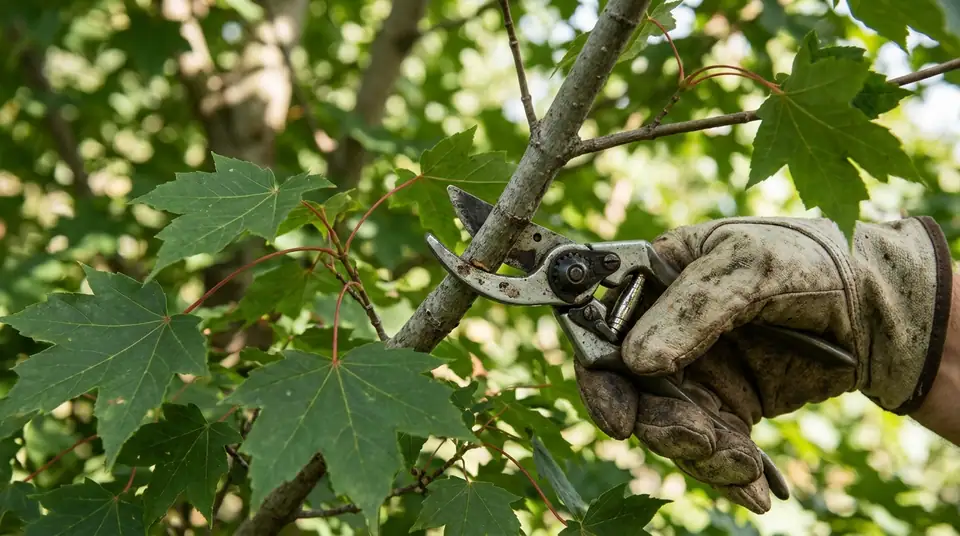
Understanding maple biology is essential before making a single cut. Unlike some resilient shrubs that tolerate indiscriminate shearing, maples possess a strict compartmentalization system known in arboriculture as CODIT (Compartmentalization of Decay in Trees). When you make a cut, the tree does not heal or regenerate new wood over the wound; instead, it creates chemical and physical boundaries around the injured zone to wall off invading fungi and bacteria.
In their natural forest habitats, maples grow as understory or canopy trees, where their dense branching habits naturally shade out lower limbs, leading to natural self-pruning. However, in residential landscapes, trees are subjected to turf competition, soil compaction, and altered hydrology. If you are designing a cohesive yard layout, you might look at Creative Landscaping Ideas Around Tree Roots to manage the surface root zones that often accompany mature maples without damaging their structural stability. Improper pruning disrupts the tree's natural hormonal balance—specifically apical dominance—triggering a frantic flush of weak, poorly attached water sprouts that ruin the canopy architecture.
2. Essential Environmental & Care Requirements
Maples are remarkably adaptable, but successful pruning and recovery depend heavily on meeting their foundational environmental needs. Soil pH should ideally range between 6.0 and 7.0, though species like the Red Maple (Acer rubrum) tolerate slightly acidic soils down to 5.0, while Sugar Maples (Acer saccharum) prefer more neutral to alkaline conditions.
Moisture management is critical when recovering from heavy structural pruning. Maples require consistent moisture, translating to roughly 1 inch (2.5 cm) of water per week during the active growing season. Mulching is vital: apply a 3-inch (7.5 cm) layer of organic woodchips across the root zone, keeping the mulch 6 inches (15 cm) away from the trunk flare to prevent collar rot. Never pile mulch against the bark, a mistake that invites fungal pathogens and tunneling rodents.
| Parameter | Optimal Condition | Common Mistake | Why It Matters |
|---|---|---|---|
| Pruning Timing | Late summer to mid-winter (dormant or fully leafed) | Pruning in early spring (heavy sap flow) | Pruning during active spring sap runs attracts wood-boring insects and causes excessive bleeding. |
| Soil Moisture | Consistent, well-draining, 1 inch (2.5 cm) water/week | Waterlogging or severe drought stress | Stressed maples cannot effectively compartmentalize pruning wounds, inviting pathogens. |
| Cut Angle | 45-degree angle just outside the branch collar | Flush cuts or leaving long stubs | Flush cuts destroy trunk tissue; stubs die back and provide entry points for decay fungi. |
| Max Removal | Maximum 15% to 20% of canopy per season | Lion-tailing or removing >30% canopy | Over-pruning starves the root system and triggers chaotic epicormic sprouting. |
For deep botanical insights into tree physiology and regional care standards, consult the U.S. Forest Service Tree Care Guidelines.
💡 Pro-Tip: When evaluating a branch to remove, look for the wrinkly ring of tissue where it joins the trunk—this is the branch bark collar. Never cut flush against the trunk; always preserve this collar, as it contains the specialized cells necessary to seal the wound naturally.
3. Step-by-Step Cultivation, Feeding & Propagation
When you are ready to cut back a maple tree for structural correction, disease removal, or size management, follow this strict operational protocol. Never attempt heavy structural pruning without sanitized tools and a clear plan.
- Sanitize Your Equipment: Wipe all blades with a 70% isopropyl alcohol solution or a 10% household bleach solution before you begin, and re-sanitize between different trees to prevent transferring pathogens like Verticillium wilt.
- Inspect and Identify Target Limbs: Walk around the tree from 15 feet (4.5 meters) away. Identify the "3 Ds"—dead, damaged, and diseased wood—as well as crossing branches and competing leaders.
- Perform the Three-Cut Drop Method for Heavy Limbs: For any branch heavier than 2 inches (5 cm) in diameter, use the three-cut method to prevent bark tearing:
- Cut 1: Undercut the branch 12 inches (30 cm) out from the trunk, cutting about one-third of the way through.
- Cut 2: Make a top cut 2 inches (5 cm) further out from the undercut. The branch will snap off cleanly under its own weight without stripping bark down the trunk.
- Cut 3: Make the final cut cleanly just outside the branch collar, holding the stub to prevent last-second tearing.
- Thin the Canopy (If Necessary): Remove interior water sprouts and weak secondary branches to improve air circulation and light penetration, ensuring you remove no more than 15% of the total live canopy in a single year.
- Clean Up and Monitor: Rake and dispose of all diseased debris away from the property. Do not apply wound paint or sealer; modern arboricultural science proves that unsealed wounds heal and compartmentalize faster on their own.
If your landscaping goals extend beyond maples into tropical or subtropical specimens, you might also explore the Colvilles Glory Tree Colvillea Racemosa Growing Guide for contrast planting ideas, or study How to Identify and Treat Common Fruit Tree Diseases if you maintain an edible orchard alongside your ornamental maples.
4. Common Problems, Pests & Troubleshooting
Pruning wounds are open gateways if neglected or executed incorrectly. One of the most severe threats to maples is Verticillium wilt, a soil-borne fungus that enters through damaged roots or improper pruning cuts made with unsterilized tools. Symptoms include sudden flagging, wilting of leaves on one side of the tree, and dark olive-green or brown discoloration in the sapwood rings. If confirmed, infected branches must be pruned out 12 inches (30 cm) below the visible vascular staining, and tools must be sterilized immediately after every single cut.
Another frequent issue is "bleeding." Maples pruned in late winter or early spring often leak copious amounts of watery sap from fresh cuts. While visually alarming, this sap flow is rarely fatal to a healthy tree; however, it can attract pests such as aphids and ambrosia beetles. To eliminate this risk entirely, restrict your heavy pruning sessions to mid-summer when the tree is fully leafed out and sap pressure is low, or late autumn after dormancy is fully established.
⚠️ Important Caution: Never top a maple tree—often referred to as "dehorning," "heading," or "hatracking." Cutting main leaders back to stubby upright poles destroys the tree's natural defense mechanisms, starves the root system, and forces an explosion of weakly attached epicormic shoots that are highly susceptible to wind snap and internal decay.
5. Frequently Asked Questions
What is the best month of the year to cut back a maple tree?
The absolute best time to prune a maple tree is in late summer (July through August) after the leaves have fully matured, or during deep dormancy in late autumn and early winter (November through January). During these windows, sap flow is minimal, which prevents excessive bleeding and deters wood-boring insects from targeting fresh wounds. Avoid pruning in early spring when the sap is surging rapidly upward.
Can I cut the top off my maple tree to make it shorter?
No, you should never top a maple tree. Topping removes essential food-producing foliage, starves the roots, and leaves massive, unshielded wounds that inevitably invite fungal decay. Furthermore, topping triggers a desperate survival response, causing the tree to push out dense, structurally weak vertical shoots that grow rapidly and break off easily in high winds. If a maple is too tall for its space, employ crown reduction techniques by pruning back to lateral branches that are at least one-third the diameter of the removed stem.
Why is my maple tree bleeding sap after I pruned it?
Maples naturally operate under positive root pressure, especially in late winter and early spring, meaning sap is pushed upward through the vascular system. When you make a pruning cut, this pressurized sap escapes before the tree has time to close the xylem vessels. While unsightly, sap bleeding is generally harmless to a vigorous tree. It will naturally cease within 7 to 14 days as the tree seals the wound internally through compartmentalization.
How much of a maple tree can I safely cut back at one time?
You should never remove more than 15% to 20% of a living maple tree's canopy in a single growing season. Removing more than this threshold shocks the tree, depletes its stored carbohydrate reserves, and forces a chaotic wave of epicormic growth. If a tree requires major structural reduction, spread the pruning regimen across two to three consecutive years to give the canopy time to adjust and recover. If you are also managing understory shrubs or trying out other gardening projects nearby, make sure your property plan accommodates heavy leaf drop, or consider integrating techniques from a Total Guide to Moringa Why You Should Grow the Miracle Tree or Drumstick Vegetable if you are diversifying your landscape with fast-growing multi-use trees.
Related Guides
- How to Transplant a Japanese Maple Tree
- Sun Valley Maple Tree
- Plant Plumeria Cutting
- How to Root a Plumeria Cutting
- Japanese Maple in Texas
📋 Table of Contents ▼ Click to expand
Tags:
Keep reading
🌿 Related Plants You Might Like






PlantSavvyWorld
Editorial team
PlantSavvyWorld is an independent botanical education project. Articles are drafted with AI assistance, then edited and checked against university extension services, botanical garden collections and other published horticultural sources.