

Cinnamon Tree Care
Written with AI assistance, edited and checked against horticultural sources.
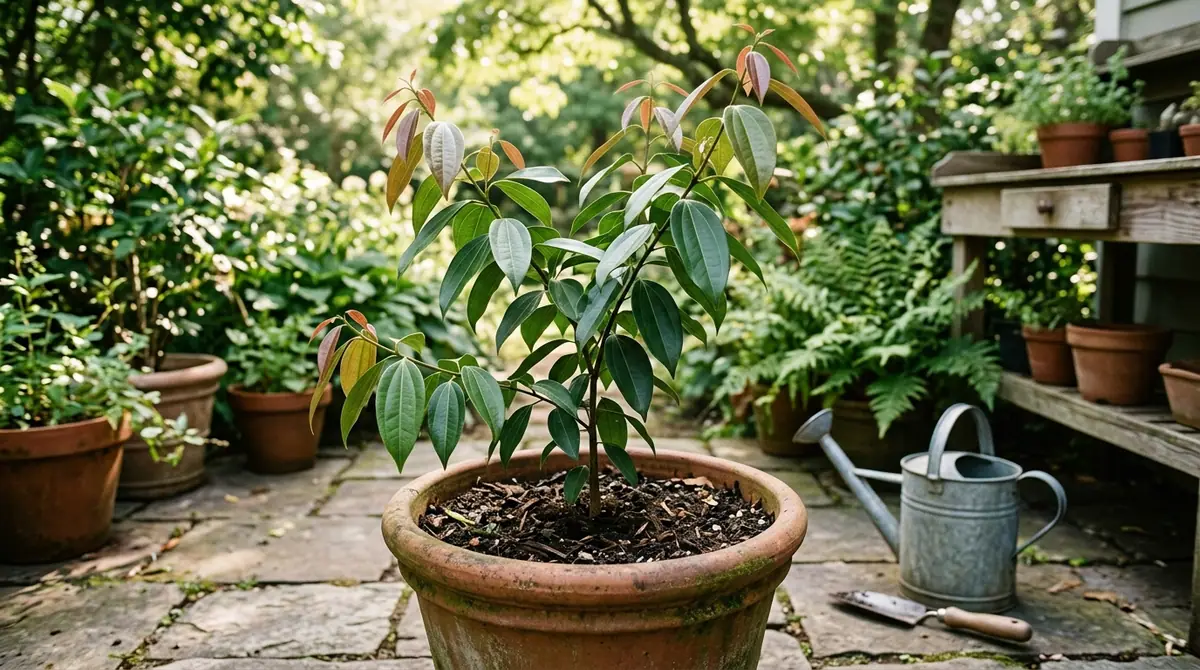
I was kneeling in the damp, red-clay earth of trial gardens on a humid Tuesday morning in July, delicately peeling back a strip of bark from a three-year-old sapling to check its cambium layer, when the rich, unmistakable aroma of warm baking spice rose into the air. That intoxicating, sweet-earthy scent is the ultimate reward for growing Cinnamomum verum, and it makes every minute of managing tropical humidity and precise soil moisture entirely worthwhile. If you want to experience that same rush of aromatic satisfaction in your own landscape or greenhouse, you need to understand the precise environmental, soil, and pruning parameters these magnificent evergreens demand. Welcome to PlantSavvyWorld's definitive guide on cinnamon tree care.
1. Botanical Overview & Natural Habitat
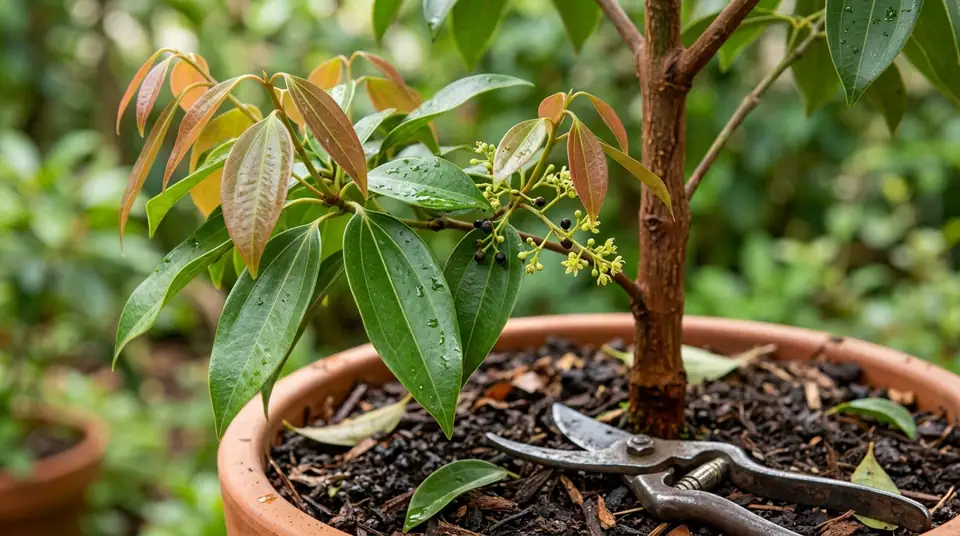
In its natural understory habitat, Cinnamomum verum can reach heights of 30 to 50 feet (9 to 15 meters), though in cultivation and container settings, it is typically pruned and maintained as a dense, multi-stemmed bush or small tree standing 10 to 15 feet (3 to 4.5 meters) tall. The leaves are leathery, opposite, ovate-oblong, and measure 3 to 7 inches (7.5 to 18 cm) in length. When young, the foliage unfurls in a striking flush of coppery-red or brilliant bronze before maturing to a glossy, dark emerald green with distinctive, pale longitudinal veins.
Botanically speaking, true cinnamon differs significantly from Cassia (Cinnamomum cassia), which produces thicker, hollower, and harsher-tasting quills. True cinnamon produces thin, fragile, multiple-layered inner barks that crumble delicately between your fingers and contain low levels of coumarin. The flowers are small, greenish-yellow, and grow in loose panicles, eventually yielding a purple, single-seeded berry about 0.5 inches (1.2 cm) long that birds relish.
Cultivating this spice-producing marvel requires recreating its native tropical ecosystem. If you are also expanding your tropical and subtropical collection, you might find structural inspiration in our Creative Landscaping Ideas Around Tree Roots guide, which explores how to manage under-canopy space for sensitive root systems. For a broader look at managing tropical multi-use trees, check out the Total Guide to Moringa Why You Should Grow the Miracle Tree or Drumstick Vegetable.
2. Essential Environmental & Care Requirements
Successful cinnamon tree care hinges on absolute fidelity to its native climate. This is not a plant that tolerates guesswork. You must monitor temperature, light, moisture, and soil chemistry with surgical precision.
Temperature and Hardiness
Cinnamon is strictly tropical, rated for USDA Hardiness Zones 10 through 12. It suffers irreversible cellular damage if exposed to temperatures dropping below 35°F (1.7°C), and a hard freeze at 32°F (0°C) will kill the tree to the ground. Maintain ambient growing temperatures between 70°F and 90°F (21°C to 32°C). If you live in a temperate zone, you must grow your cinnamon tree in a container and bring it indoors before autumn temperatures dip below 50°F (10°C).
Light Requirements
In the wild, young cinnamon trees grow in the dappled shade of the tropical rainforest canopy, while mature specimens stretch into full sun. For optimal growth, provide 6 to 8 hours of bright, direct sunlight daily if grown outdoors. Indoor container specimens require a south-facing or west-facing window, supplemented by full-spectrum LED grow lights for 12 hours daily during winter months to prevent leggy, weak growth.
Soil and Drainage
The root system of Cinnamomum verum is extremely sensitive to waterlogging. It demands a rich, sandy loam or volcanic soil with an acidic to neutral pH between 4.5 and 6.5. Heavy clay soils will suffocate the roots and invite fungal pathogens.
| Parameter | Optimal Condition | Common Mistake | Why It Matters |
|---|---|---|---|
| Soil pH | 4.5 to 6.5 (Acidic to slightly acidic) | Planting in alkaline soil (>7.0) | High pH locks out essential micronutrients like iron and manganese, causing chlorosis. |
| Watering | Evenly moist, watered when top 2 inches (5 cm) dry | Allowing soil to dry out completely or stay soggy | Drought halts essential oil production; waterlogged soil triggers fatal root rot. |
| Temperature | 70°F – 90°F (21°C – 32°C) | Exposing to frost or sudden drafts below 50°F (10°C) | Cold shock drops leaves, halts cambium activity, and can kill tropical tissue. |
| Humidity | 60% to 80% relative humidity | Keeping in dry indoor air (<30%) | Low humidity causes leaf tip burn, browning, and attracts spider mites. |
For deep insights into managing fungal pathogens that can affect tropical and orchard trees alike, consult the How to Identify and Treat Common Fruit Tree Diseases resource.
3. Step-by-Step Cultivation, Feeding & Propagation
Growing cinnamon from seed or establishing a nursery-bought sapling requires a methodical approach. Follow this step-by-step cultivation protocol to ensure your tree establishes a vigorous root system and produces aromatic bark.
- Sourcing and Germination: Obtain fresh cinnamon seeds (they lose viability within 14 days of harvest). Plant seeds immediately in a flat filled with a sterile, moist mix of 50% perlite and 50% peat moss at a shallow depth of 0.5 inches (1.2 cm). Maintain a bottom-heat temperature of 80°F (26.7°C). Germination typically occurs within 14 to 21 days.
- Selecting the Container or Site: If container growing, choose a pot at least 16 inches (40 cm) in diameter with robust drainage holes. Fill with a high-drainage tropical potting mix enriched with well-rotted leaf mold or compost.
- Transplanting: Plant your sapling in spring, ensuring the root ball sits level with the surrounding soil surface. Burying the trunk too deep will cause stem rot. Press the soil gently to eliminate air pockets and water thoroughly.
- Fertilization Schedule: Feed your cinnamon tree every 4 to 6 weeks during the active growing season (spring through early autumn) with a balanced, slow-release organic fertilizer (such as a 10-10-10 formulation) enriched with micronutrients. Withhold fertilizer entirely during the dormant winter period.
- Irrigation Management: Water deeply whenever the top 2 inches (5 cm) of soil feel dry to the touch. Ensure runoff flows freely from the drainage holes. Never let the pot sit in standing saucer water.
- Coppicing and Harvesting (Years 3-4): Once the tree reaches a height of 6 to 8 feet (1.8 to 2.4 meters) and has trunk diameters of at least 1.5 to 2 inches (3.8 to 5 cm), cut the main stems back to ground level during the rainy season. This process, known as coppicing, stimulates the tree to send up vigorous new vertical shoots (or "turions") from the root crown. Harvest the thin inner bark from these harvested shoots after drying and peeling.
💡 Pro-Tip: When harvesting bark for spice, select smooth, straight shoots that are at least two years old. Slit the bark vertically with a non-metallic, stainless steel blade—metal reactions can discolor the spice—and gently peel away the outer rough layer before stripping the golden inner cambium layer. Lay the strips flat in a warm, shaded, well-ventilated room to curl naturally as they dry over 5 to 7 days.
⚠️ Important Caution: Never use copper-based fungicides or heavy synthetic pesticides on cinnamon trees intended for spice harvesting. Chemical residues absorb readily into the systemic tissues and bark, rendering your homemade spice unsafe for culinary consumption. Always rely on organic, mechanical, or biological pest control methods.
For official horticultural guidelines on maintaining woody perennials and biosecurity practices, refer to the Royal Horticultural Society (RHS) database. For broader botanical taxonomy and plant conservation insights, explore the Missouri Botanical Garden plant finder portal.
4. Common Problems, Pests & Troubleshooting
Even with meticulous care, indoor and outdoor cinnamon trees can occasionally encounter stress. Diagnosing problems early is the key to preserving your harvest.
Leaf Tip Burn and Brown Margins
- Cause: Low ambient humidity or fluoride/chlorine toxicity from tap water.
- Solution: If growing indoors, run a cool-mist humidifier nearby to maintain 60% relative humidity. Switch to distilled water or collected rainwater, and flush the soil every 60 days to leach out built-up mineral salts.
Yellowing Lower Leaves (Chlorosis)
- Cause: Overwatering combined with poor soil drainage, or iron deficiency due to high soil pH.
- Solution: Check root health. If roots are brown and mushy, prune away infected tissue and repot in fresh, fast-draining media. If roots are firm, apply a chelated iron foliar spray and check your soil pH with a test kit, amending with elemental sulfur if the pH exceeds 6.5.
Insect Pests: Scale and Mealybugs
- Cause: Stagnant indoor air and warm temperatures can trigger infestations of sap-sucking scale insects and cottony mealybugs along leaf veins and stem joints.
- Solution: Wipe affected areas immediately with a cotton swab dipped in 70% isopropyl alcohol. For larger outbreaks, spray the entire canopy thoroughly with horticultural neem oil applied at dusk to avoid leaf scorching.
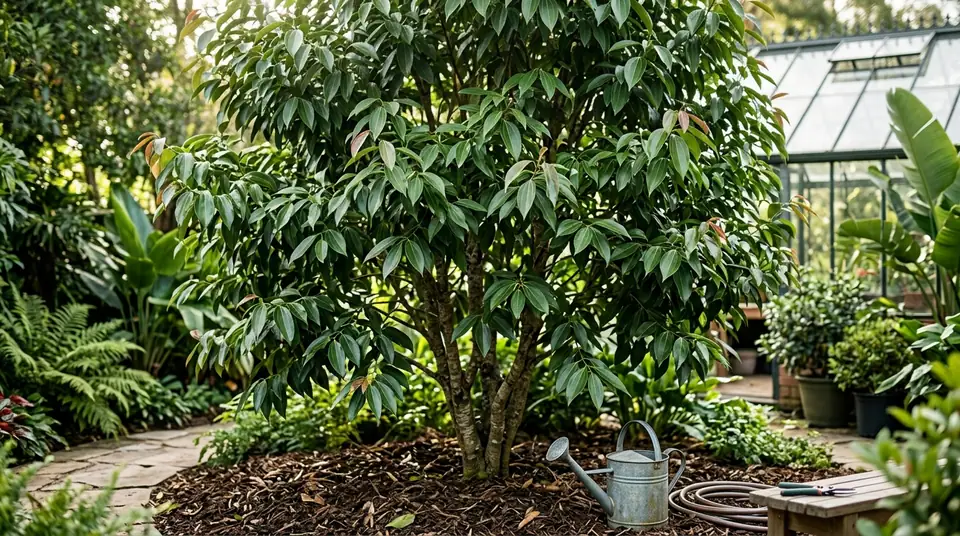
Lush cinnamon tree growing in a garden bed with a watering can nearby
5. Frequently Asked Questions
Can I grow a cinnamon tree indoors in a small apartment?
Yes, you can successfully grow a true cinnamon tree indoors as a potted specimen, provided you place it directly in front of a south-facing window that receives at least 6 to 8 hours of direct sunlight. Because indoor air tends to be dry, you must supplement humidity using a room humidifier or a pebble tray filled with water. Prune the tree regularly to maintain a manageable shrubby form, keeping it between 4 and 6 feet (1.2 to 1.8 meters) tall.
How long does it take for a cinnamon tree to produce usable spice?
From seed, a cinnamon tree typically requires 3 to 4 years of vigorous growth before its stems reach the minimum diameter required for harvesting bark (about 1.5 inches or 3.8 cm). Once the tree is established, you can practice coppicing—cutting stems back to the base to encourage rapid, multi-stem regrowth—which allows for sustainable annual or biennial harvests of fresh spice.
Do cinnamon trees lose their leaves in the winter?
No, Cinnamomum verum is a tropical broadleaf evergreen, meaning it retains its glossy, deep green foliage year-round. However, if your indoor container tree experiences a drastic drop in temperature below 50°F (10°C), suffers from sudden drafts, or undergoes a severe lack of light, it may drop leaves as a stress response. Maintain stable indoor temperatures and consistent light levels to prevent winter defoliation.
Can I propagate cinnamon from stem cuttings?
Yes, semi-hardwood stem cuttings taken in late spring can be successfully rooted, though the success rate is lower than growing from fresh seed. Select healthy, non-flowering current-season shoots measuring 4 to 6 inches (10 to 15 cm) long. Strip the lower leaves, dip the cut end in rooting hormone powder, and insert the cutting into a warm, humid propagation bed filled with a 1:1 mix of perlite and vermiculite. Keep the medium consistently moist until root systems develop within 30 to 45 days.
Related Guides
- Will a Lemon Tree Survive Winter
- Money Tree New Leaves Drooping
- Why is My Money Tree Drooping
- Why is My Money Tree Dropping Leaves
- How to Know If a Palm Tree is Dead
📋 Table of Contents ▼ Click to expand
Tags:
Keep reading
🌿 Related Plants You Might Like






PlantSavvyWorld
Editorial team
PlantSavvyWorld is an independent botanical education project. Articles are drafted with AI assistance, then edited and checked against university extension services, botanical garden collections and other published horticultural sources.