


I learned this SHOCKING lavender secret from a botanist who grows award-winning blooms..!
Written with AI assistance, edited and checked against horticultural sources.
This journey of observation took a thrilling turn when I met an award-winning lavender grower on the rugged coast of Washington State. Stepping into their Mediterranean-inspired display gardens, I was struck by silver-blue foliage so dense and aromatic it defied the Pacific Northwest's notoriously damp climate. That is when they shared a startling truth with me: everything most gardeners do to cultivate lavender—heavy soil amendments, standard watering regimes, and gentle, protective coddling—is completely backwards. The secret to legendary, award-winning blooms lies not in pampering, but in controlled physiological stress and microscopic soil aeration that mimics the nutrient-poor, baking limestone cliffs of the Mediterranean basin.
Let's dive deep into the botanical mechanisms that make this shocking lavender secret work, and how you can translate these professional techniques to your own landscape or indoor sunny alcove.
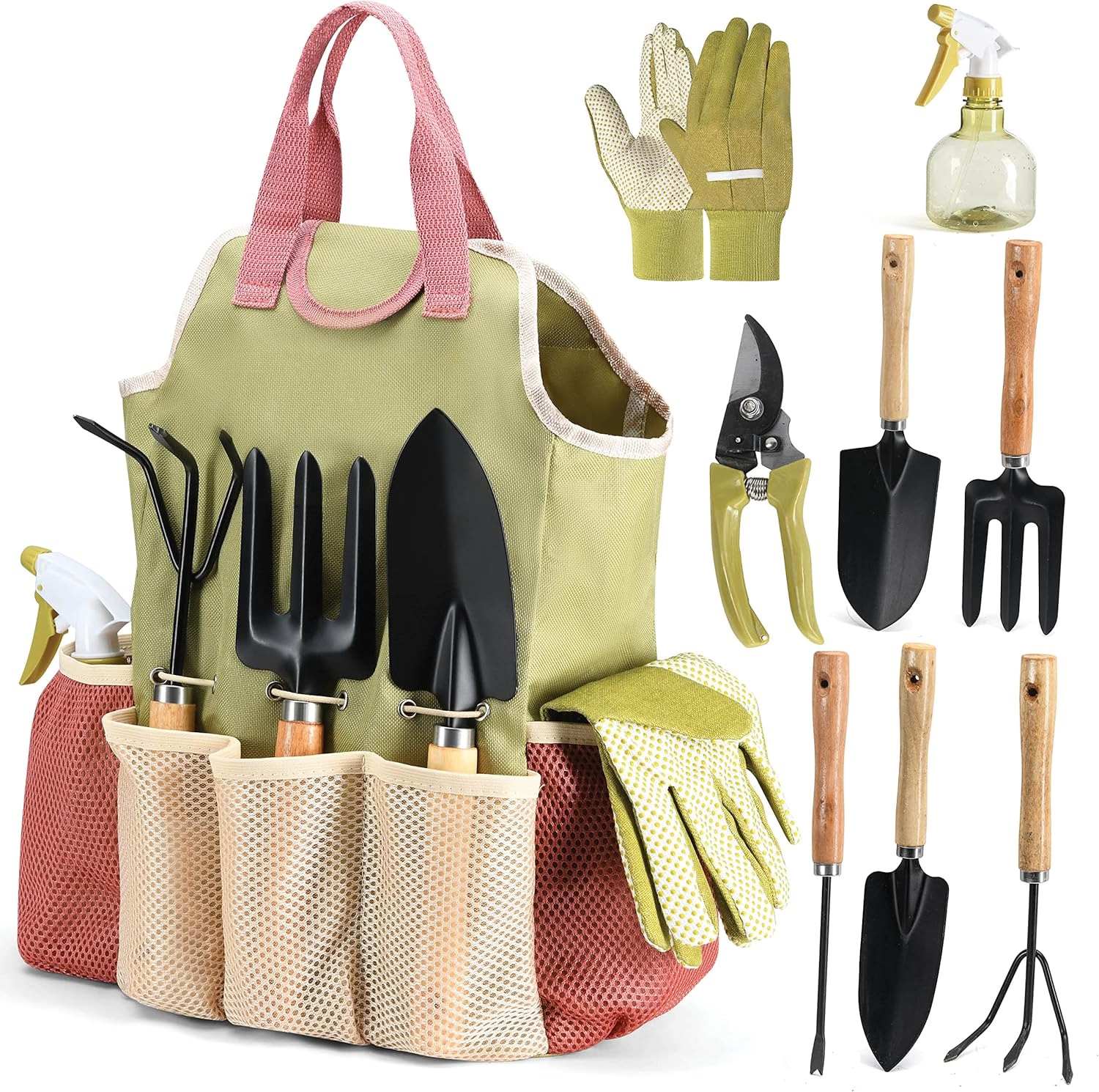
PLAY22 Gardening Tools Set of 10
A 10-piece hand tool set with a carry bag — trowel, transplanter, pruners and weeder. Suited to repotting and general container work.
View on Amazon ↗1. Botanical Overview & Natural Habitat
To understand why this award-winning lavender secret produces such breathtaking results, we must first look at Lavandula species through the lens of evolutionary botany. Native to the arid, rocky, and calcareous slopes of the Mediterranean basin—stretching from Spain through Southern France to Greece—lavender evolved in conditions that would cause standard garden plants to perish within days.
At the root zone (rhizosphere), gas exchange is just as critical as moisture. When potting mix becomes dense, muddy, or suffocated by standing drainage water, fine root hairs quickly suffer from hypoxia (oxygen deprivation), leaving the door wide open for opportunistic fungal pathogens like Pythium and Phytophthora. Conversely, an open, biologically active substrate enables robust nutrient uptake and rapid vegetative vigor.
In its natural habitat, lavender roots must wedge themselves into alkaline, porous limestone fissures where temperatures regularly exceed 95°F (35°C) in summer and drop to a chilling 20°F (-6°C) in winter. The soil is exceptionally low in organic matter but rich in calcium, magnesium, and coarse mineral aggregate.
When growers try to coddle lavender in rich, moisture-retaining compost, they trigger cellular over-expansion. The stems become succulent and water-laden rather than woody and resilient. The secret shared by my award-winning mentor is simple yet counterintuitive: lavender actually thrives under mild chemical and structural stress. By deliberately restricting root space slightly, keeping soil pH strictly between 6.5 and 7.5, and completely withholding rich nitrogen fertilizers, you force the plant to synthesize concentrated essential oils (linalool and linalyl acetate) in its trichomes. This biological defense mechanism is precisely what yields those thick, deeply colored, fragrant spikes that sweep ribbons of purple across prestigious horticultural shows. For broader companion planting ideas in similar climates, you might explore our guide on Lavender Plant Texas. If you are looking to diversify your aromatic garden layout, pairing your beds with architectural perennials like those detailed in How to Grow Iris from Seeds can create striking textural contrasts.
2. Essential Environmental & Care Requirements
Replicating Mediterranean conditions in a home garden or patio container requires strict adherence to specific environmental parameters. Because lavender's wild ancestors evolved under intense solar radiation and bone-dry winds, you cannot cut corners on light and air movement.
"Successful indoor or container gardening isn't a game of luck—it is the art of respecting root biology and working in harmony with natural physiological cycles."
To help you manage these critical thresholds, consult the parameters below, which balance traditional cultivation with the insights of master growers:
When monitoring these environmental factors, remember that air circulation is just as vital as soil composition. Stagnant humidity around the leaf canopy invites fungal spores. If you are designing a multi-layered garden bed, you can review techniques from professional horticultural authorities like the Royal Horticultural Society to ensure proper spacing between aromatic herbs and other herbaceous perennials.
3. Step-by-Step Cultivation, Feeding & Propagation
Here is the proven, systematic protocol I personally follow in a greenhouse seeking award-winning bloom quality:
- Optimize Container & Soil Aeration: Ensure containers feature generous drainage holes and amend standard potting mix with 40% coarse perlite, crushed lava rock, or horticultural grit. Avoid peat-heavy mixes that retain excessive moisture; lavender demands an open, fast-draining substrate.
- Stabilize Climate & Micro-Environment: Position plants in a south-facing exposure where they receive a minimum of 6 to 8 hours of direct sunlight daily. Keep them at least 3 feet away from cold winter drafts and forced-air heating registers to prevent temperature shock.
- Apply Controlled, Lean Nutrition: Unlike heavy-feeding tropical houseplants, lavender despises rich fertilizers. Skip chemical nitrogen completely. Instead, top-dress the soil surface once in early spring with a tiny dusting of agricultural lime and a balanced, slow-release organic amendment to maintain a neutral-to-alkaline pH.
- Execute the "Dry-Out" Watering Cycle: Saturate the soil deeply until water runs freely from the base, then withhold water entirely until the top 3 inches (7.6 cm) of substrate are completely dry to the touch. This intermittent drying triggers deep root searching and strengthens cell walls.
- Implement Post-Bloom Pruning: Immediately after flowering concludes in late summer, prune back the green stems by about one-third, taking care never to cut into old, woody stems that lack visible leaf nodes, as lavender cannot regenerate new shoots from bare wood.
💡 Pro-Tip: Always hydrate with room-temperature water (around 68°F / 20°C); icy tap water induces thermal root shock and halts nutrient absorption for hours, which can stall delicate flower spike development.
⚠️ Important Caution: Never let pots stand in saucer runoff water for more than fifteen minutes; stagnant water creates anaerobic conditions in the root zone that rapidly cause root rot and stem base collapse.
For those interested in expanding their garden palette beyond herbs, similar meticulous soil preparation steps are required when learning How to Start Hostas from Seed or experimenting with tropical exotics via How to Grow Plumeria from Seed.
4. Common Problems, Pests & Troubleshooting
Even when applying elite botanical secrets, growers occasionally encounter physiological setbacks. Recognizing the early warning signs of stress allows you to intervene before permanent damage occurs.
The most frequent issue growers face is lower stem dieback and yellowing foliage. This is almost invariably caused by overwatering or compacted, poorly aerated soil that suffocates the root hairs. If you notice the base of your lavender plant turning black and mushy, immediately unpot the specimen, trim away necrotic root tissue with sterilized shears, and repot into a sterile, ultra-coarse mineral mix.
Another common adversary is powdery mildew and fungal leaf spot, which strike when plants are crowded together or kept in stagnant indoor environments. To combat this, increase horizontal airflow with oscillating fans and eliminate overhead misting entirely.
Pests like spider mites and aphids occasionally target stressed indoor plants. For comprehensive horticultural diagnostic criteria and safe biological control strategies, consult the Missouri Botanical Garden Plant Finder, which provides exceptional research-backed resources for managing garden stressors. If you notice curious insect activity around your aromatic beds, you may also want to read our diagnostic breakdown on Lavender Ants. Furthermore, if your broader garden includes ornamental shrubs that fail to perform, compare your symptoms with our guide on Why Didn't My Hydrangea Bloom This Year.
5. Frequently Asked Questions
When is the best time of year to implement these changes?
Early spring represents the ideal metabolic window when plants emerge from winter dormancy and can rapidly utilize increased light, fresh air circulation, and pH adjustments. During deep winter dormancy, reduce hydration frequency significantly.
How quickly will I see visible improvements after adjusting my lavender care?
Most lavender specimens respond within 14 to 21 days. You will notice firmer silver foliage, increased resistance to drooping, and the rapid initiation of robust floral bud clusters as the root zone begins to breathe.
Can I grow award-winning lavender indoors year-round?
Yes, provided you place the plant directly in a south-facing window that receives intense, unobstructed sunlight for at least 8 hours a day, or supplement with high-output full-spectrum LED horticultural grow lights.
Why are the lower stems of my lavender turning woody and bare?
This is a natural aging process known as lignification, but it can be accelerated by a lack of sunlight reaching the lower canopy. Ensure you prune lightly every year after flowering, but never cut back into old, bare wood where there are no active green shoots.
How do I raise the soil pH for container-grown lavender?
If your potting mix is too acidic (below pH 6.0), you can amend it by mixing in a small quantity of horticultural agricultural lime or crushed oyster shells, which slowly buffers the substrate toward the neutral-to-alkaline range lavender demands.
Have you tried this technique with your own houseplants or garden beds? Share your results with our global grower community on the Community Forum, explore more expert guides on Plant Tips, or visit our Home Page for comprehensive plant care archives.
📋 Table of Contents ▼ Click to expand
PlantSavvyWorld
Editorial team
PlantSavvyWorld is an independent botanical education project. Articles are drafted with AI assistance, then edited and checked against university extension services, botanical garden collections and other published horticultural sources.
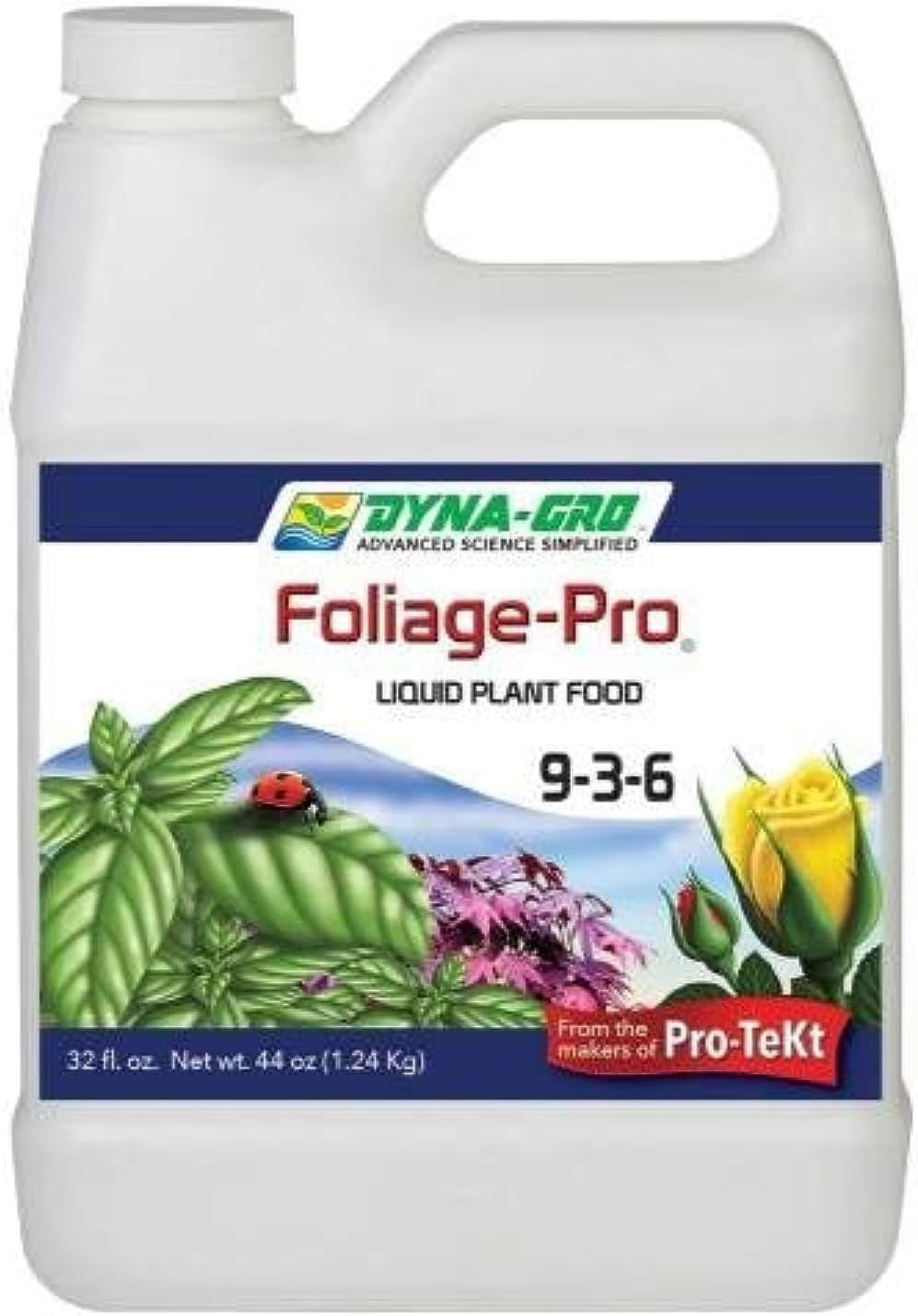
Organic Liquid Plant Food (FoxFarm)
A liquid organic plant food. Applied at label rate during active growth; most houseplants do better at reduced strength and not at all in winter.
View on Amazon ↗
PlantSavvyWorld
Editorial team
PlantSavvyWorld is an independent botanical education project. Articles are drafted with AI assistance, then edited and checked against university extension services, botanical garden collections and other published horticultural sources.
💬 Discussion