


My 90-year-old botanist friend told me to put a WET ROCK in my English Ivy pot...
Written with AI assistance, edited and checked against horticultural sources.
It was during this time that my dear friend and mentor, Dr. Elizabeth "Betty" Vance—a 90-year-old retired university botanist who spent over six decades researching temperate forest ecology—paid a visit to a greenhouse. She took one look at my crispy, brown-edged English Ivy (Hedera helix) and chuckled. "the PlantSavvyWorld editorial team, you're treating an understory climber like a desert succulent," she said. "Pick up a porous river stone or a chunk of volcanic lava rock, soak it in water, and set it right at the crown of your pot. Keep that rock wet."
That single piece of advice transformed my approach to indoor horticulture.

PLAY22 Gardening Tools Set of 10
A 10-piece hand tool set with a carry bag — trowel, transplanter, pruners and weeder. Suited to repotting and general container work.
View on Amazon ↗The "wet rock" hack is not folklore; it is an elegant, passive microclimate regulator that works in perfect alignment with plant physiology.
1. Botanical Overview & Natural Habitat
To understand why a wet rock works wonders for English Ivy, we must look at its evolutionary origins. Hedera helix is native to the moist, shaded woodland understories of Europe, western Asia, and northern Africa. In these habitats, ivy does not simply grow in soil; it is a clambering, climbing opportunist that thrives on damp stone walls, limestone cliffs, and the mossy bark of ancient trees.
In the wild, ivy stems produce thousands of tiny adventitious roots. These specialized aerial structures are highly sensitive to moisture gradients. When they make contact with a wet, porous stone, they cling to it, absorbing localized humidity and trace minerals directly from the rock's surface.
At the root zone (rhizosphere), gas exchange is just as critical as moisture. When potting mix becomes dense, muddy, or suffocated by standing drainage water, fine root hairs quickly suffer from hypoxia (oxygen deprivation), leaving the door wide open for opportunistic fungal pathogens like Pythium and Phytophthora. Conversely, an open, biologically active substrate enables robust nutrient uptake and rapid vegetative vigor.
The wet rock acts as a physical bridge between the humid air your ivy craves and the oxygen-rich, aerated soil its root system requires. Placing a saturated, highly porous rock (such as pumice, lava rock, or weathered limestone) on the soil surface creates a localized zone of high relative humidity directly above the soil line. This is the boundary layer. As water slowly evaporates from the microscopic fissures of the stone, it increases the ambient moisture levels surrounding the low-lying foliage without saturating the potting medium. This significantly reduces the Vapor Pressure Deficit (VPD)—the difference between the amount of moisture in the air and how much moisture the air can hold when saturated—which keeps the plant's stomata open and actively photosynthesizing without causing root suffocation.
"Successful indoor gardening isn't a game of luck—it is the art of respecting root biology and working in harmony with natural physiological cycles."
2. Essential Environmental & Care Requirements
Creating the perfect home for Hedera helix requires balancing light, air, and moisture. In their native habitats, these plants experience cool, damp conditions with bright, dappled sunlight filtering through the forest canopy. Indoors, our homes are often far too dry and warm, especially during winter when forced-air heating strips moisture from the air, dropping relative humidity levels below 20%.
To mimic the natural woodland floor, we must carefully tune each environmental parameter. The table below outlines the optimal conditions required to maintain a healthy English Ivy specimen:
3. Step-by-Step Cultivation, Feeding & Propagation
Here is the proven, systematic protocol I personally follow in a greenhouse. By combining structural soil aeration with Betty’s wet rock micro-climate trick, you can quickly build a flourishing indoor jungle.
Step 1: Optimize Container Aeration & Substrate Composition
Choose a container with a minimum of three generous drainage holes at the base. Standard nursery pots or unglazed terracotta pots work exceptionally well. Prepare your potting medium by thoroughly blending 50% premium organic potting soil, 30% coarse perlite or pumice, and 20% orchid bark. This porous, aggregate-heavy mix prevents soil compaction and allows gravity to pull excess water away from the rhizosphere within seconds.
Step 2: Implement the "Wet Rock" Micro-Humidity System
Select a highly porous stone roughly the size of a chicken’s egg or a small fist. Volcanic red lava rock, vesicular basalt, weathered pumice, or natural tufa are ideal choices because of their high surface-area-to-volume ratio and capillary-wicking properties. Avoid polished, smooth, river stones as they cannot hold water.
Submerge the rock in clean, dechlorinated water for at least 1 hour until it is completely saturated. Place the saturated stone directly on top of the soil mix, resting it gently against the base of your English Ivy's main stem. To maintain this micro-humidity system, simply pour a small splash of water directly over the rock whenever you check on your plant, or mist the stone thoroughly every 2 to 3 days.
Step 3: Stabilize Climate & Micro-Environment
Position your potted ivy in a room with stable environmental parameters. Place your plants at least 3 feet (90 cm) away from cold winter drafts, open windows, and forced-air heating registers to prevent extreme temperature fluctuations and sudden humidity shock. Maintain ambient room temperatures between 60°F and 75°F (15°C to 24°C) during the day, with a slight drop at night to mimic natural outdoor cooling.
Step 4: Apply Dilute Organic Nutrients
During active vegetative phases (typically early spring through late summer), your ivy requires macro- and micronutrients to build strong cell walls. Nourish your ivy every 14 days with half-strength organic liquid seaweed or fish emulsion fertilizer. This provides a gentle release of nitrogen, potassium, and trace minerals, fueling cell division and leaf expansion without risk of chemical root burn.
Step 5: Master Propagation for a Fuller Pot
English Ivy is incredibly easy to propagate using stem cuttings, allowing you to fill in bare spots at the top of your pot.
- Identify a healthy, active vine and use sterilized pruning shears to cut a 4-to-6-inch (10 to 15 cm) segment directly below a leaf node.
- Strip away the bottom 2 inches (5 cm) of leaves, leaving at least 3 to 4 leaves intact at the tip.
- Submerge the bare stem nodes in a small glass of room-temperature water, or press them directly into a damp bed of 100% perlite.
- Place the propagation vessel in a bright, warm area. You will notice fine root development within 10 to 14 days. Once the roots reach 1 inch (2.5 cm) in length, transplant the cuttings back into the mother pot to create a lush, dense canopy.
💡 Pro-Tip: Always hydrate your plants with room-temperature water (around 68°F / 20°C). Utilizing icy tap water directly from the plumbing system induces severe thermal shock in the root zone. This causes root hairs to instantly constrict, halting nutrient absorption and water uptake for several hours, which can trigger leaf drop.
⚠️ Important Caution: Never let your pots stand in saucer runoff water for more than fifteen minutes. Stagnant water at the base of the pot creates anaerobic conditions, blocking oxygen transport to the root tissues and rapidly initiating root rot (Pythium). If your saucer is full after irrigation, empty it immediately.
4. Common Problems, Pests & Troubleshooting
Even with the best care, indoor environments can present challenges. English Ivy is particularly sensitive to dry, stagnant air, which can trigger physiological stress and invite destructive pests. Understanding how to diagnose these issues early is key to keeping your ivy vibrant and healthy.
Crispy, Papery Brown Leaf Edges
This classic symptom is almost always caused by a steep Vapor Pressure Deficit (VPD)—in other words, the air is too dry, and the plant is losing water through transpiration faster than its roots can pull moisture from the soil. If you observe crispy margins, check your wet rock. If the rock is bone-dry within 12 hours of wetting, it indicates that your room's ambient relative humidity has fallen below 35%. Re-hydrate the stone more frequently or cluster your houseplant collection together to create a shared, humid micro-climate.
Two-Spotted Spider Mites (Tetranychus urticae)
Spider mites are the bane of ivy growers. These microscopic arachnids thrive in warm, dry conditions and feed on plant sap, leaving fine webbing on the undersides of leaves and a dusty, yellow-speckled appearance on the upper surfaces.
Because spider mites hate high humidity, the wet rock hack acts as a brilliant preventive shield. By keeping the local boundary layer humid, you create a hostile environment for mite reproduction. If an infestation does occur, immediately isolate the plant and wash the foliage with a steady stream of lukewarm water. Apply a organic insecticidal soap or a 1% solution of cold-pressed neem oil, making sure to spray the undersides of every leaf where mites harbor. Repeat this treatment every 5 to 7 days for three consecutive cycles to disrupt the pest's reproductive cycle.
Leaf Yellowing & Stem Mushiness
If you notice the lower leaves of your ivy turning a dull yellow while the stems feel soft or water-soaked, the plant is likely suffering from overwatering or poor drainage. This environment promotes Xanthomonas leaf spot and root rot. Suspend watering immediately and check the soil. If the soil smells sour or looks muddy, gently slip the root ball out of its pot. Prune away any mushy, brown, or black roots, leaving only firm, white, healthy root tissue. Repot the plant into a fresh, well-aerated mix enriched with coarse perlite, and ensure you are not letting the pot sit in standing saucer water.
For further scientific reading on identifying and managing houseplant pathogens, consult the Clemson University Home & Garden Information Center, which offers invaluable diagnostic keys for domestic growers.
5. Frequently Asked Questions
When is the best time of year to implement these changes?
Early spring through mid-summer represents the active metabolic window when plants can rapidly utilize increased light and fresh nutrients. During this phase, your English Ivy is actively producing new cells and expanding its root system, allowing it to adapt quickly to soil amendments and the wet rock micro-climate setup. During winter dormancy, reduce your watering and feeding frequencies to reflect the plant’s slowed metabolism.
How quickly will I see visible improvements?
Most foliage houseplants, including English Ivy, respond within 7 to 14 days with noticeable leaf turgidity, deeper emerald color, and active apical shoot emergence. You will also notice that the trailing stems closest to the wet rock may begin developing small, healthy adventitious root bumps as they attempt to anchor onto the humid stone.
Is this technique suitable for all indoor plant varieties?
Yes! It is exceptionally effective for tropical foliage collections and understory species that struggle with dry indoor air. Plants like Monsteras, Philodendrons, Pothos, Spathiphyllum (Peace Lilies), and even Sansevieria (Snake Plants) benefit greatly from a porous, highly aerated soil substrate paired with a localized humidity source. For further advice on managing diverse indoor collections, check out the care sheets maintained by the Royal Horticultural Society.
Why are the leaves of my English Ivy turning brown and crispy?
Crispy, brown leaf margins are a classic cry for help indicating extremely low ambient humidity or underwatering. When the air is dry, the plant loses moisture through its stomata faster than the root system can replenish it. Placing a porous wet rock at the base of your ivy helps raise local humidity levels right around the foliage, reducing this transpirational stress and keeping leaf margins supple and green.
Can I use any type of rock for the wet rock method?
No, smooth or polished decorative stones (like river pebbles or quartz) do not have the microscopic pores or capillary structure required to absorb, hold, and slowly evaporate water. To make this hack work, you must use highly porous, unpolished geological materials such as volcanic lava rock, red basalt, natural pumice, or weathered limestone. These materials act like natural sponges, slowly releasing moisture to create a steady humid boundary layer around your plant's crown.
Have you tried this technique with your own houseplants? Share your results with our global grower community on our Forum, explore more expert guides in our archives, or visit our homepage for comprehensive plant care resources.
📋 Table of Contents ▼ Click to expand
PlantSavvyWorld
Editorial team
PlantSavvyWorld is an independent botanical education project. Articles are drafted with AI assistance, then edited and checked against university extension services, botanical garden collections and other published horticultural sources.
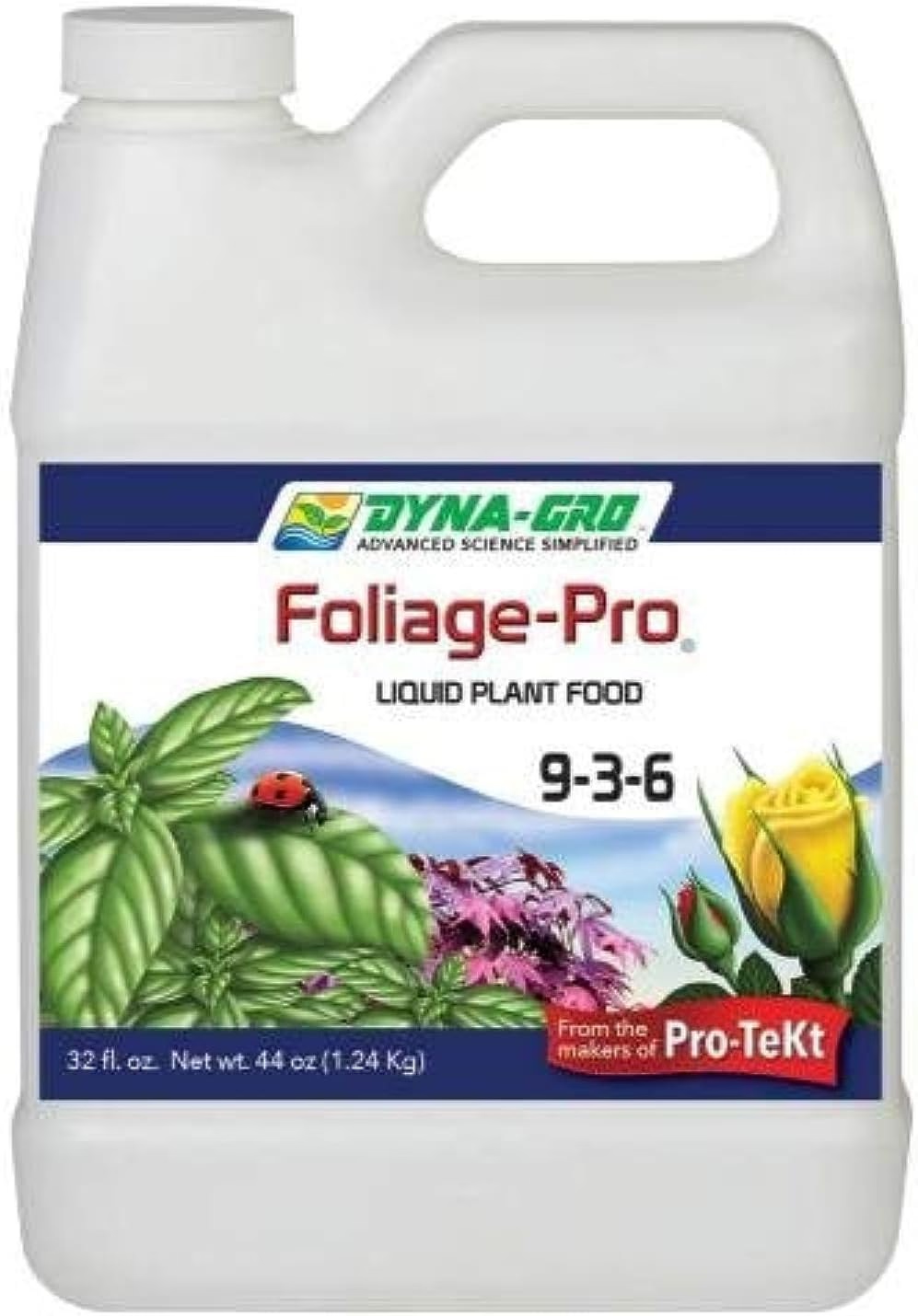
Organic Liquid Plant Food (FoxFarm)
A liquid organic plant food. Applied at label rate during active growth; most houseplants do better at reduced strength and not at all in winter.
View on Amazon ↗
PlantSavvyWorld
Editorial team
PlantSavvyWorld is an independent botanical education project. Articles are drafted with AI assistance, then edited and checked against university extension services, botanical garden collections and other published horticultural sources.
💬 Discussion