

Lavender Ants
Written with AI assistance, edited and checked against horticultural sources.
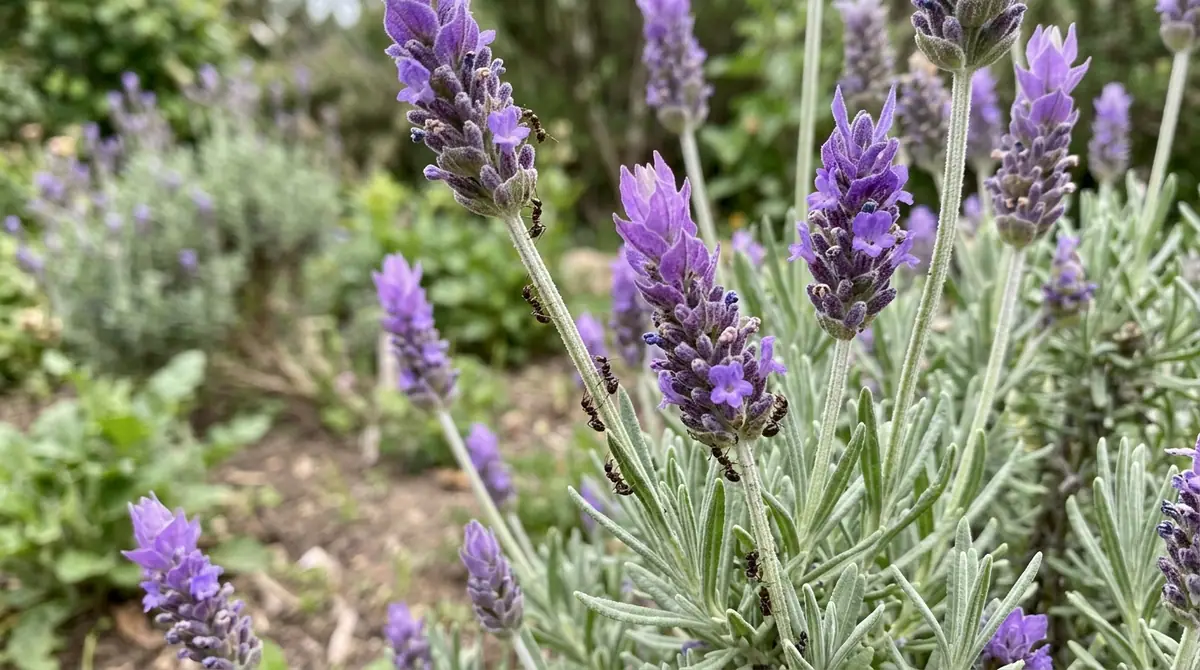
The sharp, camphor-heavy fragrance hit the back of my throat before I even laid eyes on the plant. It was the summer of 2018 at a private estate in the Hudson Valley, and I was on my knees inspecting a massive, sprawling lavender specimen that growers insisted was dying. The stems were stripped of leaves in erratic patches, and a ceaseless army of tiny black ants was marching up and down the woody base. Yet, despite the insect infestation, the shrub was throwing out some of the most electric, violet-blue flower spikes I had ever seen in northeastern clay. That was my first real introduction to the enigmatic agricultural phenomenon gardeners call "lavender ants"—a fascinating ecological dance between Lavandula species and formicid colonies that challenges everything we think we know about garden pests.

1. Botanical Overview & Natural Habitat
Lavender (Lavandula spp.) belongs to the Lamiaceae (mint) family, comprising roughly 47 known species of flowering plants. The most commonly cultivated species include English Lavender (Lavandula angustifolia), Lavandin (Lavandula x intermedia), and French Lavender (Lavandula dentata). Native to the dry, rocky, limestone-rich slopes of the Mediterranean basin—stretching from Spain through southern France and across to Italy—these plants evolved in environments subject to intense solar radiation, meager rainfall, and poor, highly porous soils.
Morphologically, lavender is a subshrub featuring woody basal stems and herbaceous, aromatic flowering stalks. The leaves are linear to lanceolate, densely covered in minute, star-shaped trichomes (hairs) that trap essential oils, protecting the plant from excessive transpiration and voracious herbivores.
What people colloquially call "lavender ants" are not a distinct, specialized species of ant that feeds exclusively on the plant. Rather, the term refers to generalist ant colonies—most frequently pavement ants (Tetramorium caespitum), odorous house ants (Tapinoma sessile), or various species of field ants (Formica spp.)—that choose the dry, thermal-mass environment at the base of a lavender bush to establish their nests.
These insects are drawn to lavender for several distinct reasons:
- Microclimate: The sprawling, dense canopy of a mature lavender plant creates a warm, stable sub-surface microclimate protected from heavy rains and direct avian predators.
- Aphid Mutualism: Lavender is occasionally targeted by sap-sucking insects like aphids or mealybugs. Ants farm these insects for their sugary honeydew, effectively turning the lavender shrub into an open-air dairy farm.
- Porous Soil: The sharp, gravelly, well-draining soil required to keep lavender alive also happens to be exceptionally easy for ants to excavate for underground galleries.
Understanding this dynamic is crucial. The ants themselves rarely consume the plant tissues; instead, their presence is an indicator of either an associated sap-sucking pest population or simply an ideal physical habitat for colony nesting.
2. Essential Environmental & Care Requirements
Growing robust lavender that can gracefully host or repel insect activity requires replicating its native Mediterranean biome. Deviate from these parameters, and the plant declines rapidly, inviting opportunistic pests and fungal pathogens.
| Parameter | Optimal Condition | Common Mistake | Why It Matters |
|---|---|---|---|
| Temperature Range | 65°F to 85°F (18°C to 29°C) | Planting in stagnant, humid heat zones | High humidity combined with heat drastically increases the incidence of Phytophthora root rot. |
| Soil pH | 6.5 to 7.5 (Neutral to slightly alkaline) | Planting in acidic peat-based mixes (pH < 6.0) | Acidic soils lock up essential calcium and magnesium, weakening cell walls against insect and fungal attacks. |
| Sunlight | Minimum 6 to 8 hours of direct, unshaded sun | Partial shade or filtered light under tree canopies | Insufficient light leads to leggy, weak growth and drastically reduces essential oil production. |
| Watering Depth | Soak to a depth of 6 to 8 inches (15 to 20 cm) then dry completely | Frequent, shallow watering (every 1 to 2 days) | Constant surface moisture rots the crown and attracts subterranean pests like ants and fungus gnats. |
When managing lavender in landscapes with heavy ant activity, soil moisture management is your primary defense. If you overwater, the soil becomes waterlogged, forcing ants to tunnel upward into the root crown to save their brood, which physically destabilizes the plant.
💡 Pro-Tip: To discourage ants from nesting directly in the root zone of your lavender, top-dress the soil around the plant with a 1-inch (2.5 cm) layer of sharp, angular horticultural grit or pea gravel instead of organic wood mulch. Organic mulch retains moisture and attracts insects; mineral grit mimics the rocky scree of the Mediterranean and dries out within minutes of a rain event.
3. Step-by-Step Cultivation, Feeding & Propagation
Whether you are starting new specimens or dividing an established hedge that has become a bustling ant metropolis, precision is everything. Here is my exact field-tested protocol for cultivating resilient lavender.
- Select and Prepare the Site: Choose a location receiving full sun. Excavate a planting hole twice as wide as the nursery root ball but no deeper than the container itself—typically 4 to 6 inches (10 to 15 cm) deep. Amend heavy native soils with 30% coarse horticultural sand and a handful of agricultural lime to elevate the pH if necessary.
- Planting: Gently tease out the outer roots of your nursery start to break any circling patterns. Set the plant in the hole, ensuring the crown sits slightly above the surrounding soil grade—roughly 0.5 inches (1.2 cm) high. Backfill with the native-soil-and-sand mixture, tamping down firmly to eliminate air pockets.
- Initial Watering: Water the newly planted lavender deeply once to settle the soil, delivering about 1 inch (2.5 cm) of water. Do not water again until the top 3 inches (7.5 cm) of soil are completely bone dry to the touch.
- Mulching with Mineral Aggregates: Apply your 1-inch (2.5 cm) layer of pea gravel or crushed limestone in a 12-inch (30 cm) radius around the base of the stem, keeping the stones slightly away from direct contact with the bark to prevent moisture retention against the cambium.
- Propagation via Semi-Ripe Cuttings: In mid-summer (roughly 60 to 90 days after spring flush), take 3-to-4-inch (7.5 to 10 cm) cuttings from non-flowering lateral shoots. Strip the lower half of the leaves, dip the base in rooting hormone powder, and stick them into a sterile medium of 50% perlite and 50% coarse peat. Maintain ambient temperatures around 70°F (21°C) and expect root development in 21 to 30 days.
When it comes to feeding, abandon all instincts to fertilize heavily. Lavender is a starvation artist. Applying high-nitrogen fertilizers forces rapid, succulent green growth that tastes delicious to aphids, which in turn invites hordes of ants to farm them. A light top-dressing of composted manure once every two years in early spring is more than sufficient.
4. Common Problems, Pests & Troubleshooting
When dealing with lavender ants, you must look past the ants themselves to identify the root cause of the ecosystem imbalance.
The Ant-Aphid Axis
If you notice a dense line of ants streaming up the stems, inspect the tender tips of the flower spikes. You will likely find colonies of green or black aphids feeding on the sap. The ants are simply harvesting the honeydew excretions.
- The Fix: Blast the aphids off the plant with a sharp stream of water from a garden hose, or apply horticultural insecticidal soap directly to the affected tips. Once the aphids are gone, the ants will lose their food source and migrate elsewhere.
Crown Rot and Ant Nesting
If an ant colony has nested directly inside the root ball, it is usually because the soil has remained too damp, creating a humid, protected cavity.
- The Fix: Stop all irrigation immediately and let the soil dry out for 14 days. If the plant is severely destabilized, dig it up in the cooler morning hours, gently wash the soil and ants from the root system using a bucket of water, prune away any black, mushy roots with sterilized shears, and replant in a fresh, highly porous, gritty medium. For more detailed diagnostics on plant stressors, consult the Royal Horticultural Society guidelines on herb cultivation.
⚠️ Important Caution: Never use broad-spectrum synthetic insecticides or ant baits containing harsh neurotoxins directly around lavender beds if you intend to harvest the flowers for culinary use, sachets, or therapeutic distillation. Furthermore, heavy chemical treatments often kill off beneficial predatory insects like ladybugs and lacewings that naturally keep aphid and mite populations in check.

5. Frequently Asked Questions
Do ants kill lavender plants?
No, ants rarely kill lavender directly. They do not eat the plant's roots or foliage. However, their tunneling activities can occasionally expose or dry out the root system, and their presence usually indicates that aphids are feeding on the plant's sap, which can weaken or damage the shrub over time.
How do I get rid of ants living in my lavender plant?
First, check for sap-sucking pests like aphids and eliminate them to remove the ants' food source. Second, replace any organic wood mulches around the base of the plant with dry, coarse pea gravel or sharp grit. Ants despise dry, unstable mineral surfaces and will voluntarily relocate their nests within 7 to 10 days.
Is it safe to use lavender flowers if ants have been crawling on them?
Yes, provided you have not sprayed the plant with synthetic chemical pesticides or ant poisons. Simply harvest the flower spikes in the morning after the dew has dried, give them a gentle rinse in cool water, and lay them out on a drying rack. For authoritative research on safe herbal harvesting practices, review the resources provided by University of California Agriculture and Natural Resources.
Why are ants suddenly swarming all over my English lavender?
A sudden swarm of ants is almost always driven by one of two factors: a sudden population explosion of aphids on the new growth, or excessive soil moisture that has forced subterranean colonies to move their brood upward into the dry, warm canopy of the lavender root crown. Check your watering schedule and inspect the terminal buds for sap-feeders.
Related Guides
📋 Table of Contents ▼ Click to expand
Tags:
Keep reading
🌿 Related Plants You Might Like



PlantSavvyWorld
Editorial team
PlantSavvyWorld is an independent botanical education project. Articles are drafted with AI assistance, then edited and checked against university extension services, botanical garden collections and other published horticultural sources.